Frictionless Transferring of Wallet Ownership
The wallet sharing feature allowed a user to add other users as signers and transfer ownership without their consent or notification. An attacker could spoof another user as the wallet owner and expose phone numbers of unrelated users.
 Originally disclosed on HackerOne
- Triaged in 37 hours
- Fixed in 17 days
- Paid in 17 days
- Disclosed after 47 days
In the Robocoin application, users can create their own personal or operator wallets and then share it with other Robocoin users.
It was observed that this sharing of wallets with other users is frictionless. In other words, the users with whom the wallet is shared with (Let's say B and C) are not asked to confirm this transfer or ownership at all. They are not notified either.
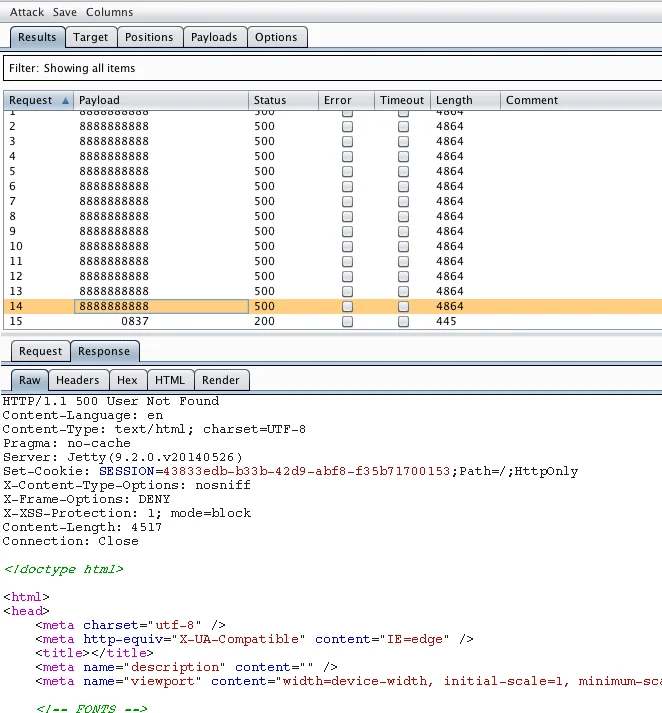
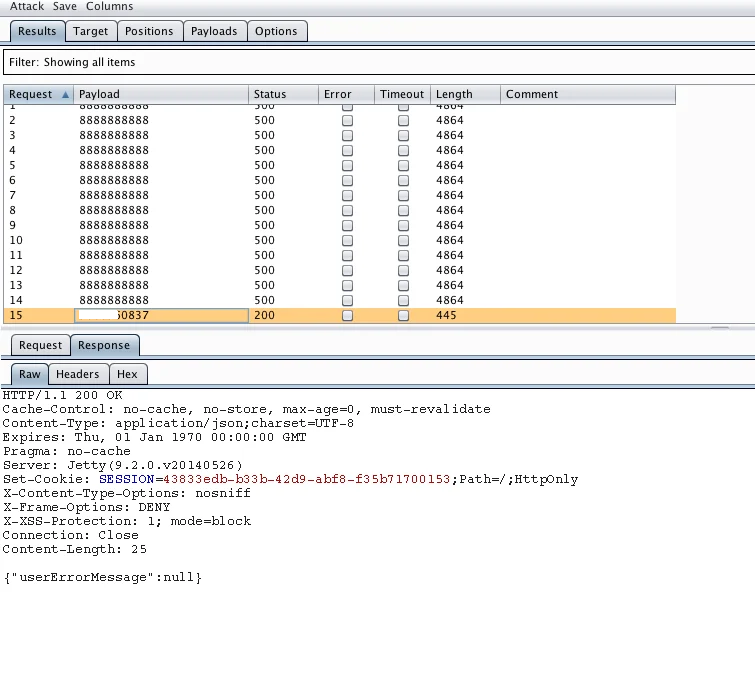
What this means is that a malicious Robocoin user (Let's say A) would create a wallet and then share it with both B and C (assuming A was able to find some random phone numbers associated with some Robocoin users - this is possible since there was no rate limiting observed for this feature. See attached screenshots where 14 invalid requests were sent with an invalid phone number and the 15th request was a valid number. Notice the difference in the response) as Signers. A then goes ahead and makes B the wallet owner.
Since B is the wallet owner now, this changes A's permissions and now A becomes a Signer along with the other signer C (who A assigned as a Signer originally). There are no email notifications sent to notify B and C who shared the wallet with them, who transferred ownership from A to B. No notifications of any kinds.
C then logs on and notices that a new wallet is being shared with him. C looks at the user summary of the wallet and notices that B is the owner and both A and C are signers. C becomes suspicious that B is the malicious user and has shared the wallet with both A and C.
In a nutshell, A spoofed B as the wallet owner. The fact that there are no notifications being sent of any kind and that there is no rate limiting observed for the sharing feature only makes this issue more feasible and prone to an attack.
There are some other ramifications as well due to this behavior such as:
A can share this wallet with any number of Robocoin users. This would allow different Robocoin users to view each other's phone numbers. In a way, this is basically revealing phone numbers of various Robocoin users to each other which is totally unnecessary. Revealing a phone number is worse than revealing a name IMHO.
This would also allow a large number of wallets being shown in Robocoin user dashboards to which they have no connection whatsoever.
Cheers! /ab
Attachments
Context
Robocoin is a wallet application in which users can create personal or operator wallets and then share those wallets with other Robocoin users. Sharing is the core of the feature: a wallet has an owner and one or more signers, and the owner can bring other users into a wallet so that several people hold roles on the same wallet.
The report examines what happens when a wallet is shared and when ownership is transferred. The people on the receiving end of a share or an ownership transfer are not made aware of it and do not consent to it. The researcher found that neither happens: the transfer is frictionless, with no confirmation step and no notification of any kind.
Setup
The report describes three Robocoin users, referred to as A, B and C. A is the malicious user. B and C are ordinary users who are pulled into A's wallet. The only precondition the researcher names is that A needs to know, or guess, phone numbers associated with Robocoin users, because wallets are shared by phone number. The researcher notes that this is feasible because no rate limiting was observed on the sharing feature.
No tools, versions or specific endpoints are given in the report. The evidence consists of two screenshots of the sharing requests and their responses.
Finding it
The researcher observed that sharing a wallet with another user is frictionless. When a wallet is shared with users B and C, neither is asked to confirm the transfer or the ownership, and neither is notified. Neither B nor C is asked to confirm the transfer or ownership, and neither is notified.
That alone looked wrong because it means the recipient of a share has no say in whether a wallet is attached to their account, and no way of knowing who attached it. The researcher then worked out how to chain this into an ownership spoof.
Exploitation
Step 1: enumerate valid Robocoin phone numbers
Because the sharing feature had no rate limiting, A could send share requests against phone numbers until one hit a real Robocoin user. The researcher demonstrated this with 14 invalid requests using an invalid phone number, followed by a 15th request with a valid number, and points to the difference in the response between the two cases.
The screenshots show the invalid requests and the valid one side by side, with the differing response making it possible to tell a registered number from an unregistered one. The report does not reproduce the request or response bodies, so the exact fields and status codes are not available here.
Step 2: share the wallet with B and C as signers
A creates a wallet and shares it with both B and C, assigning them as signers. Neither B nor C is asked to confirm, and neither receives a notification.
Step 3: make B the wallet owner
A then makes B the wallet owner. This is the key move: the ownership of the wallet is transferred to a user who never agreed to anything. The report does not describe a separate confirmation step for the ownership transfer either.
Step 4: the permission change on A
Making B the owner changes A's own permissions. A is no longer the owner and becomes a signer alongside C, the other signer that A assigned originally. The wallet therefore ends up with B as owner and A and C as signers.
Step 5: what C sees
C logs on and notices that a new wallet is being shared with him. C looks at the user summary of the wallet and sees that B is the owner and that both A and C are signers. C becomes suspicious that B is the malicious user who shared the wallet with both A and C.
That is the spoof: A has made B appear to be the wallet owner, and the absence of any notification means B has no idea this happened and C has no way to attribute the share correctly.
Root cause
The design flaw is that sharing a wallet and transferring its ownership take effect immediately, with no consent from the recipient and no notification to anyone involved. The recipient's account is modified by another user's action, and the recipient is never told. The report frames this as a violation of secure design principles rather than a coding bug in a single handler.
Two properties of the feature make the flaw worse. First, there is no rate limiting on the sharing feature, so phone numbers of Robocoin users can be enumerated and the share can be aimed at real accounts. Second, C looks at the user summary of the wallet and sees that B is the owner and both A and C are signers.
Impact
A malicious Robocoin user can spoof another user as the owner of a wallet. The victim is not notified and has not consented, and C sees B listed as the owner of the wallet.. The researcher notes that the absence of notifications and the absence of rate limiting make the issue more feasible and more prone to attack.
The report lists further ramifications of the same behaviour:
- A can share the wallet with any number of Robocoin users. This lets different Robocoin users view each other's phone numbers, which the researcher considers unnecessary and, in his view, worse than revealing a name.
- A large number of wallets can be made to appear on Robocoin users' dashboards even though those users have no connection to them whatsoever.
The report does not quantify how many users could be affected or describe any server-side consequence beyond these.
Fix
The report does not state what was changed. What the described behaviour calls for is a confirmation step before a share or an ownership transfer takes effect on the recipient's account, a notification to every affected user when a wallet is shared with them or its ownership changes, and rate limiting on the sharing feature so that phone numbers cannot be enumerated. The report itself only identifies the missing confirmation, the missing notifications and the missing rate limiting; it does not prescribe an implementation.
Variants to test
- Share without consent on other multi-user wallet or team products. Try adding an account you control as a member, signer or owner of a resource and check whether the recipient is asked to accept. A positive result is the resource appearing on the recipient's dashboard with no prompt and no notification.
- Ownership transfer to an unconsenting user. Transfer ownership of a resource to a second account and inspect that account for any confirmation or alert. A positive result is the new owner role being visible to third parties while the new owner was never told.
- Role reassignment of the attacker after transfer. After handing ownership away, check what permissions the original creator retains. A positive result is the attacker staying on the resource as a signer or member, as A did here.
- Recipient enumeration through the share endpoint. Send share requests for numbers or identifiers that do not exist and compare the responses with a known-valid one. A positive result is a distinguishable response for valid versus invalid recipients, especially without rate limiting.
- Cross-user data exposure through shared membership. Share a resource with several accounts and check whether each member can see the others' contact details, such as phone numbers, in the member list. A positive result is contact data of unrelated users being visible to each other.
- Dashboard pollution. Share a resource with many accounts and check whether it appears on their dashboards. A positive result is wallets or resources showing up for users with no connection to them.
Hunting notes
This kind of bug tends to hide in features that attach one user's object to another user's account: wallet and team sharing, ownership transfer, delegated access, and invitation flows. The signal during recon is a feature where the actor supplies the recipient's identifier (a phone number here) and the recipient's account changes as a result. If the recipient is never asked to accept and never receives a notification, the design is worth probing.
A second signal is a response that differs between a valid and an invalid recipient, combined with no rate limiting, because that turns the feature into an enumeration oracle. The researcher showed impact by walking the full chain: enumerate a valid number, share the wallet with two users as signers, transfer ownership to one of them, and show that the remaining participants see the victim as the owner. Framing it as a spoof, where the attacker's own role changes to signer and the victim is presented as the party responsible, is what turns a missing confirmation into a credible attack story.
A third signal is the member or user summary view. If it exposes roles and contact details to every member, an attacker can use it to make a false attribution visible to other users, and unrelated users can see each other's phone numbers.
What happened, in plain words
Robocoin is a wallet application. A wallet, in this context, is an account that has people attached to it with different roles. The report describes two roles: the owner of a wallet and the signers on it. The owner is the person in charge; signers are other people who are attached to the wallet and hold a role on it. The application lets a user create a personal or operator wallet and then share that wallet with other Robocoin users, so that several people hold roles on the same wallet.
Sharing is the whole point of the feature, and the report looks at what happens when a wallet is shared and when its ownership is handed to someone else. The person on the receiving end of a share or an ownership transfer is not told about it and does not agree to it. The researcher found that neither happens. The transfer is what the report calls frictionless: there is no confirmation step and no notification of any kind.
A useful comparison is adding someone to a shared bank account. In a well-built bank, the other person has to sign a form before they are on the account, and they get a letter telling them it happened. Here, the equivalent of the form and the letter are both missing: there is no confirmation step and no notification.
The report describes three users, called A, B and C. A is the malicious user. B and C are ordinary users who get pulled into A's wallet without being asked. The only precondition the researcher names is that A needs to know, or guess, phone numbers associated with Robocoin users, because wallets are shared by phone number. The researcher notes this is feasible because no rate limiting was observed on the sharing feature. Rate limiting is a cap on how many requests one person can send in a period of time; without it, someone can try many phone numbers in a row.
The report gives no tools, no software versions and no specific endpoints. The evidence is two screenshots of the sharing requests and their responses.
Finding it
The researcher observed that sharing a wallet with another user is frictionless. When a wallet is shared with users B and C, neither is asked to confirm the transfer or the ownership, and neither is notified. Neither B nor C is asked to confirm the transfer or ownership, and neither is notified.
That alone looked wrong, because it means the recipient of a share has no say in whether a wallet is attached to their account, and no way of knowing who attached it. The researcher then worked out how to chain this into an ownership spoof: making it look as though someone else was responsible for the wallet.
Exploitation
Step 1: enumerate valid Robocoin phone numbers
Because the sharing feature had no rate limiting, A could send share requests against phone numbers until one hit a real Robocoin user. The researcher demonstrated this with 14 invalid requests using an invalid phone number, followed by a 15th request with a valid number, and points to the difference in the response between the two cases.
The screenshots show the invalid requests and the valid one side by side, with the differing response making it possible to tell a registered number from an unregistered one. The report does not reproduce the request or response bodies, so the exact fields and status codes are not available here.
In plain terms, this step is about turning the share feature into a way of checking which phone numbers belong to real users. When a website answers differently depending on whether the thing you sent exists or not, that difference is a signal. Security people call a feature that leaks this kind of signal an oracle: you ask it a question and its answer tells you something it should not. Here the question is "is this phone number registered?" and the answer comes back in the shape of the response. Without rate limiting, nothing stops someone asking that question thousands of times.
Step 2: share the wallet with B and C as signers
A creates a wallet and shares it with both B and C, assigning them as signers. Neither B nor C is asked to confirm, and neither receives a notification.
This is the step where the missing consent matters. Normally, when one person's action changes another person's account, the second person should be asked first. Here the change just happens. Think of someone adding you to a group chat without asking: the chat appears in your list, and you had no part in the decision.
Step 3: make B the wallet owner
A then makes B the wallet owner. This is the key move: ownership of the wallet is transferred to a user who never agreed to anything. The report does not describe a separate confirmation step for the ownership transfer either.
Why does this matter? Because the owner is the person everyone else on the wallet will see as being in charge. By putting B in the owner role, A makes it look as though B shared the wallet with A and C. B, meanwhile, has no idea any of this happened.
Step 4: the permission change on A
Making B the owner changes A's own permissions. A is no longer the owner and becomes a signer alongside C, the other signer that A assigned originally. The wallet therefore ends up with B as owner and A and C as signers, a state that A constructed entirely on his own.
Permissions are the rules about what each person is allowed to do. When A hands ownership to B, A's own role drops from owner to signer. That is not a problem for A, because A planned it: the point is the picture the other participants will see, not what A can do afterwards.
Step 5: what C sees
C logs on and notices that a new wallet is being shared with him. C looks at the user summary of the wallet and sees that B is the owner and that both A and C are signers. C becomes suspicious that B is the malicious user who shared the wallet with both A and C.
That is the spoof: A has made B appear to be the wallet owner, and the absence of any notification means B has no idea this happened and C has no way to attribute the share correctly. The user summary is the page that lists who is on the wallet and in what role. C looks at the user summary, sees B as owner, and reads B as the person responsible, when in fact A set it up.
Root cause
The design flaw is that sharing a wallet and transferring its ownership take effect immediately, with no consent from the recipient and no notification to anyone involved. The recipient's account is modified by another user's action, and the recipient is never told. The report frames this as a violation of secure design principles rather than a coding bug in a single handler. In other words, the problem is not one broken line of code but the way the feature was designed to work.
Two properties of the feature make the flaw worse. First, there is no rate limiting on the sharing feature, so phone numbers of Robocoin users can be enumerated and the share can be aimed at real accounts. Second, the wallet summary exposes the role assignment (owner and signers) to everyone on the wallet, which is what allows the false attribution to B to be read by C.
Impact
A malicious Robocoin user can spoof another user as the owner of a wallet. The victim is not notified and has not consented, and C sees B listed as the owner of the wallet.. The researcher notes that the absence of notifications and the absence of rate limiting make the issue more feasible and more prone to attack.
The report lists further ramifications of the same behaviour:
- A can share the wallet with any number of Robocoin users. This lets different Robocoin users view each other's phone numbers, which the researcher considers unnecessary and, in his view, worse than revealing a name.
- A large number of wallets can be made to appear on Robocoin users' dashboards even though those users have no connection to them whatsoever.
The report does not quantify how many users could be affected or describe any server-side consequence beyond these.
Fix
The report does not state what was changed. What the described behaviour calls for is a confirmation step before a share or an ownership transfer takes effect on the recipient's account, a notification to every affected user when a wallet is shared with them or its ownership changes, and rate limiting on the sharing feature so that phone numbers cannot be enumerated. The report itself only identifies the missing confirmation, the missing notifications and the missing rate limiting; it does not prescribe an implementation.
Variants to test
These are the same ideas applied to other products, written so that someone new to security can follow them. Each one describes what to try and what a positive result looks like.
- Share without consent on other multi-user wallet or team products. Try adding an account you control as a member, signer or owner of a resource and check whether the recipient is asked to accept. A positive result is the resource appearing on the recipient's dashboard with no prompt and no notification.
- Ownership transfer to an unconsenting user. Transfer ownership of a resource to a second account and inspect that account for any confirmation or alert. A positive result is the new owner role being visible to third parties while the new owner was never told.
- Role reassignment of the attacker after transfer. After handing ownership away, check what permissions the original creator retains. A positive result is the attacker staying on the resource as a signer or member, as A did here.
- Recipient enumeration through the share endpoint. Send share requests for numbers or identifiers that do not exist and compare the responses with a known-valid one. A positive result is a distinguishable response for valid versus invalid recipients, especially without rate limiting.
- Cross-user data exposure through shared membership. Share a resource with several accounts and check whether each member can see the others' contact details, such as phone numbers, in the member list. A positive result is contact data of unrelated users being visible to each other.
- Dashboard pollution. Share a resource with many accounts and check whether it appears on their dashboards. A positive result is wallets or resources showing up for users with no connection to them.
Hunting notes
This kind of bug tends to hide in features that attach one user's object to another user's account: wallet and team sharing, ownership transfer, delegated access, and invitation flows. The signal during recon is a feature where the actor supplies the recipient's identifier (a phone number here) and the recipient's account changes as a result. If the recipient is never asked to accept and never receives a notification, the design is worth probing.
A second signal is a response that differs between a valid and an invalid recipient, combined with no rate limiting, because that turns the feature into an enumeration oracle. The researcher showed impact by walking the full chain: enumerate a valid number, share the wallet with two users as signers, transfer ownership to one of them, and show that the remaining participants see the victim as the owner. Framing it as a spoof, where the attacker's own role changes to signer and the victim is presented as the party responsible, is what turns a missing confirmation into a credible attack story.
A third signal is the member or user summary view. If it exposes roles and contact details to every member, an attacker can use it to make a false attribution visible to other users, and unrelated users can see each other's phone numbers.
Glossary
- Wallet: an account in the Robocoin application that has people attached to it with different roles.
- Owner: the user in charge of a wallet; the role that other participants see as responsible for it.
- Signer: a user attached to a wallet with a role below the owner.
- Sharing: the feature that attaches a wallet to another user's account, here done by phone number.
- Ownership transfer: handing the owner role of a wallet from one user to another.
- Frictionless: happening immediately, with no confirmation step and no notification.
- Rate limiting: a cap on how many requests a person can send in a period of time, which stops bulk guessing.
- Enumeration: trying many values, such as phone numbers, one after another to find out which ones are real.
- Oracle: a feature whose response reveals information it should not, such as whether a phone number is registered.
- Endpoint: the address a request is sent to on a server.
- Request: a message a browser or app sends to a server asking it to do something.
- Response: the message the server sends back.
- Status code: the number in a response that says broadly what happened, such as success or not found.
- Permissions: the rules about what each user is allowed to do on a wallet.
- User summary: the page that lists who is on a wallet and in what role.
- Spoof: making it look as though someone else did something they did not do.
- Secure design principles: the general rules for building features so that users cannot be harmed by other users' actions, such as requiring consent and sending notifications.
- Dashboard: the main page where a user sees the wallets attached to their account.
- Recon: the early stage of testing where you look for features worth probing.








