Reflected XSS on business-blog.zomato.com - Part 2
A reflected XSS existed on a Zomato blog subdomain, reportedly linked to outdated WordPress/Plupload; a crafted URL executed a payload.
 Originally disclosed on HackerOne
- Fixed in 12 months
- Disclosed after 13 months
Hi guys,
I would like to report a reflected XSS on business-blog.zomato.com.
- Open Chrome and Firefox (latest versions)
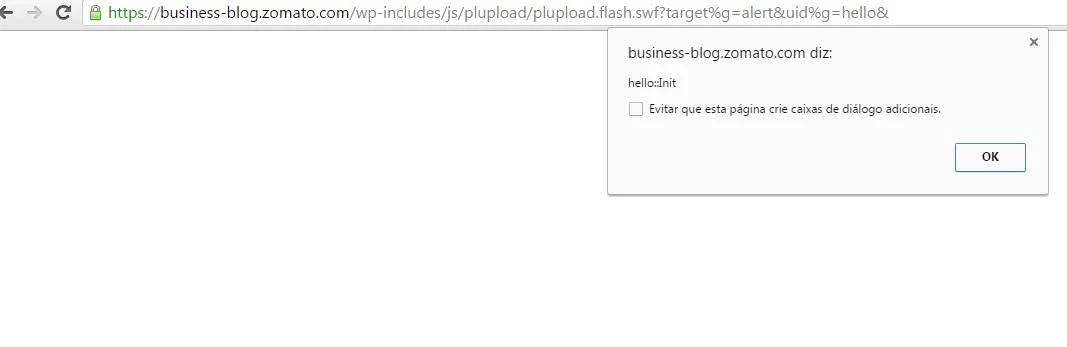
- Open https://business-blog.zomato.com/wp-includes/js/plupload/plupload.flash.swf?target%g=alert&uid%g=hello&
- Payload is executed
Check the attached screenshot.
Solution:
- Update WordPress to 4.5.2
- Update Plupload to latest version once released
Feel free to contact me if you need further assistance.
Best, -David Sopas
Attachments
Not written yet. The AI write-up for this report has not been written yet. The Original tab links to the source.
How it worked
Root cause
Likely an outdated version of the Plupload library (bundled with WordPress) that failed to sanitise user input in the Flash SWF file, allowing script injection.
Impact
A crafted URL caused a payload to execute in the victim's browser.
What the attacker needed
Victim clicks a crafted link
How it was found
- Open a modern browser such as Chrome or Firefox.
- Visit the vulnerable URL on business-blog.zomato.com with a crafted query string.
- Observe that the injected JavaScript executes.
Explained by bugbounty.wiki with AI from the original and checked against quotes from it; it can still be wrong. Read the original before relying on a detail.
Not written yet. The AI write-up for this report has not been written yet. The Original tab links to the source.
XSS is a flaw where a site lets an attacker inject code into a page others view. Here a crafted link executed a payload in the browser.
What is XSS?
Script an attacker supplies runs in another user's browser, on the target's origin, with that user's session.






