[parcel.grab.com] DOM XSS at /assets/bower_components/lodash/perf/
The lodash performance test page read the build and other GET parameters and wrote them into the page with document.write without encoding. An attacker could craft a link that runs script in the victim's browser, giving DOM-based cross-site scripting.

- Triaged in under an hour
- Fixed in 2 days
- Paid in 4 days
- Disclosed after 35 days
Summary: DOM Based XSS (or as it is called in some texts, “type-0 XSS”) is an XSS attack wherein the attack payload is executed as a result of modifying the DOM “environment” in the victim’s browser used by the original client side script, so that the client side code runs in an “unexpected” manner (Source)
Description: It is observed in https://parcel.grab.com/assets/bower_components/lodash/perf/ endpoint that the value given in build and other GET parameters are accessed by client side script and written on page using document.write without output encoding - resulting DOM XSS.
Vulnerable client side cod in page:
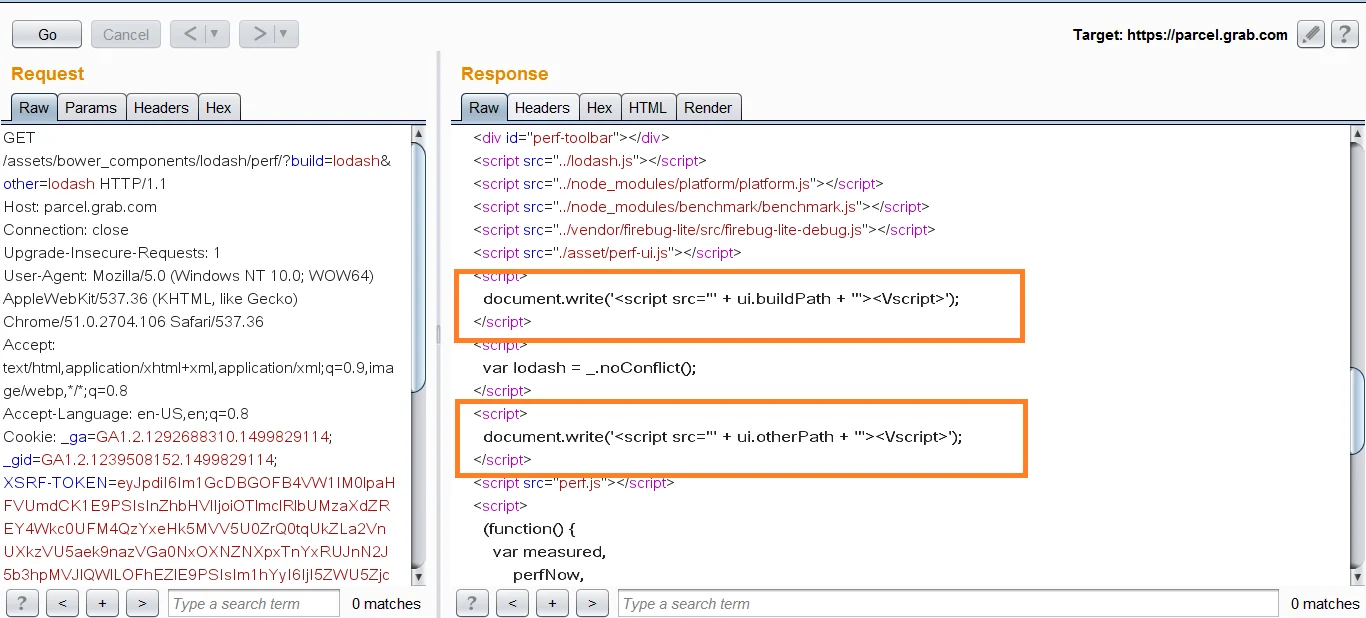
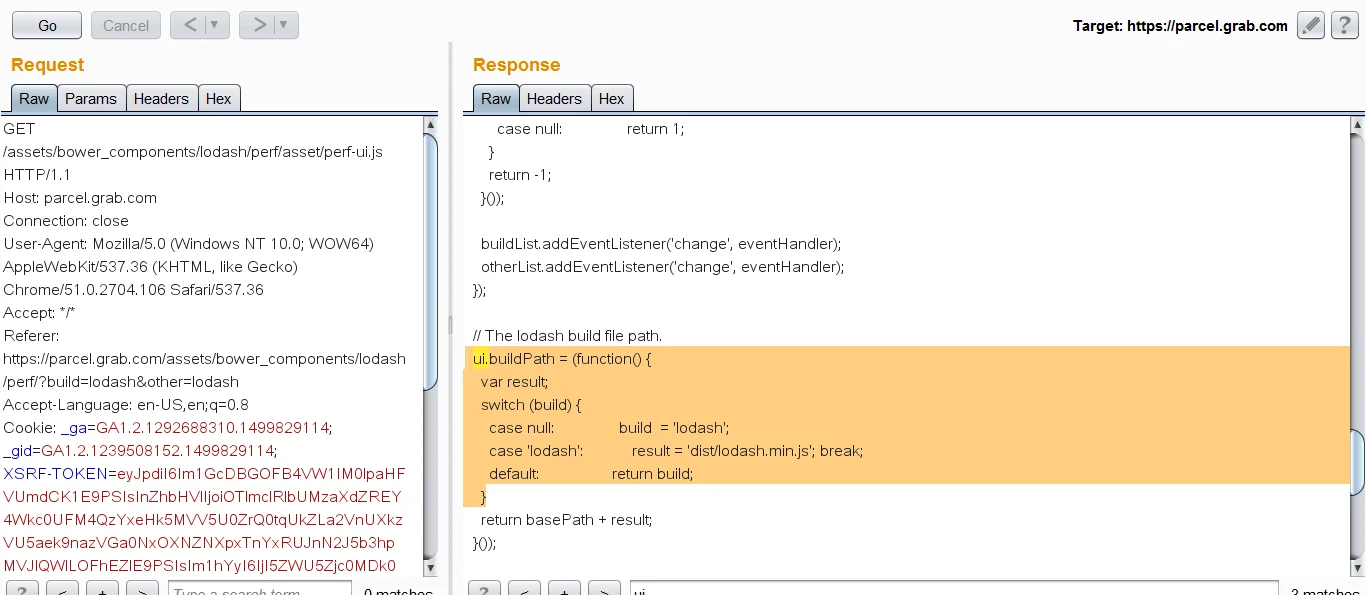
which will track back to script source - in switch default value has been set to build which will be same as user injected in parameter.
(Script link: https://parcel.grab.com/assets/bower_components/lodash/perf/asset/perf-ui.js)
Browsers Verified In:
- Mozilla Firefox (Latest)
Steps To Reproduce:
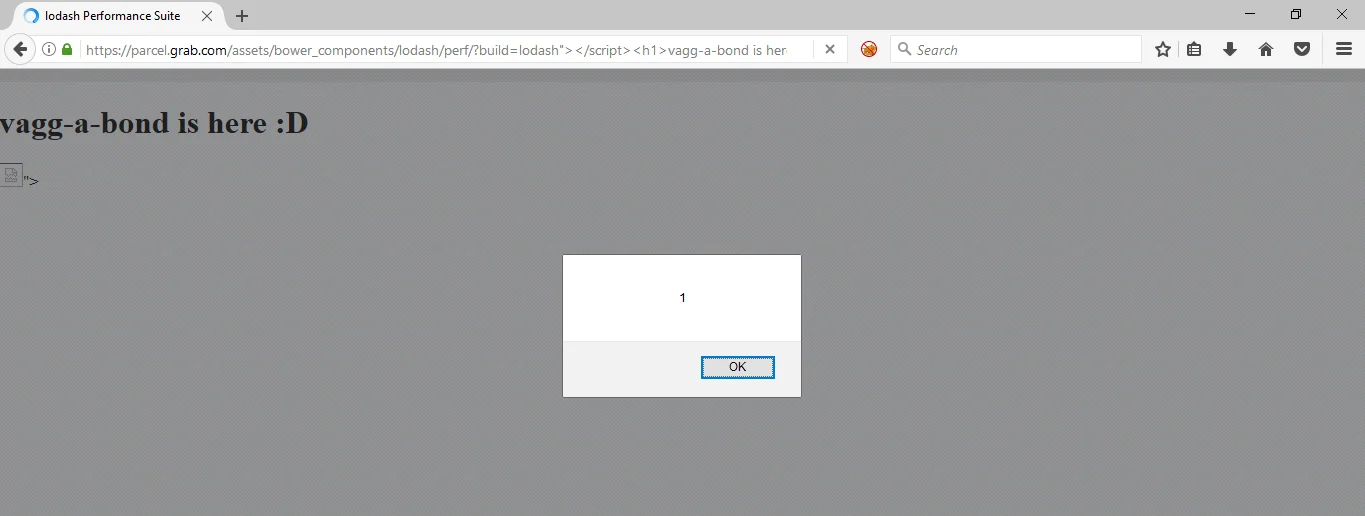
Open any of below links in Mozilla Firefox and observe the script execution.
Injected in build GET parameter:
Injected in other GET parameter:
Supporting Material/References:
Execution Screenshot:
Not written yet. The AI write-up for this report has not been written yet. The Original tab links to the source.
How it worked
Root cause
The client-side script inserted user-controlled query parameter values into the page via document.write without output encoding.
Impact
An attacker could run script in a victim's browser by getting them to open a crafted link, though the report only verified this in Firefox.
What the attacker needed
Victim opens a crafted link; Firefox browser
Explained by bugbounty.wiki with AI from the original and checked against quotes from it; it can still be wrong. Read the original before relying on a detail.
Not written yet. The AI write-up for this report has not been written yet. The Original tab links to the source.
A web page can build itself in the browser using a script. This page took text from the address bar and pasted it straight into the page without cleaning it. Because of that, a crafted link could make the browser run code the attacker chose, which is called cross-site scripting.
What is XSS?
Script an attacker supplies runs in another user's browser, on the target's origin, with that user's session.





