Email Spoofing
The report claims that emails can be sent with a forged sender address matching a Gratipay support address, making them appear to originate from Gratipay. An attacker could use this to send phishing emails that look legitimate to recipients.

- Disclosed after under an hour
Hey Gratipay, It appears that spoofed email can be sent from 1 of your emails.
###The following email is vulnerable:
###Information
Email spoofing is the forgery of an email header so that the message appears to have originated from someone or somewhere other than the actual source. Email spoofing is a tactic used in phishing and spam campaigns because people are more likely to open an email when they think it has been sent by a legitimate source. The goal of email spoofing is to get recipients to open, and possibly even respond to, a solicitation.
###Steps to Reproduce
Go to https://emkei.cz/. Write down [email protected] or any emails stated above to From Email field. Write down the test address(where you want to check the spoofed email) to To field. An email will be send to your test address from [email protected]. Proof of Concept
###Screenshot Email from: [email protected].
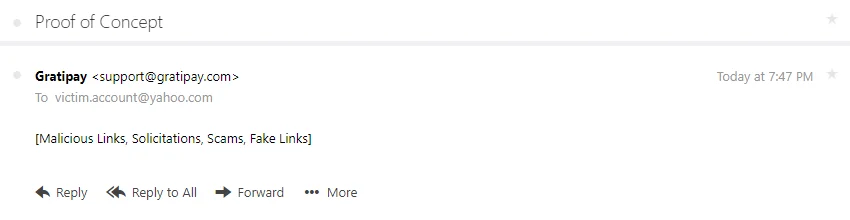
PS: As you can see, I used my Yahoo account as victim account and this is terrible to your clients who still using Yahoo (still a lot of them) as their email provider. It's because the email was sent directly to my inbox which is a trusted folder unlike spam so they will think that this spoofed email is legitimate.
Thank you for time and consideration you spent for reading my report.
Regards,
Not written yet. The AI write-up for this report has not been written yet. The Original tab links to the source.
How it worked
Root cause
Likely the domain lacks email authentication (such as SPF, DKIM, or DMARC) that would let receiving servers detect forged sender addresses.
Impact
An attacker could send phishing emails that appear to come from Gratipay, potentially tricking recipients into trusting the message.
What the attacker needed
Access to an email spoofing service; victim's email provider does not block spoofed mail
How it was found
- Go to the email spoofing website.
- Enter the Gratipay support address in the From field.
- Enter a test address in the To field.
- Send the email and observe it arrives from the Gratipay address.
Explained by bugbounty.wiki with AI from the original and checked against quotes from it; it can still be wrong. Read the original before relying on a detail.
Not written yet. The AI write-up for this report has not been written yet. The Original tab links to the source.
Email spoofing means making an email look like it came from someone else by faking the 'From' address. Here, the reporter used a public website to send an email that appeared to come from a Gratipay support address. This can trick people into trusting phishing messages.
What is Misconfiguration?
Settings left unsafe: exposed panels, open storage buckets, debug modes, default credentials.



