upgrade Aspen on inside.gratipay.com to pick up CR injection fix
The web server reflected a carriage return character from the URL path into an HTTP response header, allowing an attacker to inject arbitrary headers such as Set-Cookie. In Internet Explorer 11 this could be used to set cookies for the site.
 Originally disclosed on HackerOne
- Triaged in 14 days
- Fixed in 9 months
- Paid in 43 days
- Disclosed after 10 months
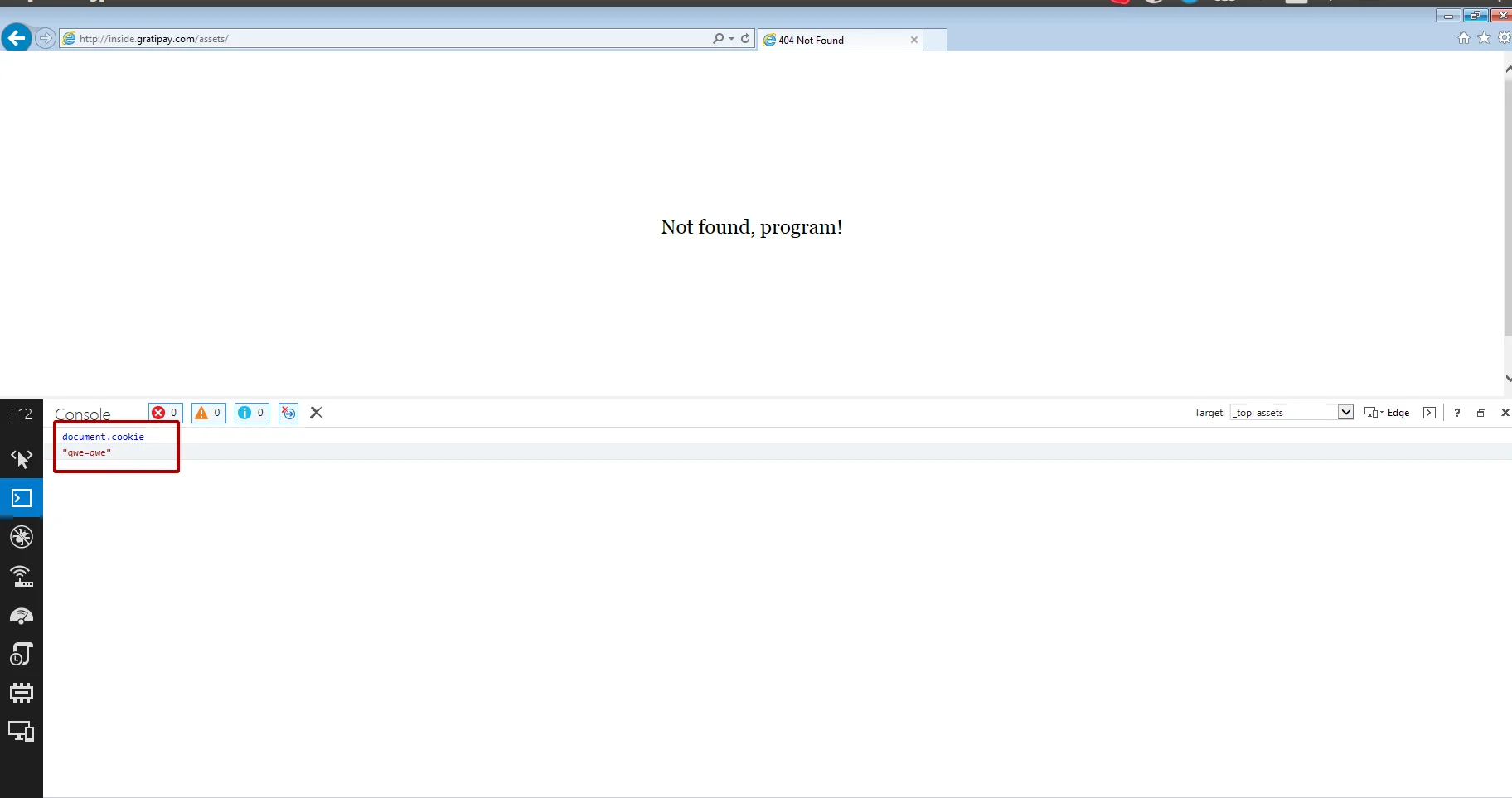
- Using IE11, open DevTools and start network capture
- visit the following URL:
http://inside.gratipay.com/assets/%0dSet-Cookie:%20qwe=qwe%0dq
- find a 'qwe' cookie set in the response
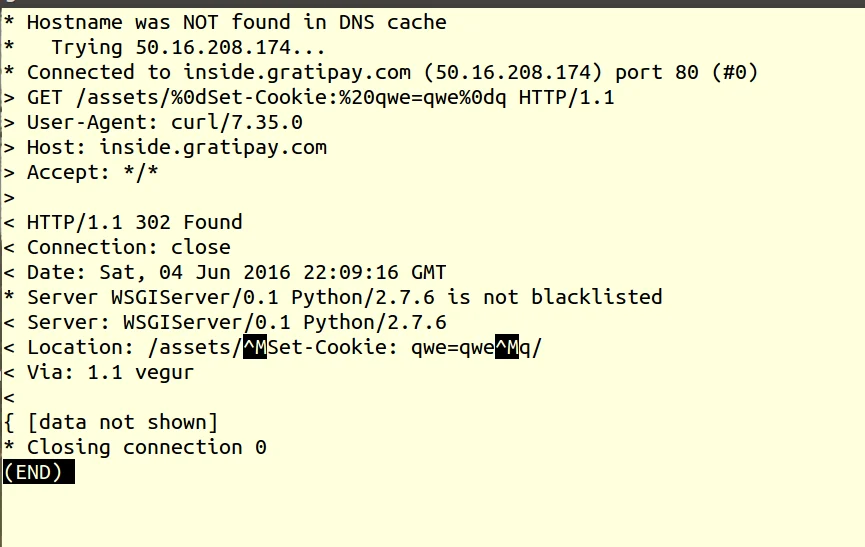
There is a 0x0d character injected, which can be used as a header delimiter in IE. To see this behaviour using Curl, you can use the following command: curl -s -v 'http://inside.gratipay.com/assets/%0dSet-Cookie:%20qwe=qwe%0dq' 2>&1|less
Screenshots of Curl output and DevTools are attached.
Attachments
Not written yet. The AI write-up for this report has not been written yet. The Original tab links to the source.
How it worked
Impact
An attacker could set cookies for the site in Internet Explorer 11; the report does not show impact in other browsers.
What the attacker needed
Victim uses Internet Explorer 11; victim visits a crafted URL
How it was found
- Open Internet Explorer 11 and start network capture in DevTools.
- Visit a URL containing an encoded carriage return followed by a Set-Cookie header value.
- Observe that a cookie named qwe is set in the response.
Explained by bugbounty.wiki with AI from the original and checked against quotes from it; it can still be wrong. Read the original before relying on a detail.
Not written yet. The AI write-up for this report has not been written yet. The Original tab links to the source.
When a web server sends a response, it includes headers that tell the browser things like what cookies to store. If a user-supplied part of the URL is copied into a header without cleaning, an attacker can sneak in extra header lines. Here a carriage return character in the URL let the attacker add a Set-Cookie header, which Internet Explorer 11 accepted.
What is Misconfiguration?
Settings left unsafe: exposed panels, open storage buckets, debug modes, default credentials.




