Information disclosure (system username, server info) in the x-amz-meta-s3cmd-attrs response header on data.gov
A web endpoint on data.gov returned an S3 metadata response header that exposed the system username and other file attributes used when the object was uploaded. An attacker could read this to learn internal system details such as the account name used to place files in the bucket.
 Originally disclosed on HackerOne
- Disclosed after 2 days
Hi Team,
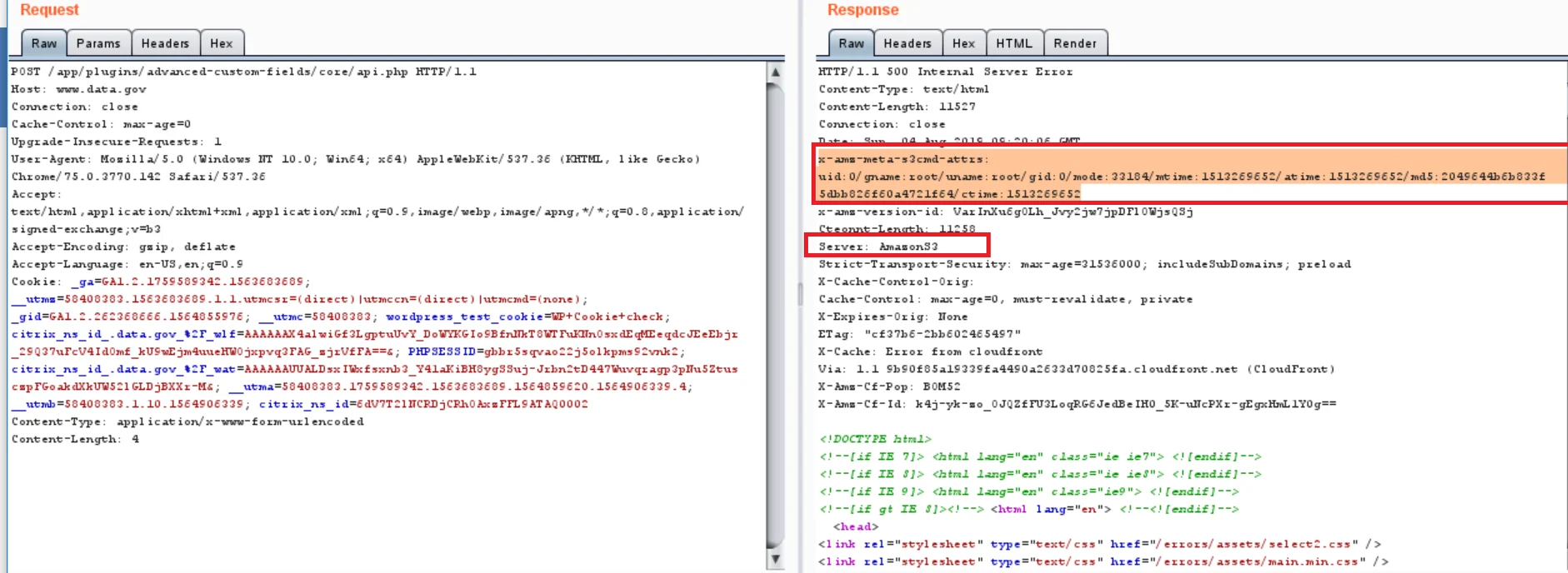
I noticed, that the x-amz-meta-s3cmd-attrs response header returns sensitive information, like system username on data.gov
x-amz-meta-s3cmd-attrs: uid:0/gname:root/uname:root/gid:0/mode:33184/mtime:1513269652/atime:1513269652/md5:2049644b6b833f5dbb826f60a4721f64/ctime:1513269652
Server: AmazonS3
Steps to reproduce:
- POST https://www.data.gov/app/plugins/advanced-custom-fields/core/api.php
- Intercept the request in burp and see the response header values with system username information
Suggested fix This issue lies in the s3cmd repository: https://github.com/s3tools/s3cmd/issues/67 where suggested fix is adding the -- no-preserve command.
Impact
The attacker can gain sensitive information about system username. In this case it was root, so i marked impact as Low. Still, the developers can have a good reason to not expose this information in the response header.
Attachments
Not written yet. The AI write-up for this report has not been written yet. The Original tab links to the source.
How it worked
Root cause
Likely the upload tool s3cmd preserved local file attributes as S3 object metadata by default, and the application returned that metadata in response headers.
Impact
The attacker could learn the system username and file attributes; the reporter rated this as low impact because the exposed account was root and no direct access was gained.
What the attacker needed
None
The fix
The upload tool should be run with the option that stops it preserving local file attributes as object metadata.
How it was found
- Send a POST request to the advanced-custom-fields API endpoint on data.gov.
- Inspect the response headers in an intercepting proxy.
Explained by bugbounty.wiki with AI from the original and checked against quotes from it; it can still be wrong. Read the original before relying on a detail.
Not written yet. The AI write-up for this report has not been written yet. The Original tab links to the source.
When files are uploaded to Amazon S3 storage, extra labels called metadata can be attached to them. Here the upload tool stored details about the computer that did the upload, including the account name, and the server sent those details back to anyone who asked. That leaks information about the internal system, though not passwords or direct access.
What is Info disclosure?
Data the application should keep private (personal data, internal details, other users' records) reaches someone it should not.



