[kb.informatica.com] Dom Based xss
A search page built a breadcrumb link by inserting the full page URL into the page's HTML without sanitising it. An attacker could craft a link whose fragment contains an image tag with an error handler, so the script runs in the victim's browser on that domain.

- Triaged in 25 hours
- Fixed in 7 months
- Disclosed after 3.0 years
Hi! I found Dom based xss on this subdomain https://kb.informatica.com javaScript security is very important, even more in portals where users store their personal data. Attackers can target those portals to find and exploit High-risk JavaScript vulnerabilities like Dom based xss vulnerabilities
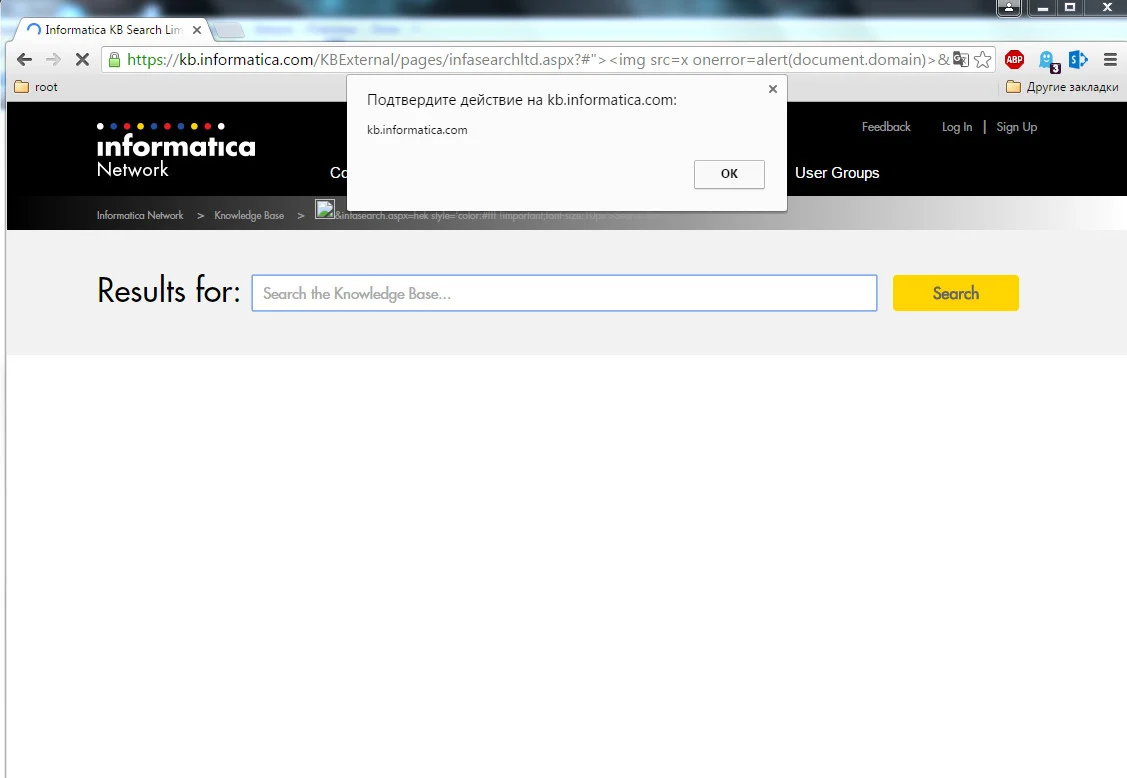
POC ,the vulnerable code javascript on this page https://kb.informatica.com/KBExternal/pages/infasearchltd.aspx? view-source: string 1406 /*google chrome
var li = document.createElement("li"); strChild = "<a href="+document.URL+" style='color:#fff !important;font-size:10px'>Search Results</a>"; li.innerHTML = strChild; document.getElementById('DynamicBreadcrumb').appendChild(li); }
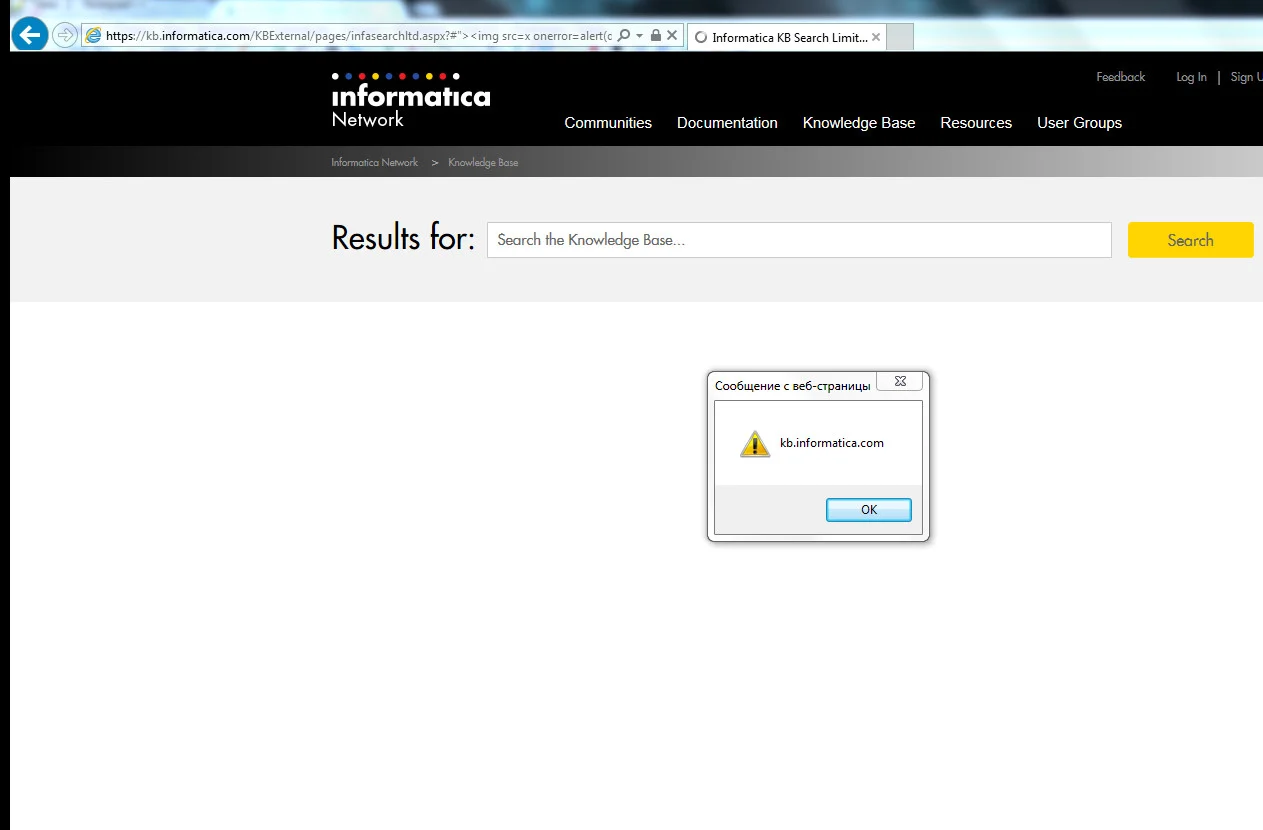
attack scenario the latest versions of browsers google chrome https://kb.informatica.com/KBExternal/pages/infasearchltd.aspx?#"><img src=x onerror=alert(document.domain)>&infasearch.aspx=hek IE 11 https://kb.informatica.com/KBExternal/pages/infasearchltd.aspx?#"><img src=x onerror=alert(document.domain)>&infasearch.aspx=hek
Attachments
Not written yet. The AI write-up for this report has not been written yet. The Original tab links to the source.
How it worked
Root cause
Likely the page concatenated document.URL into an innerHTML assignment without encoding, so attacker-controlled fragment content became markup and script.
Impact
An attacker could run script in the knowledge base domain's context; the report only demonstrates an alert.
What the attacker needed
Victim opens a crafted link; JavaScript enabled in the browser
The fix
The page should avoid inserting the URL via innerHTML, using DOM methods or encoding instead.
Explained by bugbounty.wiki with AI from the original and checked against quotes from it; it can still be wrong. Read the original before relying on a detail.
Not written yet. The AI write-up for this report has not been written yet. The Original tab links to the source.
The page took the address bar's own URL and pasted it straight into the page as HTML. Because the part after the # sign is controlled by whoever sends the link, an attacker can put HTML in it, and the browser runs any script inside. This is called DOM-based cross-site scripting: the flaw lives in the page's own JavaScript rather than on the server.
What is XSS?
Script an attacker supplies runs in another user's browser, on the target's origin, with that user's session.







