Dom Based Xss
A DOM-based cross-site scripting flaw existed in the prettyPhoto plugin used on a subdomain, because the URL fragment was inserted into the page without proper filtering. An attacker could craft a link that runs script in the victim's browser when opened.

- Triaged in 2 hours
- Fixed in 6 days
- Paid in 19 days
- Disclosed after 47 days
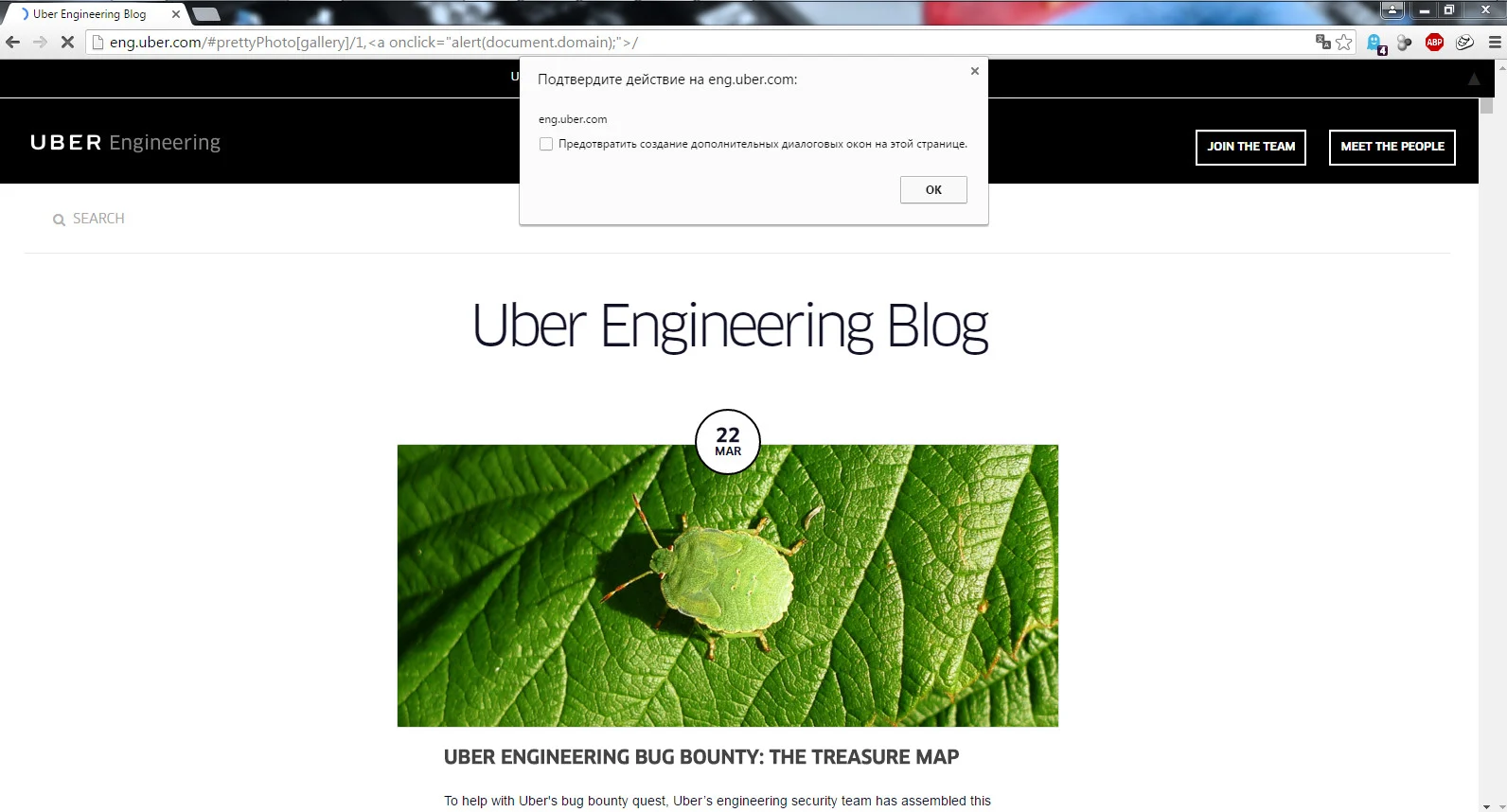
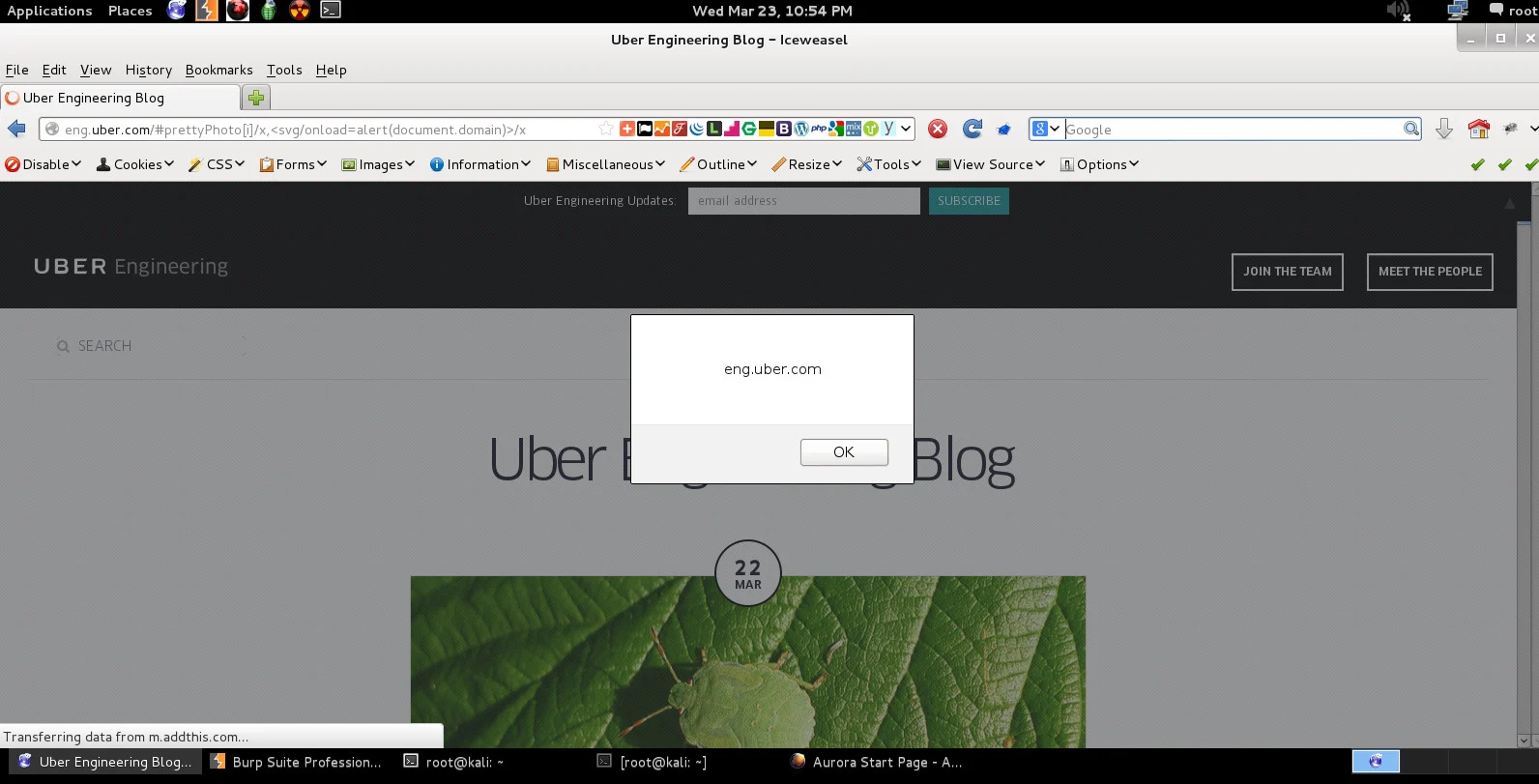
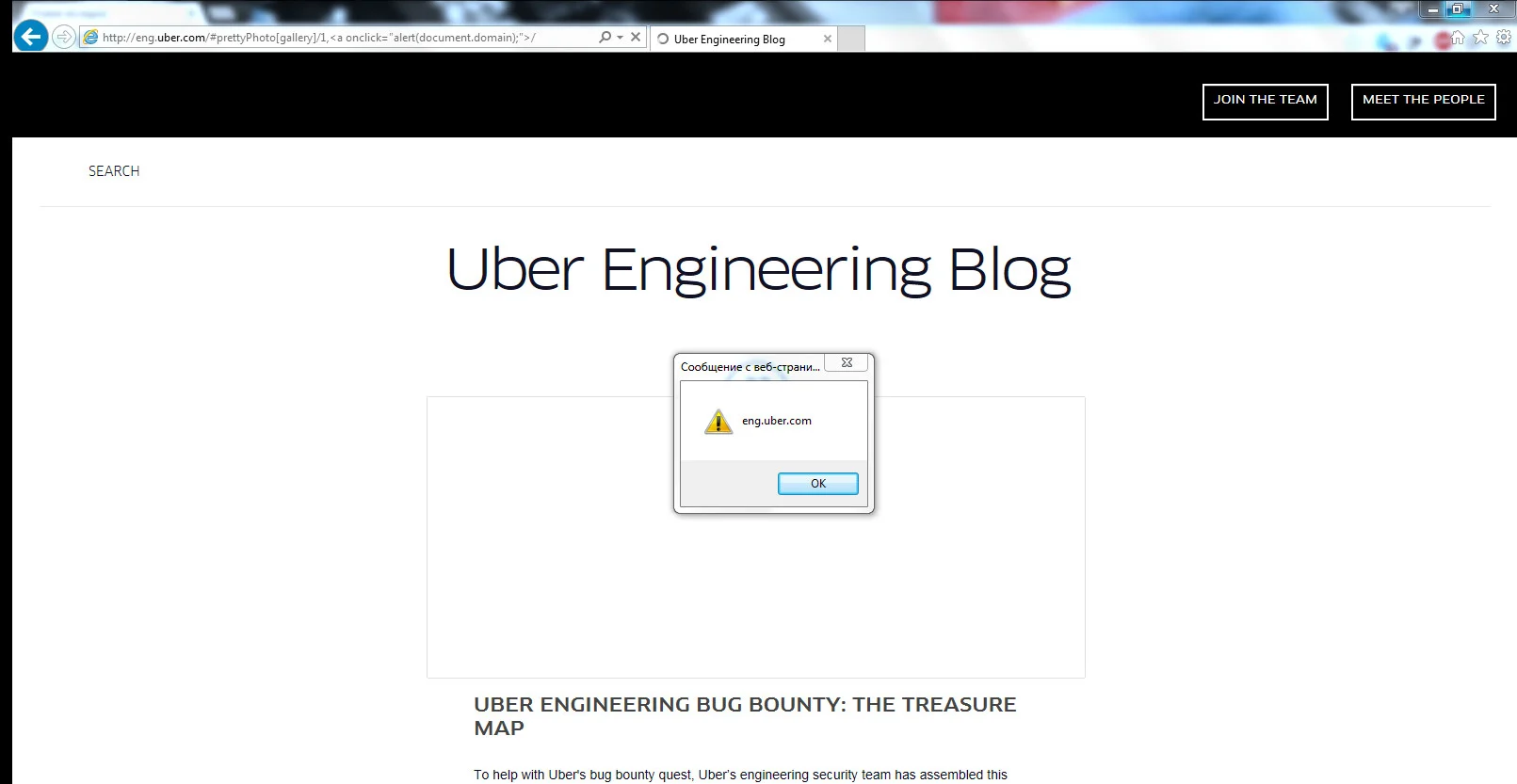
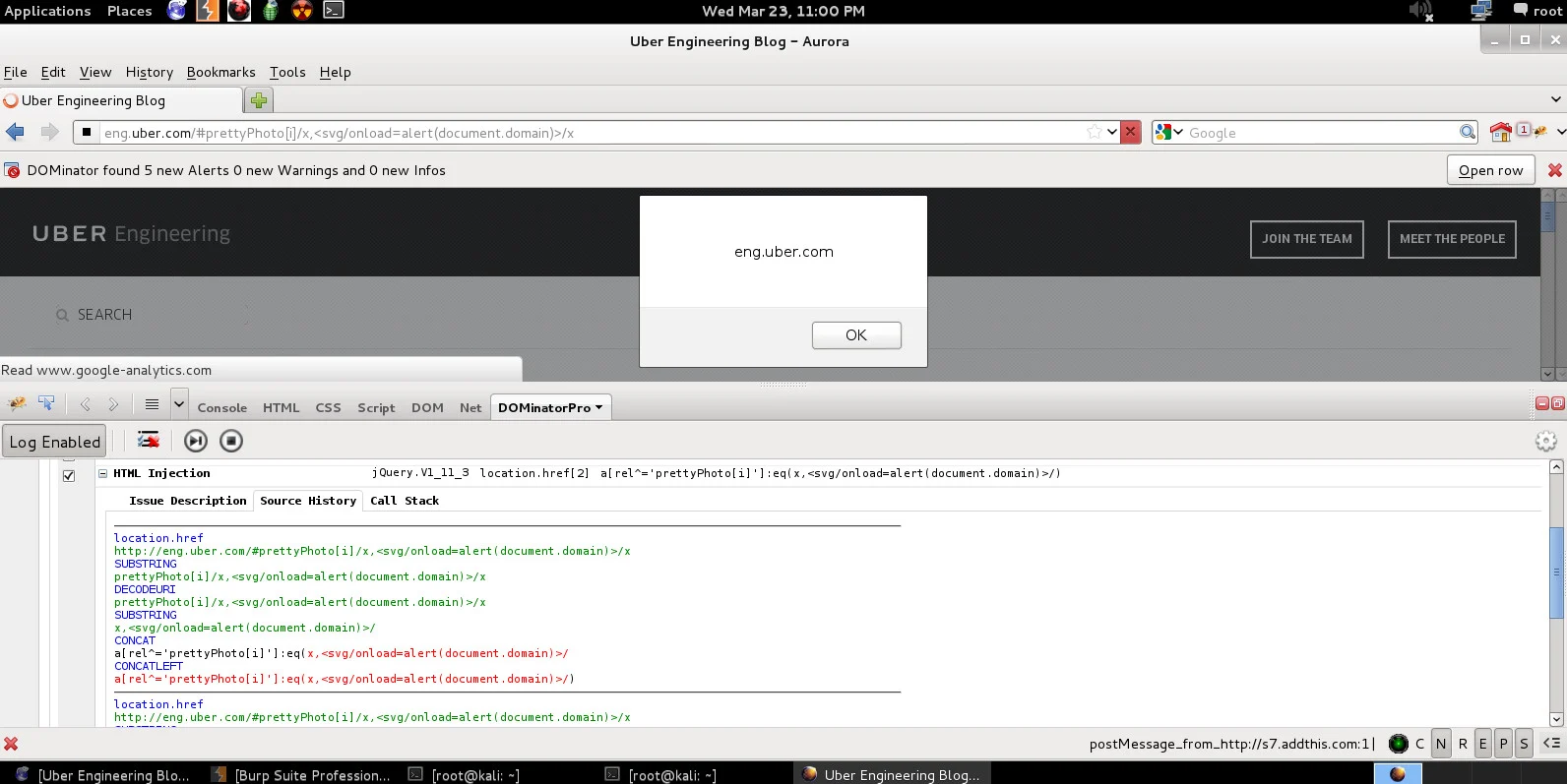
Hi. found dom xss on this subdomain eng.uber.com. you are using a vulnerable plugin prettyPhoto.. This XSS will work in Firefox,Chrome - Google and IE last version ! And this is very dangerous! POC Firefox vector http://eng.uber.com/#prettyPhoto[i]/x,<svg/onload=alert(document.domain)>/x POC Google and IE http://eng.uber.com/#prettyPhoto[gallery]/1,<a onclick="alert(document.domain);">/
Add screenshot How to fix the vulnerability,upgrade the plugin or add the filter hashIndex = parseInt(hashIndex) hashRel = hashRel.replace(/([ #;&,.+*~':"!^$=>|/])/g,'$1');
Attachments
Not written yet. The AI write-up for this report has not been written yet. The Original tab links to the source.
How it worked
Root cause
Likely the prettyPhoto plugin read the URL fragment and inserted it into the page without sanitising it, allowing HTML and script to be interpreted.
Impact
An attacker could run script in the site's context for users who open a crafted link; the report says it works in Firefox, Chrome and IE.
What the attacker needed
Victim opens a crafted link
The fix
The plugin should be upgraded or the fragment value should be filtered before being inserted into the page.
How it was found
- Open the target subdomain in a browser.
- Append a crafted fragment starting with prettyPhoto and containing an SVG with an onload handler.
- The browser executes the script and shows an alert with the document domain.
Explained by bugbounty.wiki with AI from the original and checked against quotes from it; it can still be wrong. Read the original before relying on a detail.
Not written yet. The AI write-up for this report has not been written yet. The Original tab links to the source.
A DOM-based XSS bug happens when a page takes part of the address after the # and puts it into the page without cleaning it. An attacker can make a link that runs their script when someone opens it.
What is XSS?
Script an attacker supplies runs in another user's browser, on the target's origin, with that user's session.






