Stored XSS via Discussion Title and Send as Email attribute in [marketplace.informatica.com]
A stored cross-site scripting flaw existed in the discussion title field on a marketplace site. An attacker could inject script that executed when another user chose to send the discussion as an email.

- Triaged in 23 days
- Fixed in 28 days
- Disclosed after 2 months
POC
- Under "Your Stuff" choose to "Create a Discussion/Ask a question"
- Choose a space to submit your discussion/question. Any space will do.
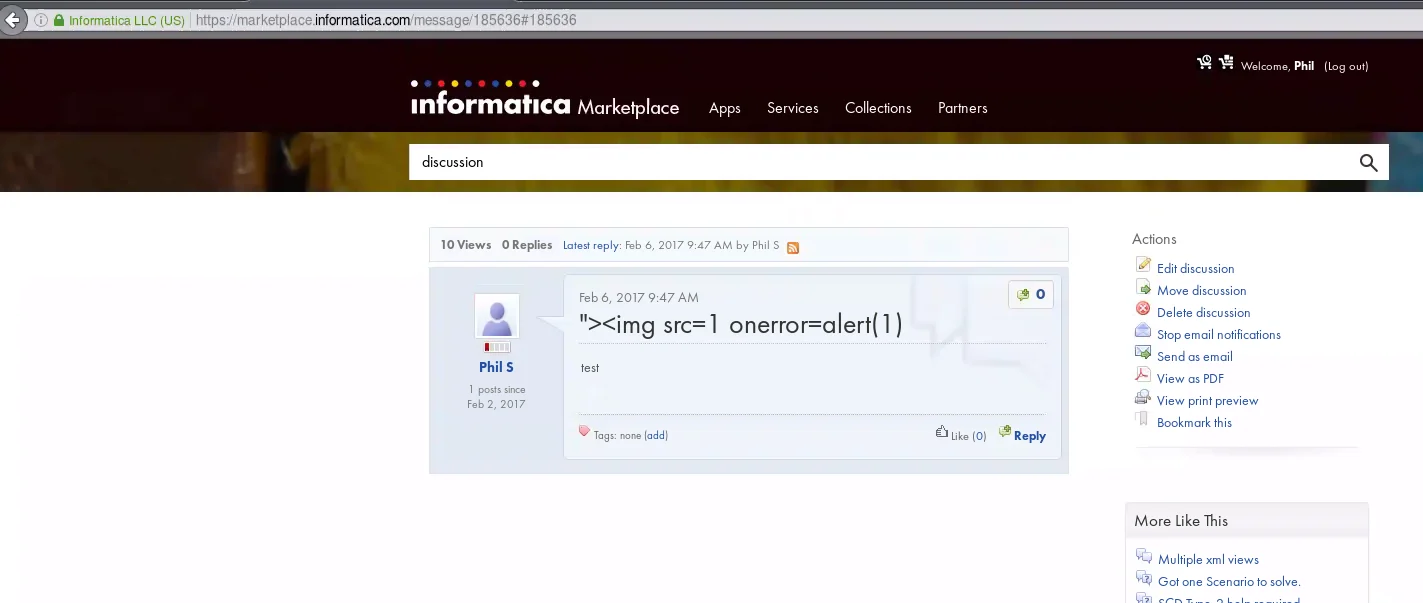
- Title your discussion with the payload
"><img src=x onerror=alert(1)> - Choose "Post message" to publish.
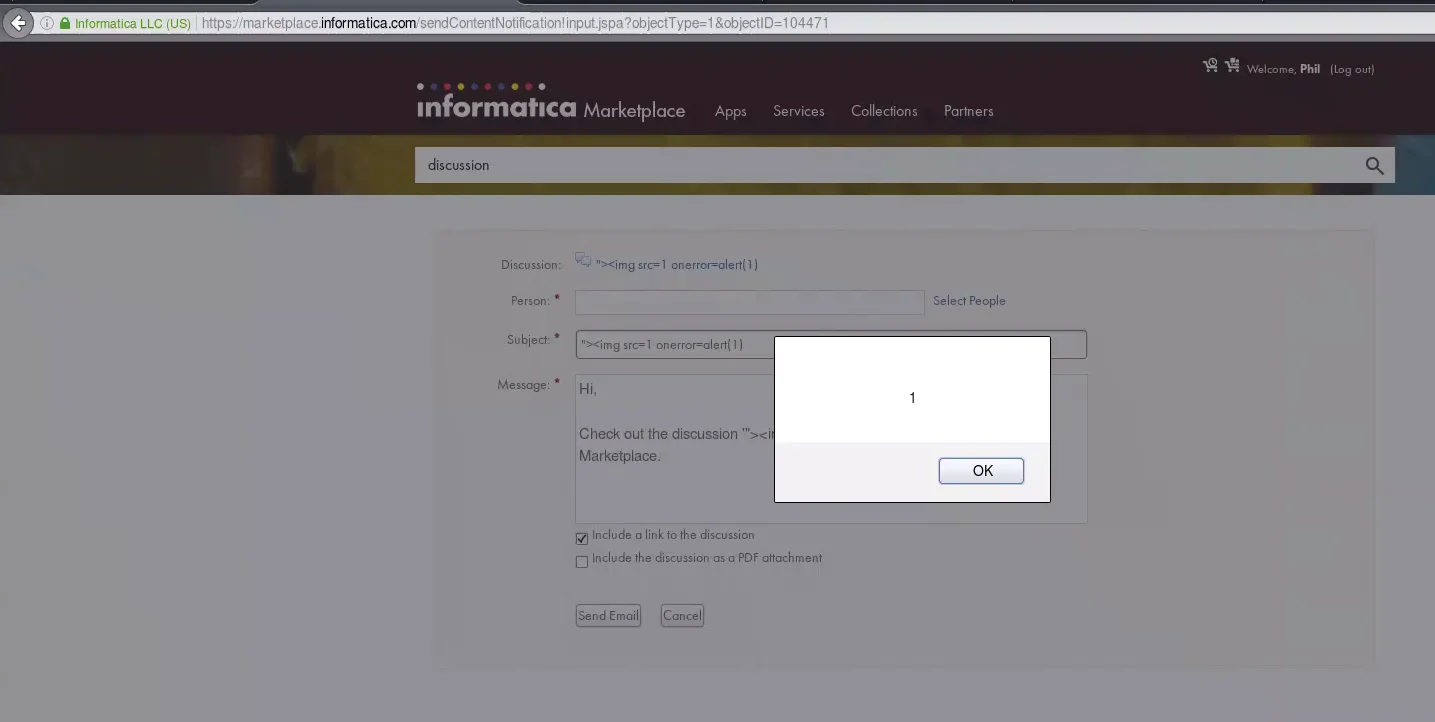
- View the message as any user. Under "Actions" choose to "Send as Email"
- Observe XSS poc alert box"
Please let me know if you have any questions.
Attachments
Not written yet. The AI write-up for this report has not been written yet. The Original tab links to the source.
How it worked
Root cause
Likely the discussion title was stored and later rendered into the email view without proper output encoding or sanitisation.
What the attacker needed
A user account able to create discussions; victim views the discussion and sends it as email
How it was found
- Create a discussion or question under 'Your Stuff'.
- Pick any space to submit it.
- Set the discussion title to a script payload.
- Publish the message.
- View the message as any user and choose 'Send as Email' under 'Actions'.
- Observe the alert box.
Explained by bugbounty.wiki with AI from the original and checked against quotes from it; it can still be wrong. Read the original before relying on a detail.
Not written yet. The AI write-up for this report has not been written yet. The Original tab links to the source.
Cross-site scripting (XSS) is when a website displays user input without making it safe, so a browser runs it as code. Here, a discussion title could contain a script that ran when someone used the 'Send as Email' action, letting the attacker run code in that person's browser.
What is XSS?
Script an attacker supplies runs in another user's browser, on the target's origin, with that user's session.




