Unchecking hidden parameter is vulnerable to XSS-attack
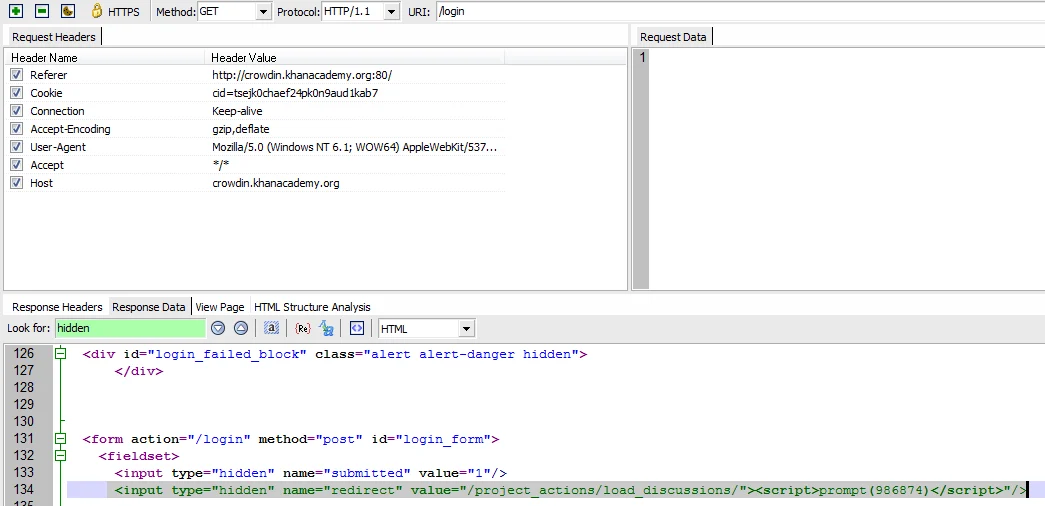
A hidden redirect parameter on the login page was not sanitised, so a crafted value could break out of the input tag and inject script. An attacker could use this to run JavaScript in a victim's browser and try to gather their data.

- Disclosed after 2 months
Unchecking parameter <input type="hidden" name="redirect">
Malicious users may inject JavaScript, VBScript, ActiveX, HTML or Flash into a vulnerable application to fool a user in order to gather data from them.
http://crowdin.khanacademy.org:/login
PoC <input type="hidden" name="redirect" value="/project_actions/load_discussions/"><script>prompt(986874)</script>"/>
Attachments
Not written yet. The AI write-up for this report has not been written yet. The Original tab links to the source.
How it worked
Root cause
Likely the redirect parameter was reflected into the page inside a hidden input without encoding, allowing the value to close the tag and inject markup.
Impact
An attacker could run script in a victim's session on the login page, potentially fooling the user into giving up data.
What the attacker needed
Victim visits a crafted login link
Explained by bugbounty.wiki with AI from the original and checked against quotes from it; it can still be wrong. Read the original before relying on a detail.
Not written yet. The AI write-up for this report has not been written yet. The Original tab links to the source.
A web page can include hidden fields carrying values the user never sees. If the site puts an unsanitised value into such a field, an attacker can add extra code that the browser then runs.
What is XSS?
Script an attacker supplies runs in another user's browser, on the target's origin, with that user's session.