CRLF Injection
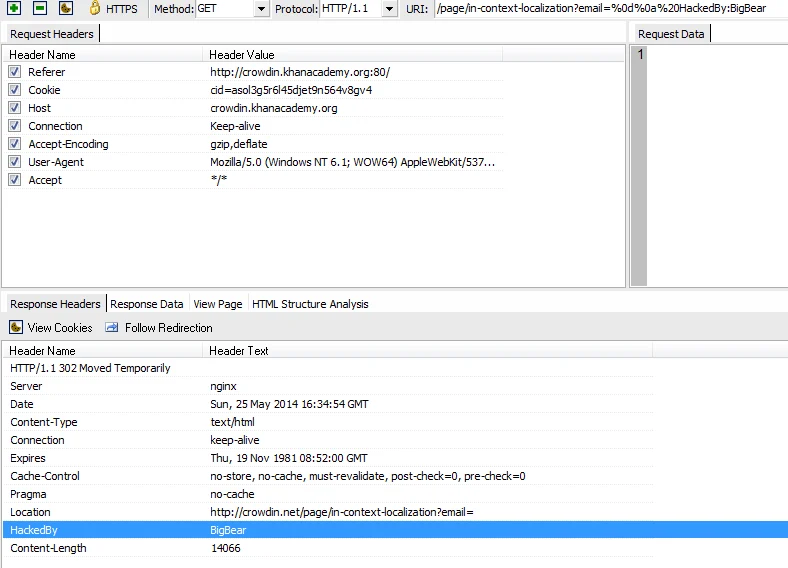
A URL parameter on a Khan Academy Crowdin page was reflected into an HTTP response header without sanitising carriage-return and line-feed characters, allowing an attacker to inject extra headers. The reporter suggests this could lead to session fixation or cross-site scripting, though no exploitation of those outcomes is shown.

- Disclosed after 2 months
Is it possible for a remote attacker to inject custom HTTP headers. For example, an attacker can inject session cookies or HTML code. This may conduct to vulnerabilities like XSS (cross-site scripting) or session fixation.
PoC https://crowdin.khanacademy.org/page/in-context-localization?email=%0d%0a%20InjectedBy:BigBear
Attachments
Not written yet. The AI write-up for this report has not been written yet. The Original tab links to the source.
How it worked
Root cause
Likely the application placed the email parameter value into an HTTP response header without stripping CR and LF characters.
Impact
An attacker could inject arbitrary HTTP response headers, which may enable session fixation or cross-site scripting, though the report does not demonstrate either outcome.
Explained by bugbounty.wiki with AI from the original and checked against quotes from it; it can still be wrong. Read the original before relying on a detail.
Not written yet. The AI write-up for this report has not been written yet. The Original tab links to the source.
When a web server builds a response, it separates the headers (metadata like cookies) from the body with special line-break characters. If a user-supplied value containing those characters is placed into a header, the server treats the extra text as new headers. Here the email parameter was reflected into a header, so an attacker could add their own header lines.
What is CSRF?
Another site makes a signed-in user's browser perform an action they did not intend.