Reflected XSS on error page on https://apps.topcoder.com/wiki/plugins/socialbookmarking/updatebookmark.action
The bookmarkPageId parameter on an error page did not validate input, so a crafted value containing an image tag with an error handler executed script in the victim's browser. An attacker could use this to steal cookies or run arbitrary code in the victim's browser.

- Triaged in 12 hours
- Fixed in 6 days
- Disclosed after 7 days
Hi :)
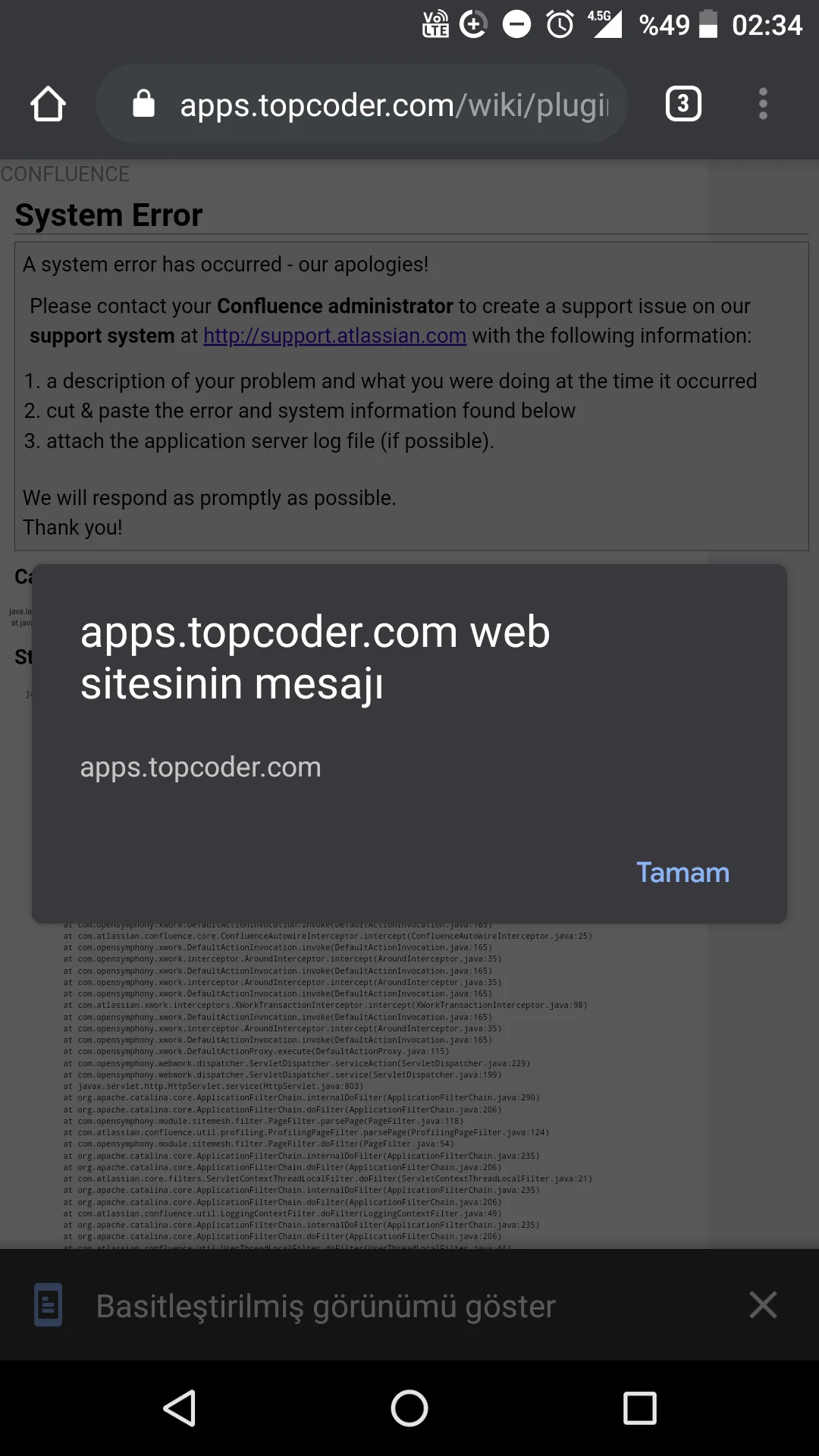
In https://apps.topcoder.com/wiki/plugins/socialbookmarking/updatebookmark.action bookmarkPageId parameter expects a number value. If you add XSS payload instead of number, an error page displays with XSS.
PoC
https://apps.topcoder.com/wiki/plugins/socialbookmarking/updatebookmark.action?bookmarkPageId="><img src=x onerror=alert(document.domain)>
Impact
XSS can use to steal cookies or to run arbitrary code on victim's browser.
Not written yet. The AI write-up for this report has not been written yet. The Original tab links to the source.
How it worked
Root cause
Likely the application reflected the bookmarkPageId parameter into the error page without validating or encoding it.
Impact
An attacker could steal cookies or run arbitrary code in the victim's browser.
What the attacker needed
Victim clicks a crafted link
How it was found
- Open the updatebookmark.action URL with a non-numeric bookmarkPageId value.
- The application shows an error page that includes the supplied value.
- The value is interpreted as HTML, so an image tag with an error handler runs script.
Explained by bugbounty.wiki with AI from the original and checked against quotes from it; it can still be wrong. Read the original before relying on a detail.
Not written yet. The AI write-up for this report has not been written yet. The Original tab links to the source.
A website page that shows an error message took a value from the web address and put it directly into the page without cleaning it. An attacker could craft a link that, when clicked, runs their own small program in the victim's browser. This kind of flaw is called reflected cross-site scripting, or XSS.
What is XSS?
Script an attacker supplies runs in another user's browser, on the target's origin, with that user's session.





