Possible content spoofing due to missing error page
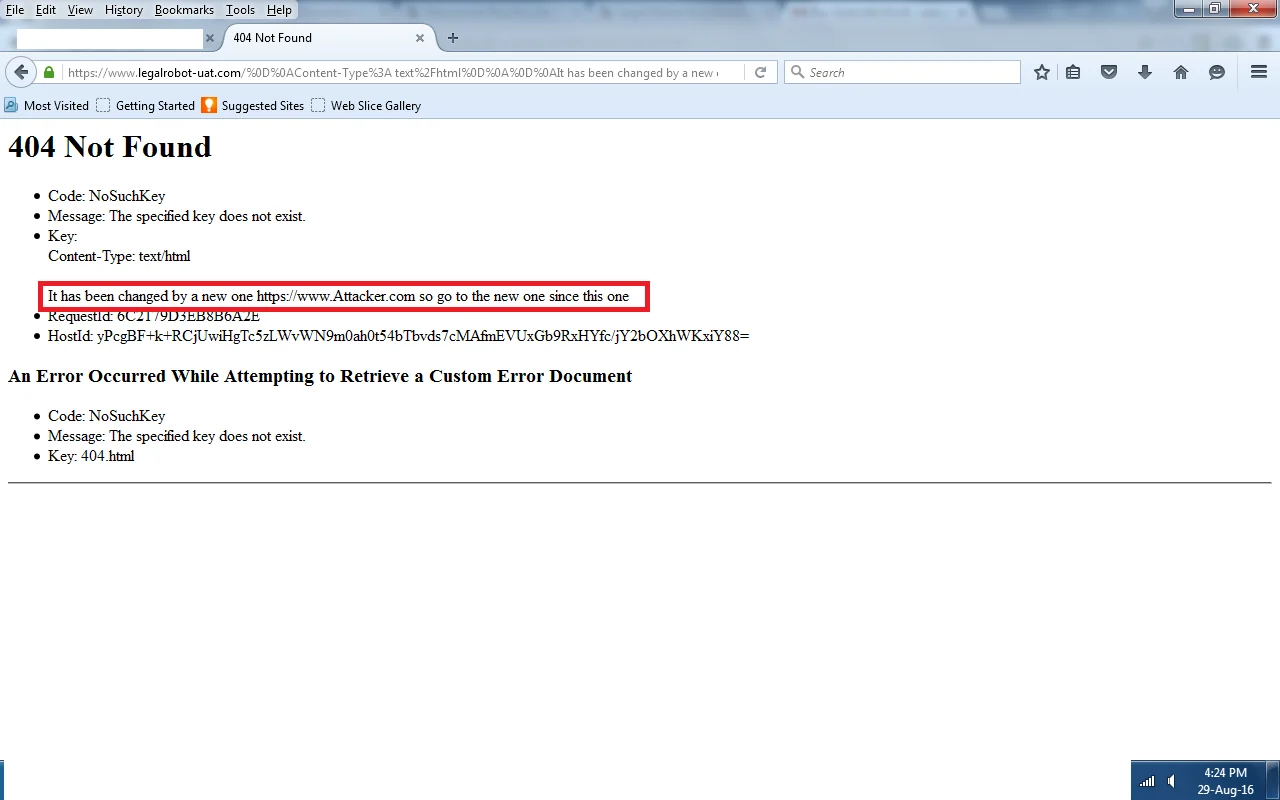
A crafted URL on the site displays misleading content, including a message directing users to another site.
 Originally disclosed on HackerOne
- Fixed in 7 days
- Paid in 7 days
- Disclosed after 8 days
the domain https://www.legalrobot-uat.com is vulnerable to content spoofing. visit the following link for POC.
kindly find attached image.
Attachments
Not written yet. The AI write-up for this report has not been written yet. The Original tab links to the source.
How it worked
Root cause
Likely the site displayed crafted URL content without proper handling, allowing spoofed text and links.
Impact
An attacker could make the error page show misleading text and a link to a malicious site, potentially tricking users into visiting it.
What the attacker needed
Victim clicks a crafted link
How it was found
- Craft a URL containing encoded carriage returns, a Content-Type header, and a spoofed message with a link.
- Visit the crafted URL on the target domain.
- Observe that the site displays the injected message and link.
Explained by bugbounty.wiki with AI from the original and checked against quotes from it; it can still be wrong. Read the original before relying on a detail.
Not written yet. The AI write-up for this report has not been written yet. The Original tab links to the source.
A website can be tricked into showing extra text or links from a crafted address, faking content on the real site.
What is UI spoofing?
The interface lies to the user: a framed page catches their clicks, or a browser shows the wrong address or a fake prompt. Paid when it leads to a sensitive action or convincing phishing.


