Weak Rate Limiting Controls in the (LOGIN) page Expose System to Brute Force and DoS Attacks
The login endpoint's rate limiting only counted repeated attempts against a single username, so an attacker could spread guesses across many usernames without being blocked. This allowed systematic password guessing that could eventually find valid credentials and lead to account takeover.

- Disclosed after 36 days
Summary:
The login page lacks proper rate limiting, allowing an attacker to easily perform a brute-force attack. This vulnerability enables the attacker to systematically try different username and password combinations until they successfully compromise any account, which poses a significant security risk.
Steps To Reproduce:
-
Navigate to the login page.
-
Attempt login with any valid credentials.
-
Capture the request using a proxy tool (e.g., Burp Suite).
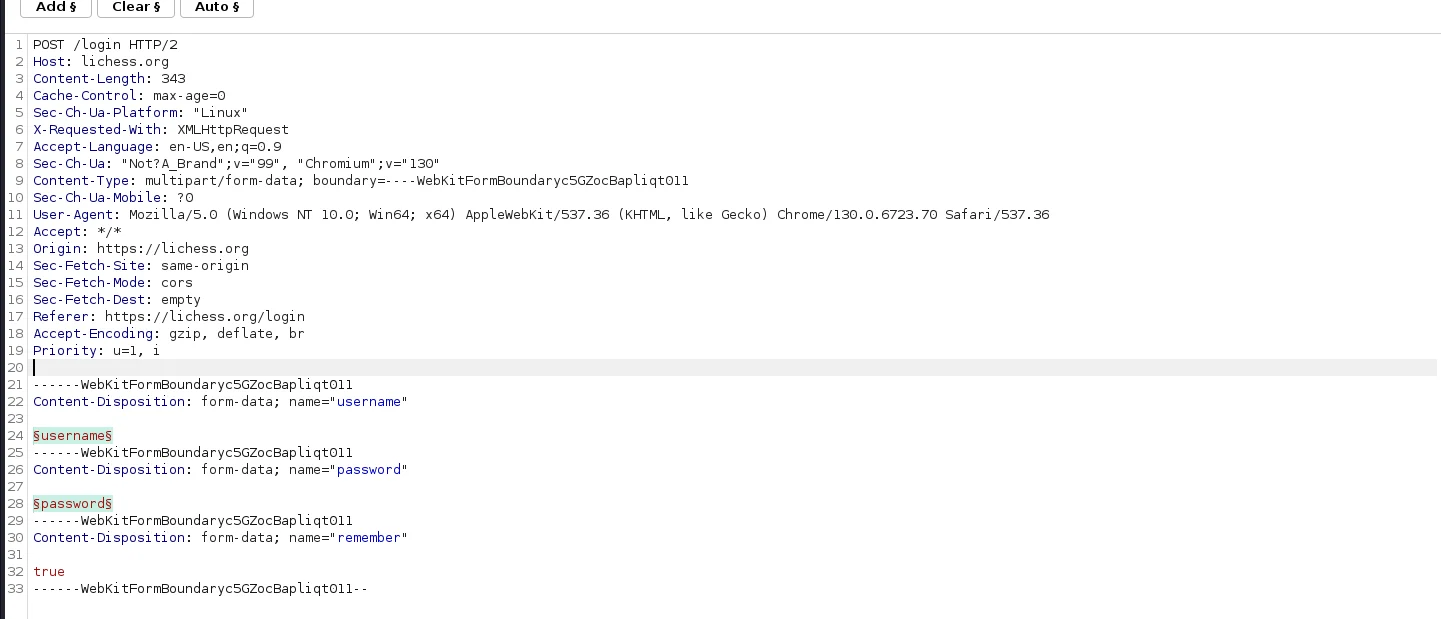
- Modify the captured request by deleting the token parameter and the cookies to make the request look like this:
==================================================================== POST /login HTTP/2 Host: lichess.org Content-Length: 343 Cache-Control: max-age=0 Sec-Ch-Ua-Platform: "Linux" X-Requested-With: XMLHttpRequest Accept-Language: en-US,en;q=0.9 Sec-Ch-Ua: "Not?A_Brand";v="99", "Chromium";v="130" Content-Type: multipart/form-data; boundary=----WebKitFormBoundaryc5GZocBapliqt011 Sec-Ch-Ua-Mobile: ?0 User-Agent: Mozilla/5.0 (Windows NT 10.0; Win64; x64) AppleWebKit/537.36 (KHTML, like Gecko) Chrome/130.0.6723.70 Safari/537.36 Accept: / Origin: https://lichess.org Sec-Fetch-Site: same-origin Sec-Fetch-Mode: cors Sec-Fetch-Dest: empty Referer: https://lichess.org/login Accept-Encoding: gzip, deflate, br Priority: u=1, i
------WebKitFormBoundaryc5GZocBapliqt011 Content-Disposition: form-data; name="username"
§username§ ------WebKitFormBoundaryc5GZocBapliqt011 Content-Disposition: form-data; name="password"
§password§ ------WebKitFormBoundaryc5GZocBapliqt011 Content-Disposition: form-data; name="remember"
true ------WebKitFormBoundaryc5GZocBapliqt011--
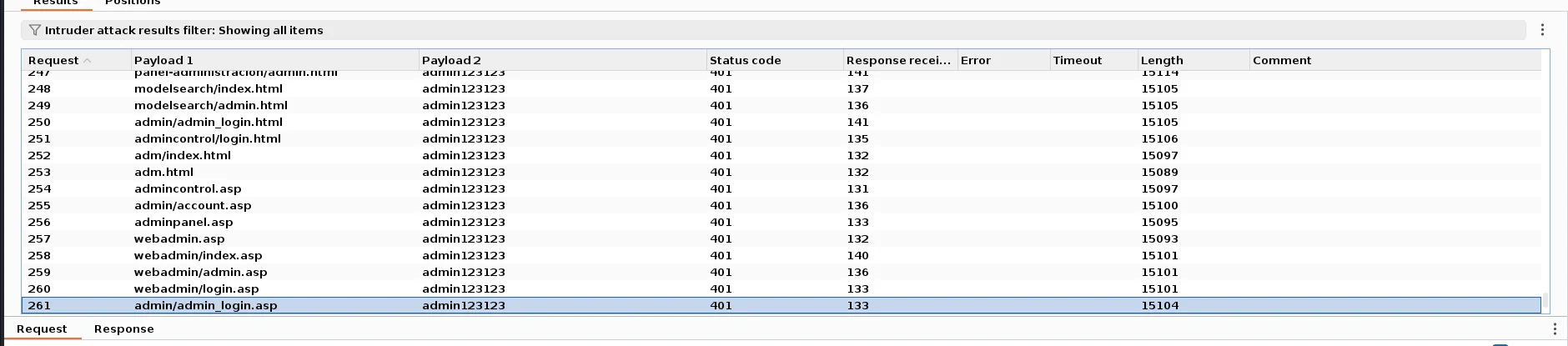
- Send the request to Burp's Intruder, adding a username wordlist for the "username" field and a password wordlist for the "password" field. Run the attack with the cluster bomb payload type.
+   The wordlists should be large and realistic, matching common usernames and passwords (this will prevent rate-limiting issues caused by a smaller wordlist).

   + A smaller wordlist will cause the app to respond with 429 Too Many Requests due to insufficient time between attempts.
-
Launch the attack, and you should eventually find a valid pair of credentials (response code 200 OK).
- Ensure auto encoding is turned off in Burp Suite, as the credentials in the request are in plaintext.
+ Note: The valid username will match many incorrect password attempts before the correct password is found and the app will not even feel that or make any reaction
Cause of the Vulnerability:
The vulnerability exists because the rate-limiting mechanism only checks for excessive requests to individual usernames. It does not account for multiple requests being sent to different usernames, allowing an attacker to bypass the rate-limiting by targeting a range of usernames. This creates an opportunity for a brute-force attack across a large set of accounts.
Supporting Material/References:

- [attachment / reference]
Impact
This vulnerability can lead to account takeover, privilege escalation, and the theft of sensitive user data.
Not written yet. The AI write-up for this report has not been written yet. The Original tab links to the source.
How it worked
Root cause
The rate-limiting mechanism only tracked excessive requests per individual username and did not count attempts spread across many different usernames.
Impact
An attacker could eventually find valid credentials, which the report says could lead to account takeover, privilege escalation and theft of sensitive user data.
What the attacker needed
Network access to the login page; a proxy and intruder tool; large username and password wordlists
How it was found
- Open the login page and attempt a login with valid credentials.
- Capture the login request with a proxy tool.
- Remove the token parameter and cookies from the captured request.
- Send the request to an intruder tool and set username and password wordlists with a cluster bomb attack type.
- Use large, realistic wordlists so the app does not return 429 Too Many Requests.
- Run the attack and look for a 200 OK response indicating a valid credential pair.
Explained by bugbounty.wiki with AI from the original and checked against quotes from it; it can still be wrong. Read the original before relying on a detail.
Not written yet. The AI write-up for this report has not been written yet. The Original tab links to the source.
A login page should slow down or block someone who keeps guessing passwords. Here the protection only watched one username at a time, so an attacker could try a few guesses against lots of different usernames and never trip the limit. That makes it practical to keep guessing until a real username and password pair is found.
What is Business logic?
The application works as coded but not as intended: a negative price, a skipped payment step, a limit that can be crossed.




