IDOR: Creating a Share Link for Any Campaign Planner in Facebook Business
The share link creation feature in Facebook Business Manager's Campaign Planner did not verify that the requesting user owned the campaign plan ID, allowing an attacker to generate a shareable link for another user's private campaign plan. An attacker could then view details of campaign plans they should not have access to.

Bug Bounty
The full write-up lives on its author's site
It belongs to its author, so we link to it rather than copy it. The other two tabs are our own rewrites, checked against it.
Context
Facebook Business Manager includes an application called Campaign Planner. Within Campaign Planner there is a sub-service that handles sharing campaign plans and creating share links. That share link feature is where the vulnerability described here was found.
The issue is an Insecure Direct Object Reference (IDOR) in the create share link functionality. By changing the campaign plan identifier in the share link creation request, a user could generate a shareable link for another user's campaign plan without being authorised to access it.
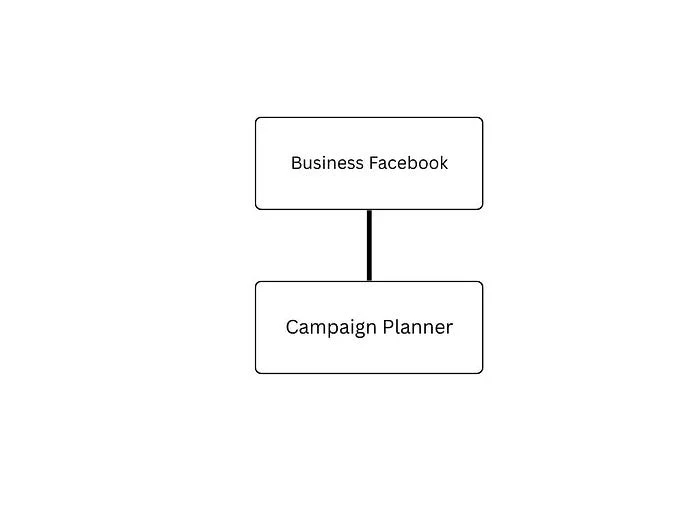
The researcher's approach was to map the application's services first: every node from the main application down to its sub-nodes and related services. That mapping is what surfaced Campaign Planner as a target.
Setup
Two distinct Facebook Business Manager accounts are required. Each account needs its own campaign plan, created inside Campaign Planner. A proxy tool such as Burp Suite is used to capture and modify the HTTP request sent when a share link is created. No other tooling, roles or versions are described.
Finding it
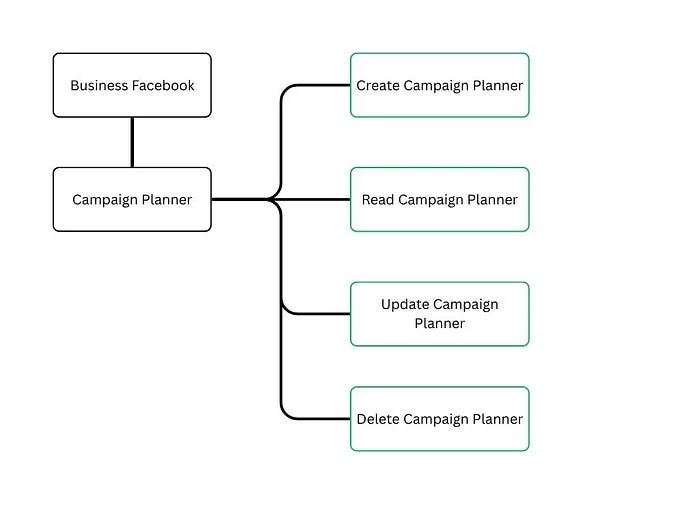
The first round of testing targeted the CRUD operations on campaign plans themselves: Create, Read, Update and Delete. All of those operations turned out to be securely implemented and were not vulnerable to IDOR.
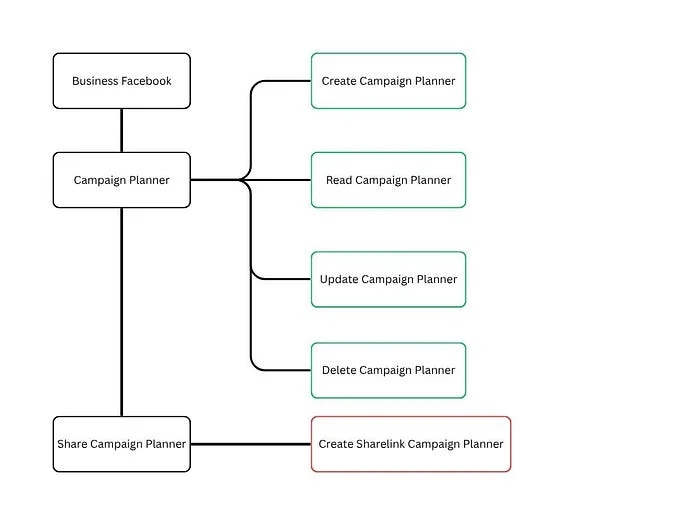
The researcher then moved on to a sub-service of Campaign Planner dedicated to sharing campaign plans and creating share links. The create share link feature was vulnerable to an IDOR flaw.
Exploitation
Step 1: Prepare two accounts
Log in to Facebook Business Manager with two distinct accounts.
Step 2: Create campaign plans
In each account, create a separate campaign plan.
Step 3: Initiate sharing from the first account
From the first account, start the sharing process for the campaign plan created there.
Step 4: Capture the request
Capture the HTTP request sent during share link creation, using a proxy tool such as Burp Suite.
Step 5: Modify the campaign plan ID
In the captured request, locate the parameter that carries the campaign plan ID belonging to the first account, and replace it with the campaign plan ID created by the second account.
Step 6: Send the modified request
Send the modified HTTP request. The result is a share link that points to the campaign plan belonging to the second account, even though the request originated from the first account, which should not have direct access to that plan.
The report does not include the raw request or response, only the video proof of concept below.
Root cause
The create share link feature was vulnerable to an IDOR flaw: a request from one account could produce a share link for another account's campaign plan. The CRUD operations on campaign plans were not vulnerable to IDOR, but the sharing sub-service was. The report does not describe the server-side implementation, so the exact location of the missing check is not stated.
Impact
An attacker could create and distribute share links for campaign plans they should not have access to. The researcher notes that the immediate impact is unlikely to include arbitrary code execution or large-scale sensitive data exfiltration, but it is a significant breach of privacy and access control: an attacker could view details of campaign plans meant to be private, with potential reputational or strategic damage for businesses using Facebook Business Manager.
Fix
The report does not describe the fix that was applied. The check that should exist is an authorisation test on the create share link endpoint: the campaign plan ID in the request must be verified as belonging to, or accessible by, the requesting account before a share link is issued.
Variants to test
What happened, in plain words
A security researcher found a way to create a working share link for someone else's campaign plan inside Facebook Business Manager, without having permission to see that plan. The feature that lets you share a campaign plan was vulnerable to an IDOR flaw. By swapping that number for another account's plan number, the researcher got back a link that opened the other account's plan. Meta paid a $5375 bounty for the finding.
This kind of mistake has a name: Insecure Direct Object Reference, usually shortened to IDOR. Before we get into the details, it helps to understand a few everyday ideas.
What Facebook Business Manager is. It is a tool for companies that run advertising and manage pages on Facebook. Instead of one person's personal account, a business uses Business Manager to organise its work, its people and its advertising campaigns.
What Campaign Planner is. Inside Business Manager there is a smaller application called Campaign Planner. Think of it as a planning notebook for advertising campaigns: you write down what a campaign is meant to achieve, who it targets and how it will run. Each plan you create is stored as its own object, and the system gives it a unique number, called an ID, so it can tell one plan from another. That number is like a locker number in a changing room: it identifies the locker, but on its own it does not prove the locker is yours.
What a share link is. A share link is a web address you can send to a colleague so they can open something you made. In Campaign Planner, the share link feature produces a link that points at a particular campaign plan. The idea is that you share your own plan with people you choose.
What an API and an HTTP request are. When you click a button in a web page, your browser does not magically change things on Facebook's computers. It sends a message over the internet to a server, asking it to do something, and the server sends a message back. That conversation is an HTTP request and an HTTP response. An API is simply the set of addresses and rules a program uses to ask a server to do things. Think of a restaurant: the menu is the API, your order is the request, and the plate that comes back is the response. The campaign plan ID travels inside that order, as one of the pieces of information the request carries.
What a proxy tool is. A proxy sits between your browser and the server and lets you read and edit the messages going back and forth. Burp Suite is a well-known proxy tool used by security testers. It is like intercepting a letter before it is delivered, reading it, changing a word, and sending it on.
What IDOR means. IDOR happens when a server accepts an identifier sent by the user (a plan number, a file number, an order number) and acts on it without checking that this particular user is allowed to touch that object. The object is referenced directly, by its ID, and the check that should stand between the user and the object is missing. A simple comparison: a hotel clerk who hands out a room key to anyone who says a room number, without checking that the person is the guest booked into that room.
What CRUD means. CRUD stands for Create, Read, Update and Delete. These are the four basic things you can do with a stored object: make it, look at it, change it, remove it. Testing all four is a standard first pass when you are looking for access-control mistakes.
How the researcher approached it
The write-up starts with method. When testing a large web application, the researcher maps every service involved: starting from the main application and working down to its sub-nodes and related services. A node here just means one part of the application, one service or screen or feature. The point of the mapping is to make sure nothing is missed. Big products are built from many small pieces, and a piece that is easy to overlook is exactly where a missing check can hide.
That mapping is how Campaign Planner came into view as a target.
The image sits right after the description of mapping the application from its main node down to sub-nodes and related services, and it illustrates the point where Campaign Planner was identified as one of those services.
The first round of testing: CRUD operations
The researcher began by testing the CRUD operations on campaign plans themselves. In plain terms: can account A create a plan, read a plan, update a plan or delete a plan that belongs to account B, simply by putting B's plan ID into the request? This is the obvious first question, because if the basic operations are broken, there is no need to look further.
The answer was no. All CRUD operations on campaign plans were securely implemented and were not vulnerable to IDOR. The CRUD operations on campaign plans were not vulnerable to IDOR.
This image appears just after the CRUD results, and it illustrates that stage of the testing, where the basic operations turned out to be properly protected.
This is an important lesson in itself. A secure result on the main operations does not mean the whole product is secure. It only means those particular doors are locked.
Where the problem was
The researcher kept going and found a sub-service of Campaign Planner whose job was specifically to handle sharing campaign plans and creating share links. This is a separate piece of functionality from creating, reading, updating or deleting a plan. It is a separate piece of functionality from creating, reading, updating or deleting a plan.
The create share link feature was vulnerable to an IDOR flaw.
This image marks the point in the write-up where the vulnerable feature is named: the create share link feature.
Reproducing it, step by step
The write-up gives six steps. Here they are, with the reason behind each one.
- Prepare two accounts. Log in to Facebook Business Manager using two distinct accounts. You need two because the whole test is about account A reaching account B's object. With one account you cannot tell whether a request succeeded because it was allowed or because it was your own plan.
- Create campaign plans. In each account, create a separate campaign plan. Each plan gets its own ID. You now have two known IDs, one that belongs to you and one that belongs to the other account, and you can compare what happens when you use each.
- Initiate sharing from the first account. From the first account, start the sharing process for the campaign plan you just created there. You do this through the normal interface, because you want the browser to build a genuine request that you can then inspect. Starting from a real action means the request will be shaped exactly as the application expects.
- Capture the request. Capture the HTTP request sent during share link creation, using a proxy tool such as Burp Suite. The request is the message your browser sends to the server. You need to see it in order to find the field that carries the plan ID.
- Modify the campaign plan ID. In the captured request, find the parameter that carries the campaign plan ID from the first account, and replace it with the campaign plan ID created by the second account. This is the heart of the test. Everything else in the request stays as the application built it, including whatever identifies you as the logged-in user. Only the object ID changes. If the server is checking permissions properly, it should notice that this ID does not belong to you and refuse. If it is not checking, it will do as asked.
- Send the modified request. Send the modified HTTP request. The result is a share link that points to the campaign plan belonging to the second account, even though the request came from the first account, which should not have direct access to that plan.
The write-up does not include the raw request or response text, so the exact address, parameter names and headers are not shown. What it does include is a video proof of concept.
Why this works: the root cause
The create share link feature was vulnerable to an IDOR flaw: a request from one account could produce a share link for another account's campaign plan. The CRUD operations on campaign plans were not vulnerable to IDOR, but the sharing sub-service was.
In everyday terms: the front desk of a building checks your badge at the main entrance, but the side door to the same floor has no guard at all. The building is not insecure because the main entrance is weak; it is insecure because one entrance was forgotten.
The write-up does not describe how the server is built, so the exact place in the code where the check is missing is not stated.
What the impact was
An attacker could create and distribute share links for campaign plans they should not have access to. The researcher is careful about scale: the immediate impact is unlikely to include running arbitrary code on Facebook's servers or pulling out large amounts of sensitive data. But it is a significant breach of privacy and access control. An attacker could view details of campaign plans that are meant to be private, and that can cause reputational or strategic damage for businesses that use Facebook Business Manager.
The bounty for the report was $5375.
What the fix would look like
The write-up does not describe the fix that was applied. The check that should exist is an authorisation test on the create share link endpoint: before issuing a share link, the server must verify that the campaign plan ID in the request belongs to, or is accessible by, the account making the request. In the hotel comparison, the clerk looks up the booking before handing over the key.
Other places to try the same idea
Once you understand the pattern, you can look for it elsewhere.
The common thread is that every feature which takes an object ID from the user is a candidate, and the less obvious the feature, the more worth testing it is.
Glossary
- API: the set of addresses and rules a program uses to ask a server to do something; like a menu you order from.
- Authorisation: the check that a particular user is allowed to perform a particular action on a particular object.
- Bounty: a payment made by a company to a researcher who reports a security problem to it.
- Burp Suite: a proxy tool used by security testers to capture, read and modify the HTTP messages between a browser and a server.
- Campaign Planner: an application inside Facebook Business Manager for planning advertising campaigns.
- Campaign plan ID: the unique number that identifies one campaign plan, used by the system to tell plans apart.
- CRUD: Create, Read, Update, Delete, the four basic operations on a stored object.
- Endpoint: a specific address on a server that accepts requests for a particular action.
- Facebook Business Manager: a tool for businesses to manage their pages, people and advertising on Facebook.
- HTTP request: the message a browser sends to a server asking it to do something.
- HTTP response: the message a server sends back after receiving a request.
- IDOR (Insecure Direct Object Reference): a flaw where a server acts on an object ID supplied by the user without checking that the user is allowed to access that object.
- Node: one part of an application, such as a service, screen or feature, when the application is mapped out piece by piece.
- Parameter: a named piece of information carried inside a request, such as a plan ID.
- Proof of concept: a demonstration, often a video or a set of steps, showing that a vulnerability really works.
- Proxy tool: software that sits between your browser and a server so you can inspect and edit the traffic.
- Share link: a web address that opens a particular object, meant to be sent to other people.
- Sub-service: a smaller service inside a larger application, handling one specific job such as sharing.
- Vulnerability: a weakness in software that someone can use to do something the software's owner did not intend.



