Stored XSS in Direct debit name
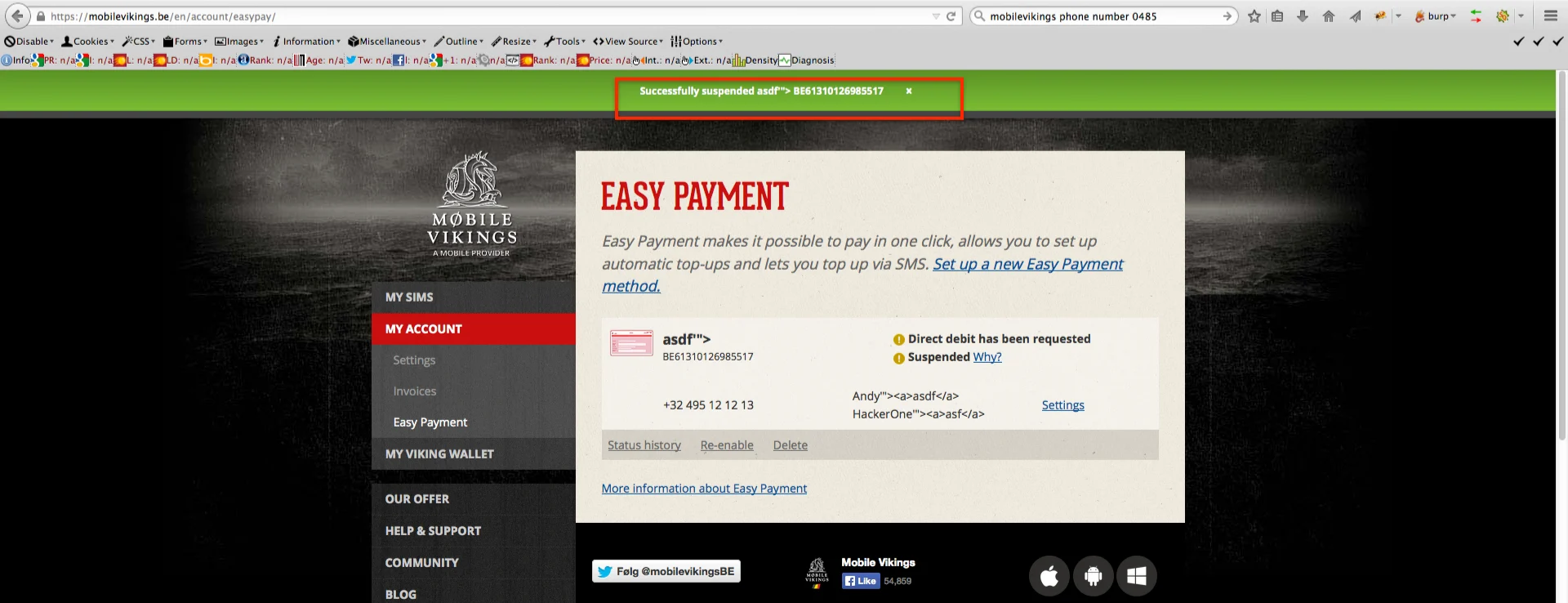
The owner's name field in a direct debit mandate was not sanitised, allowing a stored cross-site scripting payload to execute on several account pages. An attacker could run script in the victim's browser, and the report also notes that a signed cookie containing the payload is set, which might be exploitable if an attacker can set that cookie.
 Originally disclosed on HackerOne
- Triaged in under an hour
- Fixed in 15 days
- Disclosed after 37 days
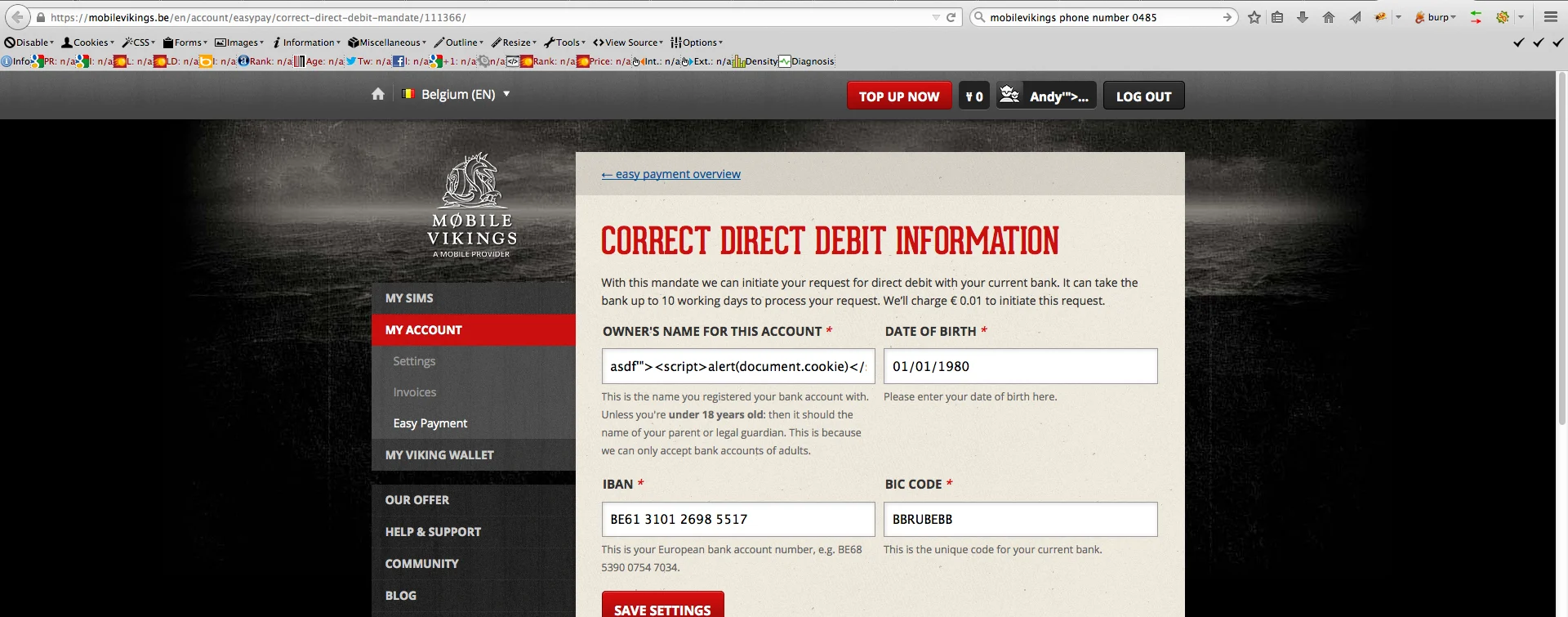
- Make new or edit old Direct debit (for example https://mobilevikings.be/en/account/easypay/correct-direct-debit-mandate/111366/)
- Fill owners name with payload asdf'"><script>alert(document.cookie)</script>
- Save form.
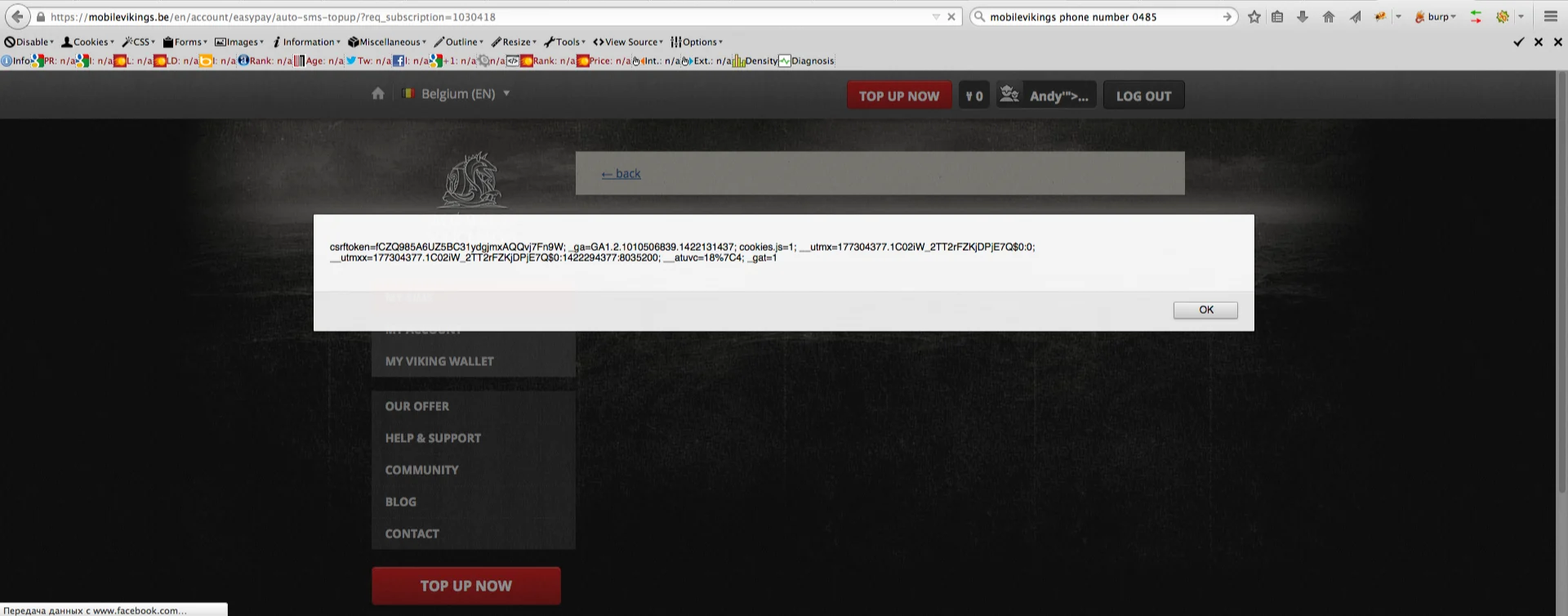
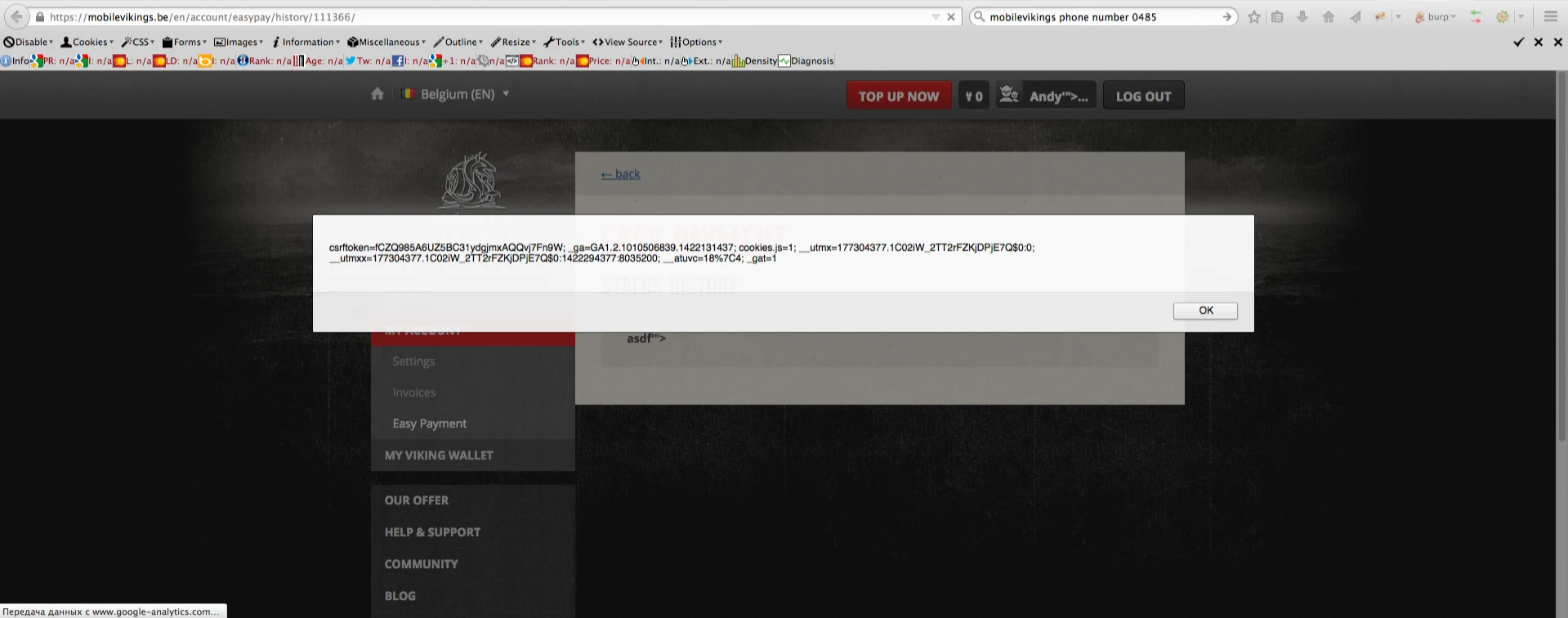
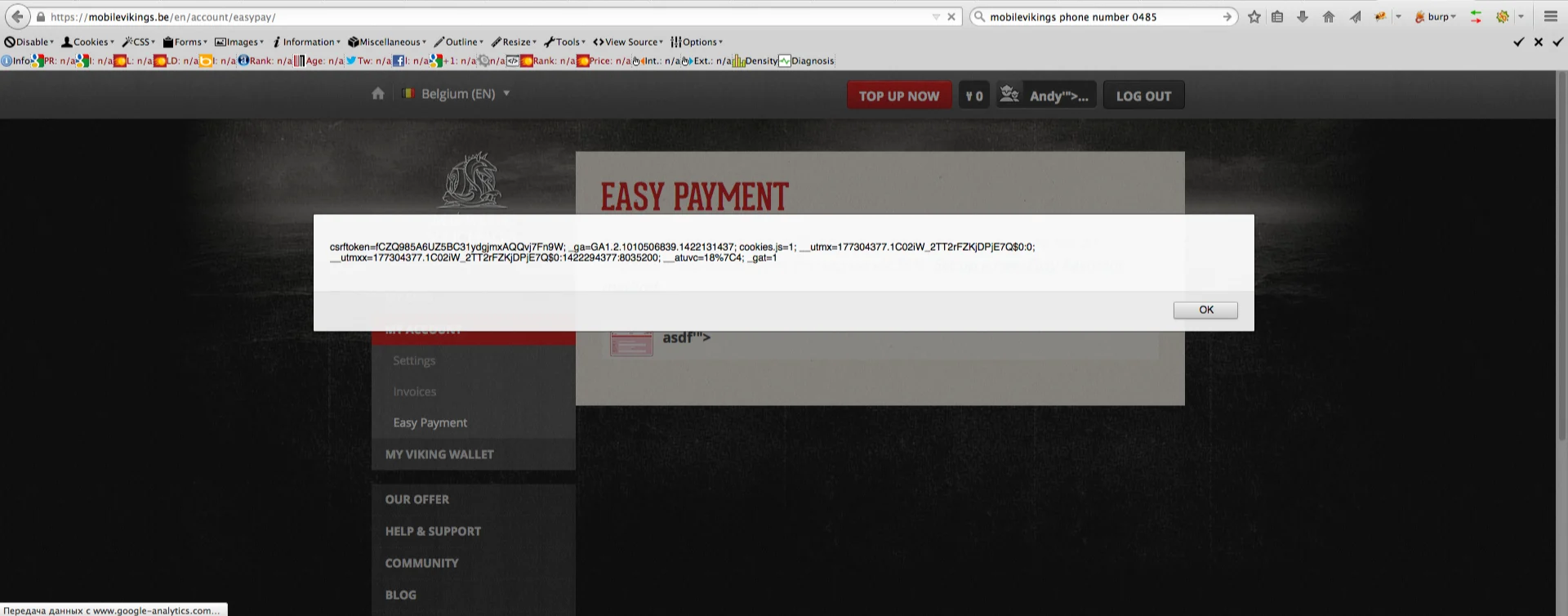
We got Stored XSS in pages: https://mobilevikings.be/en/account/easypay/ https://mobilevikings.be/en/account/easypay/history/111366/ https://mobilevikings.be/en/account/easypay/auto-sms-topup/?req_subscription=1030418 And admin area pages may be affected.
The really interesting thing is if we press https://mobilevikings.be/en/account/easypay/287740/suspend/ link we got this cookie setted: Set-Cookie messages="e052df5f3af892c7a61d74d0d9a6ab14c7f1631c$[["__json_message"\0540\05425\054"Successfully suspended asdf'\"><script>alert(document.cookie)</script> <span>BE61310126985517</span>"]]"; Path=/
So we have a properly signed cookie with XSS payload. And if we found some way to setup it (it may be some xss on mobilevikings.be subdomain or CRLF issue in some data which used in header) we can use this xss vector too.
Attachments
Not written yet. The AI write-up for this report has not been written yet. The Original tab links to the source.
How it worked
Impact
An attacker could execute arbitrary JavaScript in the context of the victim's session on the affected pages, potentially stealing cookies or performing actions as the user; the report also suggests that a signed cookie containing the payload might be exploitable if an attacker can set it, but this is not demonstrated.
What the attacker needed
A user account; ability to create or edit a direct debit mandate
How it was found
- Create or edit a direct debit mandate.
- Enter a script payload in the owner's name field.
- Save the form.
- Visit the easypay pages to see the script execute.
Explained by bugbounty.wiki with AI from the original and checked against quotes from it; it can still be wrong. Read the original before relying on a detail.
Not written yet. The AI write-up for this report has not been written yet. The Original tab links to the source.
When a website saves text you type (like a name) and later shows it on a page without cleaning it, an attacker can type code instead of a name. That code then runs in the browser of anyone who views the page, which is called stored cross-site scripting. Here, the owner's name field allowed a script to be saved and run on several account pages.
What is XSS?
Script an attacker supplies runs in another user's browser, on the target's origin, with that user's session.