Stored xss in user name
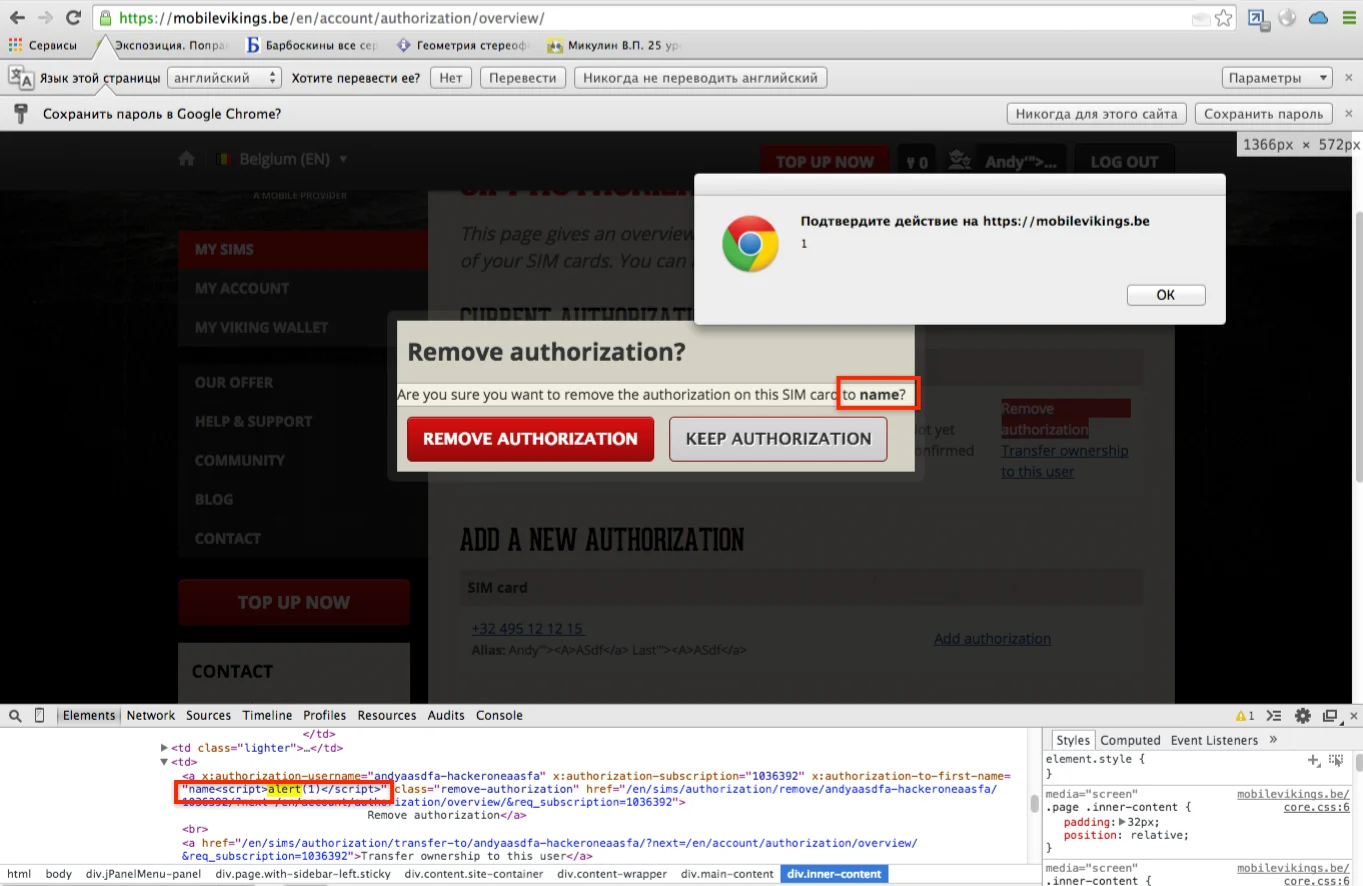
A stored cross-site scripting flaw existed in the user's first name, which was not sanitised when displayed in a modal window on the authorisation overview page. An attacker could execute script in the account owner's browser when they removed an authorisation.
 Originally disclosed on HackerOne
- Disclosed after 22 days
In prev report i showed xss in user name thru cookie, there is another place where this name shows and fired xss. After send auth request open https://mobilevikings.be/en/account/authorization/overview/ in account who send request and press "Remove authorization" and got another way to fire xss payload. param x:authorization-to-first-name is properly sanitized but probably when it goes to modal window it unsanitize.
Attachments
Not written yet. The AI write-up for this report has not been written yet. The Original tab links to the source.
How it worked
Impact
An attacker could run script in the browser of a user who views the authorisation overview and removes an authorisation.
What the attacker needed
A user account; victim views authorisation overview; victim removes an authorisation
How it was found
- Send an authorisation request from the account.
- Open the authorisation overview page while logged in.
- Press the button to remove the authorisation.
- The stored name is rendered in the modal and the script runs.
Explained by bugbounty.wiki with AI from the original and checked against quotes from it; it can still be wrong. Read the original before relying on a detail.
Not written yet. The AI write-up for this report has not been written yet. The Original tab links to the source.
When you type your name into a website, the site should treat it as plain text, not as code. Here, the name was inserted into a pop-up window without that protection, so a malicious name could run a small program in the browser of anyone who viewed it. This is called stored cross-site scripting because the harmful value is saved and shown later.
What is XSS?
Script an attacker supplies runs in another user's browser, on the target's origin, with that user's session.