csrftoken not unique to session or specific user and csrfmiddlewaretoken can be altered

- Triaged in 4 days
- Fixed in 15 days
- Paid in 21 days
- Disclosed after 6 months
Hello, while looking at the website i noticed 2 things when trying to delete a token
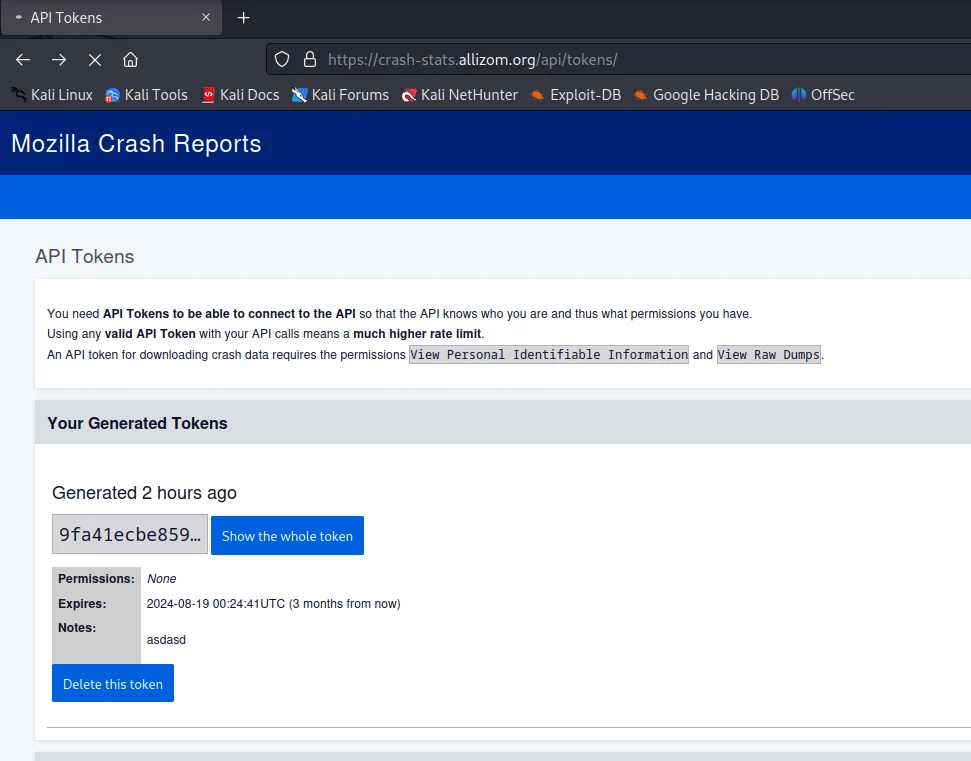
assuming i click on Delete this token button (in picture above)
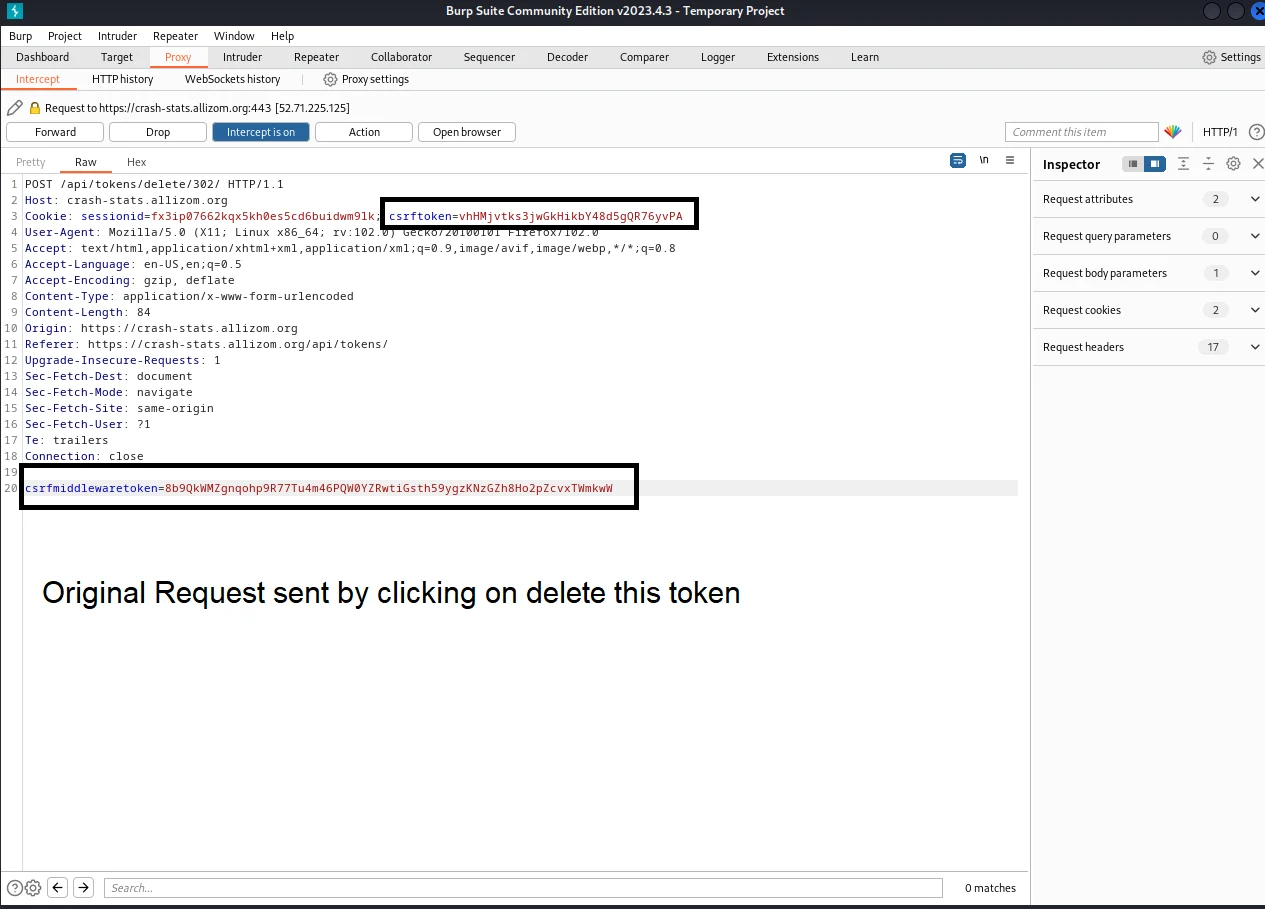
- a post request will be sent /api/tokens/delete/302 or /api/tokens/delete/some_number
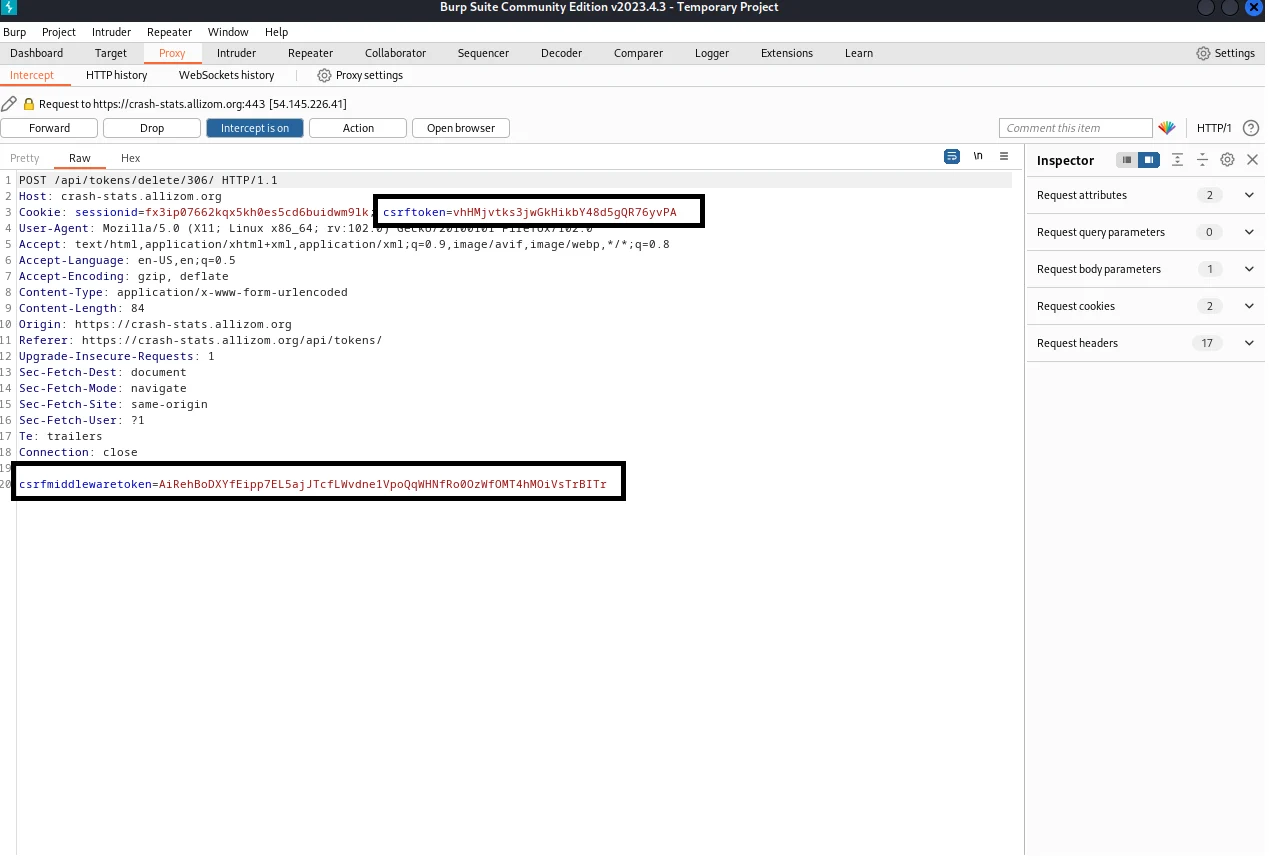
and i see in burp that in the cookie's header csrftoken = vhHMjvtks3jwGkHikbY48d5gQR76yvPA and i see in the params sent that csrfmiddlewaretoken= 8b9QkWMZgnqohp9R77Tu4m46PQW0YZRwtiGsth59ygzKNzGZh8Ho2pZcvxTWmkwW
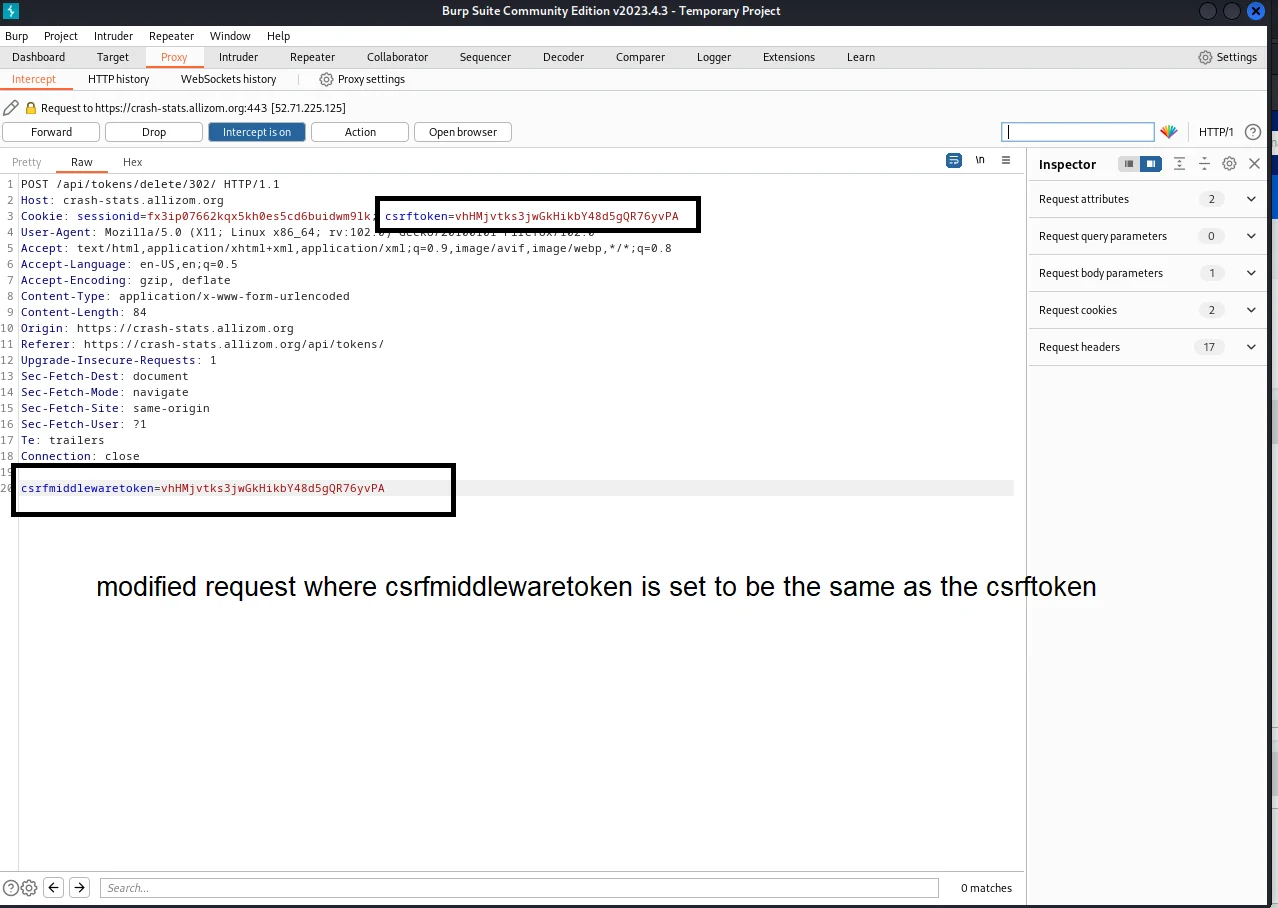
what i noticed is that changing csrfmiddlewaretoken's value to csrftoken 's value will still make the request work.. ie setting csrfmiddlewaretoken = vhHMjvtks3jwGkHikbY48d5gQR76yvPA will still let the request work
this is the actual request
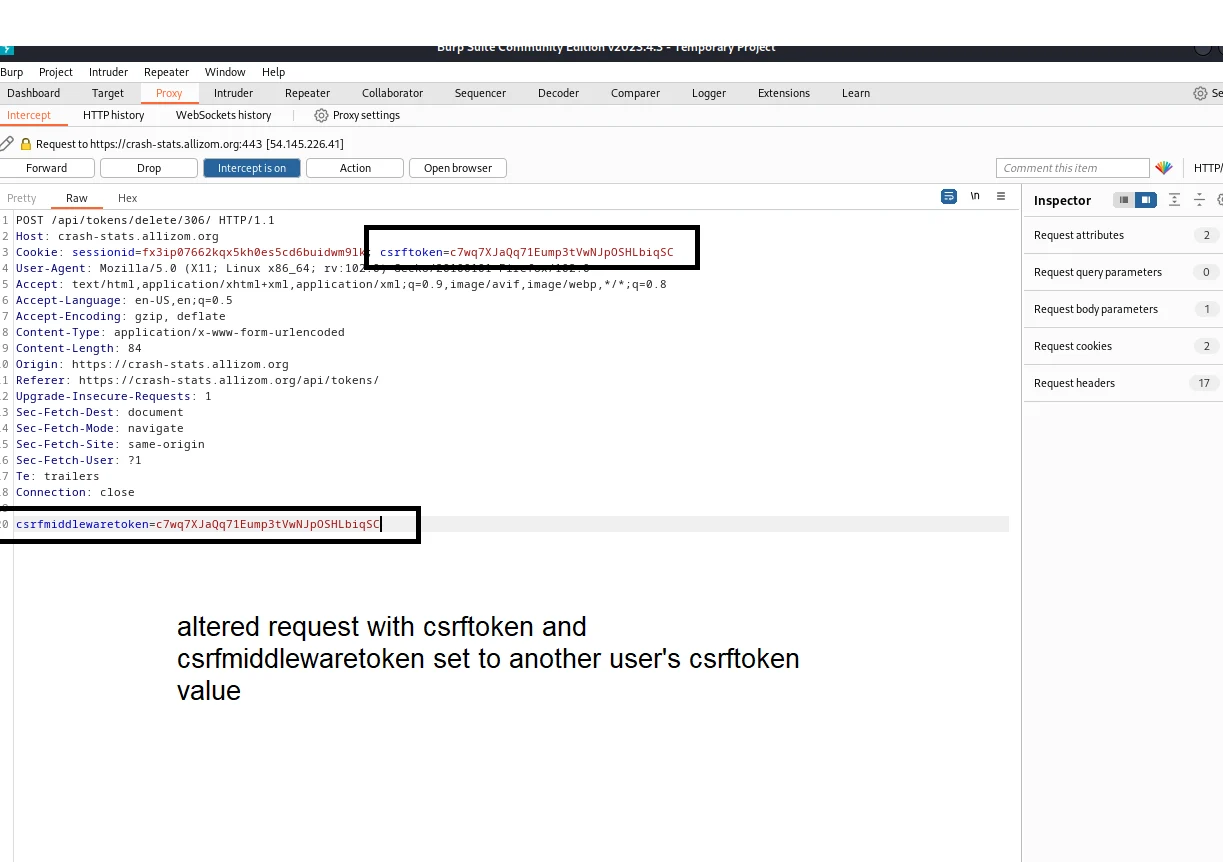
this is the modified request which works!
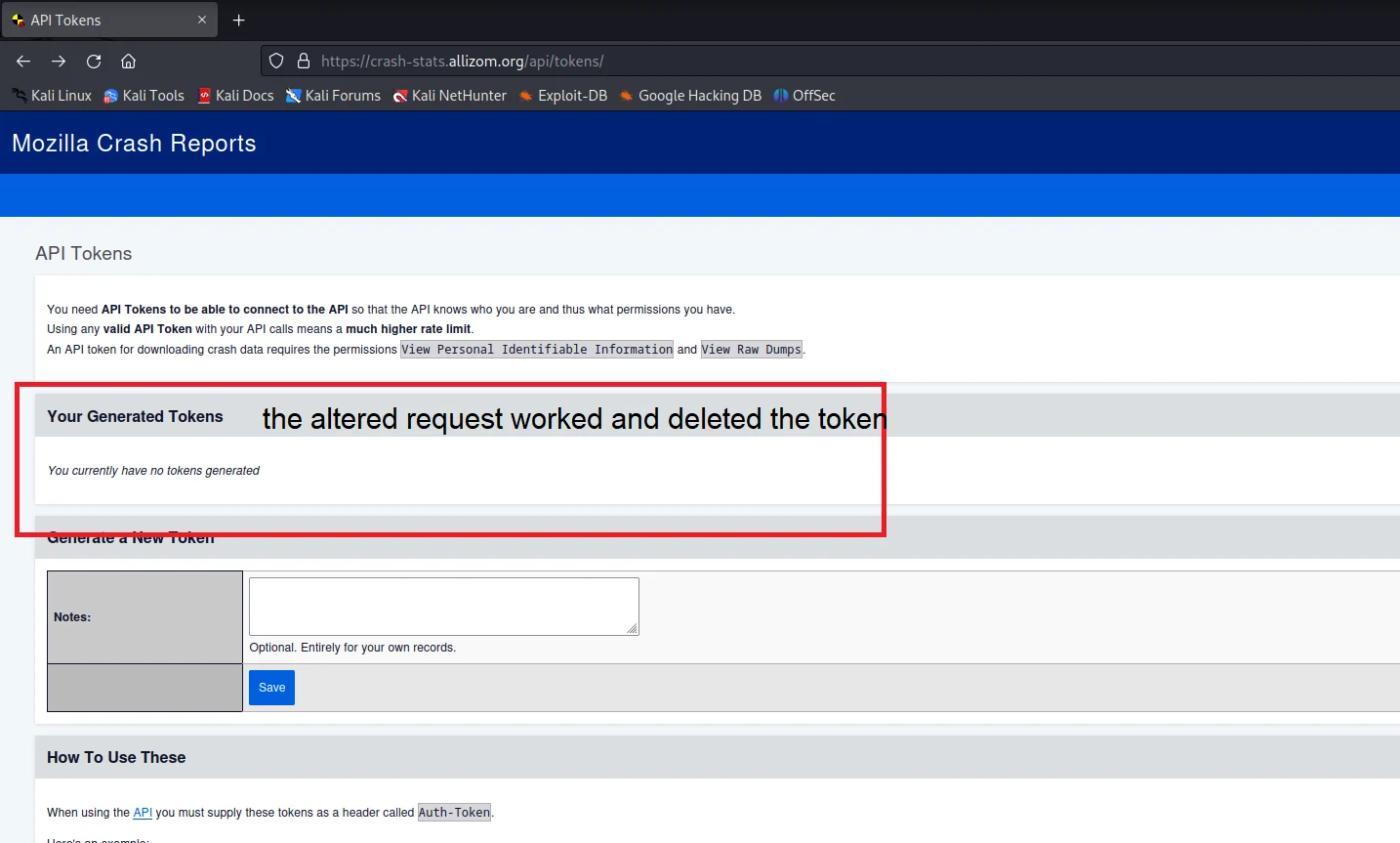
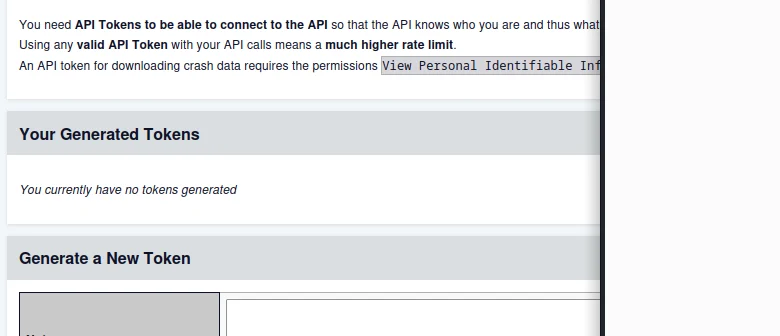
altered request successfully deleted the api oken
- i noticed that the csrftoken sent in requests is not unique to the session id or user logged , meaning if im logged in as user1 and have csrftoken=x
then i can login as user2 and send the request with csrftoken=x and csrfmiddlewaretoken=x and it will work!
for example in one of the users i logged in the csrft token was csrftoken= c7wq7XJaQq71Eump3tVwNJpOSHLbiqSC
lets say i want to delete a token again
this is the original request i get as user2
i change the csrftoken and the csrfmiddlewaretoken to be the csrfttoken i got when logged as user1 ie im using a csrftoken of another user
and as you can see this request works just fine and deleted the token api
what does this mean? 1.this means csrfmiddlewaretoken does not really add another layer of protection, i can easily change it the csrftoken stored in the cookie and it will still work 2. given a valid csrftoken from any user (for example csrftoken=c7wq7XJaQq71Eump3tVwNJpOSHLbiqSC), its possible to create a csrf request that sends the POST /api/tokens/delete/index request (where index can be enumerated ) with this valid csrftoken being sent as the csrfmiddlewaretoken value and with
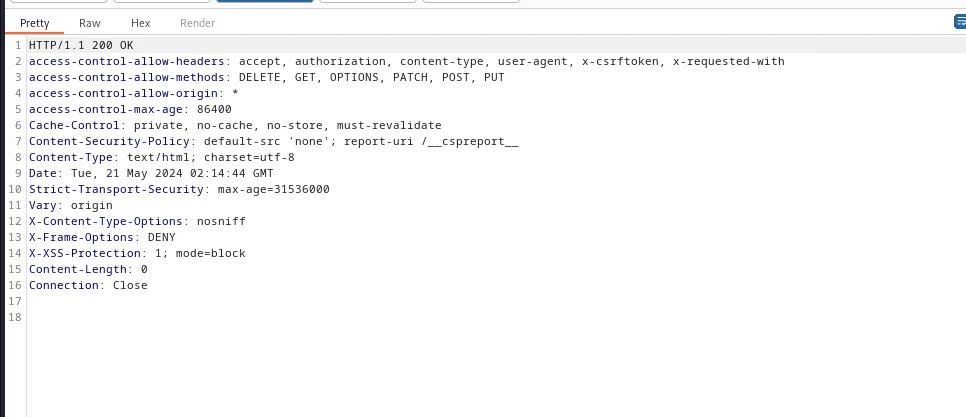
X-CSRF-Token set also as the valid csrf token as well and it will work and we can manage to delete user api tokens through csrf exploit( for example clicking on a website that sends such request) i also see that when sending an options request to /api/tokens/delete, access control allow headers are
access-control-allow-headers: accept, authorization, content-type, user-agent, x-csrftoken, x-requested-with access-control-allow-methods: DELETE, GET, OPTIONS, PATCH, POST, PUT access-control-allow-origin: *
Steps To Reproduce:
- log in as any user (user1), take the csrf token from the cookie and save it somewhere
1.1.try to delete an existing api token (if you dont have create one), and intercept the request and change the csrfmiddlewaretoken to the csrf token you took from the cookie, you should see that the request will still work. 3. now logout from user1 and login as user2 4. try to delete an existing api token (if you dont have create one), and intercept the request and change the csrfmiddlewaretoken and the csrftoken to the first csrf token you got from when you were logged in user1, you will see that the request will work and will pass
Impact
Summary:
CSRF Exploit 1.this means csrfmiddlewaretoken does not really add another layer of protection, i can easily change it the csrftoken stored in the cookie and it will still work 2. given a valid csrftoken from any user (for example csrftoken=c7wq7XJaQq71Eump3tVwNJpOSHLbiqSC), its possible to create a csrf request that sends the POST /api/tokens/delete/index request (where index can be enumerated ) with this valid csrftoken being sent as the csrfmiddlewaretoken value and with
X-CSRF-Token set also as the valid csrf token as well and it will work and we can manage to delete user api tokens
Attachments
Not written yet. The AI write-up for this report has not been written yet. The Original tab links to the source.
What is known
A low-severity CSRF bug in crash-stats.allizom.org. HackerOne made it public on 20 November 2024. It paid $500.
About CSRF
Another site makes a signed-in user's browser perform an action they did not intend.
Not written yet. The AI write-up for this report has not been written yet. The Original tab links to the source.
What is CSRF?
Another site makes a signed-in user's browser perform an action they did not intend.

