POST BASED REFLECTED XSS IN dailydeals.mtn.co.za
A search form on the site reflected a user-supplied parameter back into the page without proper encoding, so a crafted value containing an SVG element with an event handler executed script in the browser. An attacker could use this to run script in a victim's session, potentially stealing cookies or redirecting them.

- Fixed in 5 months
- Disclosed after 6 months
Summary:
Dear Team , I have found a post based reflected XSS in https://dailydeals.mtn.co.za/ .
Steps To Reproduce:
1.Create a html file with following content .
<form action="https://dailydeals.mtn.co.za/index.cfm?GO=CRAVE_ESTABLISHMENTS_LIST" method="POST"><input type="hidden" name="location_id" value="0"><input type="hidden" name="suburb" value="0"><input type="hidden" name="search_phrase" value=""><input type="hidden" name="submit_search" value="Search"><input type="hidden" name="m" value=""><input type="hidden" name="cpID" value=""><input type="hidden" name="CFID" value="a611fd5d-822a-4c08-a032-bcac1551f032'"<!--><Svg OnLoad=(confirm)(1)-->"><input type="hidden" name="CFTOKEN" value="0"></form><script>document.forms[0].submit()</script>2.Open the HTML file in any web-browser.
3.Cross site Scripting will be triggered .
Impact
Attacker can exploit this vulnerability to steal users cookies , redirect them to arbitrary domain and perform various attacks.
Attachments
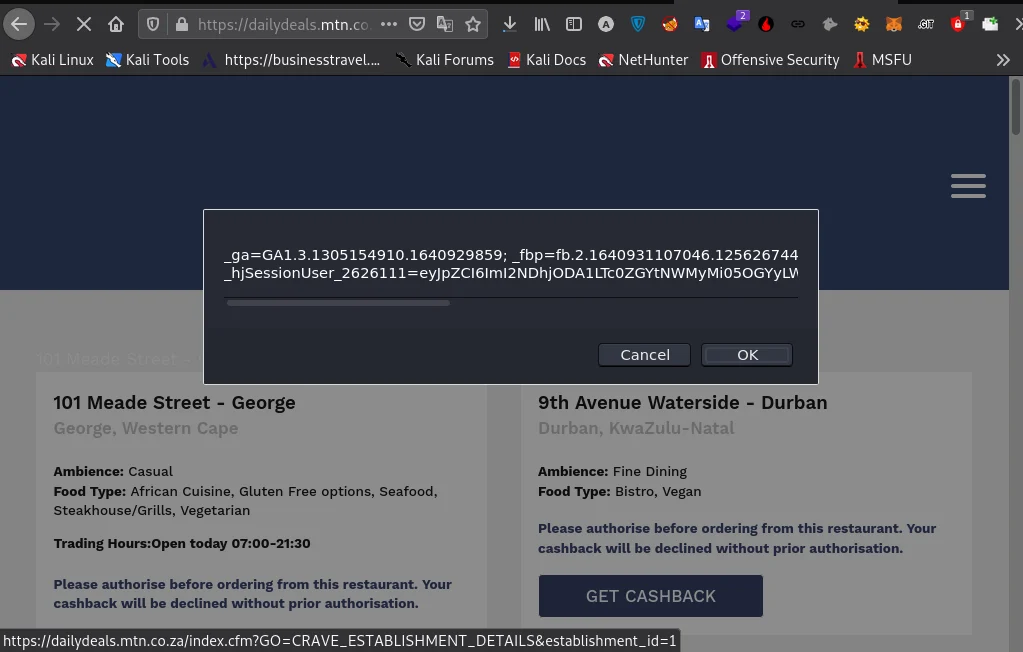
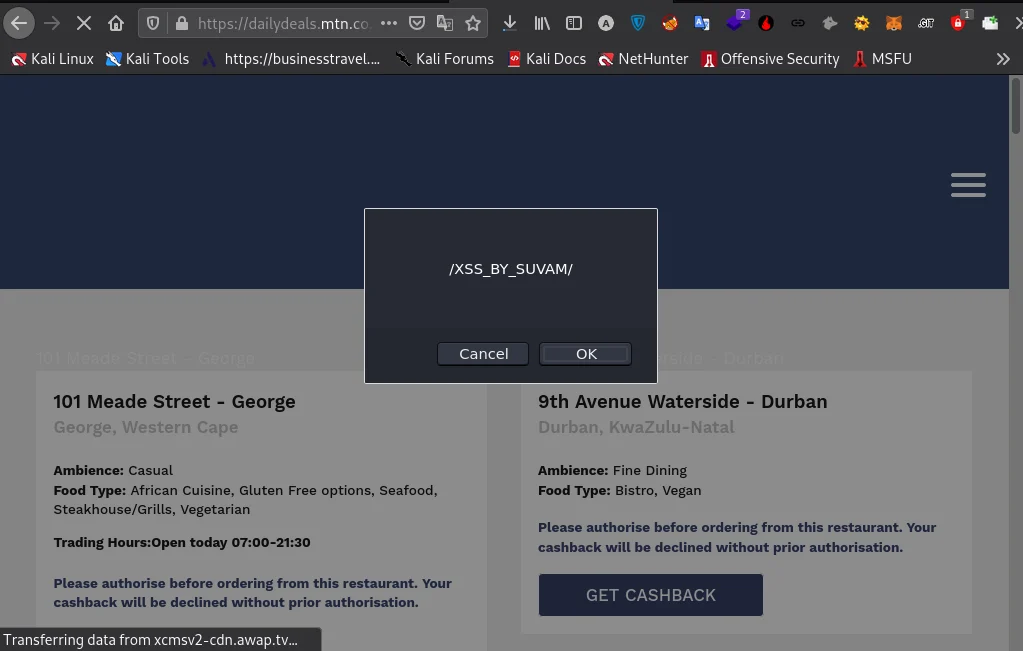
Not written yet. The AI write-up for this report has not been written yet. The Original tab links to the source.
How it worked
Root cause
Likely the application reflected the CFID parameter into the HTML response without output encoding, allowing markup and event handlers to be interpreted by the browser.
Impact
An attacker could steal users' cookies, redirect them to arbitrary domains and perform various other attacks, though the report does not demonstrate these beyond the alert.
What the attacker needed
Victim opens attacker's HTML file
How it was found
- Create a local HTML file containing a form that posts to the site's establishment list page.
- Include a hidden field whose value contains an SVG element with an onload handler.
- Open the HTML file in a browser so the form submits automatically.
- The script executes because the value is reflected into the page.
Explained by bugbounty.wiki with AI from the original and checked against quotes from it; it can still be wrong. Read the original before relying on a detail.
Not written yet. The AI write-up for this report has not been written yet. The Original tab links to the source.
When a website takes something you typed or sent and puts it straight back on the page without cleaning it, an attacker can send text that the browser treats as code. Here a hidden form field was echoed into the page, and the value included an SVG image tag with an onload handler, which is a small piece of script that runs when the image loads. That lets the attacker run their own code in the victim's browser as if it came from the site.
What is XSS?
Script an attacker supplies runs in another user's browser, on the target's origin, with that user's session.








