Stored XSS in markdown file with Nextcloud Talk using Internet Explorer
A markdown editor allowed users to create links with a javascript: URL, which was not sanitised. An attacker could execute arbitrary JavaScript in the browser of a victim who opened the file and clicked the link, though CSP blocked this in modern browsers and only Internet Explorer was affected.

- Triaged in 16 days
- Fixed in 3 months
- Paid in 3 months
- Disclosed after 4 months
While editing a markdown file through the text app, users can create link elements that have a javascript URL such as javascript:alert(1).
Steps to reproduce:
-
While editing a markdown file, select some text and click the "Add Link" button.
-
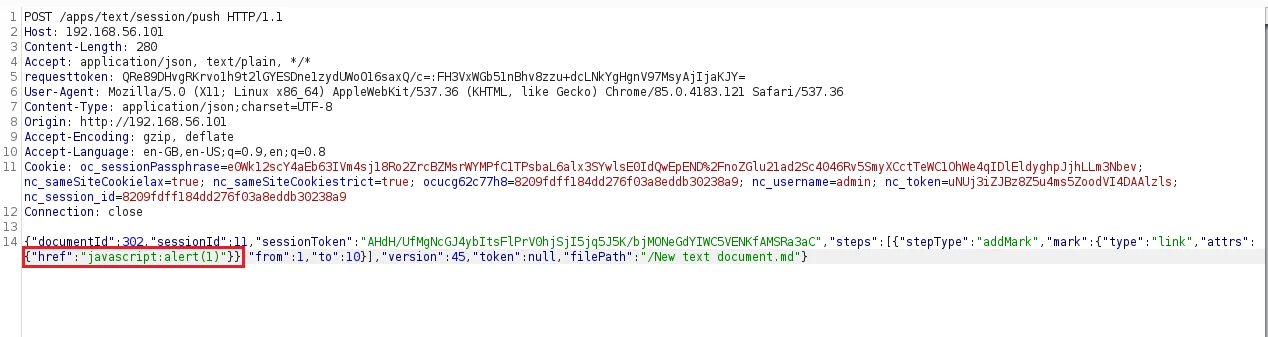
Using a web proxy, intercept the request and change the href value to
javascript:alert(1). -
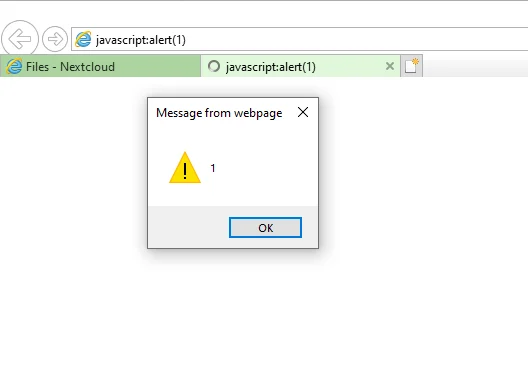
Refresh the document and click the malicious link created to fire the payload.
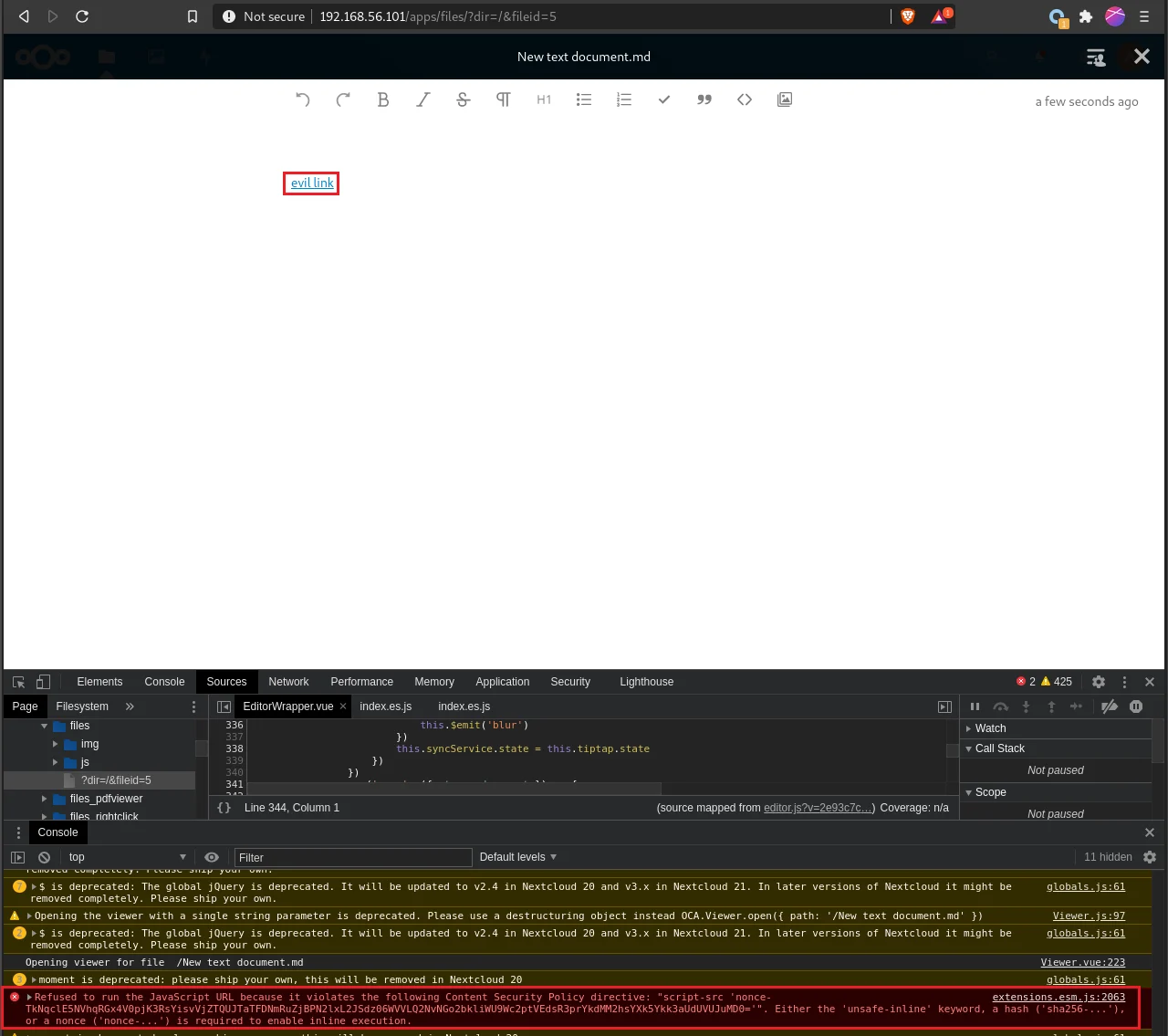
Note that CSP blocks the javascript from running, but browsers such as IE are still vulnerable.
Impact
An attacker could execute arbitrary JavaScript code on the web browser of a victim who opens the file and clicks the malicious link.
Attachments
Not written yet. The AI write-up for this report has not been written yet. The Original tab links to the source.
How it worked
Impact
An attacker could execute arbitrary JavaScript in the victim's browser when they open the file and click the link, but CSP blocked this in modern browsers and only Internet Explorer was vulnerable.
What the attacker needed
Ability to edit a markdown file; victim opens the file and clicks the link; victim uses Internet Explorer
How it was found
- While editing a markdown file, select some text and click the 'Add Link' button.
- Using a web proxy, intercept the request and change the href value to a javascript URL.
- Refresh the document and click the malicious link created to fire the payload.
Explained by bugbounty.wiki with AI from the original and checked against quotes from it; it can still be wrong. Read the original before relying on a detail.
Not written yet. The AI write-up for this report has not been written yet. The Original tab links to the source.
When you add a link in a markdown document, the app should only allow safe web addresses. Here, someone could trick the editor into saving a link that runs code instead of opening a page. If a victim clicked that link in an old browser, the code would run in their session.
What is XSS?
Script an attacker supplies runs in another user's browser, on the target's origin, with that user's session.



