Talk Android broadcast receiver is not protected by broadcastPermission allowing malicious apps to communicate
The Talk Android app registered a broadcast receiver without passing a broadcast permission, so the system did not restrict who could send broadcasts to it. A malicious app on the same device could therefore communicate with that receiver, which the author suspects might interfere with call starts and audio or Bluetooth setup.
 Originally disclosed on HackerOne
- Triaged in 4 hours
- Fixed in 5 months
- Disclosed after 7 months
Summary by the program
Security advisory at https://github.com/nextcloud/security-advisories/security/advisories/GHSA-564v-3rfc-352m
The report
Summary:
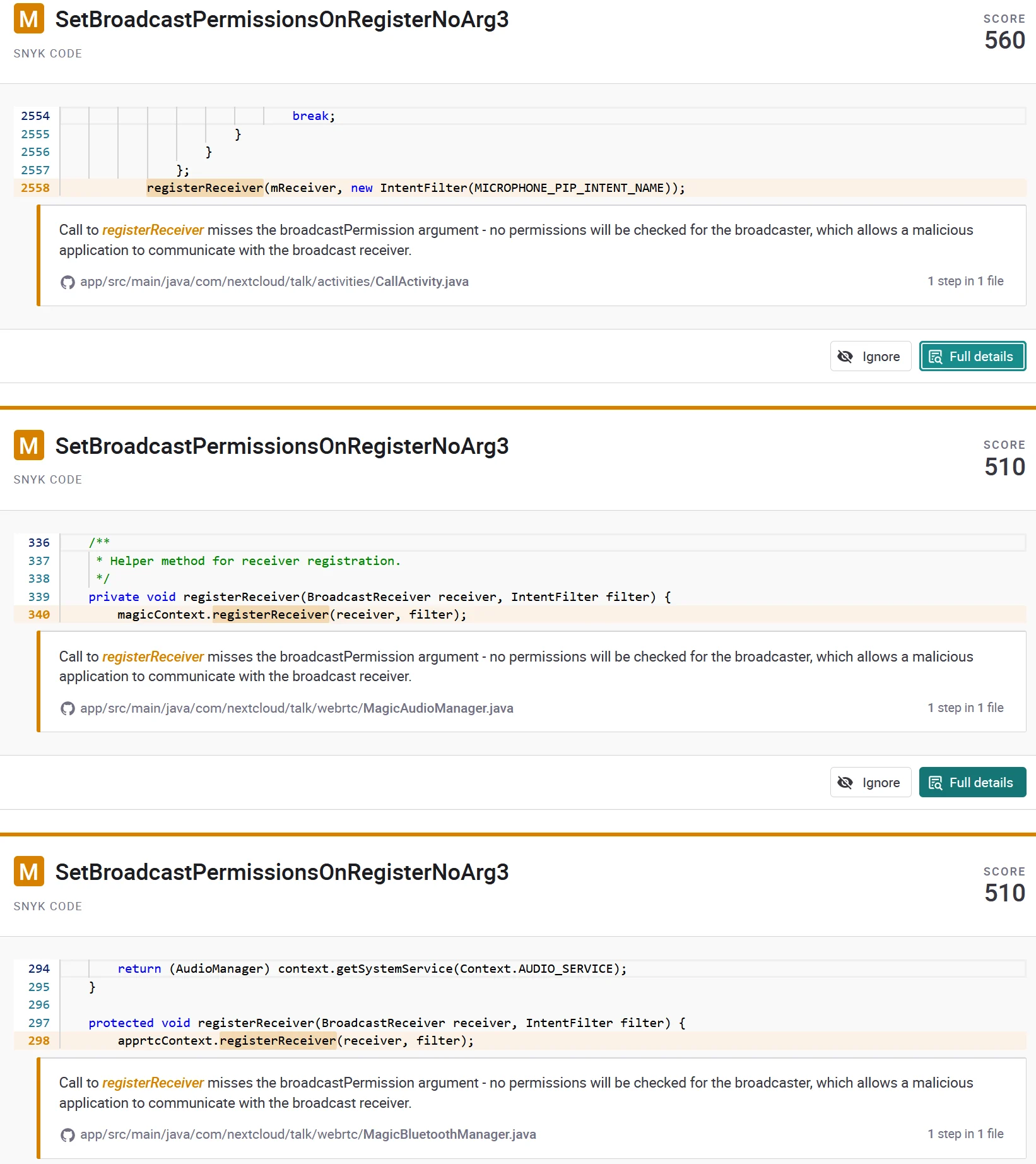
Call to registerReceiver misses the broadcastPermission argument - no permissions will be checked for the broadcaster, which allows a malicious application to communicate with the broadcast receiver.
Supporting Material/References:
- Screenshot Snyk report
- references to fixes in other repos
Impact
Unsure, potentially interfere with call starts and audio/bluetooth setup
Attachments
Not written yet. The AI write-up for this report has not been written yet. The Original tab links to the source.
How it worked
Root cause
Likely the receiver was registered without the broadcastPermission argument, so no sender permission was enforced.
Impact
The author is unsure of the real impact and only suggests a malicious app could potentially interfere with call starts and audio or Bluetooth setup.
What the attacker needed
Malicious app installed on the device
Explained by bugbounty.wiki with AI from the original and checked against quotes from it; it can still be wrong. Read the original before relying on a detail.
Not written yet. The AI write-up for this report has not been written yet. The Original tab links to the source.
Android apps can send messages to each other called broadcasts. When an app listens for a broadcast it can say which other apps are allowed to send it, using a permission. Here that check was left out, so any app installed on the phone could send the message and be heard.
What is Access control?
A user can do something their role should not allow: reach an admin function, act on a feature they have not paid for, or skip a permission check. IDOR is the special case where the object belongs to someone else.

