Brute force of a current password on a disable 2fa leads to guess password and disable 2fa.
The disable-2FA endpoint accepted repeated password guesses, and a change in response length revealed the correct password, allowing 2FA to be disabled.
 Originally disclosed on HackerOne
- Fixed in 22 hours
- Disclosed after 5 months
Summary: This Attack happen when victim login in other device and forget to logout ,Then attacker can enable 2-factor authentication by brute fore the password of victim endpoints.
Steps To Reproduce:
(1)Login in https://dashboard.omise.co/signin (2) Click on your username (3)Navigate to Two-factor authentication --> Disable 2FA (4)add random password in Please confirm your identity to register a new Two-Factor Authenticator (5)Capture the request and send it for fuzz
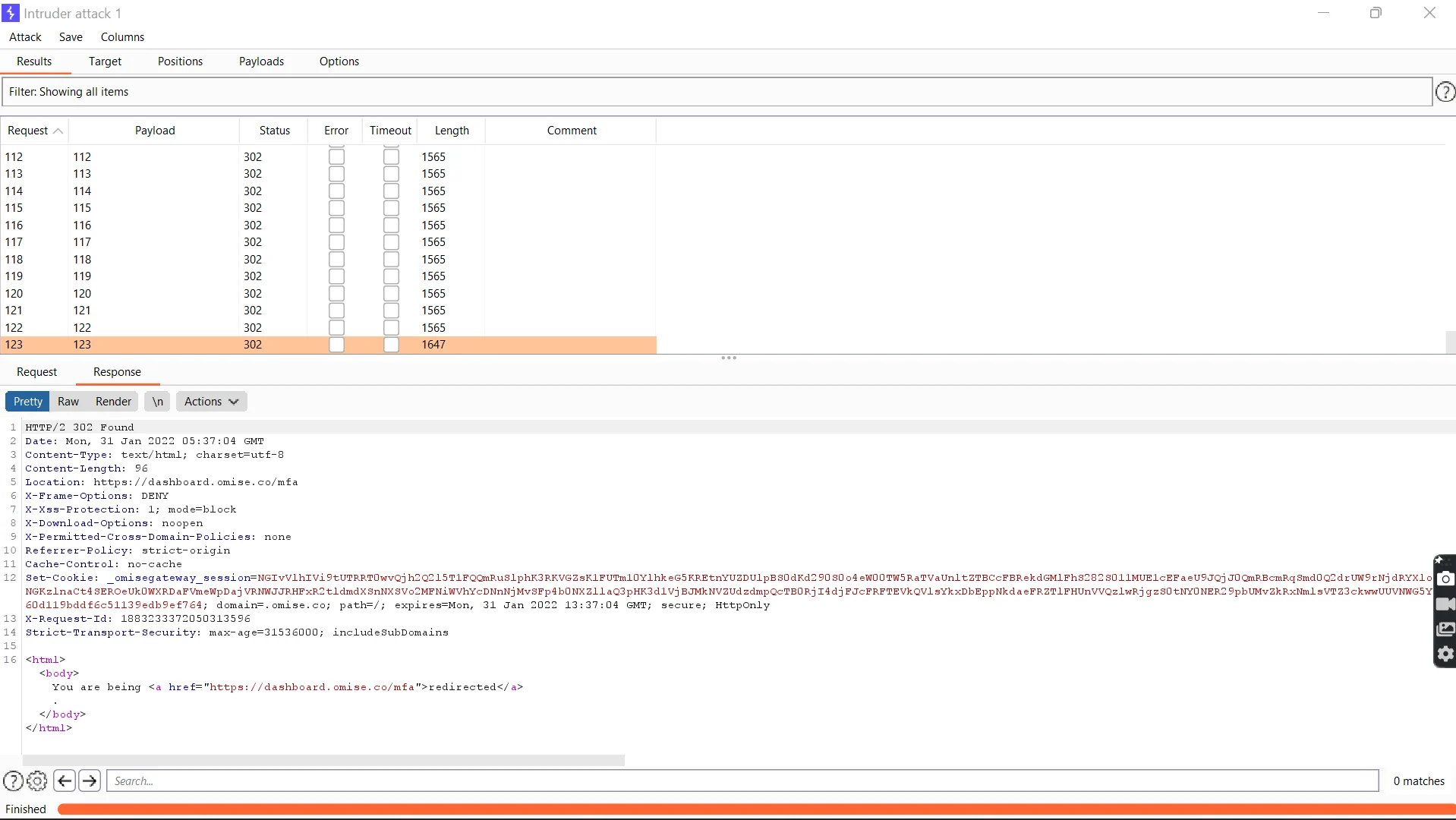
POC In screenshot you can see change in length of content when request encounter right password.
Impact
Attacker can disable 2fa and brute force currrent password.
Attachments
Not written yet. The AI write-up for this report has not been written yet. The Original tab links to the source.
How it worked
Root cause
Likely the endpoint that disables 2FA did not limit or slow down repeated password attempts, allowing unlimited guessing.
What the attacker needed
Attacker has an active logged-in session; victim did not log out on that device
How it was found
- Log in to the dashboard.
- Open the user menu and go to the two-factor authentication settings.
- Choose the option to disable 2FA.
- Enter a random password in the identity confirmation field.
- Capture the request and send it to a fuzzing tool.
- Watch the response length change when the correct password is used.
Explained by bugbounty.wiki with AI from the original and checked against quotes from it; it can still be wrong. Read the original before relying on a detail.
Not written yet. The AI write-up for this report has not been written yet. The Original tab links to the source.
This report says the page that turns 2FA off let someone try password after password, and a change in response length showed the right one, so they could switch off that extra protection.
What is Account takeover?
Getting into someone else's account through a flaw in sign-in, password reset, second factor, single sign-on or session handling.







