Clickjacking
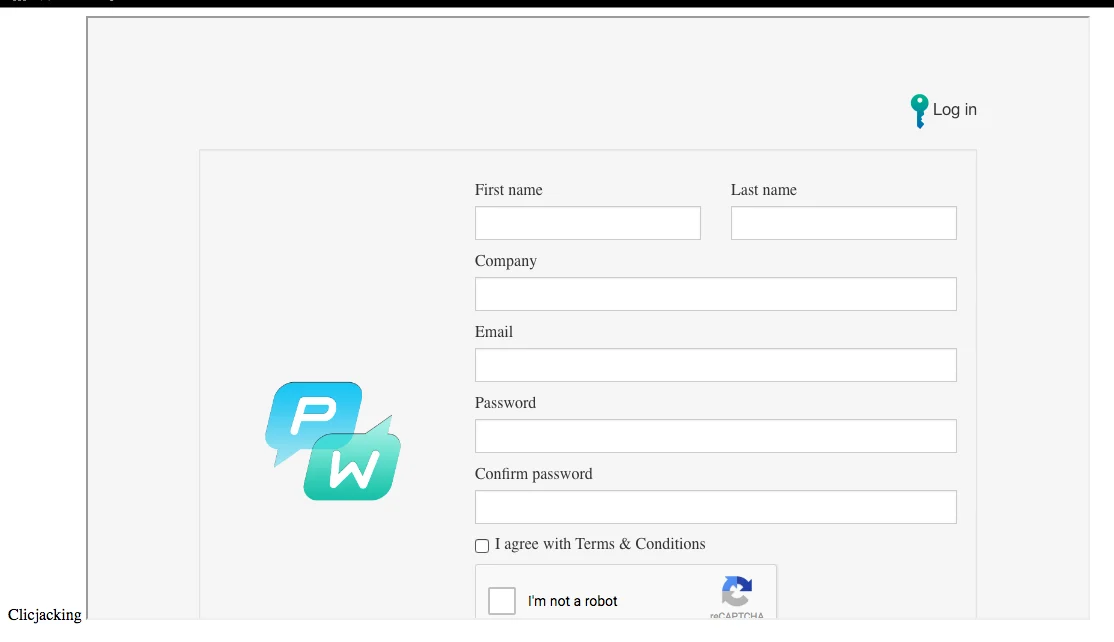
The Pushwoosh registration page could be embedded in an iframe, allowing an attacker to overlay it and trick users into clicking unintended actions. The page's own frame-busting check was insufficient to prevent this.
b1b62e8d81ce1e3993ad913 Follow
 Originally disclosed on HackerOne
- Fixed in 3 days
- Disclosed after 11 days
Steps to reproduce:
create index.html file with following content:
<iframe sandbox="allow-scripts allow-forms" src="https://go.pushwoosh.com/register" width="1000" height="600"></iframe>Open index.html in browser
Actual result: Pushwoosh viewed in iframe. Expected result: do not allow clickjacking Root cause:
var isInIFrame = (function () {
			try {
				return window.self !== window.top;
			} catch (e) {
				return true;
			}
		})();
Attachments
Not written yet. The AI write-up for this report has not been written yet. The Original tab links to the source.
How it worked
Root cause
Likely the page relied on a JavaScript frame-busting check that could be bypassed, and did not send an X-Frame-Options or Content-Security-Policy frame-ancestors header.
Impact
An attacker could embed the registration page and trick a user into interacting with it.
What the attacker needed
Victim visits attacker-controlled page
The fix
The page should be fixed by sending an X-Frame-Options header or a Content-Security-Policy frame-ancestors directive to prevent framing.
How it was found
- Create an HTML file containing an iframe that points to the Pushwoosh registration page.
- Open the HTML file in a browser.
- Observe that the Pushwoosh page loads inside the iframe.
Explained by bugbounty.wiki with AI from the original and checked against quotes from it; it can still be wrong. Read the original before relying on a detail.
Not written yet. The AI write-up for this report has not been written yet. The Original tab links to the source.
Clickjacking is when a malicious site loads a real page in an invisible frame and tricks you into clicking buttons you cannot see. Here, the registration page could be framed, so an attacker could make you click 'register' without realising.
What is UI spoofing?
The interface lies to the user: a framed page catches their clicks, or a browser shows the wrong address or a fake prompt. Paid when it leads to a sensitive action or convincing phishing.


