RelateIQ GWT based application visible to unauthenticated users
The compiled client-side JavaScript of a GWT application was served to unauthenticated users, exposing the application's internal logic. An attacker could de-obfuscate it to learn RPC calls, pages and data structures, which could then help find other vulnerabilities.
 Originally disclosed on HackerOne
- Disclosed after 35 days
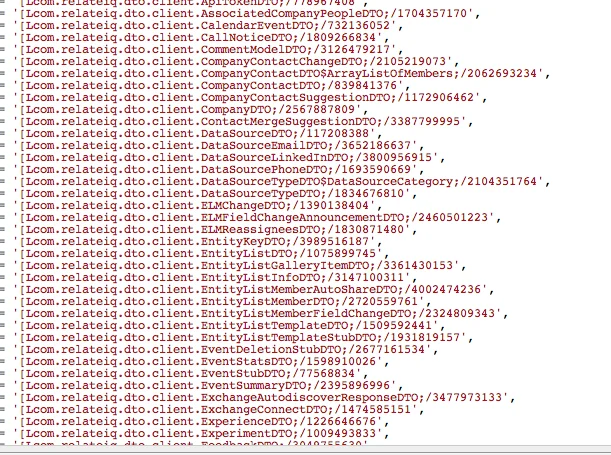
When a legitimate user authenticates to the RelateIQ application, since it is a GWT based application, a request is sent to the URL https://app.relateiq.com/app/app.nocache.js. This detects the browser and then a corresponding request is sent to the URL https://app.relateiq.com/app/3E21F01ECCFB75FE4838912FCE252FA1.cache.html and the response from the server is the entire RelateIQ application obfuscated in javascript rendered on the client side. As long as the user is authenticated to the website, it is acceptable for the server to return the obfuscated javascript of the RelateIQ application.
However, it was observed that even an unauthenticated attacker can request for the same URL and receive the same obfuscated JavaScript from the server. Since de-obfuscation of this JavaScript is possible, the attacker will then be able to retrieve information about the application itself like the different RPC calls, pages and data residing within the application, functionality logic, etc. which can then be leveraged to exploit other vulnerabilities.
This requirement is clearly stated on the on the GWT Project website and they have also described some of the ways that this can be done here - http://www.gwtproject.org/articles/dynamic_host_page.html
Attachments
Not written yet. The AI write-up for this report has not been written yet. The Original tab links to the source.
How it worked
Impact
An unauthenticated attacker could learn the application's internal RPC calls, pages and logic, which could then be leveraged to exploit other vulnerabilities.
What the attacker needed
No account needed
The fix
The GWT project documentation describes this requirement, suggesting authentication should be required.
How it was found
- Request the GWT bootstrap JavaScript file without being logged in.
- Follow the request to the browser-specific compiled cache file.
- Receive the full obfuscated application JavaScript in the response.
- De-obfuscate the JavaScript to read application logic and RPC calls.
Explained by bugbounty.wiki with AI from the original and checked against quotes from it; it can still be wrong. Read the original before relying on a detail.
Not written yet. The AI write-up for this report has not been written yet. The Original tab links to the source.
A GWT application is a web app whose code is compiled into JavaScript and run in the browser. The server was handing that code to anyone who asked, even without logging in. Because the code can be tidied up and read, someone could learn how the app works inside and use that knowledge to look for further weaknesses.
What is Info disclosure?
Data the application should keep private (personal data, internal details, other users' records) reaches someone it should not.






