Bypass comment restriction
HackerOne restricts users with low reputation from commenting on reports closed as informative or N/A, but a user can bypass this by repeatedly requesting and cancelling disclosure, attaching a comment each time. This allows an unlimited number of comments despite the restriction.

- Disclosed after 28 days
Hackerone disallows people with under 3000 reputation and 3 signal to comment on reports which have been closed as informative or N/A:
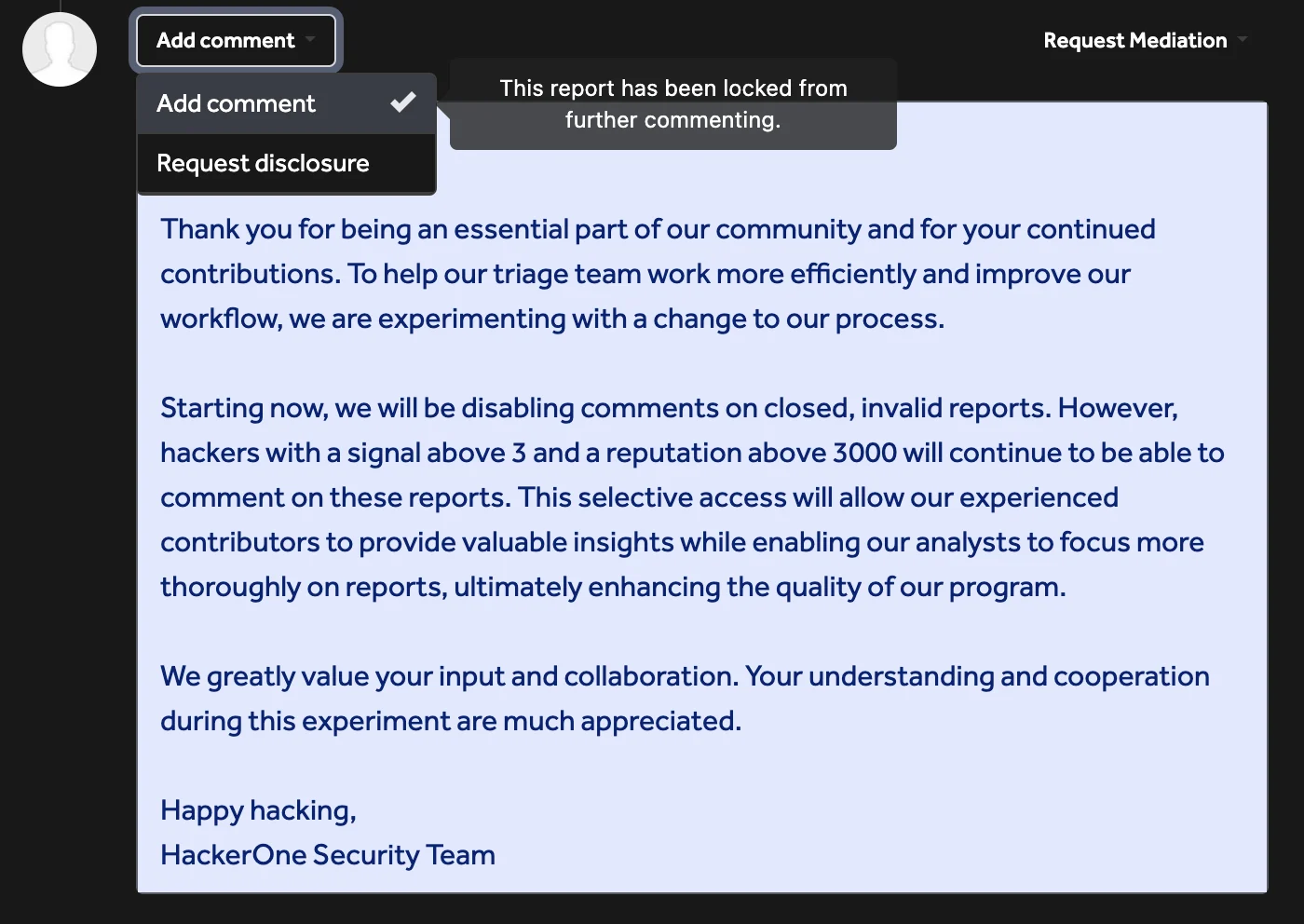
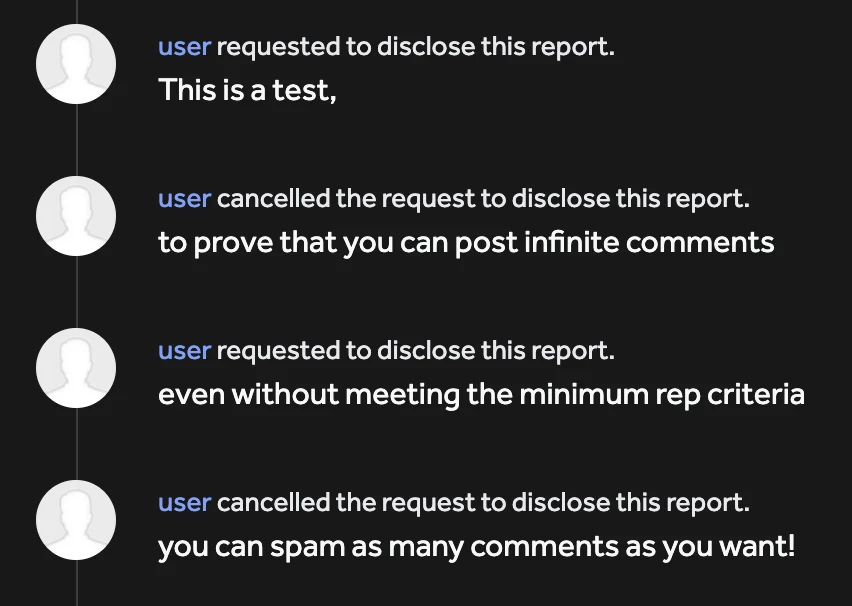
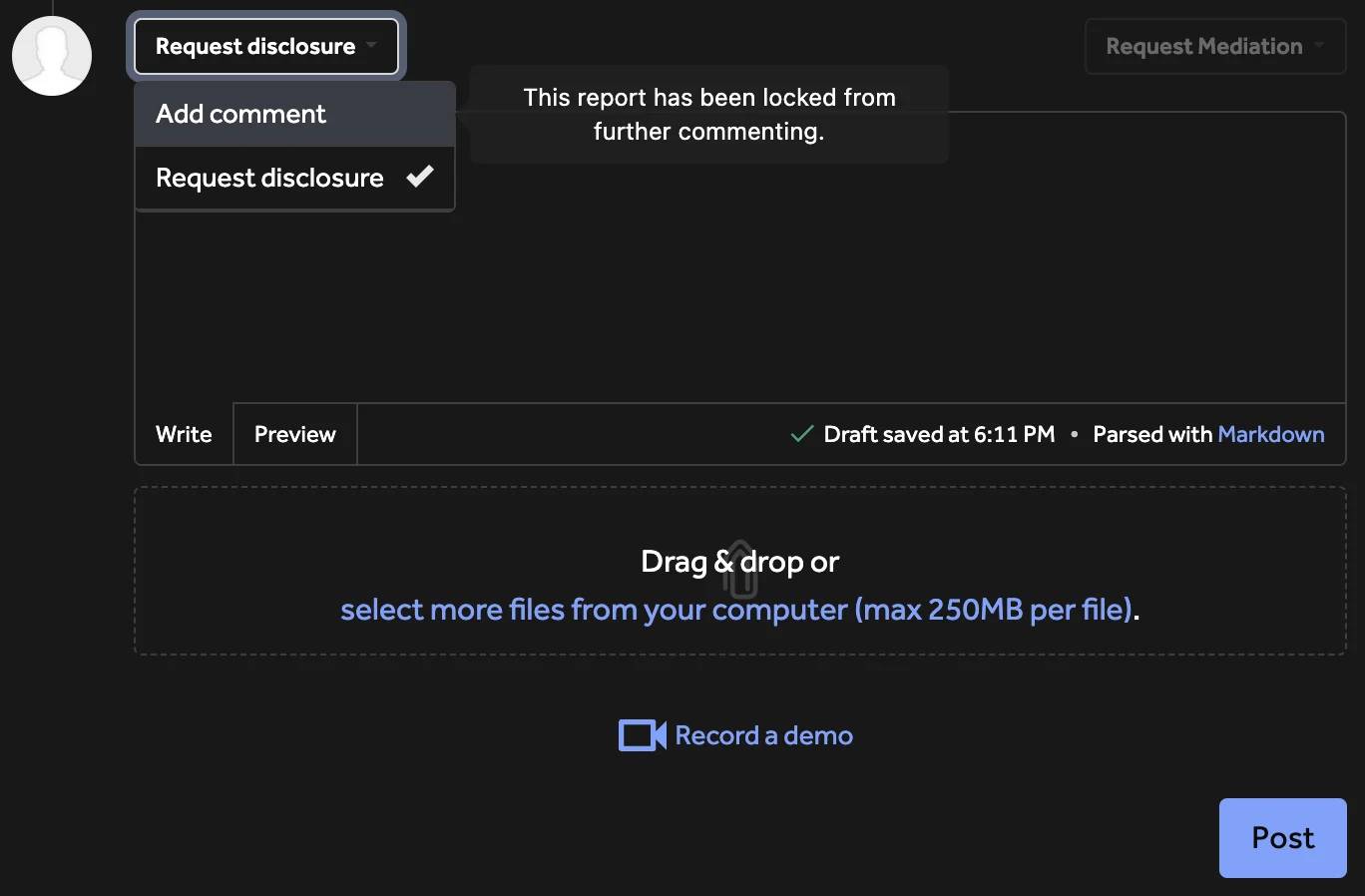
However you can bypass this and leave an infinite amount of comments by "requesting disclosure" , then cancelling it (if you want to write more messages), then request again and so on. you can attach a comment on each request/cancellation , effectively bypassing this measure
Impact
broken access control (bypassing restriction)
Attachments
Not written yet. The AI write-up for this report has not been written yet. The Original tab links to the source.
How it worked
Root cause
Likely the comment restriction is only enforced on the normal comment form, not on the comment field attached to disclosure requests and cancellations.
Impact
A user could post unlimited comments on reports they are not supposed to comment on, bypassing the access control.
What the attacker needed
A HackerOne account with low reputation; a closed report (informative or N/A)
How it was found
- Request disclosure on a closed report.
- Attach a comment to the request.
- Cancel the disclosure request.
- Attach another comment to the cancellation.
- Repeat to post unlimited comments.
Explained by bugbounty.wiki with AI from the original and checked against quotes from it; it can still be wrong. Read the original before relying on a detail.
Not written yet. The AI write-up for this report has not been written yet. The Original tab links to the source.
A website tried to stop new users from commenting on certain closed reports. But the 'request disclosure' button still lets you add a comment, and you can press it again and again. So the restriction can be avoided.
What is Access control?
A user can do something their role should not allow: reach an admin function, act on a feature they have not paid for, or skip a permission check. IDOR is the special case where the object belongs to someone else.

