CSRF possible when SOP Bypass/UXSS is available
The report describes how an attacker could perform CSRF attacks against HackerOne if they can read content from the site (via SOP bypass or UXSS), because CSRF tokens are printed in HTML, not bound per action, and PATCH/DELETE can be sent via _method. The attack scenario uses a UXSS bug in IE to frame a CloudFlare endpoint without X-Frame-Options, extract the token via AJAX, and then submit a forged request.
 Originally disclosed on HackerOne
- Triaged in 21 hours
- Fixed in 2 days
- Paid in 16 days
- Disclosed after 24 days
Description If an attacker could extract content from https://hackerone.com, they could perform CSRF attacks due to the fact that:
- Some pages prints the token in the HTML response (edit user form at https://hackerone.com/settings/profile/edit)
- Tokens aren't bound per action
- PATCH/DELETE can be sent via _method
Attacker being allowed to read content but not execute JS could happen if:
- SOP Bypass in plugin (http://www.cve.mitre.org/cgi-bin/cvename.cgi?name=CVE-2015-3115)
- SOP Bypass in application design (https://miki.it/blog/2014/7/8/abusing-jsonp-with-rosetta-flash/)
- UXSS (https://blog.innerht.ml/ie-uxss/)
Currently, some mitigations are in place. _method isn't allowed in GET and the Origin header is checked. This isn't enough since FireFox and IE doesn't send Origin header when submitting forms.
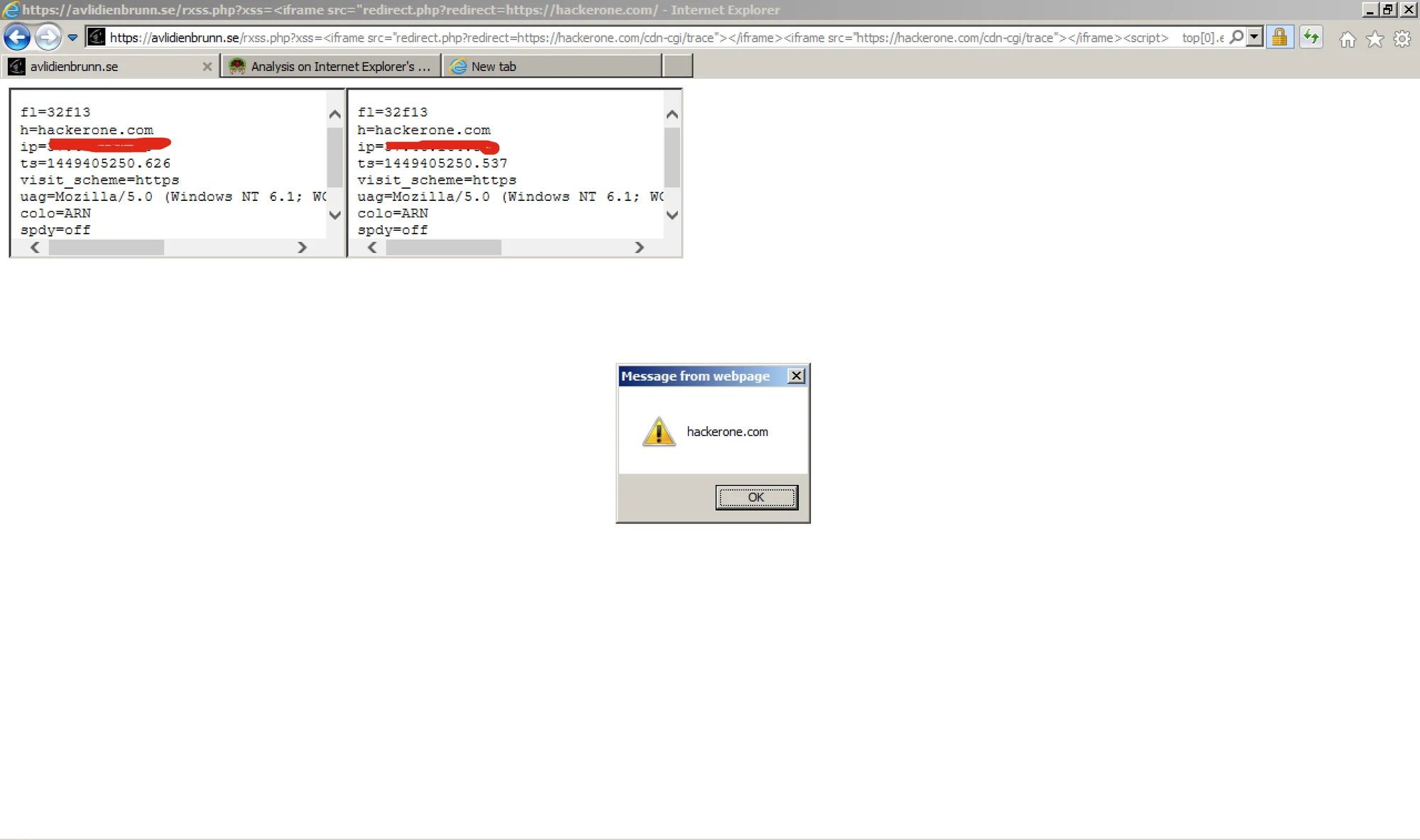
Attack scenario The most recent (to my knowledge) SOP bypass was the re-implementation of the IE UXSS bug (https://blog.innerht.ml/ie-uxss/). This was working November 28th 2015. However, the bug required framing at least one resource, and HackerOne sends X-Frame-Options on all resources. Sadly, HackerOne uses CloudFlare so the URL https://hackerone.com/cdn-cgi/trace could be used (doesn't send X-Frame-Options).
So to sum up:
- Logged in user visits attackers page in IE (vulnerable to UXSS)
- UXSS runs script on framed "https://hackerone.com/cdn-cgi/trace" to extract CSRF token on https://hackerone.com/settings/profile/edit (via AJAX)
- User is attacked with the extracted CSRF token
Fix This could be mitigated by storing the token in JavaScript and adding the token to the form after the page is loaded.
Attachments
Not written yet. The AI write-up for this report has not been written yet. The Original tab links to the source.
How it worked
Root cause
Likely the CSRF token is embedded in the HTML of some pages and is not tied to a specific action, so if an attacker can read the page content (e.g., via a browser SOP bypass), they can reuse the token for other state-changing requests.
Impact
An attacker could perform CSRF attacks, such as changing the user's profile, if they can read content from HackerOne via a SOP bypass or UXSS; however, the attack requires a vulnerable browser and the specific UXSS bug was working as of November 28th 2015.
What the attacker needed
Victim uses a browser with SOP bypass or UXSS; victim is logged in to HackerOne; victim visits attacker's page
The fix
The token should be stored in JavaScript and added to the form after the page loads, so it is not present in the HTML.
How it was found
- Logged in user visits attacker's page in IE (vulnerable to UXSS)
- UXSS runs script on framed "https://hackerone.com/cdn-cgi/trace" to extract CSRF token on https://hackerone.com/settings/profile/edit (via AJAX)
- User is attacked with the extracted CSRF token
Explained by bugbounty.wiki with AI from the original and checked against quotes from it; it can still be wrong. Read the original before relying on a detail.
Not written yet. The AI write-up for this report has not been written yet. The Original tab links to the source.
CSRF is when a malicious site makes your browser send a request to another site where you are logged in, without your knowledge. Normally, a secret token in each form prevents this, but here the token could be stolen if the attacker can read the page's content using a browser bug. The report suggests hiding the token in JavaScript so it is not in the HTML.
What is CSRF?
Another site makes a signed-in user's browser perform an action they did not intend.




