Stored XSS in IE11 on hackerone.com via custom fields
A stored cross-site scripting vulnerability existed in HackerOne's custom fields feature when viewed in Internet Explorer 11. An attacker could inject a script that executed in a program admin's browser when they edited a report, potentially redirecting them to malicious sites.
 Originally disclosed on HackerOne
- Paid in 2 months
- Disclosed after 2 months
Summary by the researcher
Hi @security,
Steps:
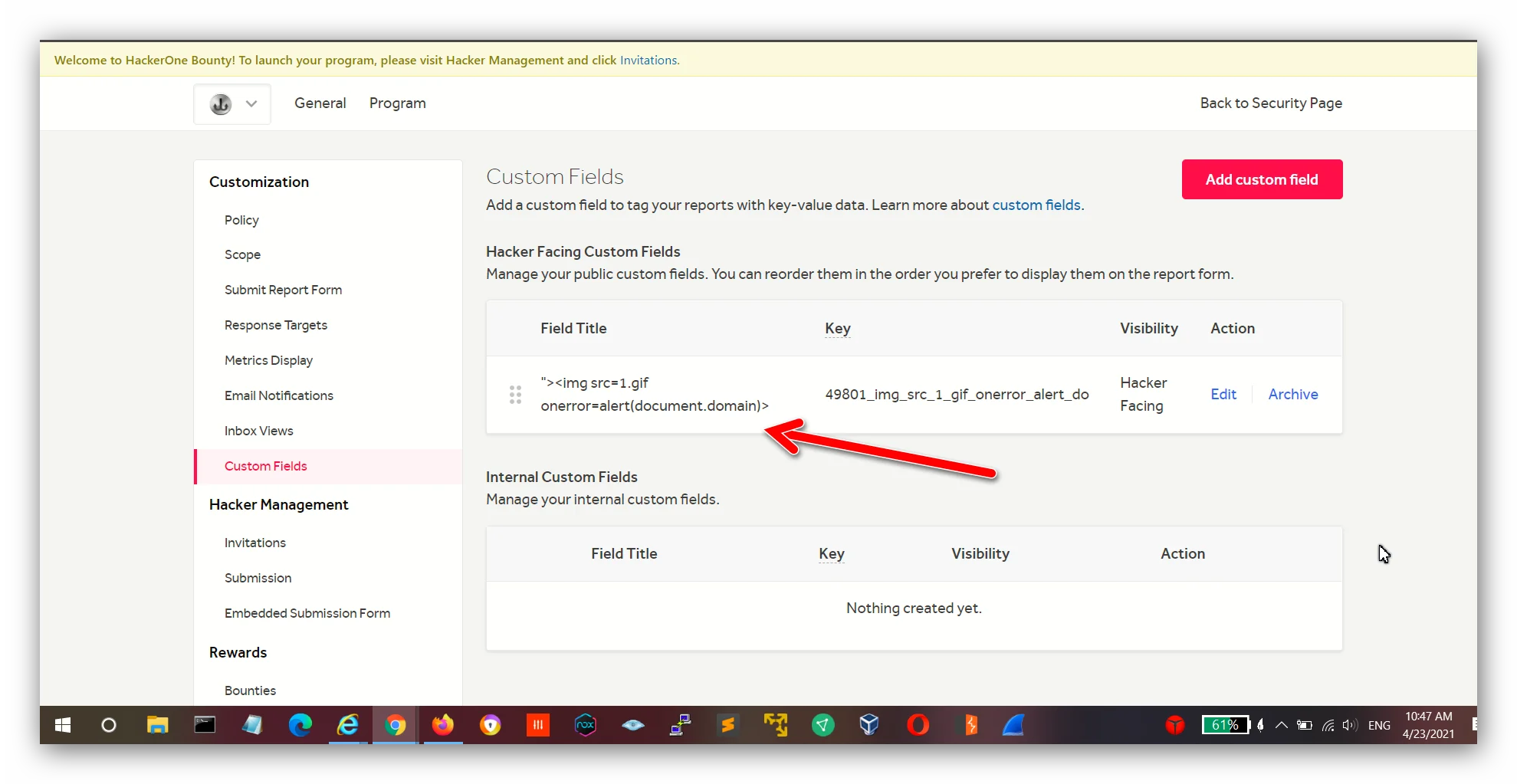
1-The affected program is enabled with a Hacker Facing Custom Fields feature: https://hackerone.com/:handle/custom_fields
Custom Fields >> Hacker Facing Custom Fields >>new field with a title name (hello) >>
Select type : text >> Visibility; Hacker facing - this field will appear on the report for the hacker to complete
2-Then a malicious user report a bug to that program and put this payload "><img src=x onerror=alert(document.domain)>
to Additional information field in the report and then submit the report.
3-when the program admin open the attacker report and doing this actions [edit or modify or change and save it] to the value of the attacker in report(Custom data - hacker facing) field as a result a stored xss issue happen.
Poc: https://hackerone.com/reports/1173040#activity-11548302
i think this issue happen when rendering the report data via : ==updated custom field (from) the attacker value (to) a new value both values in (from) & (to) are not sanitized from malicious code so the attacker malicious payload executed there.==
==so even if the program admin have changed the attacker payload in the report (Custom data - hacker facing) field in order to prevent the attacker code from execute, the attacker payload will be saved in the report data for ever in (from) value and the attack going to work permanently.==
The report
Hi There,
i found stored xss via Custom Fields
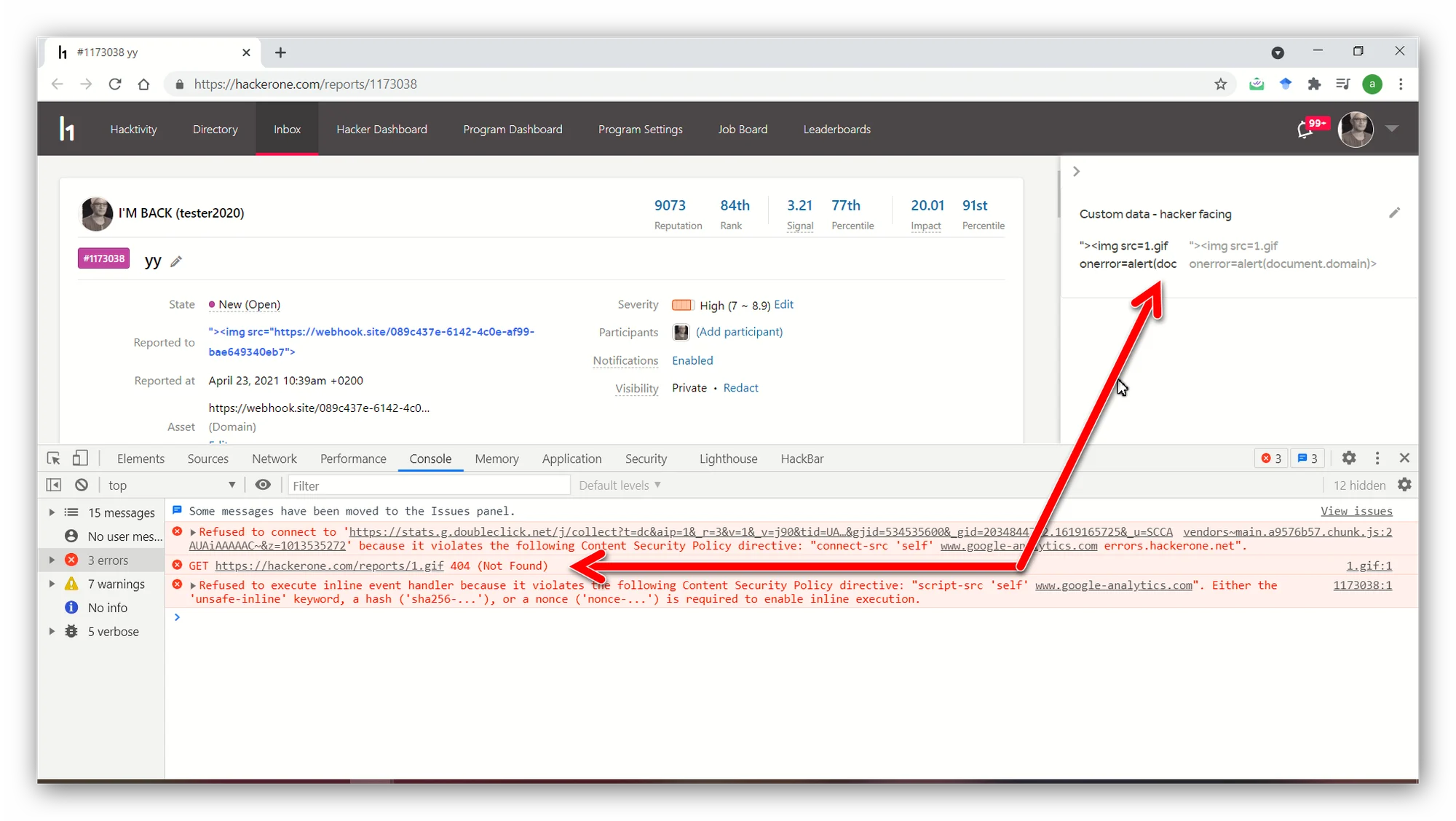
POC:
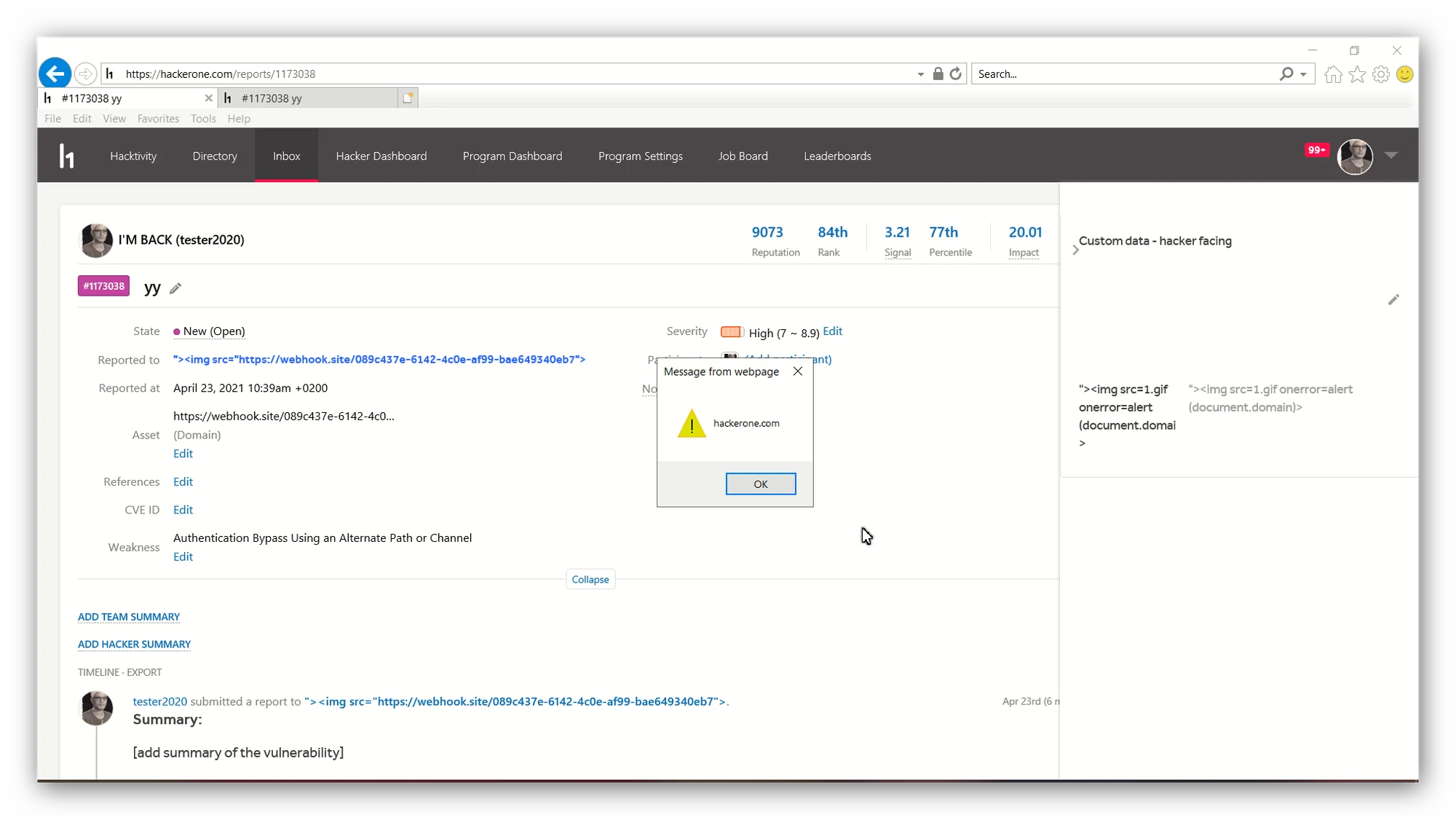
Impact
The attacker can use this issue to execute malicious script code in the victim user browser also redirect the victim user to malicious sites.
Not written yet. The AI write-up for this report has not been written yet. The Original tab links to the source.
How it worked
Root cause
Likely the application failed to sanitise user-supplied input in the 'from' and 'to' values of custom fields when rendering report activity, allowing script injection.
Impact
The attacker could execute malicious script in the victim's browser and redirect them to malicious sites; the report does not state whether defences like CSP limited the exploit, but it specifically mentions Internet Explorer 11.
What the attacker needed
Program with Hacker Facing Custom Fields enabled; attacker submits a report; admin edits the report
How it was found
- Enable Hacker Facing Custom Fields for a program and create a new text field.
- Submit a report with a malicious payload in the Additional information field.
- As a program admin, open the report and edit or save the custom field value.
- The stored XSS executes in the admin's browser.
Explained by bugbounty.wiki with AI from the original and checked against quotes from it; it can still be wrong. Read the original before relying on a detail.
Not written yet. The AI write-up for this report has not been written yet. The Original tab links to the source.
Cross-site scripting (XSS) is when an attacker sneaks harmful code into a website so it runs in another person's browser. Here, a text field in a bug report was not cleaned properly, so when an admin edited the report, the code ran. This could send the admin to a fake site.
What is XSS?
Script an attacker supplies runs in another user's browser, on the target's origin, with that user's session.



