Following links are vulnerable to clickjacking
Several pages on the site did not send an X-Frame-Options header, so they could be loaded inside a frame on another site. An attacker could use this to trick a logged-in user into clicking things on the framed page without realising it.

- Triaged in 10 days
- Fixed in 17 days
- Paid in 31 days
- Disclosed after 2 months
NOTE! Thanks for submitting a report! Please replace all the [square] sections below with the pertinent details. Remember, the more detail you provide, the easier it is for us to verify and then potentially issue a bounty, so be sure to take your time filling out the report!
Summary: [The below listed links, dont have X-FRAME-OPTIONS set to DENY or SAMEORIGIN and they are vulnerable to clickjacking]
Description: [The following url can be easily vulnerable to clickjacking]
Browsers Verified In:
- [Firefox V56]
Steps To Reproduce: [add details for how we can reproduce the issue]
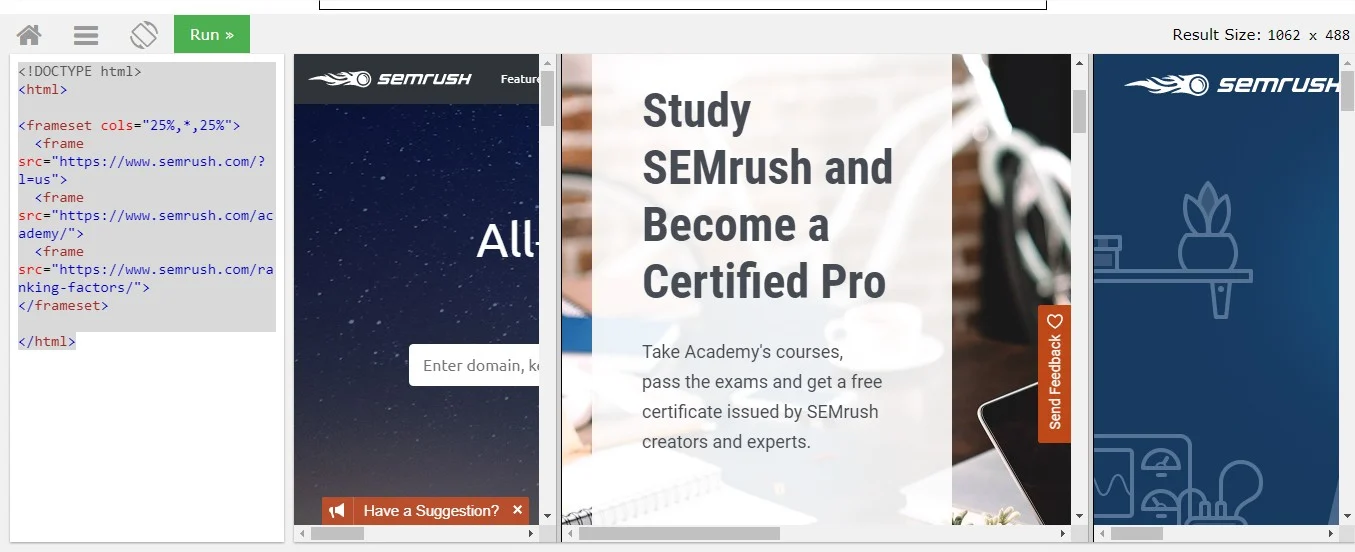
- [Run below code from browser and you will see listed links are vulnerable to clickjacking attack]
- [<!DOCTYPE html>
Following links are vulnerable to clickjacking
- https://www.semrush.com/semrush-opensearch.xml
- https://www.semrush.com/academy/
- https://www.semrush.com/ranking-factors/
- https://www.semrush.com/manifest.json
- https://www.semrush.com/?l=us
- https://www.semrush.com/blog/
- https://www.semrush.com/
- https://www.semrush.com/prices/
- https://www.semrush.com/.
- https://www.semrush.com/.?l=us
Supporting Material/References:
- Screenshot is attached with ticket
Attachments
Not written yet. The AI write-up for this report has not been written yet. The Original tab links to the source.
How it worked
Root cause
Likely the pages were served without an X-Frame-Options header (or an equivalent frame-ancestors rule), so browsers allowed them to be framed by any origin.
Impact
A user could be tricked into interacting with the framed site while believing they are on another page, though the report does not show a concrete harmful action.
What the attacker needed
Victim visits an attacker page
The fix
The pages lack an X-Frame-Options header set to DENY or SAMEORIGIN.
How it was found
- Open a local HTML page in the browser that frames several of the listed site pages.
- Observe that the framed pages load, showing they can be embedded by another site.
Explained by bugbounty.wiki with AI from the original and checked against quotes from it; it can still be wrong. Read the original before relying on a detail.
Not written yet. The AI write-up for this report has not been written yet. The Original tab links to the source.
Websites can tell browsers whether they are allowed to be shown inside a frame on another site. If they do not say no, a malicious page can quietly display the real site and place invisible buttons over it, so a visitor clicks something they did not mean to. This is called clickjacking.
What is UI spoofing?
The interface lies to the user: a framed page catches their clicks, or a browser shows the wrong address or a fake prompt. Paid when it leads to a sensitive action or convincing phishing.


