Reverse Proxy misroute leading to steal X-Shopify-Access-Token header

- Triaged in 4 days
- Fixed in 4 days
- Paid in 5 days
- Disclosed after 5 months
Summary by the program
@ruvlol discovered that the /admin/api/graphql endpoint in Shopify admin was missing host validation, and would proxy to arbitrary hosts when the host header was modified. This could have allowed making POST requests with that path to internal services, or exposing the X-Shopify-Access token for the current user (which the client does not typically have access to). However, this token has the same access level as interacting normally with the graphql endpoint in admin for that session.
The report
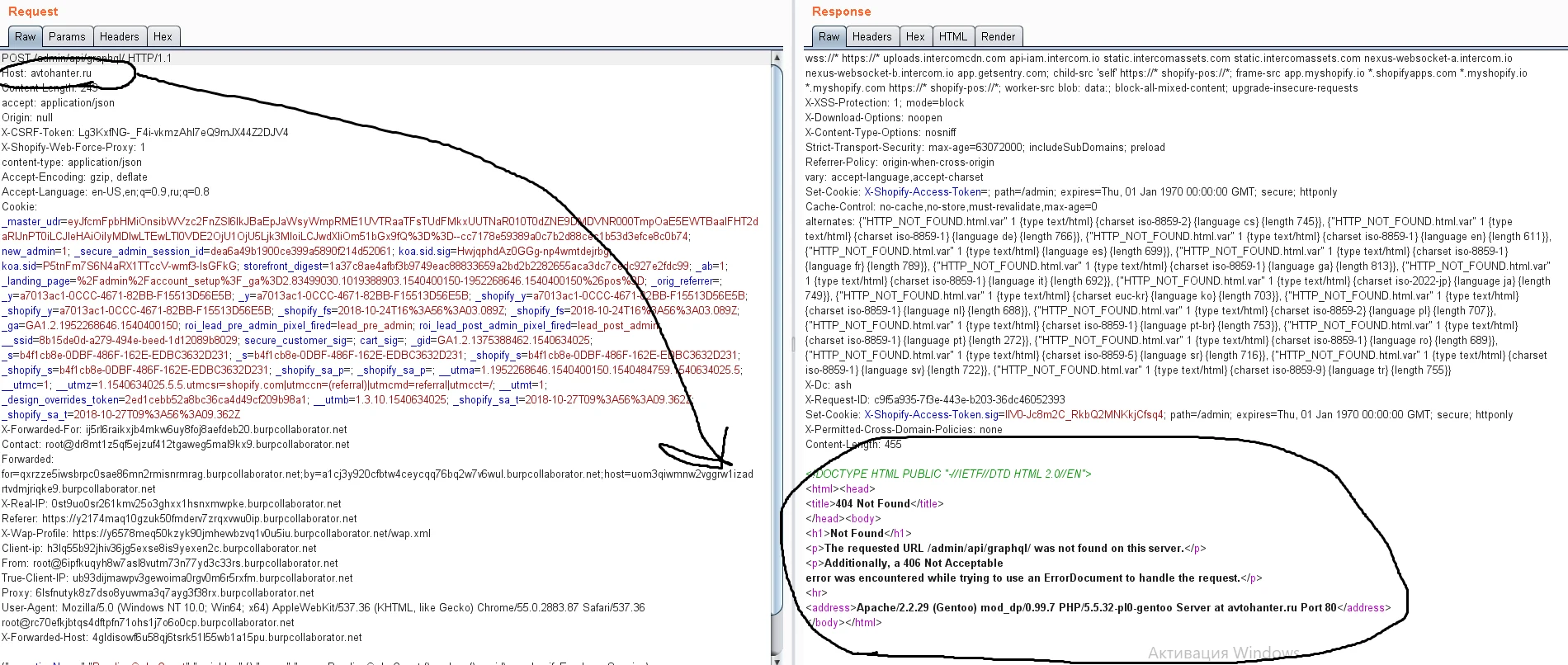
Hello Shopify team! I found out that on /admin/api/graphql endpoint server fetches content of Host header value (${HTTP_Host} + /admin/api/graphql). If my own host was sent to server, request comes from ██████████or ██████████ (your google cloud cluster). Also I can grab all reverse proxy headers including X-Shopify-Access-Token.
example of such request in base64:
███
Also it returns response your server got on ${HTTP_Host} + /admin/api/graphql address
How to reproduce:
- POST /admin/api/graphql with Host pointing to external website
- As external website owner grab incoming headers.
Impact
SSRF, X-Shopify-Access-Token leakage
Attachments
Not written yet. The AI write-up for this report has not been written yet. The Original tab links to the source.
What is known
A medium-severity SSRF bug in your-store.myshopify.com. HackerOne made it public on 14 March 2019. It paid $1,000.
About SSRF
The server can be made to fetch an address the attacker chooses, reaching internal services, cloud metadata or other customers' data.
Not written yet. The AI write-up for this report has not been written yet. The Original tab links to the source.
What is SSRF?
The server can be made to fetch an address the attacker chooses, reaching internal services, cloud metadata or other customers' data.