staff can able to extend shopify trial period without admin permission
A staff account with only the report permission could call an internal GraphQL mutation that extends the shop's trial period, despite having no subscription or plan permissions.
 Originally disclosed on HackerOne
- Triaged in 7 hours
- Fixed in 25 days
- Paid in 12 hours
- Disclosed after 47 days
Description: my store 14 days trial subscription remains only for 2 days and I see Shopify also offers shop admin to extend shop trial period to another 14 days. so, I found an issue in which staff with no permission also able to extend trial period without admin permission
steps to reproduce :
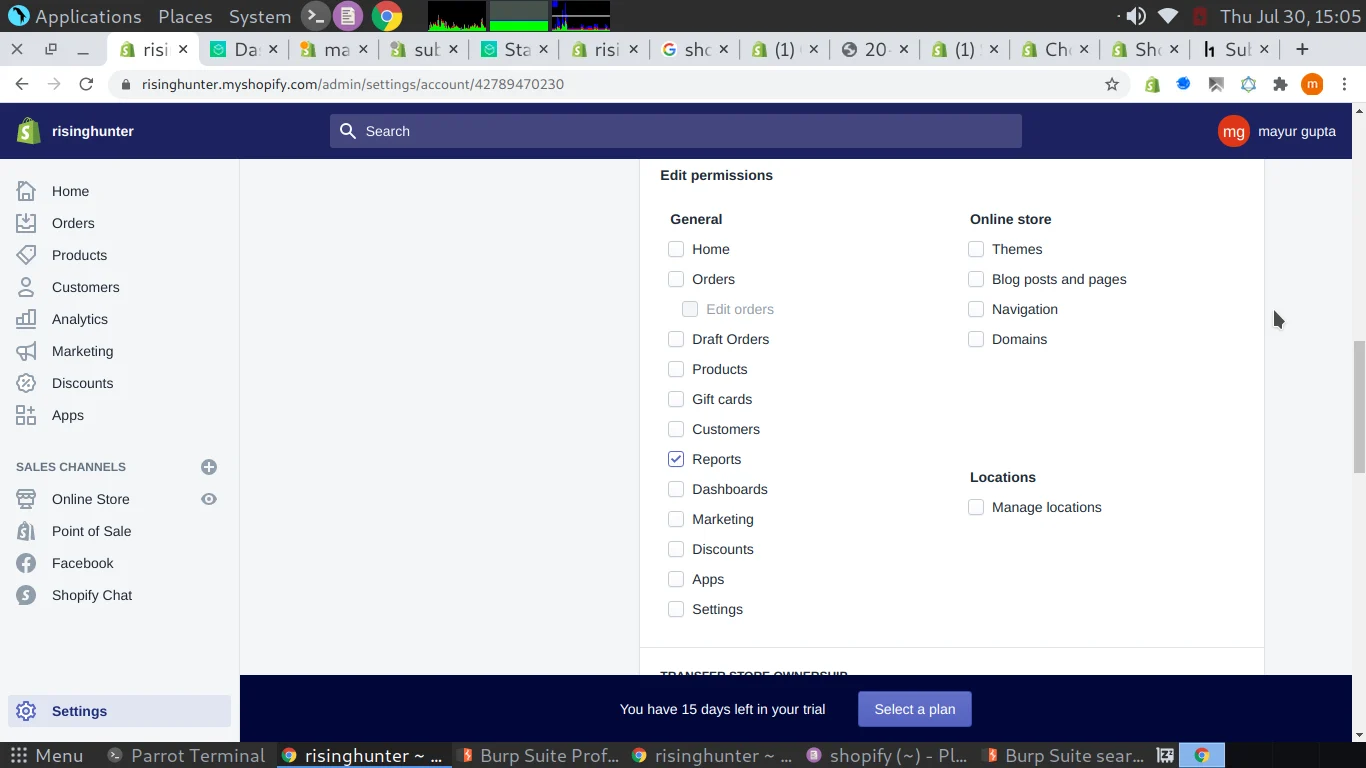
1). add staff only "report" permission
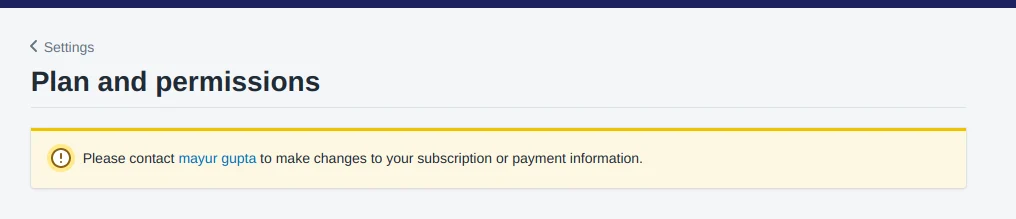
2). then added staff isn't able to do any activity related to subscription/plan
3). run following TrialSelfExtend Graphql request through added staff account ███████
POST /admin/internal/web/graphql/core HTTP/1.1
Host: risinghunter.myshopify.com
Connection: close
Content-Length: 218
accept: application/json
X-CSRF-Token: H9hN7Wt7-0Q1PwBhOsOIZMpEcCnp0WZQw8BM
content-type: application/json
User-Agent: Mozilla/5.0 (X11; Linux x86_64) AppleWebKit/537.36 (KHTML, like Gecko) Chrome/83.0.4103.61 Safari/537.36
X-Shopify-Web-Force-Proxy: 1
Origin: https://risinghunter.myshopify.com
Sec-Fetch-Site: same-origin
Sec-Fetch-Mode: cors
Sec-Fetch-Dest: empty
Accept-Encoding: gzip, deflate
Accept-Language: en-GB,en-US;q=0.9,en;q=0.8,ru;q=0.7
Cookie: new_admin=1; new_theme_editor_disabled.sig=c0lGzzh0MFBQ5fCQTfz7yqvtriw; new_theme_editor_disabled=1; _abv=0; _master_udr=eyJfcmFpbHMiOnsibWVzc2FnZSI6IkJBaEpJaWxpT1dWbU4yWmtOQzFsTVdFMUxUUmlOekV0WWprMVppMW1PV1ExTm1Jd00yRXhZMllHT2daRlJnPT0iLCJleHAiOiIyMDIyLTA3LTI4VDA3OjEwOjAyLjAyOFoiLCJwdXIiOiJjb29raWUuX21hc3Rlcl91ZHIifX0%3D--aaa21a6f8ca759e8780b581506af5e6b544b851d; _secure_admin_session_id_csrf=9b14248b770db62cc190e3e264362b12; _secure_admin_session_id=9b14248b770db62cc190e3e264362b12; koa.sid=vOD0te0oCONZnKFY8VZeCFGM5sWIbwYB; koa.sid.sig=-qd5DD-YfKDTMZz7LHyxOu7MMsE; _orig_referrer=; _shopify_y=be3905ce-c786-4135-a98c-f4c292fed5bf; _y=be3905ce-c786-4135-a98c-f4c292fed5bf; _landing_page=%2Fadmin%2Fauth%2Flogin%3Faccountnumber%3D0%26from_signup%3Dtrue; __ssid=831ecb8b-307e-4640-af0a-80bfa7b89894; _y=be3905ce-c786-4135-a98c-f4c292fed5bf; _shopify_y=be3905ce-c786-4135-a98c-f4c292fed5bf; _shopify_fs=2020-07-17T04%3A36%3A57.584Z; cart_ver=%3A0; secure_customer_sig=; cart_sig=; new_theme_editor_disabled=1; _ga=GA1.2.1368468577.1594960719; _abv=0; _ab=1; storefront_digest=██████████; _secure_session_id=05214efc7671b79b95c5540b7cde58c2; __cfduid=dd29f3357820fab55e8a97634eec973941595927106

{"operationName":"TrialSelfExtend","variables":{},"query":"mutation TrialSelfExtend {\n  trialSelfExtend {\n    message\n    userErrors {\n      field\n      message\n      __typename\n    }\n    __typename\n  }\n}\n"}
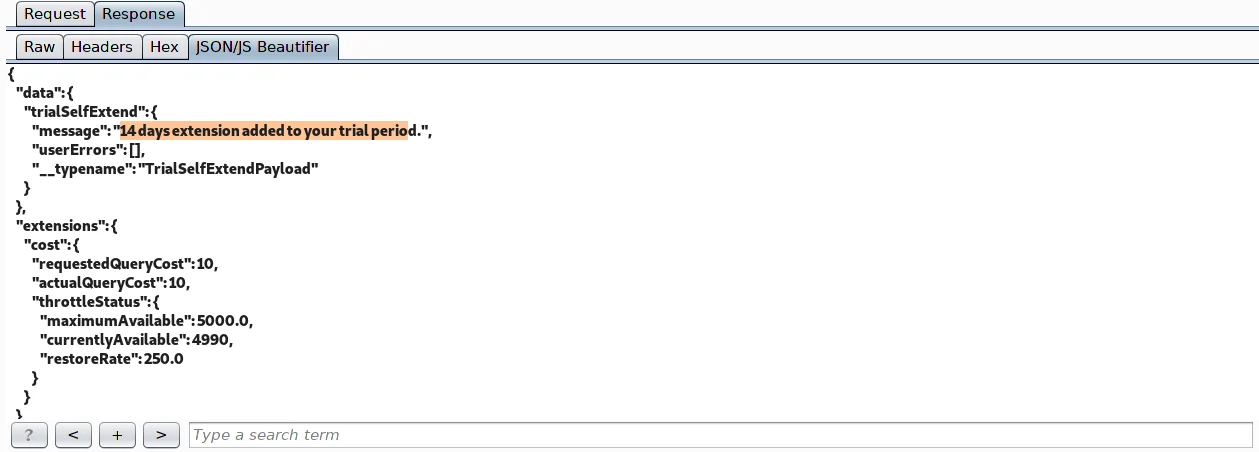
4). after running above request you get the response "14 days extension added to your trial period"
Impact
staff can able to extend Shopify trial period without admin permission
Context
Shopify stores start on a trial subscription. The report describes a store whose 14 day trial had 2 days left, and notes that Shopify offers shop admins the ability to extend the trial period by another 14 days. The feature under scrutiny is therefore the trial self extension, exposed through an internal GraphQL endpoint used by the admin interface.
The researcher's claim is that a staff member with no relevant permission can invoke the trial extension and extend the trial.
Setup
The setup is a Shopify store at risinghunter.myshopify.com with a staff account. The staff member is granted only the "report" permission, nothing related to subscriptions or plans. The request is sent as that staff account against the admin GraphQL core endpoint.
Finding it
The researcher noticed two things. First, the store's trial was nearly over (2 days remaining of the 14). Second, Shopify lets a shop admin extend the trial by another 14 days. That raised the question of whether the extension is tied to the admin role or merely to the endpoint being reachable from the admin UI.
With a staff account limited to the "report" permission, the admin interface itself does not allow any activity related to subscription or plan. The researcher then tried to call the underlying GraphQL mutation directly from that staff session.
Exploitation
Step 1: create a staff account with only the report permission
The staff member is added with the single "report" permission.
Step 2: confirm the UI blocks subscription activity
Logged in as that staff member, no activity related to subscription or plan is possible through the interface. The staff account could not do any activity related to subscription or plan.
Step 3: send the TrialSelfExtend GraphQL request as the staff account
The researcher runs the following request through the added staff account:
POST /admin/internal/web/graphql/core HTTP/1.1
Host: risinghunter.myshopify.com
Connection: close
Content-Length: 218
accept: application/json
X-CSRF-Token: [redacted]
content-type: application/json
User-Agent: Mozilla/5.0 (X11; Linux x86_64) AppleWebKit/537.36 (KHTML, like Gecko) Chrome/83.0.4103.61 Safari/537.36
X-Shopify-Web-Force-Proxy: 1
Origin: https://risinghunter.myshopify.com
Sec-Fetch-Site: same-origin
Sec-Fetch-Mode: cors
Sec-Fetch-Dest: empty
Accept-Encoding: gzip, deflate
Accept-Language: en-GB,en-US;q=0.9,en;q=0.8,ru;q=0.7
Cookie: [redacted]

{"operationName":"TrialSelfExtend","variables":{},"query":"mutation TrialSelfExtend {\n  trialSelfExtend {\n    message\n    userErrors {\n      field\n      message\n      __typename\n    }\n    __typename\n  }\n}\n"}
The request targets /admin/internal/web/graphql/core on the store's admin host. It carries the staff session cookies and the CSRF token from that session, plus the X-Shopify-Web-Force-Proxy: 1 header and same-origin Origin and Sec-Fetch-Site headers. The body is a GraphQL mutation named TrialSelfExtend with no variables. The mutation calls trialSelfExtend and asks for message and any userErrors (with field, message and __typename).
Step 4: observe the extension
After running the request, the response is "14 days extension added to your trial period". The staff account, which had no permission to touch subscriptions or plans, has extended the store's trial.
Root cause
The report does not describe the server-side implementation. What it shows is that the authorisation check for the trial extension is not enforced on the trialSelfExtend mutation for staff accounts: the UI hides subscription and plan actions from a staff member with only the "report" permission, but the GraphQL endpoint behind it accepts the mutation from that same session.
Impact
A staff member without admin permission can extend the Shopify trial period. The report frames the impact as exactly that: staff can extend the trial without admin permission. The report does not describe any other capability being reachable through the same gap, nor any limit on how often the extension can be applied.
Fix
A fix would be to enforce the admin or subscription permission check on the trialSelfExtend mutation itself, so that the server rejects the call from a staff account that lacks the permission.
Variants to test
- Other admin-only GraphQL mutations called from a low-privilege staff session. A positive result is a successful response where the UI offers the action only to admins.
- The same mutation with a staff account holding different single permissions, to see whether the gap is specific to the "report" permission or applies to any staff account.
- Repeated calls to the extension mutation, to see whether the trial can be extended more than once. A positive result is a second successful extension message.
Hunting notes
This kind of bug hides where a product exposes an admin capability through an internal GraphQL endpoint and the UI is the only place the permission is enforced. During recon, look for internal admin API paths such as /admin/internal/web/graphql/core, and for mutations whose names describe privileged actions (billing, plans, trials, settings). The signal is a staff role whose UI hides a feature while the underlying mutation remains callable with that session's cookies and CSRF token.
The researcher added a staff account with only the "report" permission, then called the mutation directly and got the extension confirmation back. That contrast between UI restriction and API acceptance is what makes the finding concrete.
What happened, in plain words
Shopify is a platform for building online shops. When you sign up, your shop starts on a free trial subscription, a fixed period during which you can use the shop before paying. In this report the shop's 14 day trial had 2 days left. Shopify also offers the shop's owner, the admin, the ability to extend the trial by another 14 days.
The researcher found that a staff member with no permission related to subscriptions or plans could also trigger the extension. A staff member, someone the admin invites to help run the shop with only some permissions, could also trigger the extension, even though that staff member had no permission related to subscriptions or plans. The staff member did it by sending a request directly to the shop's internal API instead of clicking through the admin screens.
This is a case of improper access control: the system is supposed to let only certain people do certain things, and here the check was missing on one path.
Background concepts, from zero
Before the steps, a few ideas that the rest of the article relies on.
- Admin and staff: the admin is the person who owns or manages the shop and has every power. Staff are additional accounts the admin creates for other people, each with a chosen set of permissions. Permissions are the individual rights a staff account has, such as viewing reports or managing products.
- Trial subscription: a time-limited free period on a paid product. When it ends, the shop has to start paying unless the trial is extended.
- API: an interface that programs use to talk to a service, like a service counter at a shop. The website's buttons are one way in; the API is the counter behind them, and it accepts requests directly if you know the address and the format.
- GraphQL: a way of asking an API for data or actions using a small query language. Instead of many fixed addresses, there is usually one address, and the request body says which operation you want. An operation that changes something is called a mutation.
- Endpoint: the specific address (URL path) on a server that accepts a particular kind of request. Here it is
/admin/internal/web/graphql/core. - HTTP request: the message a browser or tool sends to a server. It has a method (such as
POST), a path, headers (extra information) and often a body (the content). - Header: a labelled line in a request carrying metadata, such as what content type is being sent or which site the request came from.
- Cookie: a small piece of data the server gave your browser earlier, which the browser sends back on later requests so the server recognises you. A session cookie is the one that proves you are logged in.
- CSRF token: a secret value the site puts into its pages and expects back on requests that change things. It is a guard against another website silently making your browser send a request on your behalf (cross-site request forgery).
- Authorisation check: the server-side decision about whether the logged-in user is allowed to perform the requested action. If this check is missing, the action succeeds for anyone who can reach the endpoint, no matter what the screens show.
Context
The shop in the report is at risinghunter.myshopify.com. Its trial had 2 days remaining out of 14, and Shopify offers shop admins the ability to extend the trial by another 14 days. The feature in question is therefore the trial self extension, which the admin interface reaches through an internal GraphQL endpoint.
The researcher's claim is that this admin-only capability is not actually restricted to admins: a staff member with no relevant permission can invoke it and extend the trial.
Setup
The setup is a Shopify store at risinghunter.myshopify.com with a staff account. The staff member is granted only the "report" permission, nothing related to subscriptions or plans. The request is sent as that staff account against the admin GraphQL core endpoint.
Finding it
The researcher noticed two things. First, the store's trial was nearly over (2 days remaining of the 14). Second, Shopify lets a shop admin extend the trial by another 14 days. That raised the question of whether the extension is tied to the admin role or merely to the endpoint being reachable from the admin interface.
With a staff account limited to the "report" permission, the admin interface itself does not allow any activity related to subscription or plan. The researcher then tried to call the underlying GraphQL mutation directly from that staff session.
Exploitation
Step 1: create a staff account with only the report permission
The staff member is added with the single "report" permission.
Step 2: confirm the interface blocks subscription activity
Logged in as that staff member, no activity related to subscription or plan is possible through the interface. The staff account could not do any activity related to subscription or plan.
Step 3: send the TrialSelfExtend GraphQL request as the staff account
The researcher runs the following request through the added staff account:
POST /admin/internal/web/graphql/core HTTP/1.1
Host: risinghunter.myshopify.com
Connection: close
Content-Length: 218
accept: application/json
X-CSRF-Token: [redacted]
content-type: application/json
User-Agent: Mozilla/5.0 (X11; Linux x86_64) AppleWebKit/537.36 (KHTML, like Gecko) Chrome/83.0.4103.61 Safari/537.36
X-Shopify-Web-Force-Proxy: 1
Origin: https://risinghunter.myshopify.com
Sec-Fetch-Site: same-origin
Sec-Fetch-Mode: cors
Sec-Fetch-Dest: empty
Accept-Encoding: gzip, deflate
Accept-Language: en-GB,en-US;q=0.9,en;q=0.8,ru;q=0.7
Cookie: [redacted]

{"operationName":"TrialSelfExtend","variables":{},"query":"mutation TrialSelfExtend {\n  trialSelfExtend {\n    message\n    userErrors {\n      field\n      message\n      __typename\n    }\n    __typename\n  }\n}\n"}
Line by line, in plain words:
POST /admin/internal/web/graphql/core HTTP/1.1is the request line.POSTmeans "I am sending data that may change something". The path is the internal GraphQL endpoint the admin interface itself uses.HTTP/1.1is the version of the protocol.Host: risinghunter.myshopify.comsays which shop the request is for. Shopify serves many shops from shared infrastructure, so the server needs to know which one.Connection: closeasks the server to close the connection after this one request.Content-Length: 218states the size of the body in bytes, so the server knows how much to read.accept: application/jsonsays the client expects a JSON answer, JSON being a common text format for structured data.X-CSRF-Token: [redacted]is the anti-forgery token sent with the request.content-type: application/jsonsays the body is JSON.User-Agent: ...identifies the browser that sent the request. Here it claims to be Chrome on Linux.X-Shopify-Web-Force-Proxy: 1is a Shopify-specific header present in the request.Origin: https://risinghunter.myshopify.comsays which site the request came from. It matches the shop, so the request looks same-origin, meaning it appears to come from the shop's own pages.Sec-Fetch-Site: same-origin,Sec-Fetch-Mode: corsandSec-Fetch-Dest: emptyare browser-added hints about how the request was made. These are browser-added hints about how the request was made.Accept-Encoding: gzip, deflatelists the compression formats the client can handle in the response.Accept-Language: ...lists the languages the client prefers.Cookie: [redacted]carries the staff member's session cookies. This is what tells the server who is making the request. The values are redacted here because they are equivalent to a logged-in session.- The blank line separates the headers from the body.
- The body is a JSON object with three fields.
operationNameisTrialSelfExtend, the name of the operation.variablesis empty, so the operation takes no inputs.queryholds the GraphQL text itself:mutation TrialSelfExtenddeclares an operation that changes something, and inside ittrialSelfExtendis the action being invoked. The block after it lists what the client wants back:message, anduserErrorswithfield,messageand__typename.userErrorsis where GraphQL APIs commonly report problems with the request, and__typenameasks for the type name of the object, a GraphQL convention.
In short, the request targets /admin/internal/web/graphql/core on the shop's admin host. It carries the staff session cookies and the CSRF token from that session, plus the X-Shopify-Web-Force-Proxy: 1 header and same-origin Origin and Sec-Fetch-Site headers, so it looks like a normal admin interface call. The body is a GraphQL mutation named TrialSelfExtend with no variables.
Step 4: observe the extension
After running the request, the response is "14 days extension added to your trial period". The staff account, which had no permission to touch subscriptions or plans, has extended the store's trial.
Root cause
The report does not describe the server-side implementation. What it shows is that the authorisation check for the trial extension is not enforced on the trialSelfExtend mutation for staff accounts: the interface hides subscription and plan actions from a staff member with only the "report" permission, but the GraphQL endpoint behind it accepts the mutation from that same session.
Impact
A staff member without admin permission can extend the Shopify trial period. The report frames the impact as exactly that: staff can extend the trial without admin permission. The severity assigned is low. The report does not describe any other capability being reachable through the same gap, nor any limit on how often the extension can be applied.
Fix
A fix would be to enforce the admin or subscription permission check on the trialSelfExtend mutation itself, so that the server rejects the call from a staff account that lacks the permission.
Variants to test
- Other admin-only GraphQL mutations called from a low-privilege staff session. A positive result is a successful response where the interface offers the action only to admins.
- The same mutation with a staff account holding different single permissions, to see whether the gap is specific to the "report" permission or applies to any staff account.
- Repeated calls to the extension mutation, to see whether the trial can be extended more than once. A positive result is a second successful extension message.
Hunting notes
This kind of bug hides where a product exposes an admin capability through an internal GraphQL endpoint and the interface is the only place the permission is enforced. During recon, look for internal admin API paths such as /admin/internal/web/graphql/core, and for mutations whose names describe privileged actions (billing, plans, trials, settings). The signal is a staff role whose interface hides a feature while the underlying mutation remains callable with that session's cookies and CSRF token.
The researcher added a staff account with only the "report" permission, then called the mutation directly and got the extension confirmation back. That contrast between interface restriction and API acceptance is what makes the finding concrete.
Glossary
- Admin: the account that owns or manages a shop and holds every permission.
- API: an interface that programs use to talk to a service, separate from the website's buttons and screens.
- Authorisation check: the server-side decision about whether the logged-in user may perform the requested action.
- Cookie: a small piece of data stored by the browser and sent back to the server on later requests so the server can recognise the user.
- CSRF token: a secret value included in state-changing requests to stop another site from making the browser send them silently.
- Endpoint: the specific address on a server that accepts a particular kind of request.
- GraphQL: a query language and runtime for APIs where the request body names the operation and the fields to return.
- Header: a labelled line in an HTTP request or response carrying metadata.
- HTTP request: the message a client sends to a server, with a method, path, headers and optional body.
- Improper access control: a weakness where the system fails to restrict an action to the users who should be allowed to perform it.
- Mutation: in GraphQL, an operation that changes data or triggers an action, as opposed to a query that only reads.
- Origin: a header stating which site a request came from, used by servers to judge whether the request is same-origin.
- Permission: an individual right granted to a staff account, such as viewing reports or managing products.
- Same-origin: a request that comes from the same site (scheme, host and port) as the one it is sent to.
- Session cookie: the cookie that proves a user is logged in.
- Severity: the rating given to a vulnerability to express how serious it is, here low.
- Staff: an additional account created by the admin, limited to the permissions the admin grants.
- Subscription: a paid plan for using a product, often starting with a free trial period.
- Trial: a time-limited free period on a paid product.
- User-Agent: a header identifying the browser or client that sent the request.
userErrors: a field in a GraphQL response where the API reports problems with the request.


