Stored XSS on demo app link
A stored cross-site scripting vulnerability existed in the demo URL field of app submissions on apps.shopify.com. An attacker could inject a script that executes when a user previews changes and views the example store.

- Triaged in 29 hours
- Fixed in 17 days
- Paid in 29 hours
- Disclosed after 19 months
Hi,
I found stored XSS in apps.shopify.com in the DEMO URL of the apps you create.
#POC
- go to your partner account and create a new app
- go to DEMO link in https://apps.shopify.com/services/app_submissions/edit# of your app
put the payload you see below:
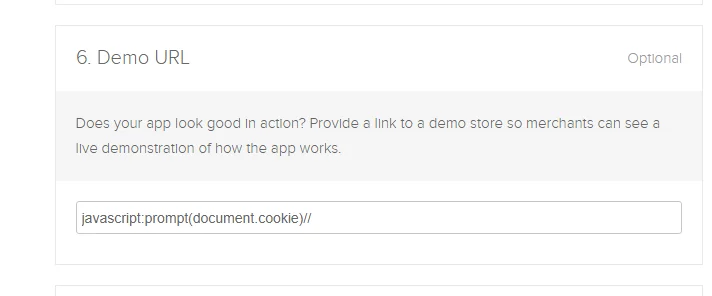
and when pressing on preview changes button and then pressing on view example store xss will fire as follows:
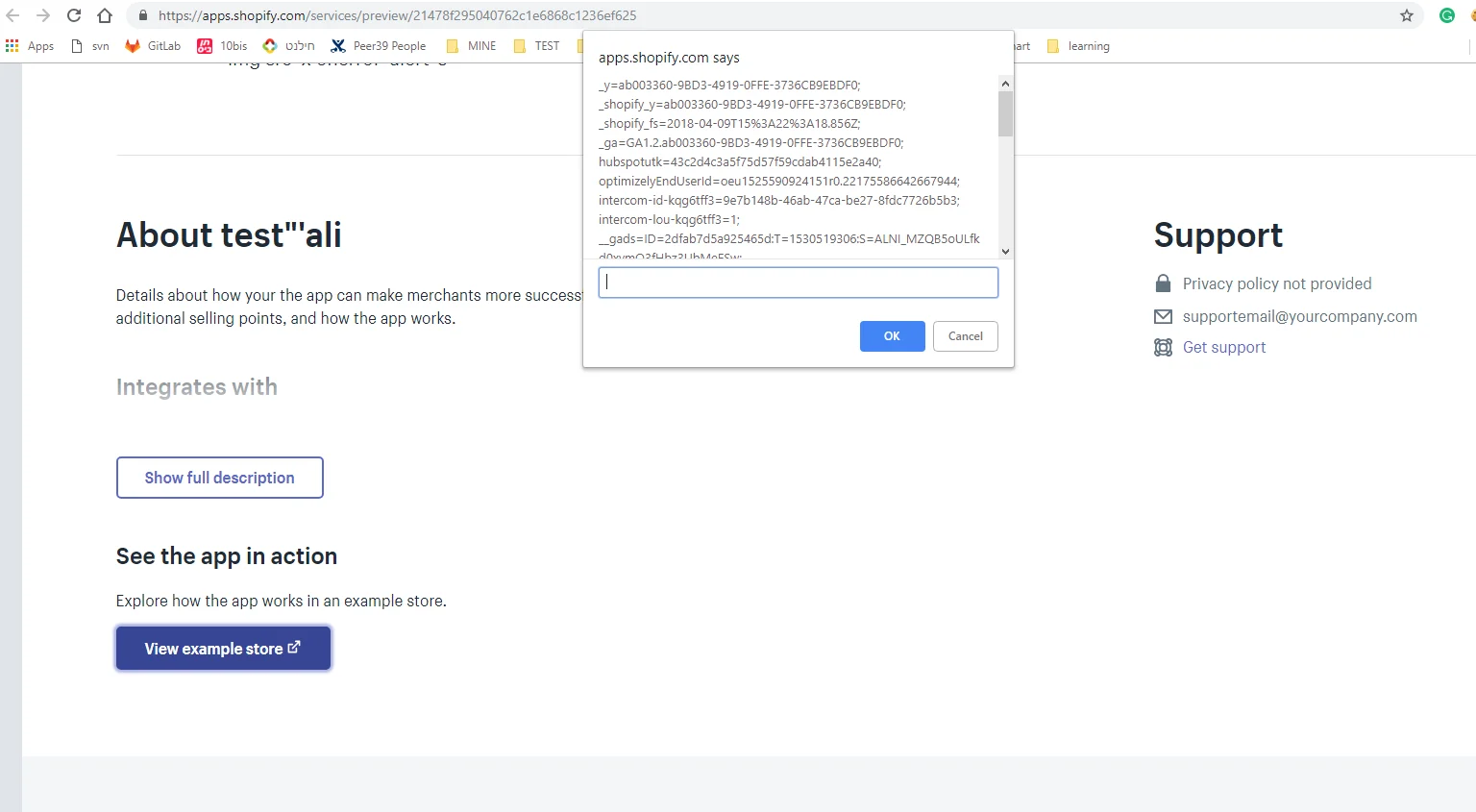
thanks!
Impact
Stored XSS on apps.shopify.com
Not written yet. The AI write-up for this report has not been written yet. The Original tab links to the source.
How it worked
Root cause
Likely the demo URL input was not properly sanitised or validated before being rendered in the preview and example store pages.
Impact
Stored XSS on apps.shopify.com, executing script when the preview and example store are viewed.
What the attacker needed
A Shopify partner account; ability to create an app
How it was found
- Go to your partner account and create a new app.
- Go to the DEMO link in the app submission edit page.
- Enter the payload in the DEMO URL field.
- Press 'preview changes' and then 'view example store' to trigger the XSS.
Explained by bugbounty.wiki with AI from the original and checked against quotes from it; it can still be wrong. Read the original before relying on a detail.
Not written yet. The AI write-up for this report has not been written yet. The Original tab links to the source.
Stored cross-site scripting (XSS) is when a website saves harmful code and later shows it to other users, letting the code run in their browsers. Here, the demo link field for an app saved a script, and it ran when someone clicked preview and view example store.
What is XSS?
Script an attacker supplies runs in another user's browser, on the target's origin, with that user's session.