Stored self-XSS at m.uber.com

- Triaged in 9 days
- Fixed in 46 days
- Disclosed after 2 months
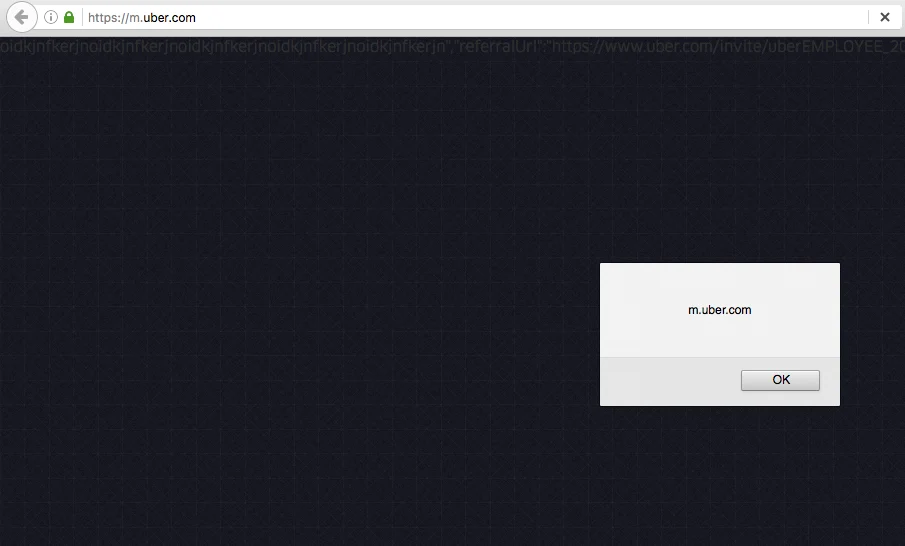
There is a stored self-XSS vulnerability at m.uber.com in displaying the uber invite code. If the user sets the invite code at <script>alert(document.domain)</script> value using the main personal area at the uber.com and then signs into the m.uber.com the XSS is fired.
Possible other user exploitation case can be the following: The attacker sends messages to everyone with text:
I have worked at Uber and I know the secret invite code using by employees
so invite friends using it gets you a $10000 discount for every invited friend.
Set your invite code to this value:
EMPLOYEE_2016_04_oidkjnfkerjnoidkjnfkerjnoidkjnfkerjnoidkjnfkerjnoidkjnfkerjn<script>eval(atob('YWxlcnQoZG9jdW1lbnQuZG9tYWluKQ=='))</script>oidkjnfkerjnoidkjnfkerjnoidkjnfkerjnoidkjnfkerjnoidkjnfkerjn
The unlimited invite code length makes easier to hide a payload inside it. So user will set his invite code to this value and next time he will visit the m.uber.com the XSS will fire.
Attachments
Not written yet. The AI write-up for this report has not been written yet. The Original tab links to the source.
What is known
A XSS bug in Uber. HackerOne made it public on 8 July 2016.
About XSS
Script an attacker supplies runs in another user's browser, on the target's origin, with that user's session.
Not written yet. The AI write-up for this report has not been written yet. The Original tab links to the source.
What is XSS?
Script an attacker supplies runs in another user's browser, on the target's origin, with that user's session.






