No Valid SPF Records/don't have DMARC record
The domain for the application lacked a valid SPF record and a DMARC record, so anyone could send email that appeared to come from the company. An attacker could use this to send phishing messages and try to obtain user credentials.

- Disclosed after 3 days
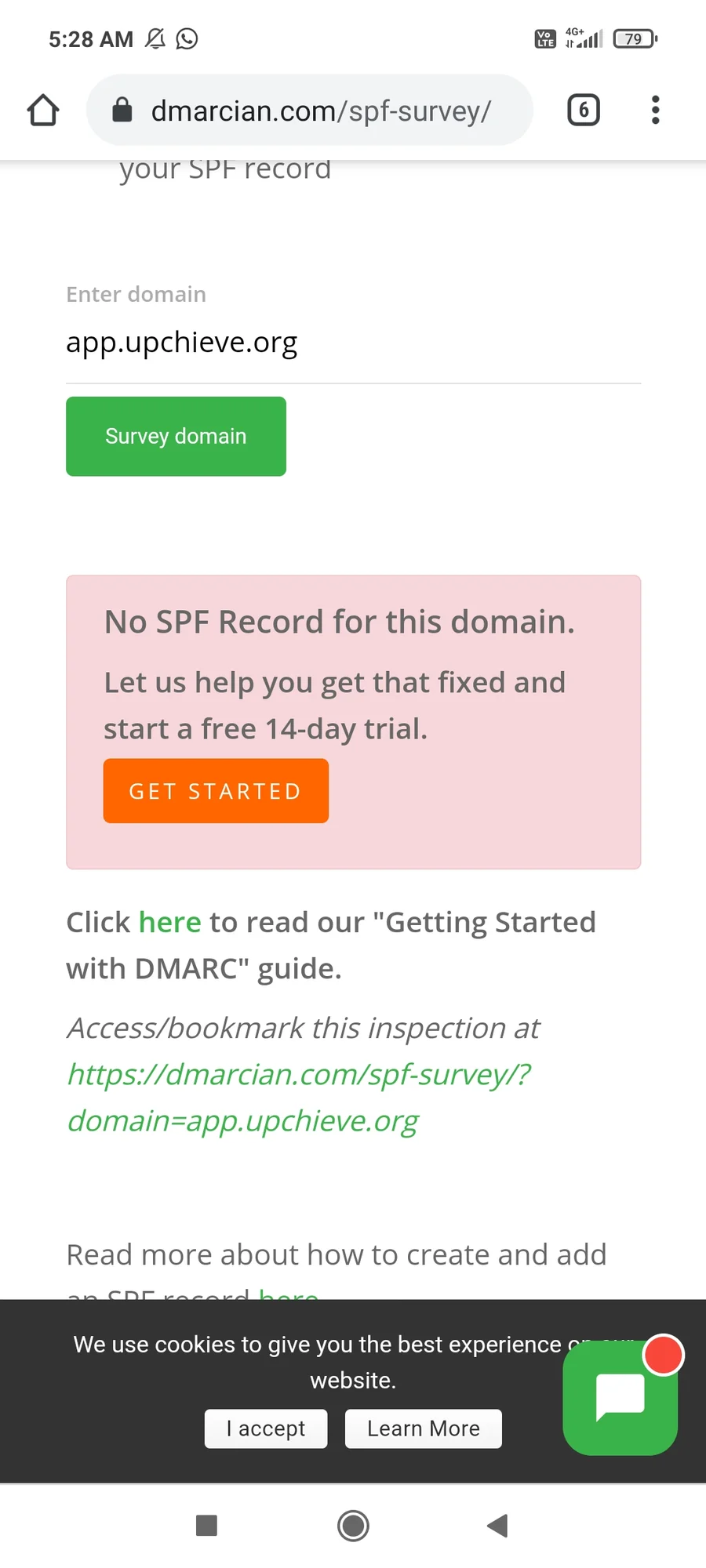
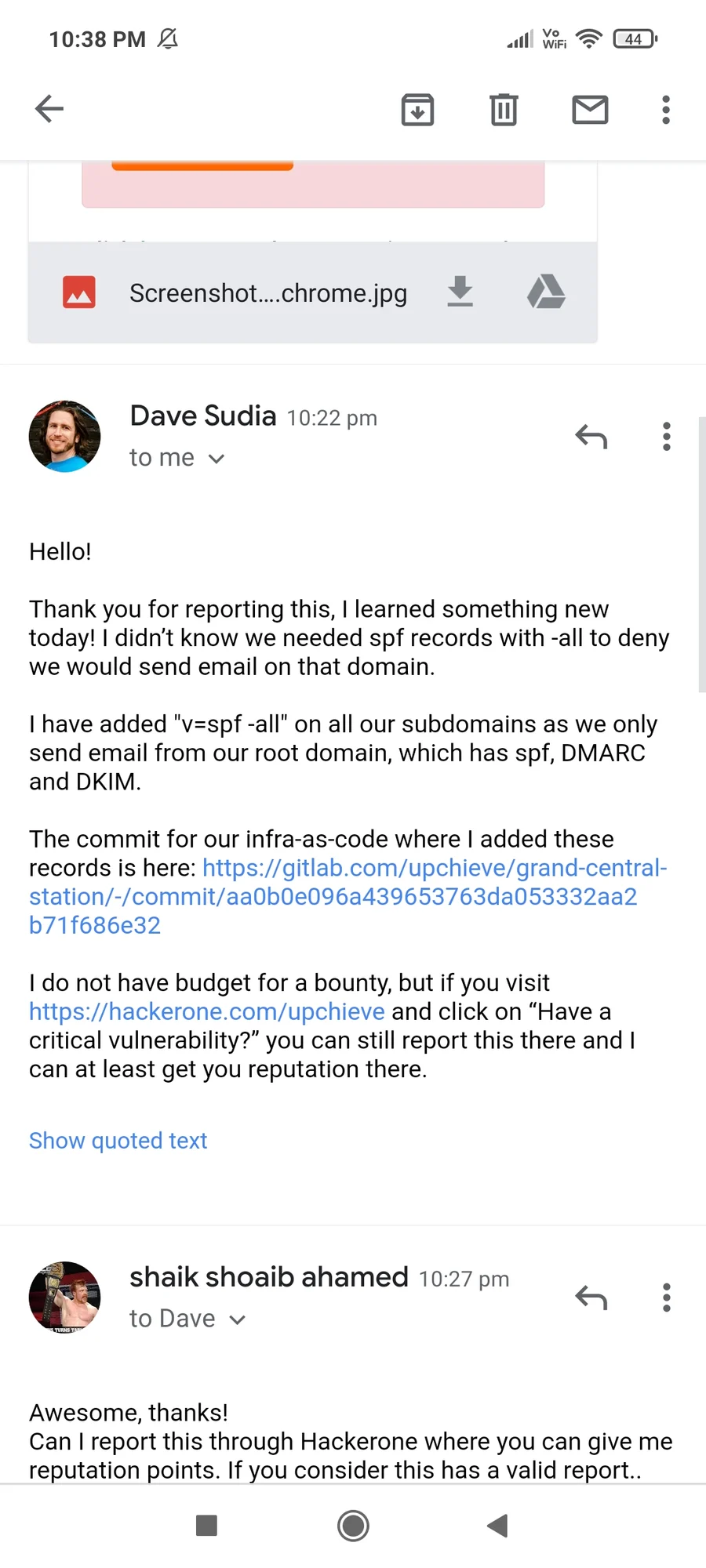
I have already reported this isssue through email and the company has accepted my report. Hiii, There is any issue No valid SPF Records on https://app.upchieve.org Desciprition : There is a email spoofing vulnerability.Email spoofing is the forgery of an email header so that the message appears to have originated from someone or somewhere other than the actual source. Email spoofing is a tactic used in phishing and spam campaigns because people are more likely to open an email when they think it has been sent by a legitimate source. The goal of email spoofing is to get recipients to open, and possibly even respond to, a solicitation. I found : SPF record lookup and validation for: https://app.upchieve.org SPF records are published in DNS as TXT records. The TXT records found for your domain are: No valid SPF record found. Use the back button on your browser to return to the SPF checking tool without clearing the form. Remediation : Replace ~all with -all to prevent fake email. ss attched with this you can check this using https://www.kitterman.com/spf/validate.html if you had a valid spf record then you don't have DMARC record due to which any one can send the mail on behalf of comapny which cause same issues of damaging comapny reputation can be used to get user data. for checking this visit : https://dmarcian.com/spf-survey/ and type your url and you'll find all the details i i send you the screen shot as a proof of both the above.
Impact
An attacker would send a Fake email. can also use to get user credential after send a psihing link through mail.The results can be more dangerous.
Attachments
Not written yet. The AI write-up for this report has not been written yet. The Original tab links to the source.
How it worked
Root cause
Likely the domain's DNS was missing a valid SPF record and a DMARC record, so receiving servers had no policy to reject forged sender addresses.
Impact
An attacker could send forged email in the company's name, which may be used in phishing to steal user credentials and damage the company's reputation.
What the attacker needed
Victim trusts the spoofed sender
The fix
The domain should publish a valid SPF record ending in a hard fail and a DMARC record; the text does not say whether this was done.
How it was found
- Look up the domain's TXT records with an SPF validation tool.
- Observe that no valid SPF record is returned.
- Check the domain with a DMARC survey tool and observe that no DMARC record exists.
Explained by bugbounty.wiki with AI from the original and checked against quotes from it; it can still be wrong. Read the original before relying on a detail.
Not written yet. The AI write-up for this report has not been written yet. The Original tab links to the source.
SPF and DMARC are DNS records that tell receiving mail servers which computers are allowed to send email for a domain, and what to do with mail that fails that check. Without them, a stranger can put the company's name in the sender field of an email, and recipients have no easy way to tell it is fake. That makes phishing messages look more trustworthy.
What is Misconfiguration?
Settings left unsafe: exposed panels, open storage buckets, debug modes, default credentials.



