Stored XSS in the guide's GameplayVersion (www.dota2.com)
A stored cross-site scripting vulnerability existed in the GameplayVersion field of Dota 2 guides, allowing an attacker to inject a script that executes when a victim views the public guide page. An attacker could steal cookies to abuse the user's session.

- Triaged in 18 hours
- Fixed in 46 hours
- Paid in 46 hours
- Disclosed after 6 months
Hi, team!
The beginning of this issue looks like my previous report #369043, but this one will be much more interesting :) So let's go!
Steps to reproduce:
- Open dota2 client and create new simple guide with XSS in the name.
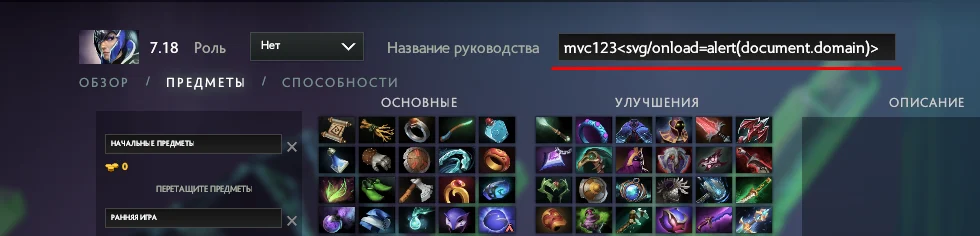
- Publish this guide on steam.

- Now go to the Fiddler app and look at the request from dota2 client:
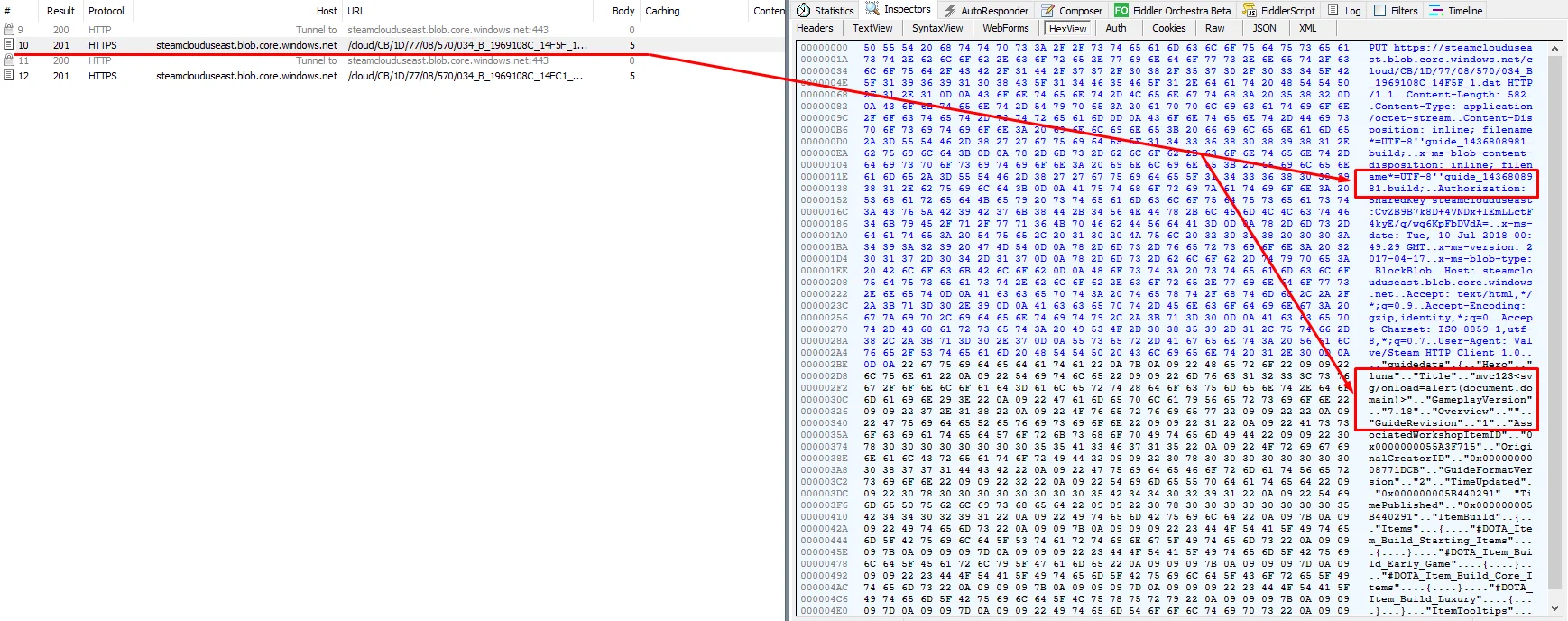
The XSS script placed in the title, the title displays a safe HTML on the site, so, for now nothing terrible happens.
- Next I write some piece of code in the Fiddler app:
if (oSession.uriContains("/cloud/CB/")) {
    var strBody=oSession.GetRequestBodyAsString();
    strBody=strBody.replace("mvc123<svg/onload=alert(document.domain)>","mvc123");
    strBody=strBody.replace("7.18","7.18<svg/onload=alert(document.domain)>");
    oSession.utilSetRequestBody(strBody);
}
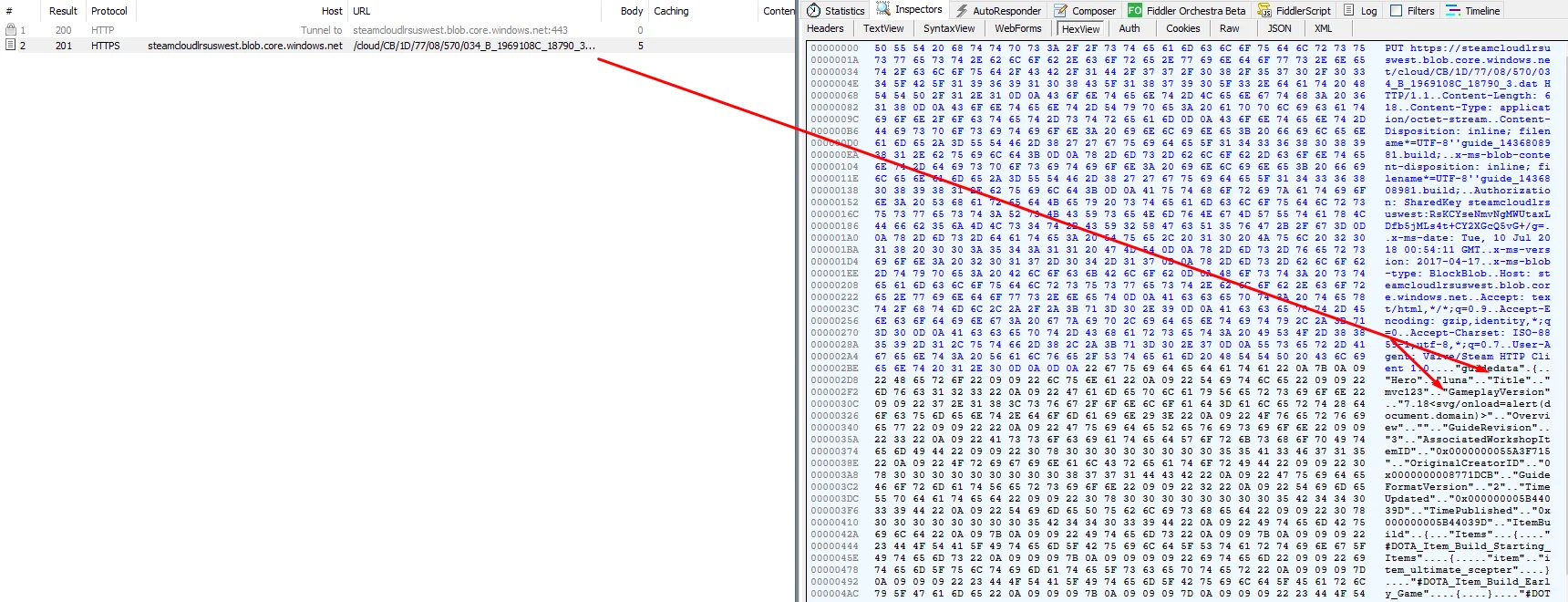
So I transfer the XSS script from "Title" to "GameplayVersion". I decided to go this way, since in this case the content length of build's file does not change and it successfully passes the hash sum comparison.
- Now we return to the dota2 client, click "Edit" and change anything in the our build and publish it again. And we see that the PUT request was successful and the XSS data in it is arranged the way we wanted:
- Next i follow to the Dota2 Workshop Manager.
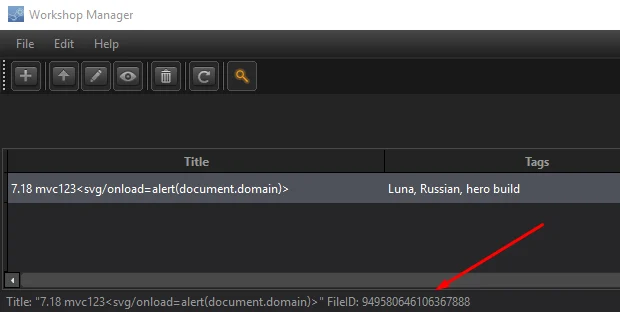
And here we see our public file ID. This connection with the public guide files I was found in the preparation of the previous report, but I did not know how to apply it (before today).
- Put this FileID into a link below and we get the public infected page:
http://www.dota2.com/workshop/builds/view?fileid=949580646106367888
And the result in the latest versions of Firefox and Chrome:
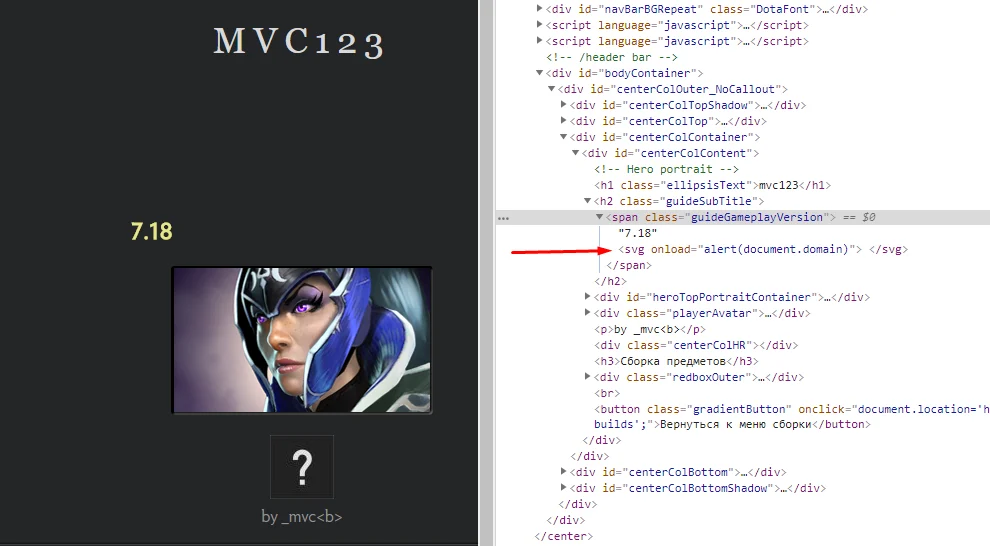
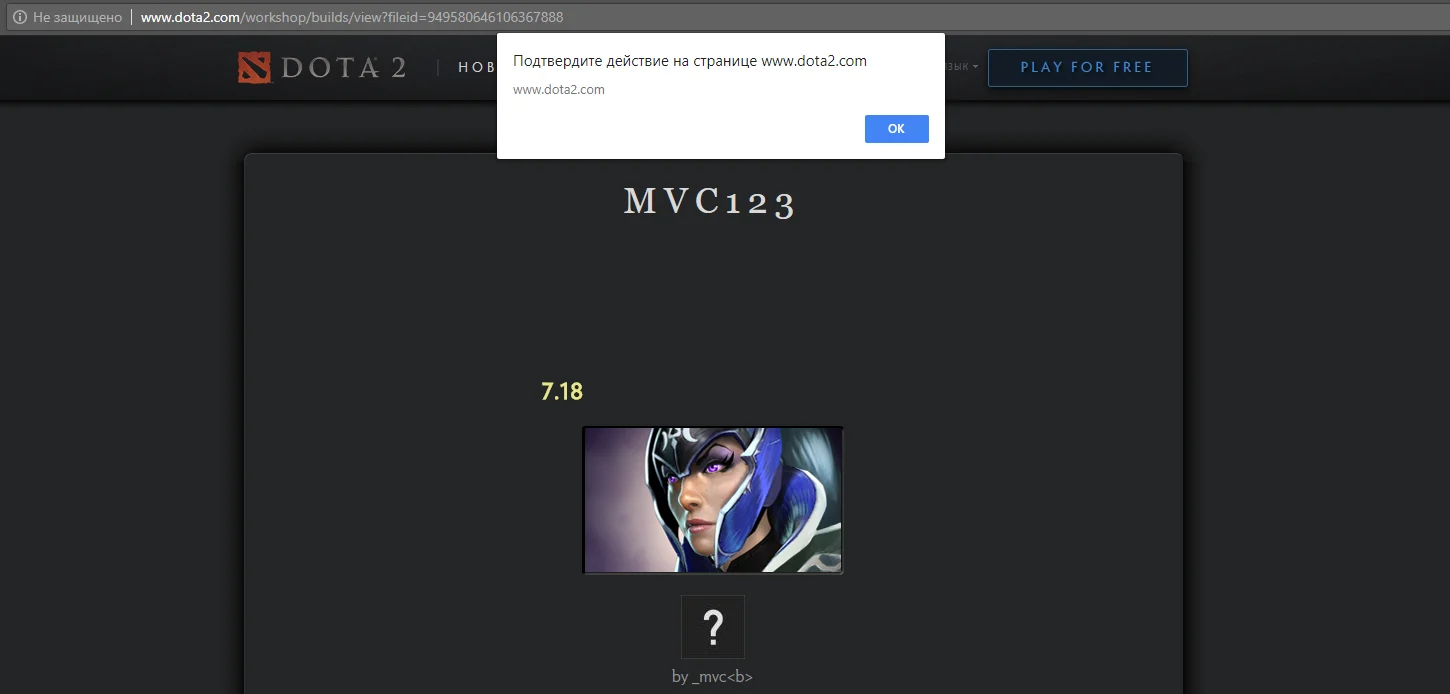
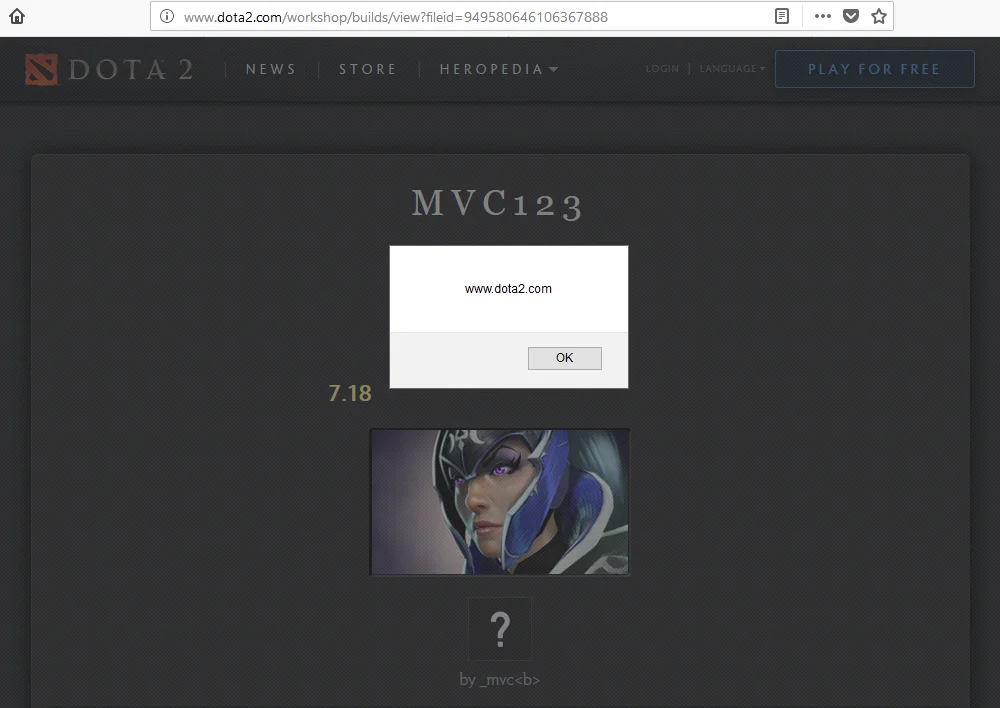
Sincerely, @mvc
Impact
As on any cross-site-scripting vulnerability. The top line would be that the attacker might steals cookies to abuse users session.
Not written yet. The AI write-up for this report has not been written yet. The Original tab links to the source.
How it worked
Root cause
Likely the GameplayVersion field was not properly sanitised or escaped before being rendered on the public guide page, allowing HTML and script injection.
Impact
An attacker could steal cookies to abuse the user's session, as with any cross-site scripting vulnerability.
What the attacker needed
Dota 2 client; Steam account; Fiddler proxy tool; Victim visits public guide page
How it was found
- Create a new simple guide in the Dota 2 client with an XSS payload in the name.
- Publish the guide on Steam.
- Use Fiddler to inspect the request from the Dota 2 client.
- Modify the request body in Fiddler to move the XSS payload from the title to the GameplayVersion field.
- Edit the guide in the client, change anything, and publish again to send the modified request.
- Find the public file ID in the Dota 2 Workshop Manager and open the public guide page using that ID.
Explained by bugbounty.wiki with AI from the original and checked against quotes from it; it can still be wrong. Read the original before relying on a detail.
Not written yet. The AI write-up for this report has not been written yet. The Original tab links to the source.
Cross-site scripting (XSS) is when a website shows user-supplied text as if it were part of the page, so a malicious script runs in a visitor's browser. Here, a hidden field in a game guide could carry such a script, and anyone opening the public guide page would run it. The script could then read the visitor's cookies, which are small pieces of data that keep them logged in.
What is XSS?
Script an attacker supplies runs in another user's browser, on the target's origin, with that user's session.



