Impersonation of Wakatime user using Invitation functionality.
The leaderboard invitation feature let anyone send an invitation email to any address without verifying ownership of the sender's email, and the name field accepted far more characters than intended. An attacker could therefore craft a convincing email that appeared to come from a trusted person such as a boss, to trick the recipient into following its instructions.
 Originally disclosed on HackerOne
- Triaged in 2 hours
- Fixed in 2 hours
- Disclosed after 23 hours
Hi wakatime team,
I have found a vulnerability in your leaderboard invitation functionality which can be used to trick the victims on the name of wakatime.
Anyone can sign up with any email id and use the leadersboard invitation to invite anyone. This loophole can be leveraged for impersonation of any user to the victims.
Eg. If bob steave is the name of Alice's boss. Then Attacker can create a wakatime account with his Bob's real id like [email protected] and without confirming his this email address he can send the invitation to Alice. Now there is no doubt Alice will accept the invitation as well as he will perform the all steps provided by that invitation mail. Which can be done by the above vulnerability.
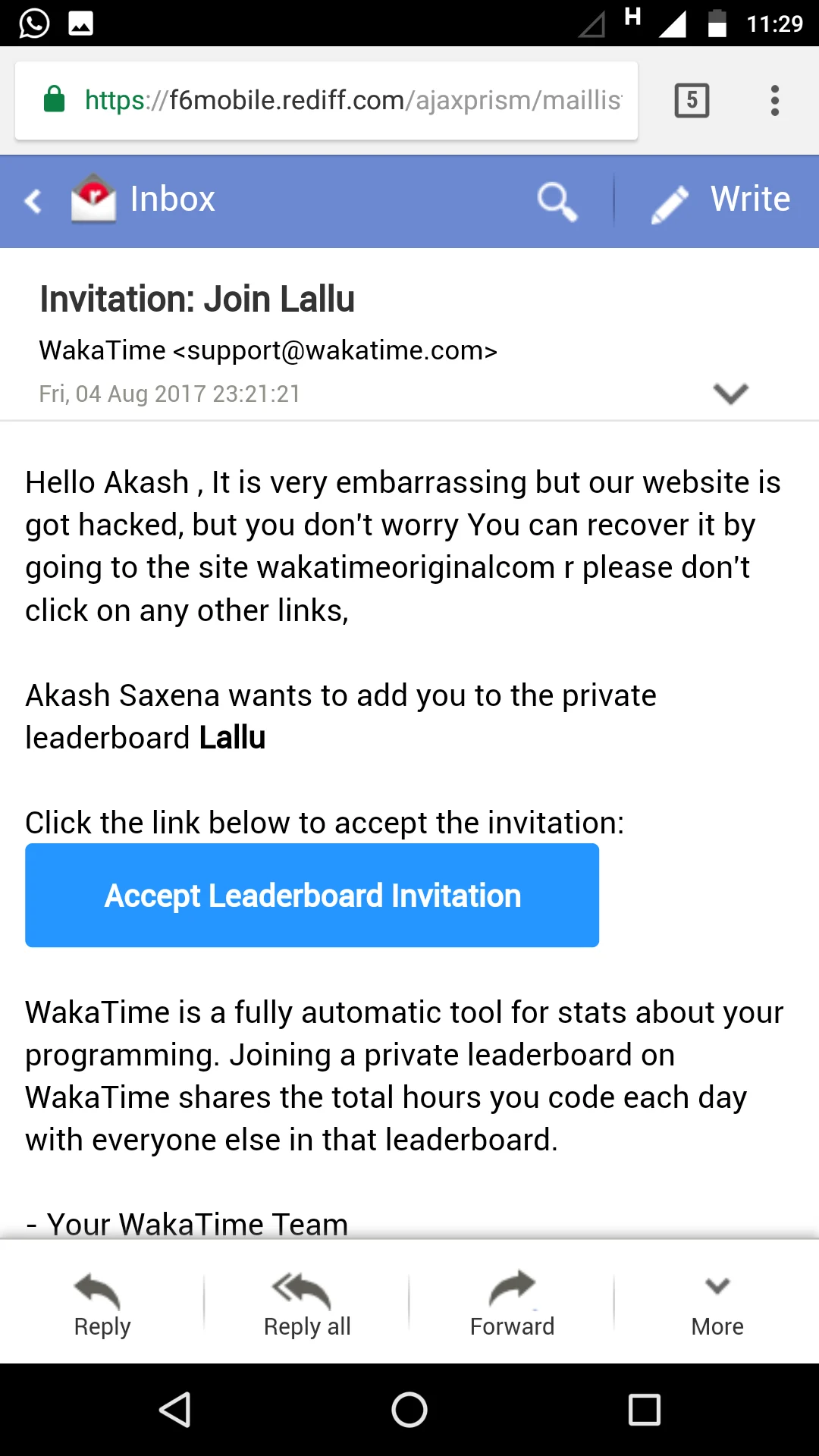
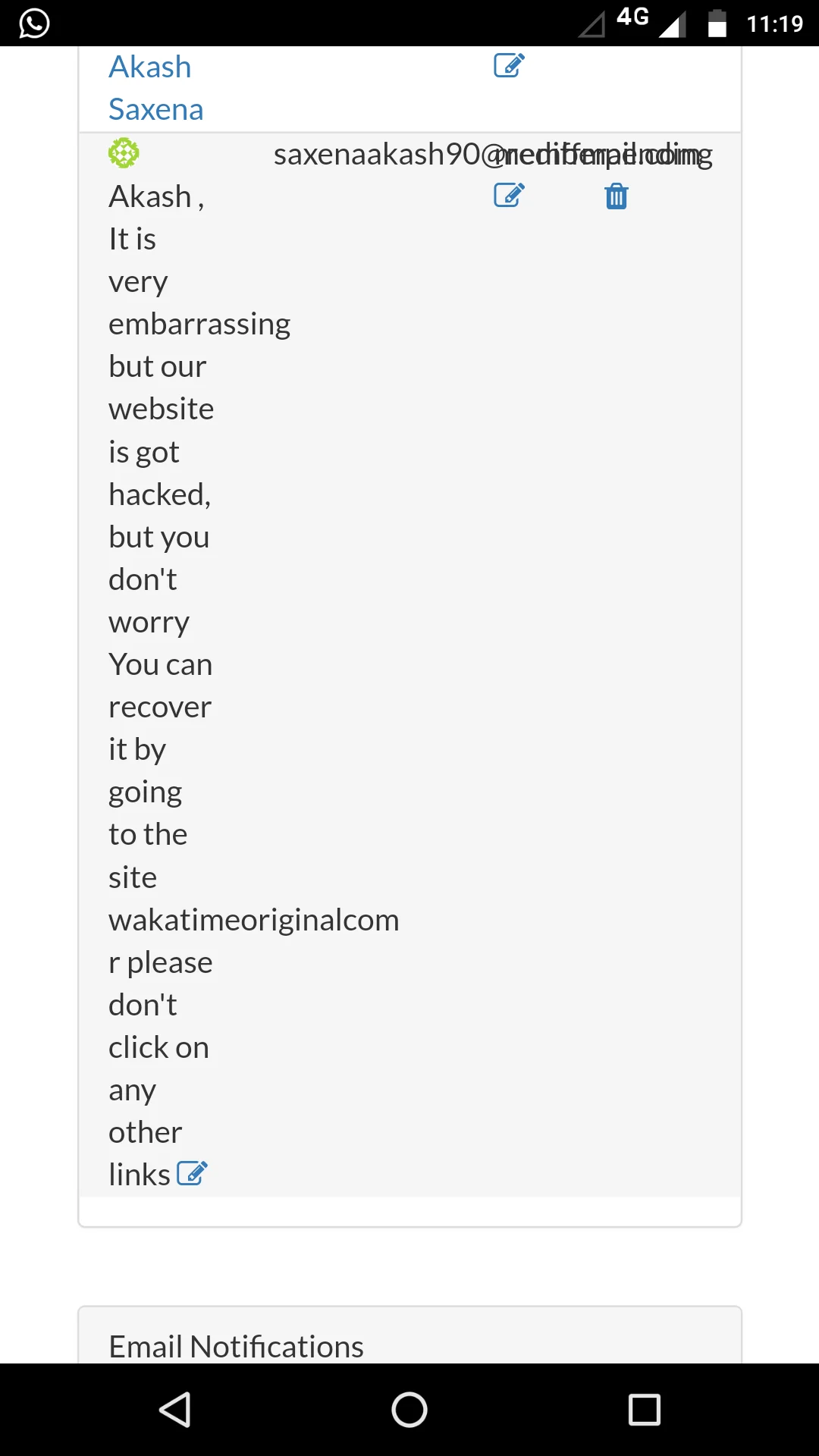
Description: Wakatime have a feature in which a user can invite anyone to his leaderboard. There are 3 fields Name , Email Id and role. But the Name field should be restricted to maximum 20 words. But wakatime is allowing 200 characters to this field. Which can be enough to construct a completely different mail.
Steps to reproduce:
- Login into the account.
- Create a leaderboard.
- Invite a victim without verifying email address.
- Invitation email will be successfully sent.(Vulnerability 1)
- In name field write some social engineering message.
- Input victim's Email Id
- Invite him.
- He will receive the mail which is constructed by attacker with some social engineering method on the name of wakatime.
- If victim is already a member of wakatime, he can be tricked to steal his information. (Vulnerability 2)
Browser: Tried on three browser.
Fix: Limit the name field to max 20 or 25.
Screen shot is attached. Please check it.
Thanks, Akash Saxena
Attachments
Not written yet. The AI write-up for this report has not been written yet. The Original tab links to the source.
How it worked
Root cause
Likely the invitation flow did not verify the sender's email address and did not enforce the intended length limit on the name field, so attacker-controlled text was placed into an email sent to the victim.
Impact
A victim could be tricked into following instructions in an email that appears to come from a trusted person, which the reporter says could be used to steal their information.
What the attacker needed
A free account; victim's email address; victim trusts the spoofed name
The fix
The name field should be limited to a short maximum length.
How it was found
- Log in to the account.
- Create a leaderboard.
- Invite a victim without verifying the email address.
- Enter a social engineering message in the name field.
- Enter the victim's email address and send the invitation.
- The victim receives the crafted invitation email.
Explained by bugbounty.wiki with AI from the original and checked against quotes from it; it can still be wrong. Read the original before relying on a detail.
Not written yet. The AI write-up for this report has not been written yet. The Original tab links to the source.
A website lets you invite people to a group by email. The site never checked that the sender really owned the email address they typed in, and it allowed a very long display name. So someone could pretend to be a person the recipient trusts and send a fake-looking invitation.
What is Business logic?
The application works as coded but not as intended: a negative price, a skipped payment step, a limit that can be crossed.






