Unauthorized Disclosure of Private Emails via WakaTime Private Leaderboards
WakaTime private leaderboards exposed members' private email addresses to the leaderboard creator and other members, even when users had not made their email public. An attacker could create a leaderboard, invite users, and harvest their email addresses for phishing.
 Originally disclosed on HackerOne
- Fixed in 24 hours
- Disclosed after 3 days
Summary:
WakaTime allows users to create private leaderboards and invite others to join. However, once a user accepts the invite and joins the leaderboard, their private email address becomes visible to the leaderboard creator or other members, even if the user has not chosen to make their email public. This bypasses intended privacy controls and could be exploited to harvest emails of unsuspecting WakaTime users.
Steps to Reproduce:
- Sign in to WakaTime.com and create a new private leaderboard.
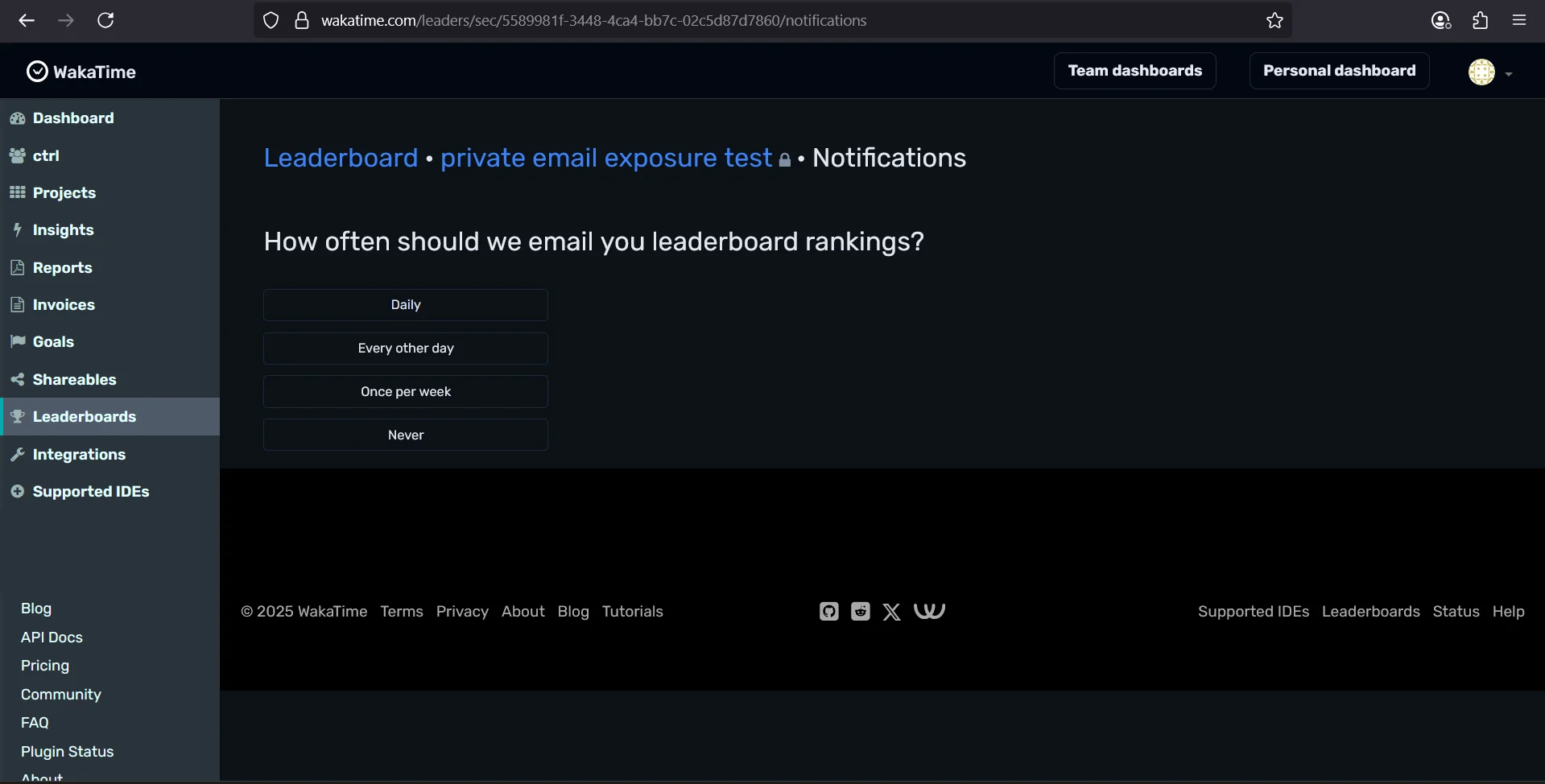
- Invite another WakaTime user to join the leaderboard using their WakaTime username or public profile link:
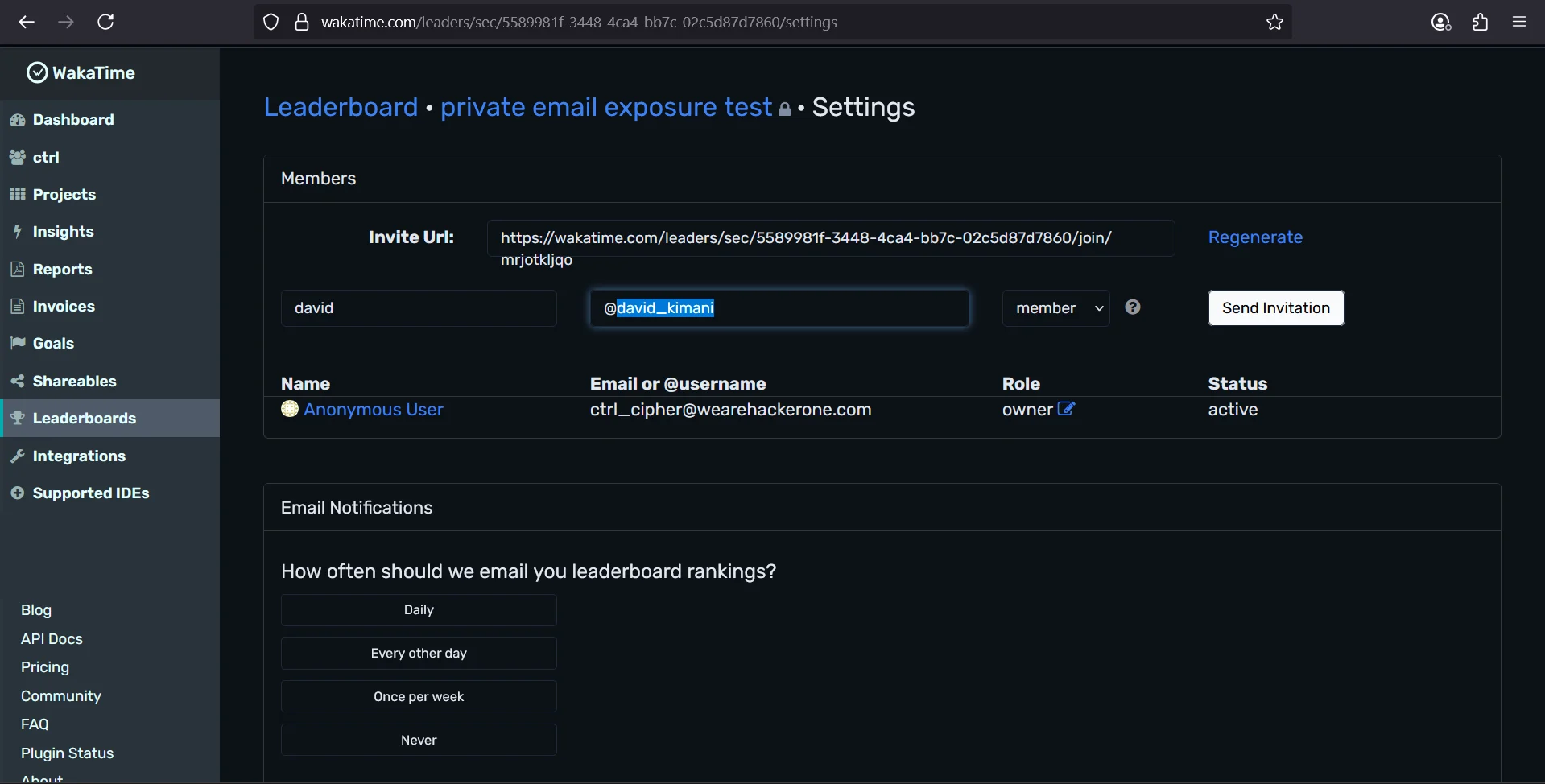
- Have the invited user accept the invite and join the leaderboard.
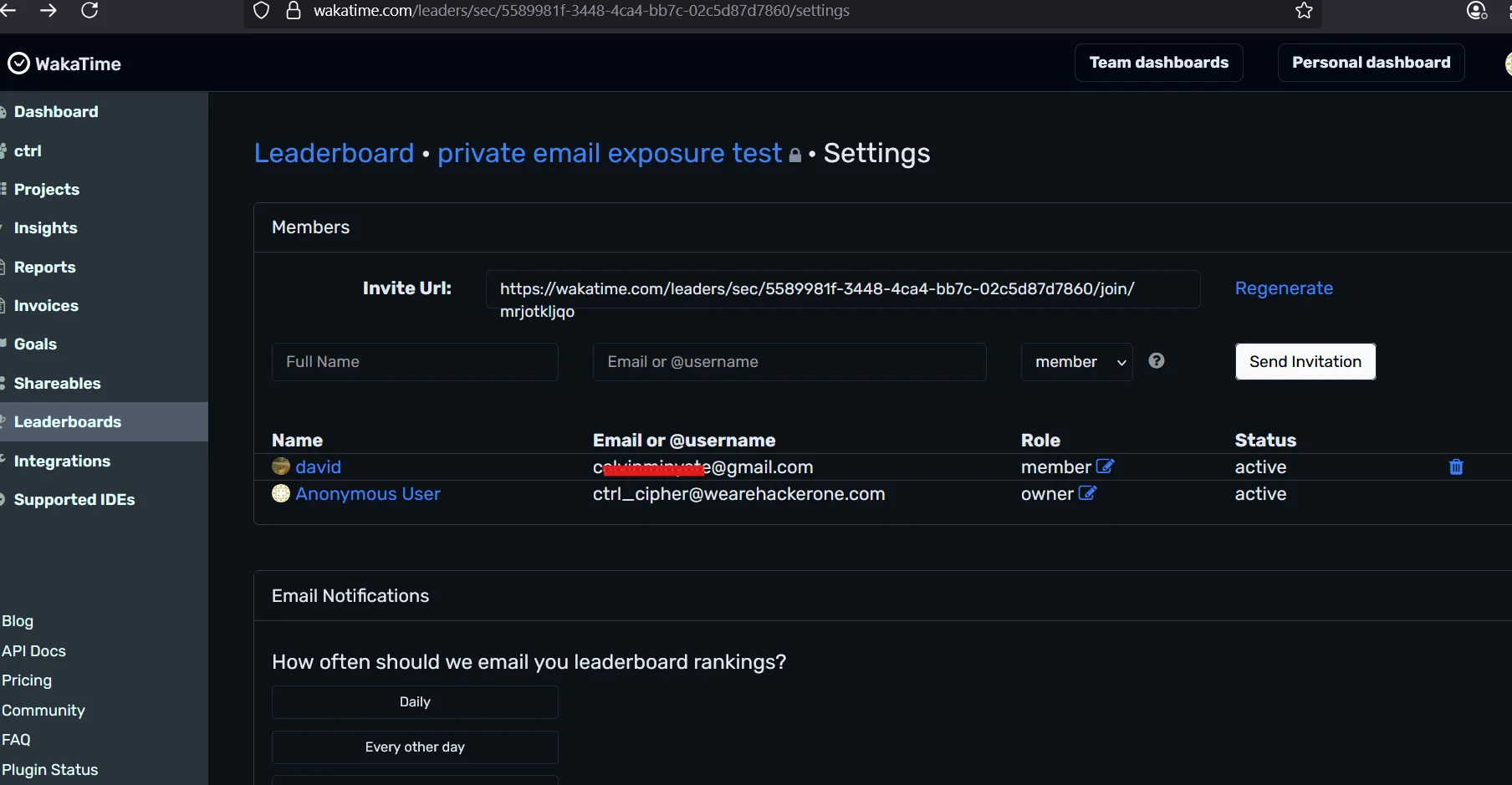
- Once joined, visit the leaderboard page and observe that it contains their emails despite of them setting it as private:
Observed Result:
You can view the email address of the invited user in the leaderboard data or UI, even if their email was never made public in their settings.
Impact
- Violation of user privacy expectations and configurations.
- Could be used for email harvesting or targeted phishing.
- Low barrier to exploitation: any user with an account can create a leaderboard and bait others to join.
- GDPR/CCPA risk due to unconsented exposure of personally identifiable information (PII).
Expected Behavior:
- Users' email addresses must remain hidden unless they have explicitly chosen to display them publicly.
- Leaderboards should only display public data, not private or sensitive identifiers like email addresses.
Recommendations:
- Ensure that private fields (like email) are never included in leaderboard-related responses unless the user has opted in to show them.
- Perform a privacy filter before returning leaderboard member data to clients.
- Add a notice or confirmation prompt when joining leaderboards about what information will be visible to other members.
Not written yet. The AI write-up for this report has not been written yet. The Original tab links to the source.
How it worked
Root cause
Likely the leaderboard member data included the email field without checking the user's privacy setting.
Impact
Private email addresses could be harvested for targeted phishing, violating user privacy and creating GDPR/CCPA risk.
What the attacker needed
A free WakaTime account; victim accepts leaderboard invite
How it was found
- Sign in to WakaTime and create a new private leaderboard.
- Invite another WakaTime user to join the leaderboard using their username or public profile link.
- Have the invited user accept the invite and join the leaderboard.
- Visit the leaderboard page and observe that it contains the invited user's email despite them setting it as private.
Explained by bugbounty.wiki with AI from the original and checked against quotes from it; it can still be wrong. Read the original before relying on a detail.
Not written yet. The AI write-up for this report has not been written yet. The Original tab links to the source.
A website let people create private groups called leaderboards. When someone joined a group, their email address was shown to the group owner and other members, even though the user had set their email to private. This meant anyone could collect email addresses by inviting people to a group.
What is Info disclosure?
Data the application should keep private (personal data, internal details, other users' records) reaches someone it should not.




