A Microphone Permission Bypass on iOS 26 (CVE-2026-65339)
A sandboxed iOS app could bypass the microphone permission prompt by writing the audio daemon's own audit token into an undocumented AudioUnit property, causing the daemon to treat the app as itself and deliver real microphone samples even after the user denied permission. The capture continued in the background and with the device locked, while the permission still read denied and no orange indicator appeared.
dbg.re
Published on dbg.re
A sandboxed iOS app with no added entitlements shows the microphone prompt. The user taps Don't Allow.
The full write-up lives on its author's site
It belongs to its author, so we link to it rather than copy it. The other two tabs are our own rewrites, checked against it.
Not written yet. The AI write-up for this write-up has not been written yet. The Original tab links to the source.
How it worked
Root cause
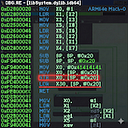
The audio daemon's property setter for the undocumented property 2009 copied caller-supplied audit token bytes over the client's stored token and recomputed the recording flag without checking that the caller was authorised to speak for another process.
Impact
An app with no special entitlements could record real microphone audio after the user denied permission, and the capture could survive backgrounding and a locked device, while the permission still read denied and no orange indicator appeared.
What the attacker needed
A sandboxed iOS app; no added entitlements; NSMicrophoneUsageDescription key; capture must start in foreground
The fix
The setter was fixed to require the com.apple.private.audio.client-audit-token-override entitlement before accepting a caller-supplied audit token, and the AudioQueue path to the same flag got its own check.
How it was found
- Look up the audio daemon's Mach service and send it an empty GetServerPID request, asking for the audit trailer on the reply.
- Read the daemon's audit token from the reply trailer.
- Create a RemoteIO audio unit with input enabled and output disabled.
- Call AudioUnitSetProperty with property ID 2009, passing the daemon's 32-byte audit token.
- Activate an AVAudioSession in record category, then initialise and start the audio unit.
Explained by bugbounty.wiki with AI from the original and checked against quotes from it; it can still be wrong. Read the original before relying on a detail.
Not written yet. The AI write-up for this write-up has not been written yet. The Original tab links to the source.
On iOS, an app must ask the user before it can use the microphone, and the user can say no. This report shows that an app could trick the system's audio service into thinking the request came from the service itself, so it handed over real microphone audio even though the user had said no. The trick used a hidden setting that let the app claim to be the audio service.
What is Access control?
A user can do something their role should not allow: reach an admin function, act on a feature they have not paid for, or skip a permission check. IDOR is the special case where the object belongs to someone else.

