Could This Have Been a €1,000 Bug? My First Accepted Bug Bounty Report
A publicly accessible container repository resource allowed access without authentication, potentially exposing internal repository information and container-related resources. The researcher found this during manual reconnaissance and the company later accepted it as a legitimate access control issue.

Bug Bounty
The full write-up lives on its author's site
It belongs to its author, so we link to it rather than copy it. The other two tabs are our own rewrites, checked against it.
Context
This is the story of my first accepted bug bounty report. I am Vikas Meena (Vicricsec), a cybersecurity researcher, bug bounty hunter, website developer and digital marketer; outside security I have worked on movie promotion campaigns, including Krishna and Chitthi, and on marketing for an upcoming movie featuring Sapna Choudhary.
The finding came from manual reconnaissance against a publicly accessible resource associated with a container repository. The report does not name the program, the host, the product or the specific endpoint, so what follows describes the class of issue and the process rather than a reproducible target.
Setup
The only tool the report mentions is Burp Suite, used to inspect HTTP requests and responses. No accounts, roles, versions or special preconditions are described: the starting observation was that the resource appeared reachable without authentication, which is exactly the condition worth verifying rather than assuming.
Finding it
During manual reconnaissance I came across a publicly accessible resource tied to a container repository. It looked like it allowed access without authentication. Rather than jumping to a conclusion, I investigated further: I inspected the HTTP traffic in Burp Suite, examined the metadata that was reachable, and assessed what the exposure would mean in practice.
My methodology was:
- Manual reconnaissance.
- Verifying authentication requirements.
- Analysing exposed resources.
- Assessing potential impact.
- Documenting evidence and recommending remediation.
The investigation revealed an access control issue that could expose internal repository information and container-related resources.
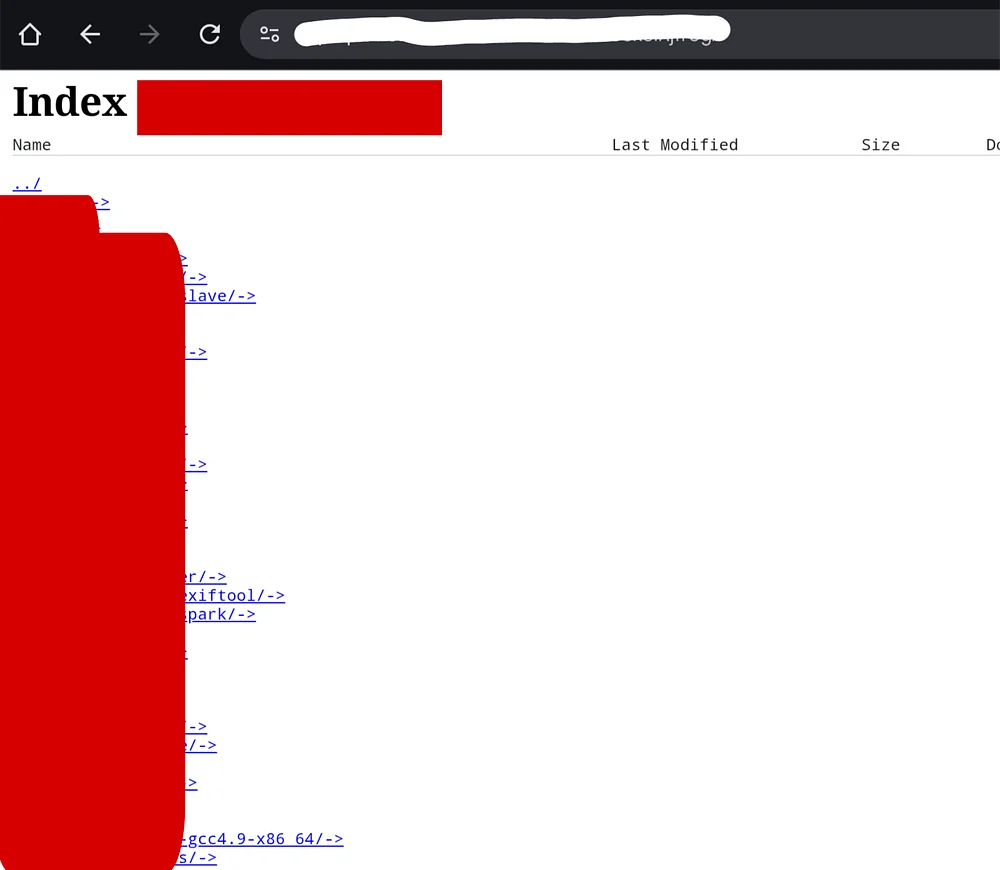
Figure 1 is an illustrative view of the repository interface I examined during the research.
Exploitation
The report does not publish the individual requests, responses, headers or payloads used, so there is no raw traffic to reproduce here. What it does describe is the sequence of work:
Step 1: Identify the resource
Manual reconnaissance surfaced a resource associated with a container repository that was publicly reachable.
Step 2: Test the authentication requirement
Instead of assuming the resource was meant to be public, I checked whether access actually required authentication. The observation that prompted the investigation was that it appeared to allow access without it.
Step 3: Inspect the traffic
Using Burp Suite I examined the HTTP requests and responses and looked at the accessible metadata, to understand what the resource returned and to whom.
Step 4: Assess impact
The access control issue could expose internal repository information and container-related resources. That assessment, together with the evidence, formed the basis of the report and its remediation recommendation.
Root cause
The report characterises the issue as an access control problem: a resource associated with a container repository was reachable without authentication when it should not have been. The report does not describe the underlying code or configuration, so the precise mistake is not stated.
Impact
Under the conditions observed, the issue could expose internal repository information and container-related resources to anyone who could reach the resource. The report does not enumerate specific data types, affected users or downstream consequences beyond that.
Fix
The report says the company confirmed the finding was legitimate and needed to be fixed, and that it was accepted. The report does include recommending remediation as part of the methodology.
Disclosure timeline and reward
After submitting the report I received an unexpected decision: Out of Scope. It was disappointing, but I stayed professional and kept learning. Later the company reviewed the report again and, on 2 June 2026, confirmed that the finding was legitimate and needed to be fixed. The report was finally Accepted, my first accepted bug bounty finding.
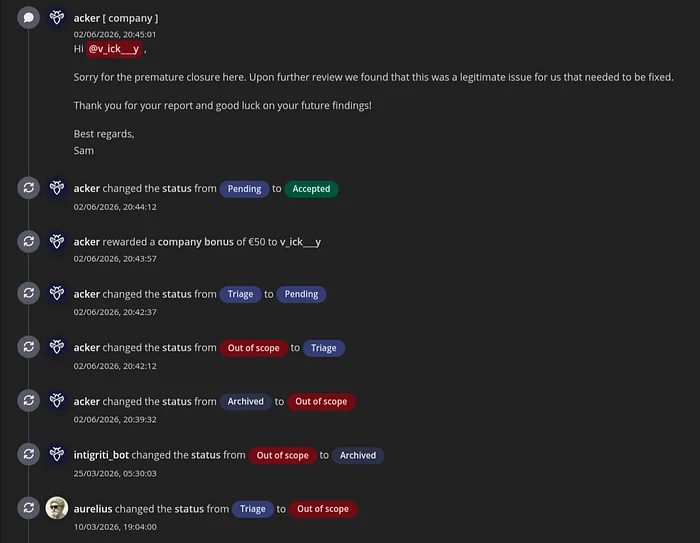
Figure 2 shows the report's journey from Out of Scope to Accepted.
The affected asset was classified as Tier 3 under the program's reward structure, and that asset did not offer standard payouts for the applicable severity categories. Although the finding was accepted, the company awarded a €50 company bonus.
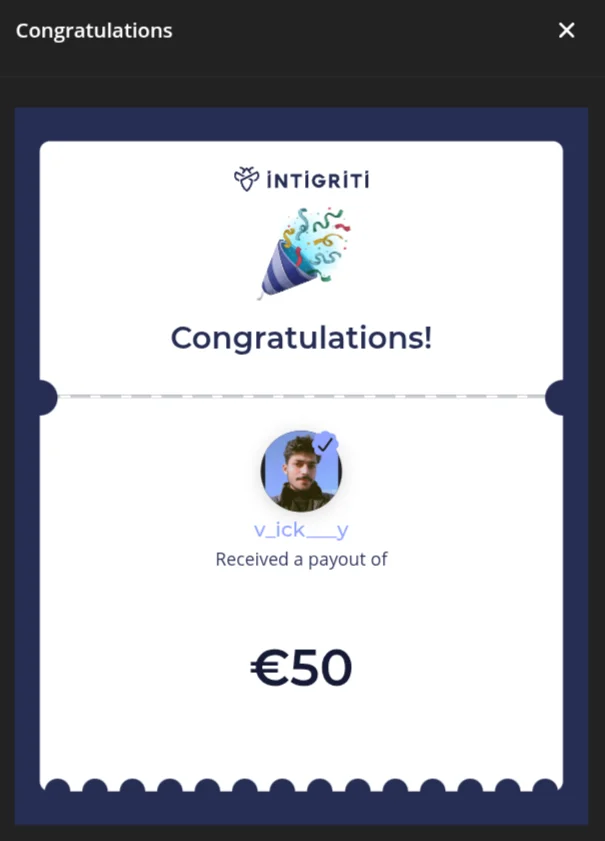
Figure 3 shows the company bonus awarded for the accepted report.
Could a similar vulnerability on a bounty-eligible asset potentially receive €1,000 or more? Possibly, depending on the impact, severity and program rules. However, €1,000 was not the official valuation of my finding.
What I learned
- An initial rejection is not necessarily the final outcome.
- Manual testing and careful observation matter.
- A strong report explains realistic security impact.
- Clear evidence and reproduction steps help security teams.
- Always follow program rules and responsible disclosure requirements.
This experience was about more than a €50 bonus. It was my first accepted report and a reminder to keep learning, improving and hunting. The journey was not straightforward, but it taught me the value of persistence, technical investigation and professional communication.
Variants to test
The report does not list variants, so these are general directions that follow from the class of issue, not claims about this target:
- Unauthenticated metadata endpoints on container registries. Request repository or image metadata without credentials. A positive result is a response containing repository names, tags or image details that should require authentication.
- Direct object access. Take a resource identifier seen while authenticated and request it again with credentials removed. A positive result is the same content returned without an authorisation check.
- Tier and scope review before testing. Check the program's reward structure and scope first, since the same finding can be accepted but paid differently depending on the asset tier, as happened here.
- Re-test after rejection. If a report is closed as out of scope, re-read the program rules and consider whether clearer impact evidence would help.
What happened, in plain words
This is the story of my first accepted bug bounty report. A bug bounty is a scheme where companies invite outside researchers to look for security problems in their systems and pay for the ones that are confirmed. I am Vikas Meena (Vicricsec), a cybersecurity researcher, bug bounty hunter, website developer and digital marketer. Outside security I have worked on movie promotion campaigns, including Krishna and Chitthi, and on marketing for an upcoming movie featuring Sapna Choudhary.
The finding came from manual reconnaissance, which simply means looking around a company's systems by hand, the way you might walk around a building and try the doors, rather than running an automated scanner. What I found was a publicly accessible resource associated with a container repository. A container repository is a storage service for software packages: developers upload their packaged programs there so that other systems can download and run them. If such a repository is meant to be internal, anyone on the internet being able to read it is a problem.
The report does not name the program, the host, the product or the specific endpoint, so what follows describes the class of issue and the process rather than a target you can reproduce.
Setup
The only tool the report mentions is Burp Suite. Burp Suite is a program that sits between your browser and a website and lets you read, pause and replay the messages they exchange. Those messages are called HTTP requests (what your browser sends) and HTTP responses (what the server sends back). Think of it as a transparent envelope you can open and inspect before it reaches the recipient.
No accounts, roles, versions or special preconditions are described. The starting observation was that the resource appeared reachable without authentication. Authentication means proving who you are, usually by logging in with a username and password. The point worth checking was whether that appearance was true: a page can look open while actually refusing you, and a page can look closed while quietly serving data to anyone who asks.
Finding it
During manual reconnaissance I came across a publicly accessible resource tied to a container repository. It looked like it allowed access without authentication. Rather than jumping to a conclusion, I investigated further: I inspected the HTTP traffic in Burp Suite, examined the metadata that was reachable, and assessed what the exposure would mean in practice. Metadata here means the descriptive information about the stored items, such as names, tags and details of the images, rather than the software itself.
My methodology was:
- Manual reconnaissance.
- Verifying authentication requirements.
- Analysing exposed resources.
- Assessing potential impact.
- Documenting evidence and recommending remediation.
Remediation means the fix: the change the company should make so the problem goes away. Documenting evidence means keeping screenshots and saved requests so the company can see exactly what you saw.
The investigation revealed an access control issue that could expose internal repository information and container-related resources. An access control issue means the system does not properly check whether the person asking is allowed to see what they are asking for. It is like a filing cabinet with a lock on the front door but no lock on the drawer.
Figure 1 is an illustrative view of the repository interface I examined during the research.
Exploitation
The report does not publish the individual requests, responses, headers or payloads used, so there is no raw traffic to reproduce here. Headers are the small labelled fields at the top of every HTTP message, carrying things like the content type or the login cookie. A payload is the part of a request that carries your input. What the report does describe is the sequence of work.
Step 1: Identify the resource
Manual reconnaissance surfaced a resource associated with a container repository that was publicly reachable. The first job is always to notice something worth a second look. Here it was a resource that seemed to be sitting in the open.
Step 2: Test the authentication requirement
Instead of assuming the resource was meant to be public, I checked whether access actually required authentication. This matters because a page that loads in your browser might be a public front page, or it might be internal data leaking out. The only way to tell is to test it deliberately.
Step 3: Inspect the traffic
Using Burp Suite I examined the HTTP requests and responses and looked at the accessible metadata, to understand what the resource returned and to whom. Reading the traffic tells you what the server actually sent, which is more reliable than what the page appears to show.
Step 4: Assess impact
The access control issue could expose internal repository information and container-related resources. That assessment, together with the evidence, formed the basis of the report and its remediation recommendation. Impact is the answer to the question: if a bad person found this, what could they do with it? A report that explains impact clearly is far more useful to a security team than one that only says something is open.
Root cause
The report characterises the issue as an access control problem: a resource associated with a container repository was reachable without authentication when it should not have been. The report does not describe the underlying code or configuration, so the precise mistake is not stated. Authorisation is the step after authentication: authentication proves who you are, authorisation decides what you are allowed to do.
Impact
Under the conditions observed, the issue could expose internal repository information and container-related resources to anyone who could reach the resource. The report does not enumerate specific data types, affected users or downstream consequences beyond that.
Fix
The report says the company confirmed the finding was legitimate and needed to be fixed, and that it was accepted. The report does include recommending remediation as part of the methodology.
Disclosure timeline and reward
After submitting the report I received an unexpected decision: Out of Scope. Out of scope means the company decided the finding did not fall within the rules of its programme, so it would not be treated as a valid report. It was disappointing, but I stayed professional and kept learning. Later the company reviewed the report again and, on 2 June 2026, confirmed that the finding was legitimate and needed to be fixed. The report was finally Accepted, my first accepted bug bounty finding.
Figure 2 shows the report's journey from Out of Scope to Accepted.
The affected asset was classified as Tier 3 under the program's reward structure, and that asset did not offer standard payouts for the applicable severity categories. A tier is a ranking the programme gives to each of its systems, and the tier decides how much, or whether, a finding on that system is paid. Although the finding was accepted, the company awarded a €50 company bonus.
Figure 3 shows the company bonus awarded for the accepted report.
Could a similar vulnerability on a bounty-eligible asset potentially receive €1,000 or more? Possibly, depending on the impact, severity and program rules. However, €1,000 was not the official valuation of my finding.
What I learned
- An initial rejection is not necessarily the final outcome.
- Manual testing and careful observation matter.
- A strong report explains realistic security impact.
- Clear evidence and reproduction steps help security teams.
- Always follow program rules and responsible disclosure requirements.
This experience was about more than a €50 bonus. It was my first accepted report and a reminder to keep learning, improving and hunting. The journey was not straightforward, but it taught me the value of persistence, technical investigation and professional communication.
Variants to test
The report does not list variants, so these are general directions that follow from the class of issue, not claims about this target.
- Unauthenticated metadata endpoints on container registries. An endpoint is a specific address on a server that answers a particular kind of request. Request repository or image metadata without credentials. A positive result is a response containing repository names, tags or image details that should require authentication.
- Direct object access. Take a resource identifier seen while authenticated and request it again with credentials removed. A positive result is the same content returned without an authorisation check.
- Tier and scope review before testing. Check the program's reward structure and scope first, since the same finding can be accepted but paid differently depending on the asset tier, as happened here.
- Re-test after rejection. If a report is closed as out of scope, re-read the program rules and consider whether clearer impact evidence would help.
Glossary
- Access control issue: a flaw where the system does not properly check whether the person asking is allowed to see or do what they are asking for.
- Accepted: the status of a report the company has confirmed as a valid security finding.
- Authentication: proving who you are, usually by logging in.
- Authorisation: deciding what an identified person is allowed to do.
- Bug bounty: a scheme where companies pay outside researchers for confirmed security problems.
- Burp Suite: a tool that sits between your browser and a website so you can read, pause and replay the messages they exchange.
- Container repository: a storage service where developers upload packaged software so other systems can download and run it.
- Credentials: the information used to prove identity, such as a username and password or a session cookie.
- Endpoint: a specific address on a server that answers a particular kind of request.
- Headers: the small labelled fields at the top of an HTTP message carrying details such as content type or login cookie.
- HTTP request: the message your browser sends to a server.
- HTTP response: the message a server sends back to your browser.
- Impact: what a bad person could do with the problem if they found it.
- Metadata: descriptive information about stored items, such as names, tags and details, rather than the items themselves.
- Methodology: the ordered set of steps a researcher follows.
- Out of scope: a decision that a finding does not fall within the programme's rules and will not be treated as valid.
- Payload: the part of a request that carries your input.
- Reconnaissance: looking around a company's systems by hand to find things worth investigating.
- Remediation: the fix a company applies to remove a security problem.
- Severity: a rating of how serious a finding is.
- Tier: a ranking a programme gives to each of its systems, which decides how much, or whether, a finding on that system is paid.
- Vulnerability: a weakness in a system that could be used to cause harm.

