From Auth Bypass to Container Breakout: Hunting a TeamCity Attacker in a PCAP
 Published on ak-abderahim.medium.com
The PCAP being analyzed in this walkthrough is sourced from CyberDefenders Blue Team CTF challenges, and it can be found here.
The full write-up lives on its author's site
It belongs to its author, so we link to it rather than copy it. The other two tabs are our own rewrites, checked against it.
Context
This walkthrough reconstructs an intrusion from a packet capture. The PCAP comes from the CyberDefenders Blue Team CTF challenge called JetBrains, and the task is to analyse the traffic in Wireshark to identify web server exploitation, extract attacker IOCs and persistence mechanisms, and map the techniques to MITRE ATT&CK.
The scenario is a web server that an attacker exploited to upload webshells and gain full control of the system, then used as a launch point for further activity including data manipulation. The investigation has to establish the initial entry point, the attacker's tools and techniques, and the extent of the compromise.
The product involved is JetBrains TeamCity, a CI/CD server. In the capture the server identifies itself as version 2023.11.3 (build 147512), which the researcher later ties to CVE-2024-27198, an authentication bypass that lets an unauthenticated attacker gain administrative control and achieve remote code execution.
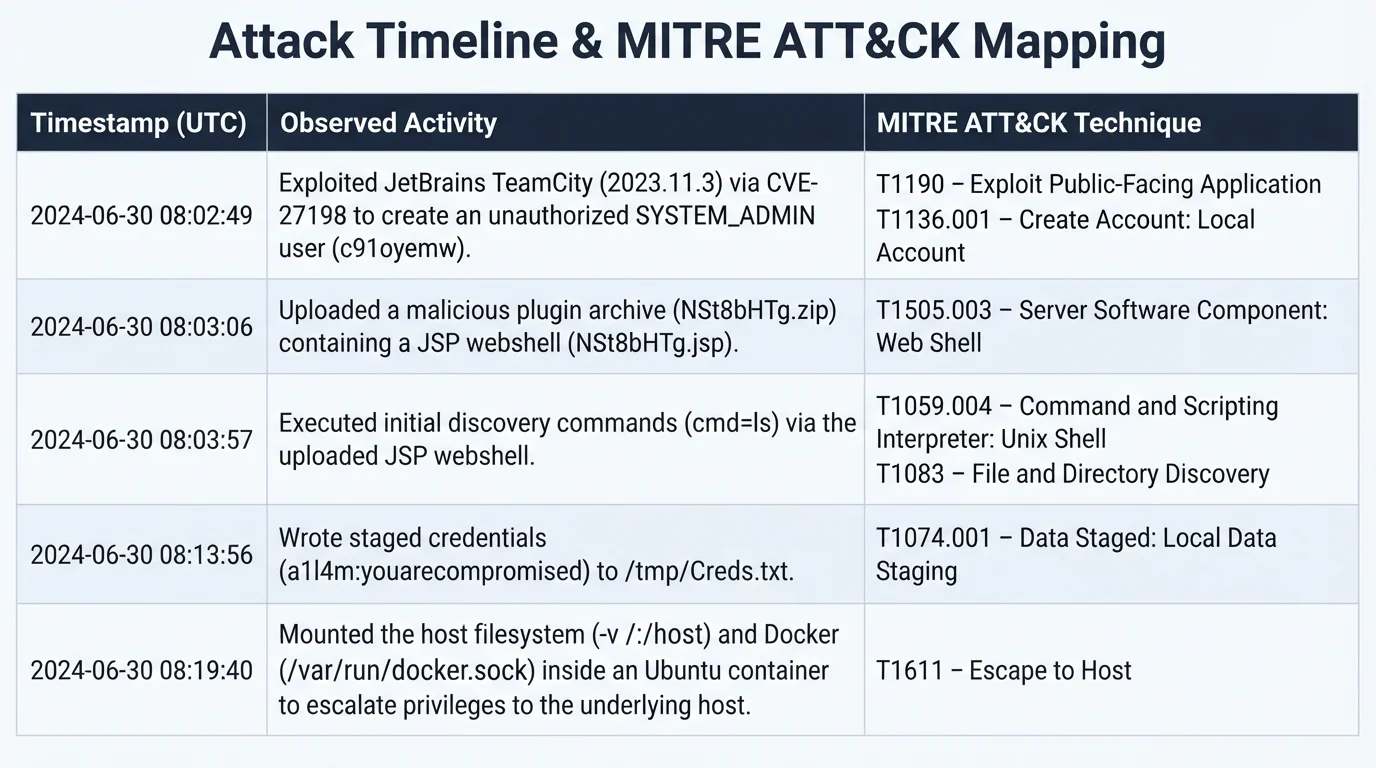
Figure 1: Attack Timeline & MITRE ATT&CK Mapping (Generated by AI Assistant [Gemini / Nano Banana], 2026).
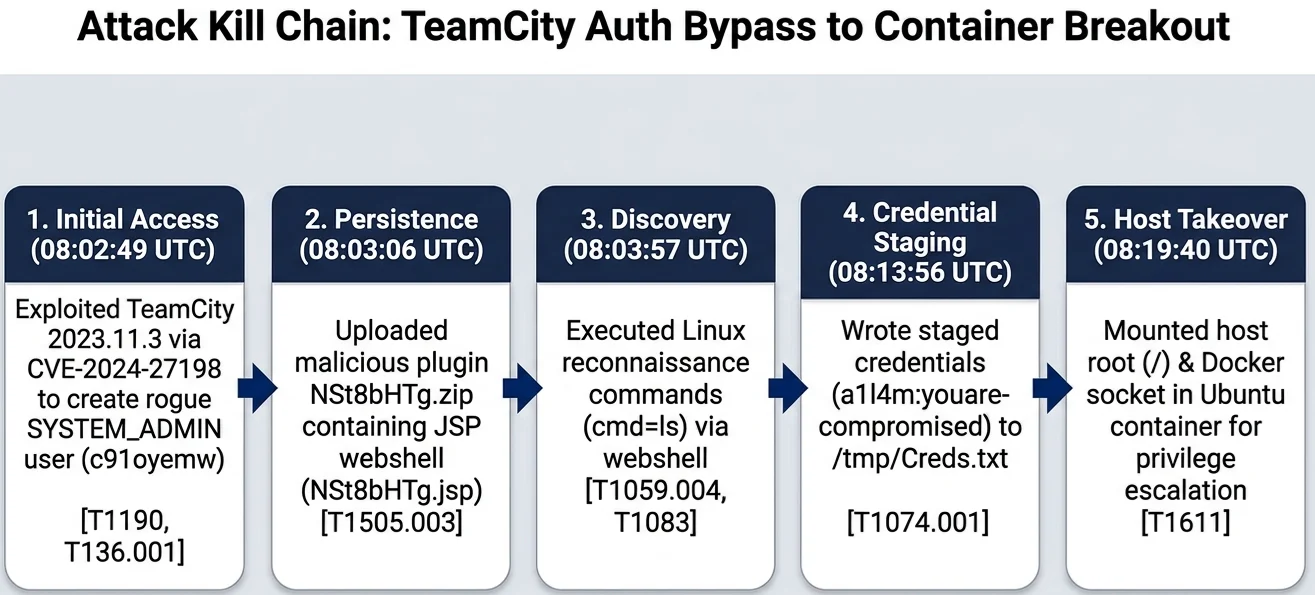
Figure 2: Attack Kill Chain (Generated by AI Assistant [Gemini / Nano Banana], 2026).
Setup
The only tool named for the analysis is Wireshark, used against the provided PCAP. Two OSINT services are used on the attacker address: IPinfo and ipqualityscore.com. CyberChef is used to URL-decode captured commands. A Google search is used to identify the vulnerability from the version string.
No credentials, accounts or lab configuration beyond the capture are described. The preconditions for the attack, as they appear in the traffic, are a TeamCity instance reachable from the internet and running the vulnerable build.
Finding it
The researcher starts with Wireshark's Protocol Hierarchy (Statistics > Protocol Hierarchy) to get a high-level view of the capture and establish a baseline before narrowing the focus. The protocols called out as high-priority leads are SSH, MIME Multipart Media Encapsulation, JavaScript Object Notation, HTML Form URL Encoded and Address Resolution Protocol, because they expose lateral movement, API exploitation, command execution and network reconnaissance.
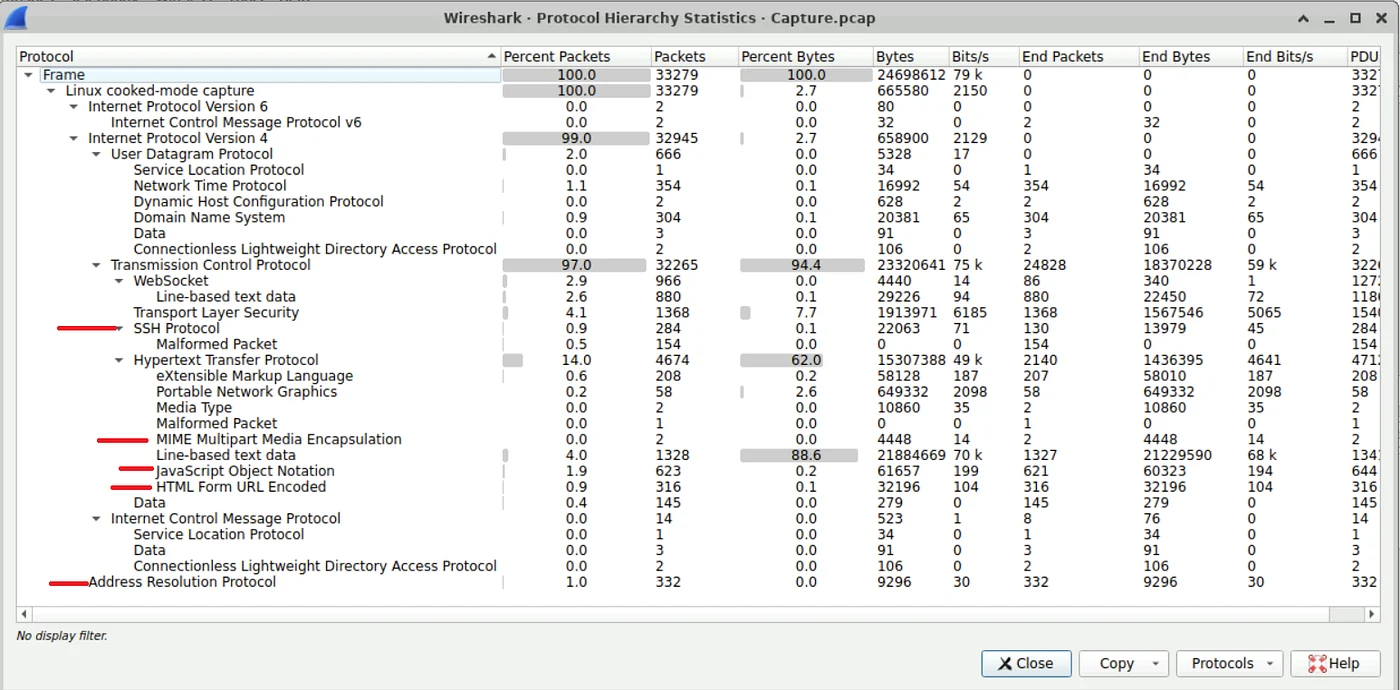
Figure 3: Wireshark Protocol Hierarchy Statistics
Next, the Endpoints view (Statistics > Endpoints, IPv4 tab, sorted by the Bytes column) isolates the top talkers. The capture shows the top 6 communicating IP addresses, made up of 2 internal Docker/private IPs and 4 external IPs, generating at least 1 MB of traffic.
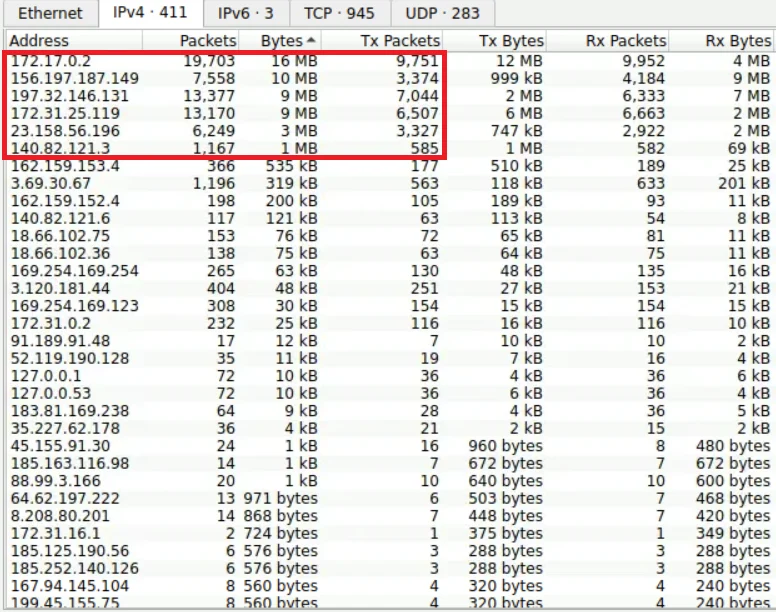
Figure 4: Wireshark IPv4 Endpoints showing attacker IP
Because the scenario describes a webshell upload, the researcher filters for POST requests whose URI carries an executable extension:
(http.request.method == POST) && (http.request.uri matches "(?i)(jsp|jspx|war|asp|aspx|php|phtml|cfm)")
The result shows the external address 23[.]158[.]56[.]196 uploading an encoded script, and that address is treated as the attacker.
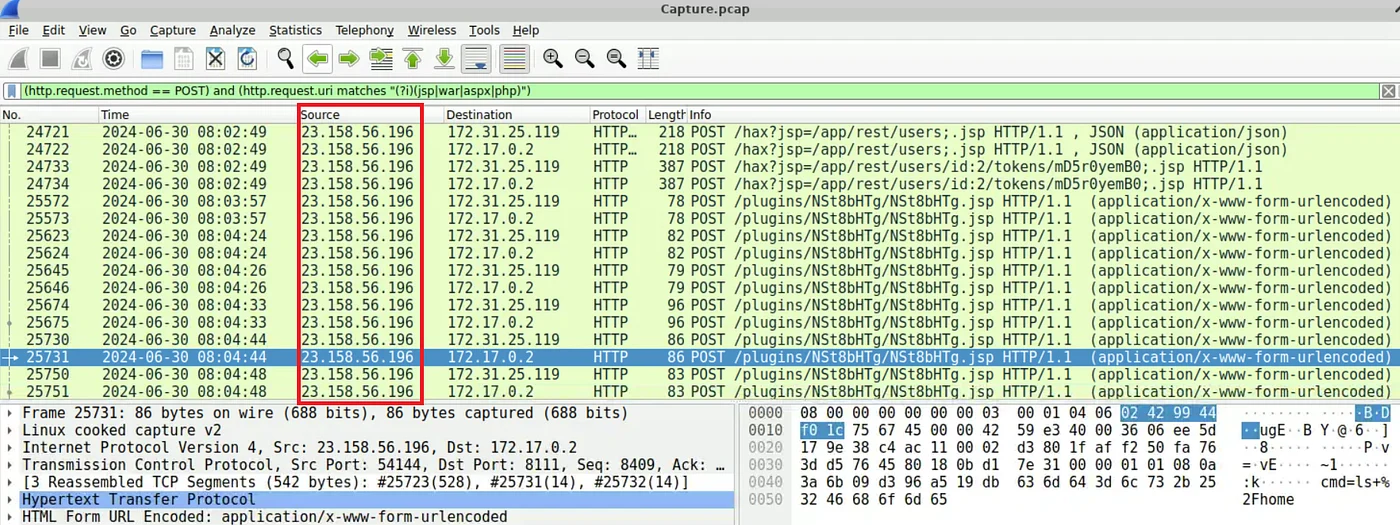
Figure 5: HTTP POST filter results
OSINT on the address
IPinfo places the address in AS63023, belonging to GTHost, located in Frankfurt am Main, Hesse, DE.
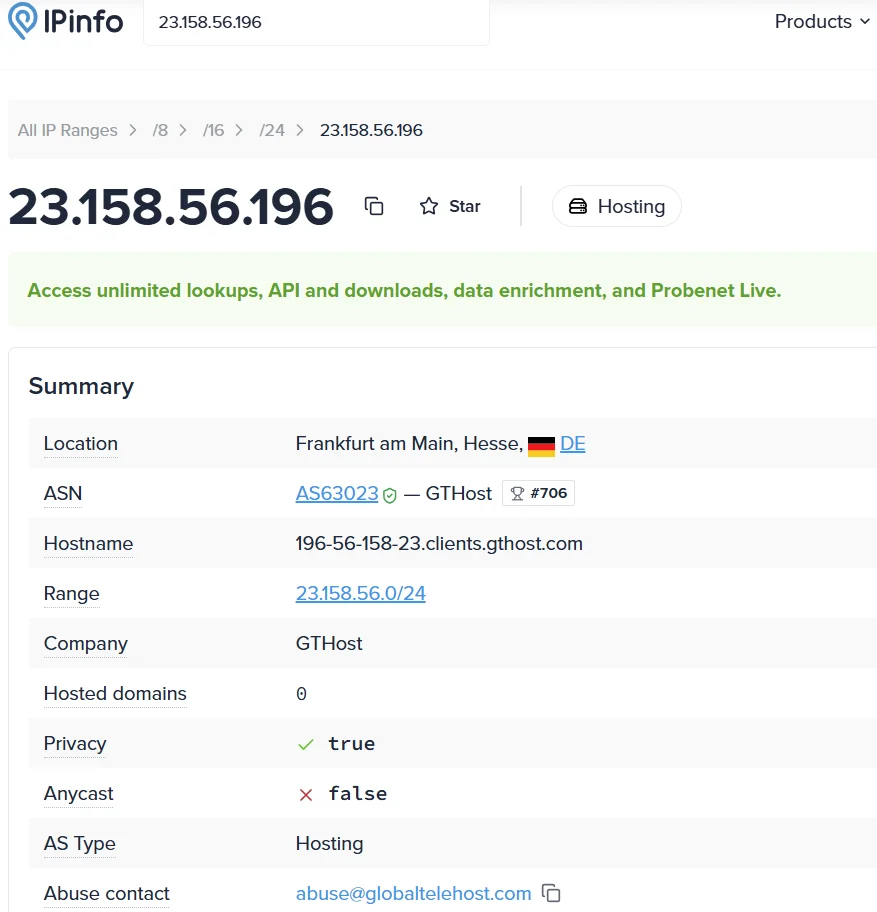
Figure 6: IPinfo lookup for 23[.]158[.]56[.]196
ipqualityscore.com reports a fraud score of 84/100, use of a VPN and a proxy, and recent abuse and bot activity.
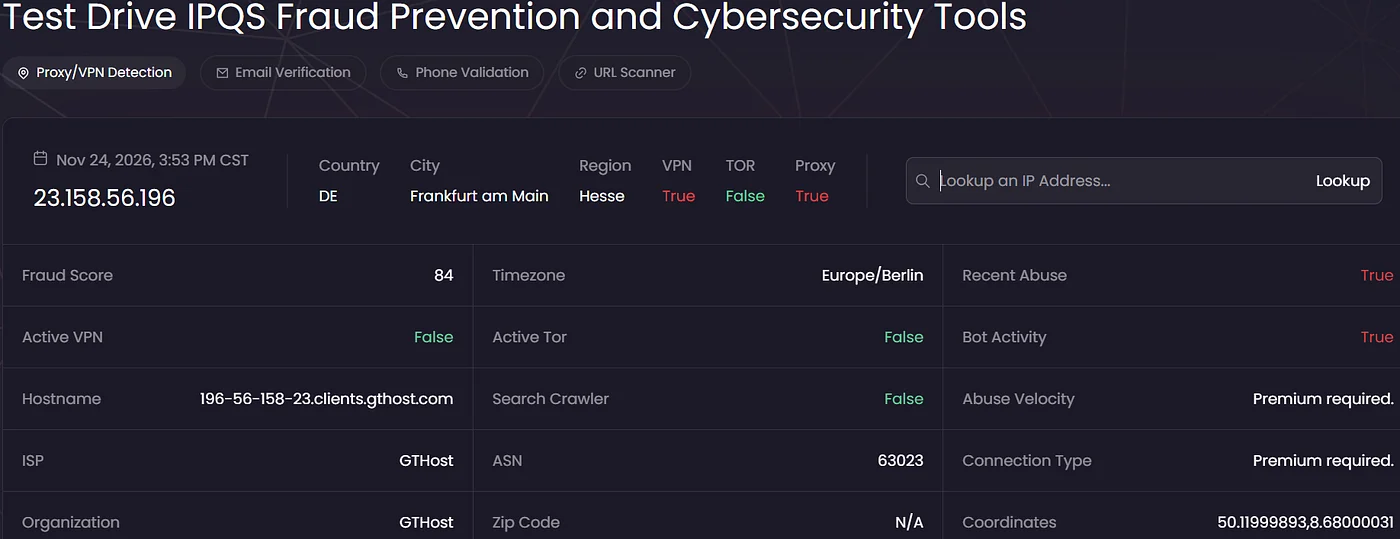
Figure 7: IPQualityScore report for 23[.]158[.]56[.]196
Exploitation
Step 1: identify the vulnerable version
Filter GET requests from the attacker and follow the HTTP stream:
(ip.src == [redacted]) && (http.request.method == GET)
The server reply exposes the version 2023.11.3 (build 147512).
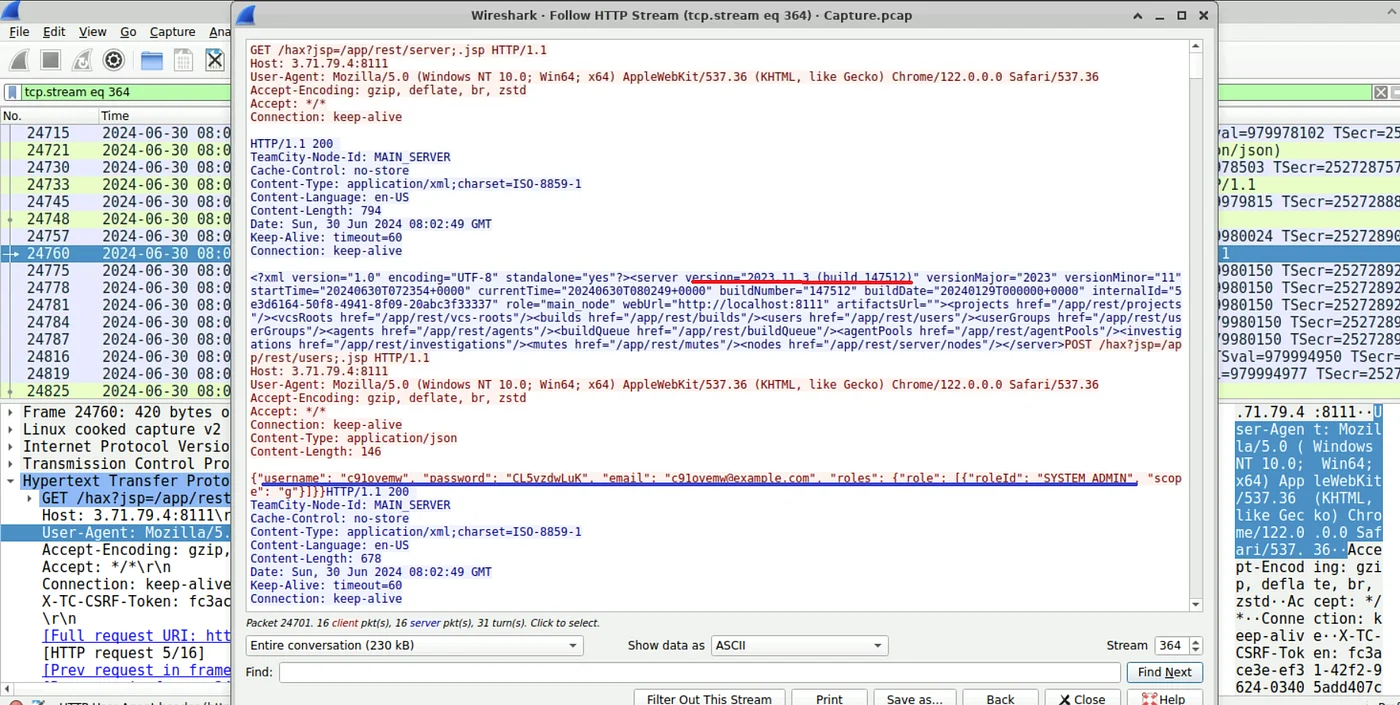
Figure 8: HTTP stream showing TeamCity 2023.11.3 and rogue user c91oyemw
A Google search confirms that TeamCity 2023.11.3 (build 147512) is affected by CVE-2024-27198, a critical authentication bypass allowing unauthenticated attackers to gain administrative control and achieve RCE.
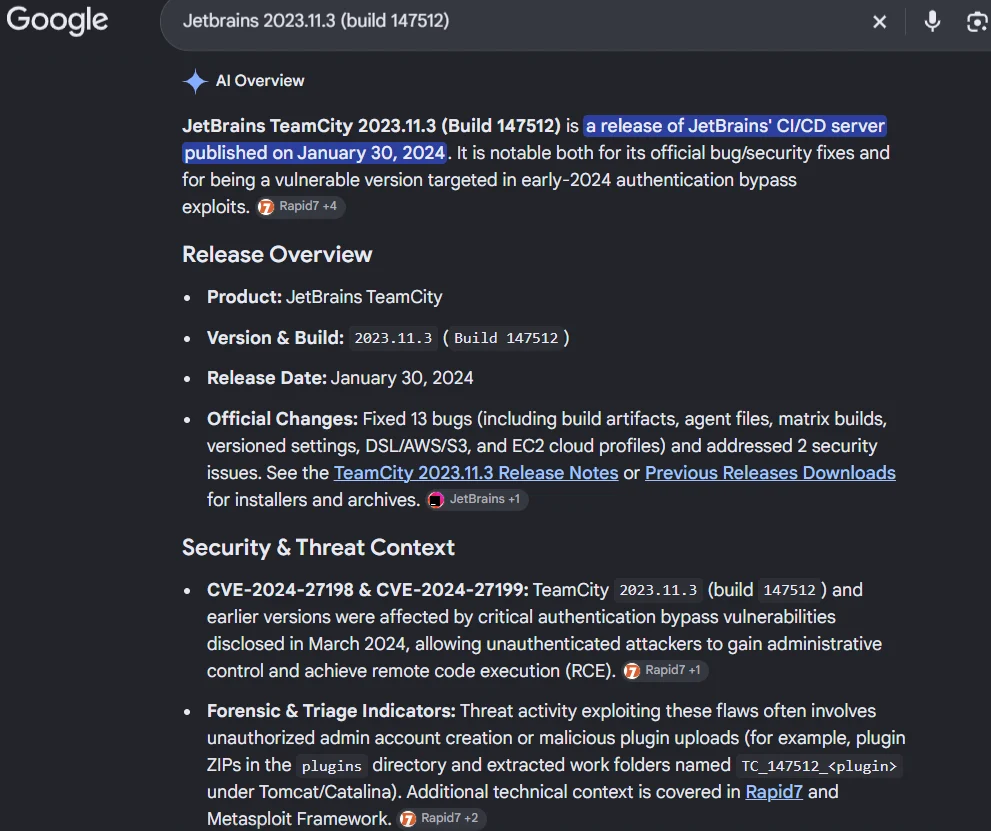
Figure 9: OSINT confirming CVE-2024-27198 affects TeamCity 2023.11.3
Step 2: create a rogue administrator
In the subsequent POST request on 2024-06-30 at 08:02:49, the attacker exploits the bypass to create a rogue user account with SYSTEM_ADMIN privileges:
"username": "c91oyemw", "password": "CL5vzdwLuK"
The POST request on 2024-06-30 at 08:02:49 creates the account with SYSTEM_ADMIN privileges.
Step 3: upload a malicious plugin
Filter POST requests from the attacker:
(ip.src == [redacted]) && (http.request.method == "POST")
On 2024-06-30 at 08:03:06, the attacker uploads NSt8bHTg.zip.
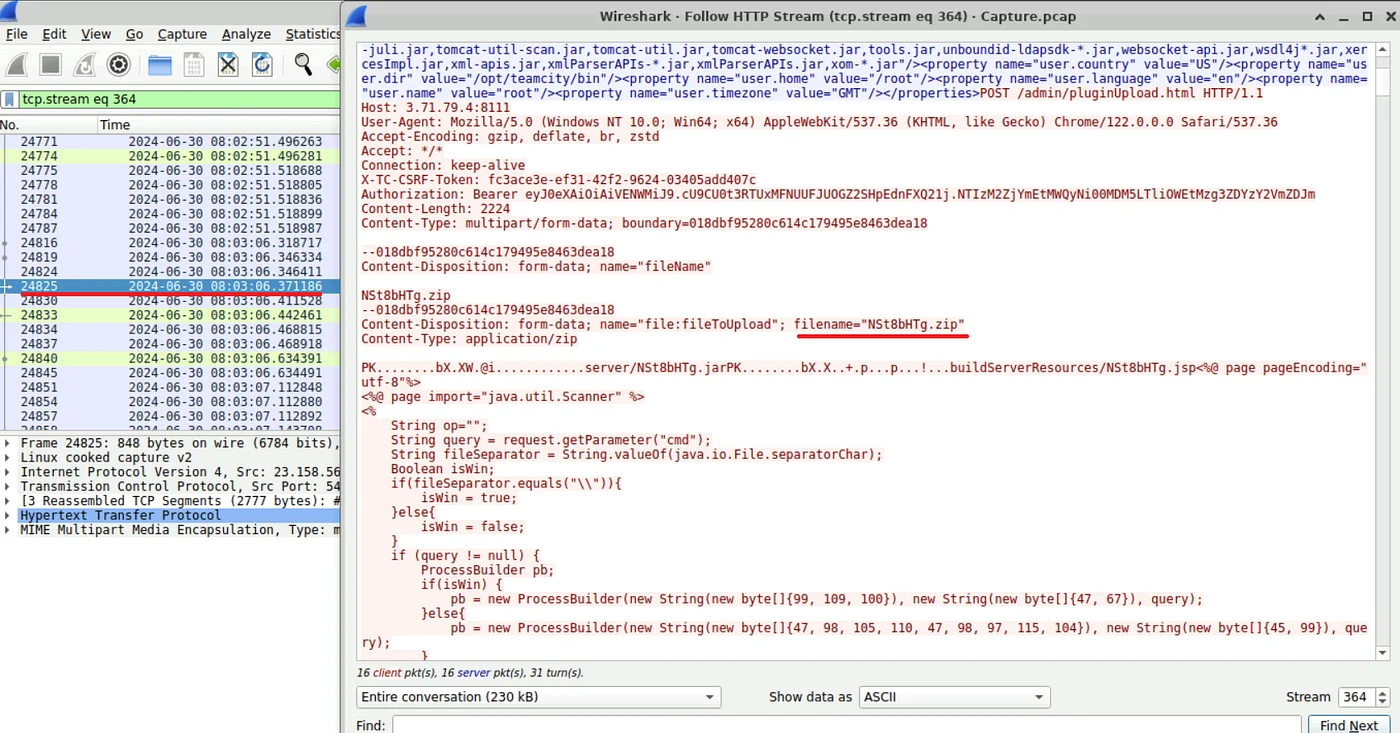
Figure 10: Malicious plugin upload (NSt8bHTg.zip)
Step 4: access the webshell and run discovery
Track access to the uploaded file:
(ip.addr == 23[.]158[.]56[.]196) && (http contains "NSt8bHTg.zip")
On 2024-06-30 at 08:03:57, the attacker accesses NSt8bHTg.jsp under the /plugins/NSt8bHTg/ directory and begins executing Linux commands for reconnaissance. The first command is cmd=ls.
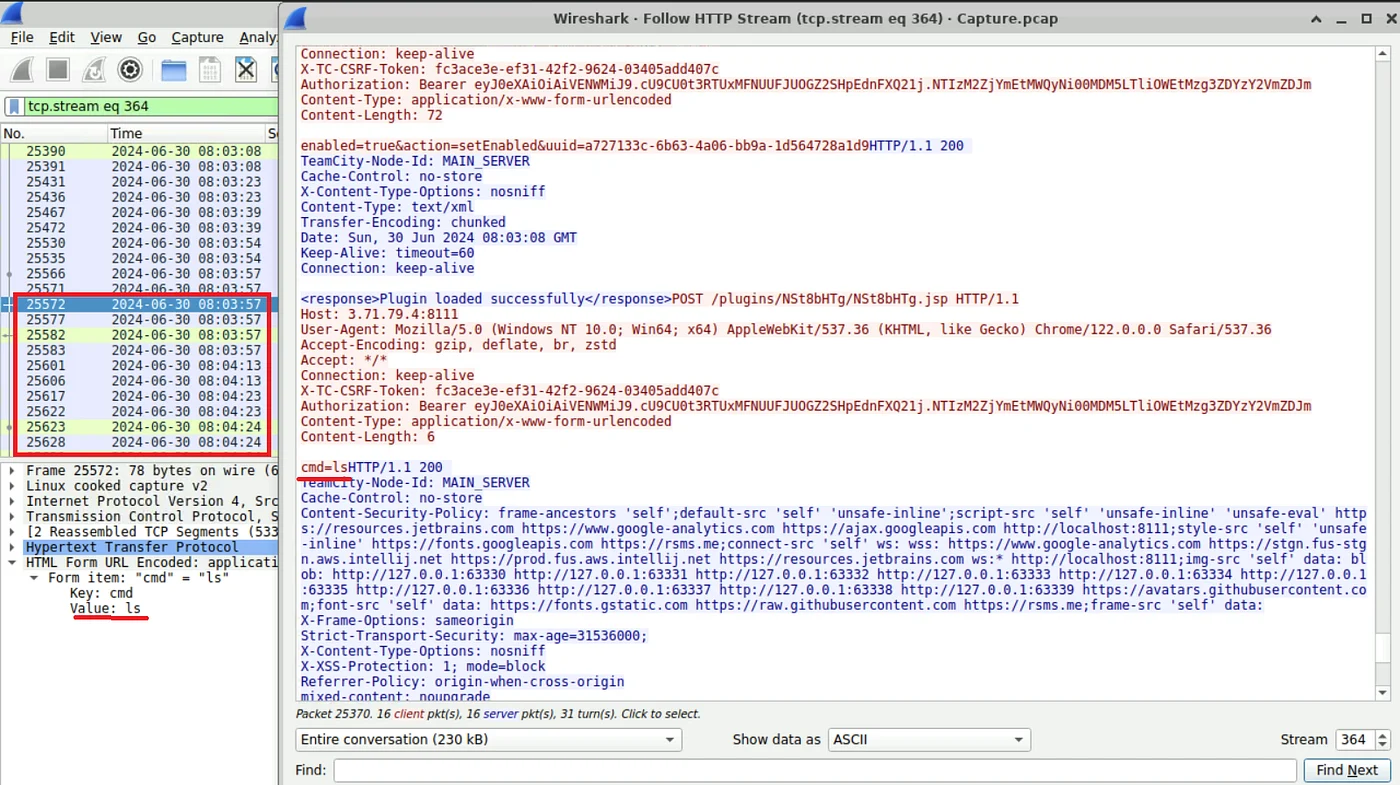
Figure 11: Initial webshell command (cmd=ls)
Step 5: look for secondary payloads and staged credentials
To check whether the webshell was used to pull additional tooling, the researcher filters for command execution and download utilities inside HTTP streams:
(ip.addr == [redacted]) && (http matches "(?i)(cmd=|wget|curl|certutil|powershell|bitsadmin|invoke-webrequest|iwr)")
On 2024-06-30 at 08:13:56, the attacker runs a Linux command that copies the username and password a1l4m:youarecompromised into /tmp/Creds.txt. The command is URL-encoded in the traffic and becomes readable after decoding with CyberChef.
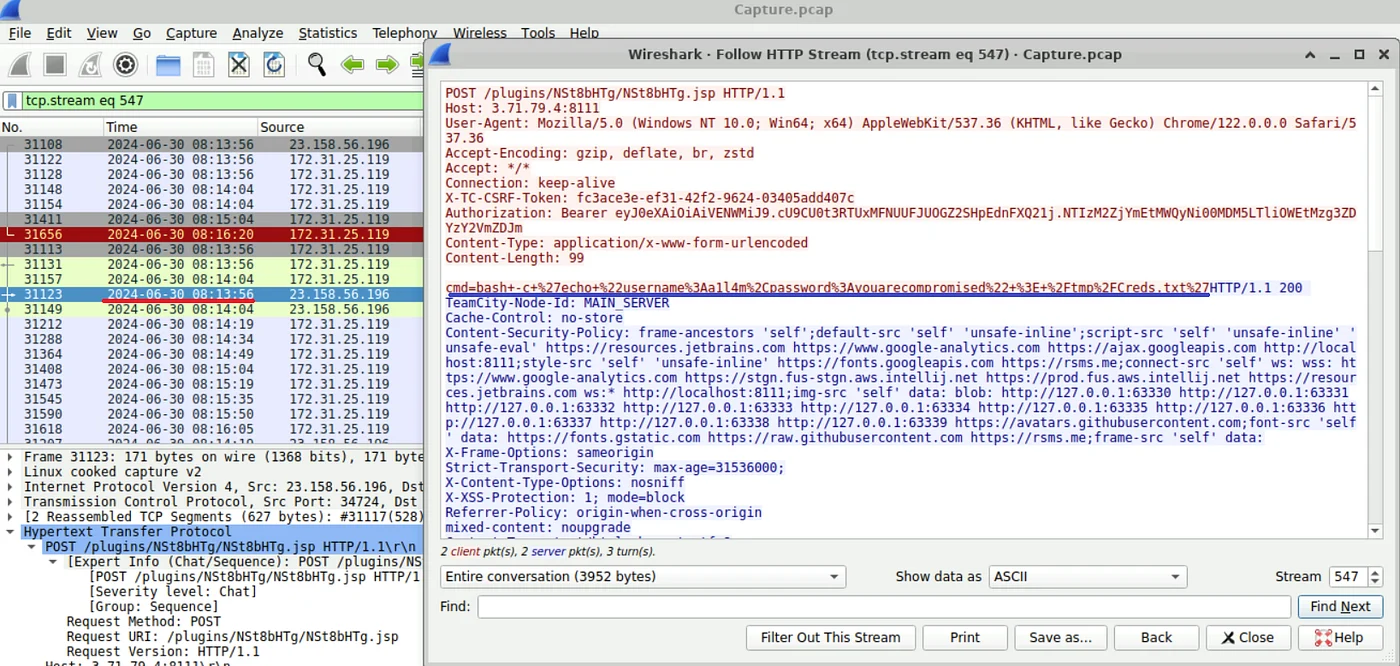
Figure 12: URL-encoded command writing staged credentials
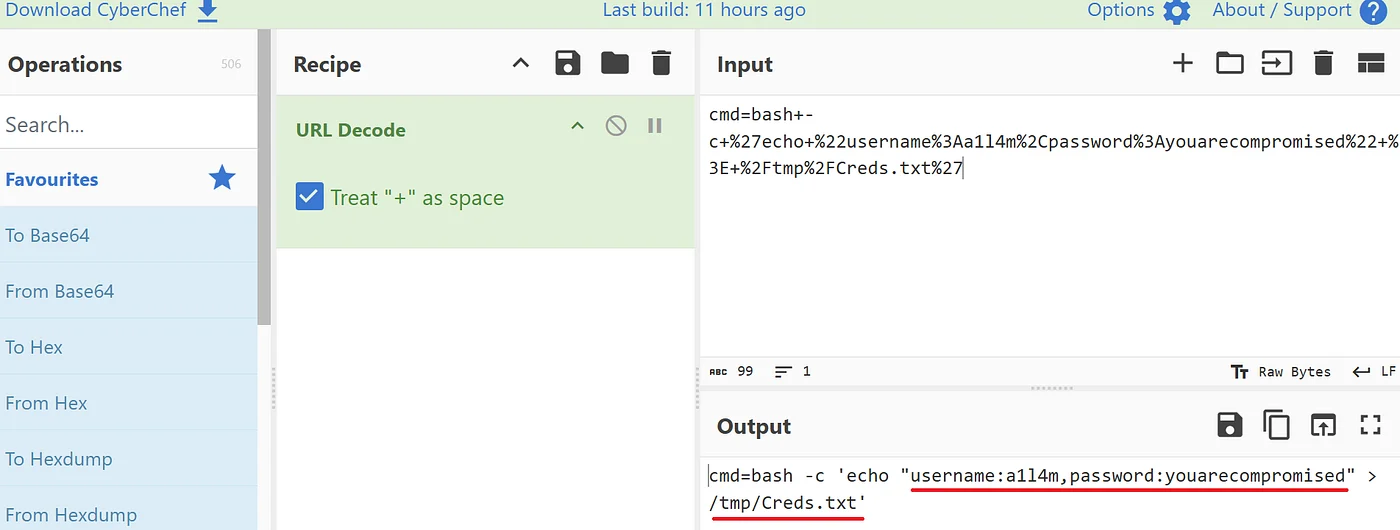
Figure 13: URL-decoded command writing staged credentials
Step 6: container breakout to the host
Filter for webshell command traffic:
(ip.src == [redacted]) && (http contains "cmd=")
On 2024-06-30 at 08:19:40, after staging the credentials, the attacker runs a Docker command that mounts the host filesystem and chroots into it, giving direct, root-level control over the host machine's Docker daemon. The analysis report describes the same step as mounting the host filesystem (-v /:/host) and the Docker socket (/var/run/docker.sock) inside an Ubuntu container to escalate to the underlying host.
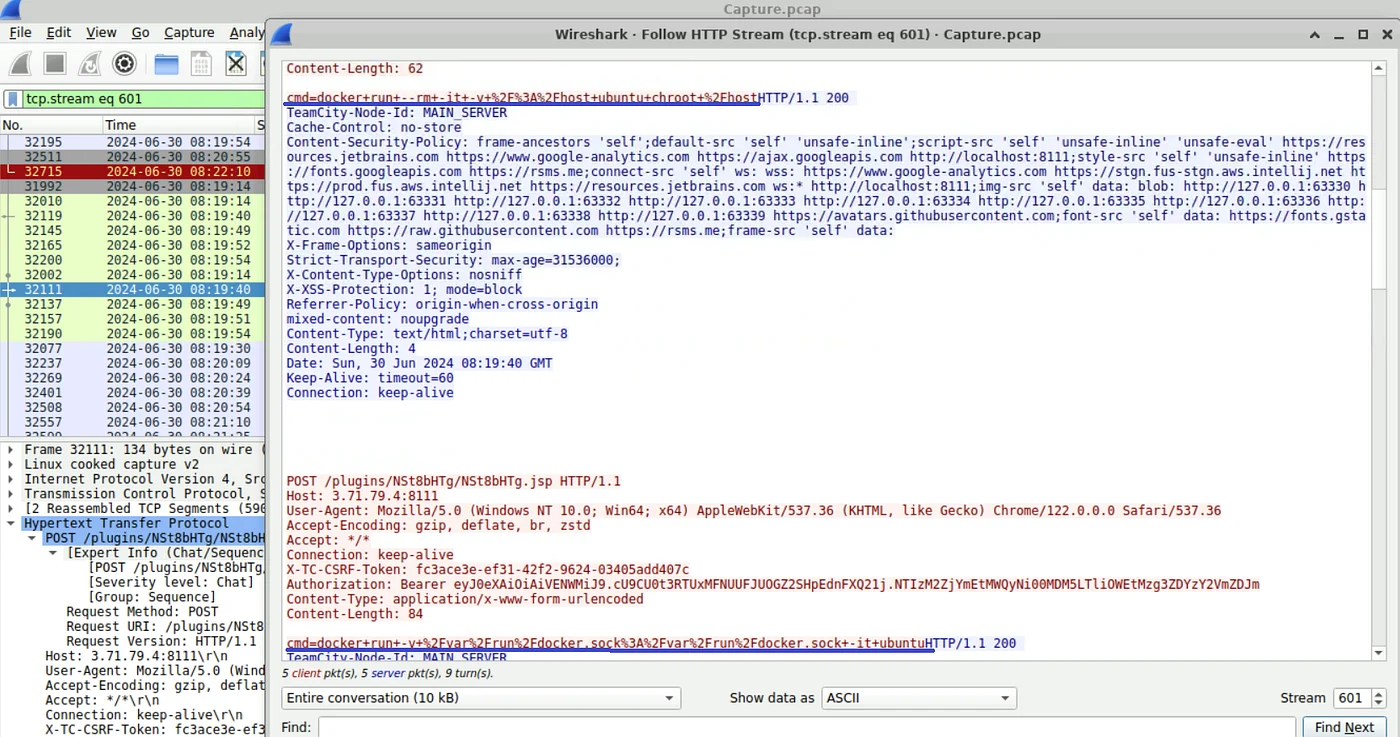
Figure 14: Encoded Docker commands mounting the host filesystem and Docker socket.
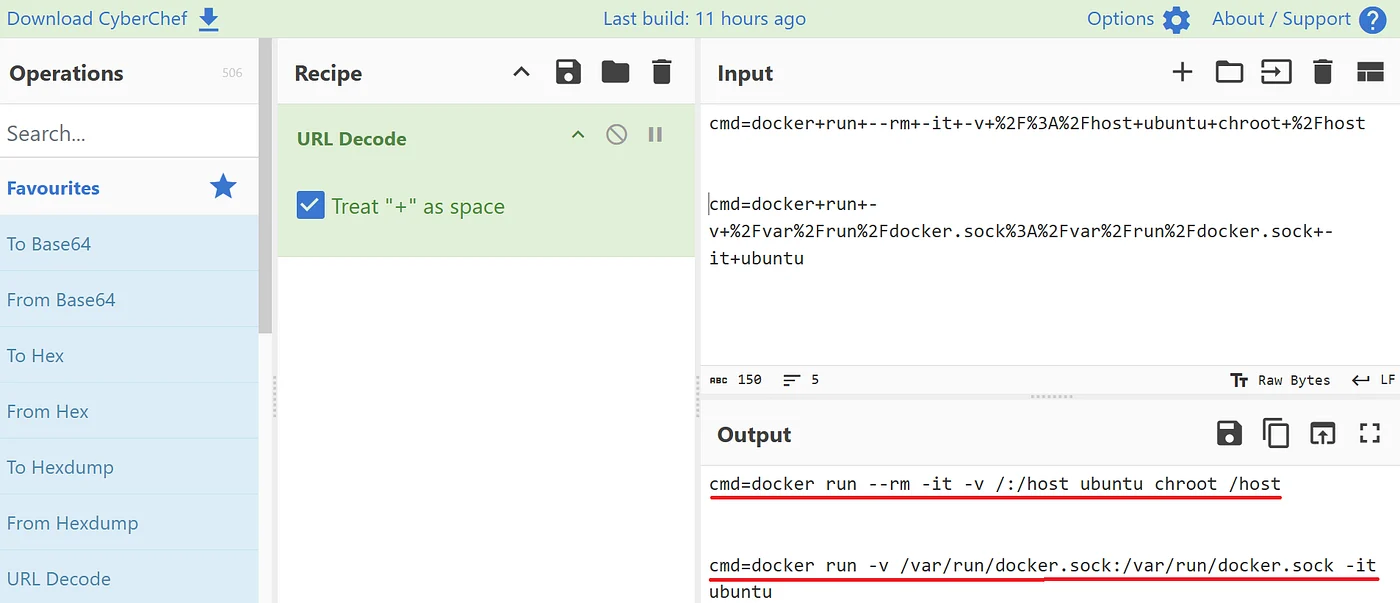
Figure 15: Decoded Docker commands mounting the host filesystem and Docker socket.
Root cause
The entry point is CVE-2024-27198, an authentication bypass in TeamCity 2023.11.3 (build 147512) that allows an unauthenticated attacker to act with administrative rights. The researcher does not analyse the vulnerable code path, so the precise defect is not described here. What the traffic shows is that a POST request on 2024-06-30 at 08:02:49 created a SYSTEM_ADMIN account without any preceding authentication.
An uploaded plugin archive contains a JSP webshell, which the attacker then accesses under /plugins/NSt8bHTg/ and uses to run commands. The attacker then ran a Docker command that mounted the host filesystem and the Docker socket, escalating to the underlying host.
Impact
With the bypass alone, an unauthenticated attacker can create an administrator account on the TeamCity server. From there the attacker uploaded a plugin containing a JSP webshell, ran discovery commands, staged credentials in /tmp/Creds.txt, and used Docker to mount the host filesystem and the Docker socket, obtaining direct root-level control over the host's Docker daemon. The scenario also describes the compromised web server being used as a launch point for further activity, including data manipulation.
Fix
The recommendations given are:
- Patch TeamCity: upgrade JetBrains TeamCity immediately to version
2023.11.4or later to remediate CVE-2024-27198 and CVE-2024-27199. - Eradicate persistence: remove the rogue
c91oyemwadministrator account, revoke all active bearer tokens, and delete the unauthorisedNSt8bHTgplugin directory. - Harden container privileges: avoid running application containers with privileged access or direct mounts to
/var/run/docker.sockand the host root filesystem (/).
Variants to test
- Version disclosure on the login or root page of a CI/CD server. A positive result is a response that names an exact build number, which can then be matched against known CVEs.
- Unauthenticated user creation against TeamCity REST endpoints. A positive result is a new account appearing with administrative rights without a prior session.
- Plugin upload followed by direct access to a JSP under
/plugins/<name>/. A positive result is a response from the JSP rather than a 404 or an access denial. - Webshell command parameters in HTTP streams (
cmd=,wget,curl). A positive result is a request from an external address carrying a command string, followed by output in the response. - Docker socket exposure from an application container. A positive result is a container able to reach
/var/run/docker.sockor mount/from the host.
Hunting notes
In a packet capture, the Protocol Hierarchy and Endpoints views are the fastest way to separate internal from external talkers and to spot the highest-volume external address. From there, filtering POST requests by executable extension in the URI surfaces webshell uploads directly, and filtering by cmd= or download utilities surfaces the interaction that follows.
On the host side, the signals in this case are a newly created SYSTEM_ADMIN account, a plugin directory that was not installed by the team, and a container that can see the Docker socket or the host root filesystem. The attacker address here also carried a high fraud score and VPN/proxy use, which is a useful corroborating signal but not proof on its own.
The researcher reconstructed the chain from the capture: version disclosure, admin account creation, plugin upload, webshell commands, credential staging and host takeover.
What happened, in plain words
Someone broke into a company's build server, the machine that software teams use to compile and package their programs. They got in without any password at all, thanks to a known flaw in the software. Once inside, they made themselves an administrator, uploaded a small program that let them run commands on the server, copied a username and password into a file, and then used a trick with containers to take over the underlying machine.
All of this was reconstructed from a recording of network traffic, a file called a packet capture (PCAP). Think of a PCAP as a security camera recording of everything that travelled over the network during a period of time. The investigator opened that recording in a program called Wireshark, which lets you pause, rewind and search through the traffic, and worked out step by step what the attacker did.
The capture comes from a CyberDefenders Blue Team CTF challenge called JetBrains. A CTF (capture the flag) is a practice exercise where defenders are given realistic evidence and asked to solve a puzzle. The task was to analyse the traffic in Wireshark, identify how the web server was exploited, extract the attacker's indicators of compromise (IOCs, the clues that point to who did what), find the persistence mechanisms (the ways the attacker arranged to keep access), and map the techniques to MITRE ATT&CK, a public catalogue that names and numbers the tactics attackers commonly use.
The scenario describes a web server that an attacker exploited to upload webshells and gain full control of the system, then used as a launch point for further activity including data manipulation. The investigation has to establish the initial entry point, the attacker's tools and techniques, and the extent of the compromise.
The product involved is JetBrains TeamCity, a CI/CD server. CI/CD stands for continuous integration and continuous delivery: it is the software that automatically builds, tests and ships a team's code every time someone saves a change. Because it holds the keys to the code and to the servers that receive it, a CI/CD server is a very valuable target. In the capture the server identifies itself as version 2023.11.3 (build 147512), which the researcher later ties to CVE-2024-27198, an authentication bypass that lets an unauthenticated attacker gain administrative control and achieve remote code execution. An authentication bypass means the login check can be skipped entirely, like a building whose side door opens without a key. Remote code execution (RCE) means the attacker can make the server run commands of their choosing.
Figure 1: Attack Timeline & MITRE ATT&CK Mapping (Generated by AI Assistant [Gemini / Nano Banana], 2026).
Figure 1 lays the whole intrusion out on a timeline and lines each step up against the MITRE ATT&CK catalogue, so you can see the order of events and the name given to each technique.
Figure 2: Attack Kill Chain (Generated by AI Assistant [Gemini / Nano Banana], 2026).
Figure 2 shows the same story as a kill chain, a way of drawing an attack as a sequence of stages from first contact to final control.
Setup
The only tool named for the analysis is Wireshark, used against the provided PCAP. Wireshark is a free program that reads a recording of network traffic and lets you filter it, the way a spreadsheet lets you filter rows. Two OSINT services are used on the attacker address: IPinfo and ipqualityscore.com. OSINT means open source intelligence: looking things up in public sources, such as who owns an internet address. CyberChef is used to URL-decode captured commands. CyberChef is a free web page that converts data from one form to another, and URL-decoding is explained when it first comes up below. A Google search is used to identify the vulnerability from the version string.
No credentials, accounts or lab configuration beyond the capture are described. The preconditions for the attack, as they appear in the traffic, are a TeamCity instance reachable from the internet and running the vulnerable build. In plain terms: the server was exposed to anyone on the internet and had not been updated.
Finding it
The researcher starts with Wireshark's Protocol Hierarchy (Statistics > Protocol Hierarchy) to get a high-level view of the capture and establish a baseline before narrowing the focus. A protocol is a language that two computers agree to speak, such as HTTP for web pages or SSH for remote command lines. The Protocol Hierarchy window counts how much of the recording belongs to each language, which tells you at a glance what kinds of conversation took place.
The protocols called out as high-priority leads are SSH, MIME Multipart Media Encapsulation, JavaScript Object Notation, HTML Form URL Encoded and Address Resolution Protocol, because they expose lateral movement, API exploitation, command execution and network reconnaissance. Lateral movement means moving from one machine to another inside the same network. An API is the doorway a program uses to talk to another program without a human clicking anything, like a service counter at a bank: you hand over a request and get an answer back. Reconnaissance means looking around to see what is there before acting. Address Resolution Protocol (ARP) is how machines on the same local network find each other's hardware addresses, and unusual ARP traffic can mean someone is mapping the network.
Figure 3: Wireshark Protocol Hierarchy Statistics
Figure 3 is that summary view: a list of protocols with the share of traffic each one accounts for.
Next, the Endpoints view (Statistics > Endpoints, IPv4 tab, sorted by the Bytes column) isolates the top talkers. An endpoint is simply one of the machines taking part in the traffic, identified by its IP address, which is the number that identifies a computer on a network, much like a postal address. The capture shows the top 6 communicating IP addresses, made up of 2 internal Docker/private IPs and 4 external IPs, generating at least 1 MB of traffic. Internal addresses belong to machines inside the company; external addresses belong to the outside world. Sorting by bytes, the amount of data exchanged, puts the busiest machines at the top, and an outside machine sending a lot of data is worth a look.
Figure 4: Wireshark IPv4 Endpoints showing attacker IP
Figure 4 shows that sorted list of addresses with their traffic volumes.
Because the scenario describes a webshell upload, the researcher filters for POST requests whose URI carries an executable extension. A webshell is a small program planted on a web server that lets the attacker run commands on it through ordinary web requests. POST is one of the two common web request methods: GET asks a server to send something back, POST sends data to the server, which is what a form submission or a file upload does. The URI is the part of the address after the domain, the path to the page or file being requested. The filter is:
(http.request.method == POST) && (http.request.uri matches "(?i)(jsp|jspx|war|asp|aspx|php|phtml|cfm)")
Line by line: http.request.method == POST keeps only requests that send data to the server. && means "and", so both halves must be true. http.request.uri matches checks the requested path against a pattern. (?i) tells the pattern to ignore upper or lower case. The bracketed list (jsp|jspx|war|asp|aspx|php|phtml|cfm) is a set of file extensions that servers can be made to execute as programs rather than just hand back as text, and the | between them means "or". So the whole filter asks: show me every upload whose filename ends in a script extension, which is exactly what a webshell upload looks like.
The result shows the external address 23[.]158[.]56[.]196 uploading an encoded script, and that address is treated as the attacker. The square brackets in 23[.]158[.]56[.]196 are a convention for writing an address so that it is not turned into a clickable link; the address itself is 23.158.56.196.
Figure 5: HTTP POST filter results
Figure 5 shows the filtered list of uploads, with the request from that external address among them.
OSINT on the address
IPinfo places the address in AS63023, belonging to GTHost, located in Frankfurt am Main, Hesse, DE. An AS number identifies the network operator that owns a block of addresses, and GTHost is a hosting provider, a company that rents out servers. An address belonging to a hosting provider rather than to a home internet connection is itself a hint, because attackers often rent servers to launch attacks from.
Figure 6: IPinfo lookup for 23[.]158[.]56[.]196
Figure 6 is the IPinfo page for the address, showing the network operator and location.
ipqualityscore.com reports a fraud score of 84/100, use of a VPN and a proxy, and recent abuse and bot activity. A VPN is a service that routes your traffic through another computer so that it appears to come from elsewhere, and a proxy does something similar for individual connections. A high fraud score is a reputation signal: it means the address has been seen doing bad things before. It supports the conclusion but does not prove anything by itself.
Figure 7: IPQualityScore report for 23[.]158[.]56[.]196
Figure 7 is that reputation report for the address.
Exploitation
Step 1: identify the vulnerable version
Filter GET requests from the attacker and follow the HTTP stream:
(ip.src == [redacted]) && (http.request.method == GET)
Line by line: ip.src == [redacted] keeps only traffic whose source address is the attacker's, so you see what the attacker sent rather than what was sent to them. && means "and". http.request.method == GET keeps only requests that ask for something. Together: everything the attacker asked the server for. Following the HTTP stream means asking Wireshark to stitch the individual packets of one conversation back together into the readable back and forth, like reassembling a torn-up letter.
The server reply exposes the version 2023.11.3 (build 147512). Many servers announce their exact version in their replies, which is convenient for administrators and equally convenient for attackers, because a version number can be looked up against lists of known flaws.
Figure 8: HTTP stream showing TeamCity 2023.11.3 and rogue user c91oyemw
Figure 8 shows that reassembled conversation, including the version the server reported and the rogue user account that appears in it.
A Google search confirms that TeamCity 2023.11.3 (build 147512) is affected by CVE-2024-27198, a critical authentication bypass allowing unauthenticated attackers to gain administrative control and achieve RCE. CVE stands for Common Vulnerabilities and Exposures: it is a public numbering system, so that everyone discussing the same flaw uses the same name for it.
Figure 9: OSINT confirming CVE-2024-27198 affects TeamCity 2023.11.3
Figure 9 shows the search result that matches the version to that CVE.
Step 2: create a rogue administrator
In the subsequent POST request on 2024-06-30 at 08:02:49, the attacker exploits the bypass to create a rogue user account with SYSTEM_ADMIN privileges:
"username": "c91oyemw", "password": "CL5vzdwLuK"
This is a fragment of JSON, a common text format for structured data, in which each value is given a name. Line by line: "username": "c91oyemw" sets the account name to c91oyemw, and "password": "CL5vzdwLuK" sets its password. SYSTEM_ADMIN is the highest level of permission in TeamCity, the equivalent of handing someone the master key.
The POST request on 2024-06-30 at 08:02:49 creates the account with SYSTEM_ADMIN privileges.
Step 3: upload a malicious plugin
Filter POST requests from the attacker:
(ip.src == [redacted]) && (http.request.method == "POST")
Line by line: again, only traffic sent by the attacker's address, and only requests that send data to the server. A plugin is an add-on that extends a program's features, and TeamCity accepts plugins as archive files, which is why an upload is the natural way to get code onto the server.
On 2024-06-30 at 08:03:06, the attacker uploads NSt8bHTg.zip.
Figure 10: Malicious plugin upload (NSt8bHTg.zip)
Figure 10 shows the upload request carrying that archive.
Step 4: access the webshell and run discovery
Track access to the uploaded file:
(ip.addr == 23[.]158[.]56[.]196) && (http contains "NSt8bHTg.zip")
Line by line: ip.addr == 23[.]158[.]56[.]196 matches traffic to or from the attacker, in either direction, so you see both the request and the reply. && means "and". http contains "NSt8bHTg.zip" keeps only web traffic that mentions that filename anywhere in it. The point is to follow the file after it was uploaded and see what happened to it.
On 2024-06-30 at 08:03:57, the attacker accesses NSt8bHTg.jsp under the /plugins/NSt8bHTg/ directory and begins executing Linux commands for reconnaissance. The first command is cmd=ls. A JSP file is a page that the server runs as a program when someone requests it, which is what turns an uploaded file into a webshell. ls is the Linux command that lists the contents of a directory, the equivalent of opening a folder to see what is inside, and cmd= is the parameter through which the webshell receives the command to run.
Figure 11: Initial webshell command (cmd=ls)
Figure 11 shows that first command travelling to the webshell.
Step 5: look for secondary payloads and staged credentials
To check whether the webshell was used to pull additional tooling, the researcher filters for command execution and download utilities inside HTTP streams:
(ip.addr == 23[.]158[.]56[.]196] && (http matches "(?i)(cmd=|wget|curl|certutil|powershell|bitsadmin|invoke-webrequest|iwr)")
Line by line: the first part again limits the view to traffic involving the attacker. http matches checks the web traffic against a pattern, and (?i) makes it case-insensitive. The bracketed list is a set of telltale words: cmd= is the webshell's command parameter, wget and curl are Linux tools for downloading files from the internet, certutil, powershell, bitsadmin, invoke-webrequest and iwr are Windows tools and commands for downloading or running things. Any of them appearing in web traffic is a sign that someone is running commands or fetching more tools. The purpose of this step is to find out whether the attacker brought extra equipment, the way you would check whether a burglar had a van parked outside.
On 2024-06-30 at 08:13:56, the attacker runs a Linux command that copies the username and password a1l4m:youarecompromised into /tmp/Creds.txt. The command is URL-encoded in the traffic and becomes readable after decoding with CyberChef. URL-encoding is a way of writing characters that are not allowed in a web address by replacing each one with a percent sign and a code, so a space becomes %20 and so on. It is not encryption: anyone can reverse it, which is why CyberChef can turn it back into readable text. /tmp is a temporary folder on a Linux machine, and a file left there is a staged file, meaning it is being kept ready for later use.
Figure 12: URL-encoded command writing staged credentials
Figure 12 shows the command as it appeared in the traffic, in its encoded form.
Figure 13: URL-decoded command writing staged credentials
Figure 13 shows the same command after decoding, where the username and password and the destination file are readable.
Step 6: container breakout to the host
Filter for webshell command traffic:
(ip.src == [redacted]) && (http contains "cmd=")
Line by line: traffic sent by the attacker, and only web traffic containing the webshell's command parameter. This narrows the view to the moments the attacker was driving the webshell.
A container is a lightweight, sealed-off environment in which an application runs, a bit like a flat inside a building: it has its own rooms but shares the building's plumbing. The host is the real machine underneath, the building itself. A Docker socket is the control channel through which programs ask Docker, the software that manages containers, to start and stop them. If a container can reach that socket, it can ask Docker to do things on the host, which is like a tenant being able to operate the building's master control panel.
On 2024-06-30 at 08:19:40, after staging the credentials, the attacker runs a Docker command that mounts the host filesystem and chroots into it, giving direct, root-level control over the host machine's Docker daemon. Mounting means attaching a folder from one place so that it appears in another, and chrooting means changing which folder the running program treats as the root of the filesystem, so that the host's files appear as its own. Root-level control means the highest level of permission on a Linux machine, the account that can do anything. The analysis report describes the same step as mounting the host filesystem (-v /:/host) and the Docker socket (/var/run/docker.sock) inside an Ubuntu container to escalate to the underlying host. In -v /:/host, the -v option attaches a folder, the / before the colon is the host's entire filesystem, and /host is where it is made to appear inside the container. /var/run/docker.sock is the file through which the Docker control channel is reached. Ubuntu is a common version of Linux, used here as the container image.
Figure 14: Encoded Docker commands mounting the host filesystem and Docker socket.
Figure 14 shows those Docker commands as they appeared in the traffic, encoded.
Figure 15: Decoded Docker commands mounting the host filesystem and Docker socket.
Figure 15 shows the same commands after decoding, where the mount options and the socket path are visible.
Root cause
The entry point is CVE-2024-27198, an authentication bypass in TeamCity 2023.11.3 (build 147512) that allows an unauthenticated attacker to act with administrative rights. The researcher does not analyse the vulnerable code path, so the precise defect is not described here. What the traffic shows is that a POST request on 2024-06-30 at 08:02:49 created a SYSTEM_ADMIN account without any preceding authentication.
An uploaded plugin archive contains a JSP webshell, which the attacker then accesses under /plugins/NSt8bHTg/ and uses to run commands. In other words, a feature designed to let administrators add capabilities was used to add the attacker's capability instead. The attacker then ran a Docker command that mounted the host filesystem and the Docker socket, escalating to the underlying host.
Impact
With the bypass alone, an unauthenticated attacker can create an administrator account on the TeamCity server. From there the attacker uploaded a plugin containing a JSP webshell, ran discovery commands, staged credentials in /tmp/Creds.txt, and used Docker to mount the host filesystem and the Docker socket, obtaining direct root-level control over the host's Docker daemon. The scenario also describes the compromised web server being used as a launch point for further activity, including data manipulation.
Fix
The recommendations given are:
- Patch TeamCity: upgrade JetBrains TeamCity immediately to version
2023.11.4or later to remediate CVE-2024-27198 and CVE-2024-27199. Patching means installing the fixed version, and the two CVE numbers are the flaws that version closes. - Eradicate persistence: remove the rogue
c91oyemwadministrator account, revoke all active bearer tokens, and delete the unauthorisedNSt8bHTgplugin directory. A bearer token is a piece of text that a program presents instead of a password to prove it is allowed in, like a wristband at an event; revoking it cancels it so it no longer works. - Harden container privileges: avoid running application containers with privileged access or direct mounts to
/var/run/docker.sockand the host root filesystem (/). Hardening means removing unnecessary powers so that a single mistake cannot become a total loss.
Variants to test
- Version disclosure on the login or root page of a CI/CD server. A positive result is a response that names an exact build number, which can then be matched against known CVEs.
- Unauthenticated user creation against TeamCity REST endpoints. A positive result is a new account appearing with administrative rights without a prior session. REST endpoints are the API addresses through which programs talk to the server.
- Plugin upload followed by direct access to a JSP under
/plugins/<name>/. A positive result is a response from the JSP rather than a 404 or an access denial. A 404 is the standard web answer meaning "no such page". - Webshell command parameters in HTTP streams (
cmd=,wget,curl). A positive result is a request from an external address carrying a command string, followed by output in the response. - Docker socket exposure from an application container. A positive result is a container able to reach
/var/run/docker.sockor mount/from the host.
Hunting notes
In a packet capture, the Protocol Hierarchy and Endpoints views are the fastest way to separate internal from external talkers and to spot the highest-volume external address. From there, filtering POST requests by executable extension in the URI surfaces webshell uploads directly, and filtering by cmd= or download utilities surfaces the interaction that follows.
On the host side, the signals in this case are a newly created SYSTEM_ADMIN account, a plugin directory that was not installed by the team, and a container that can see the Docker socket or the host root filesystem. The attacker address here also carried a high fraud score and VPN/proxy use, which is a useful corroborating signal but not proof on its own.
The researcher reconstructed the chain from the capture: version disclosure, admin account creation, plugin upload, webshell commands, credential staging and host takeover.
Glossary
- API: the doorway a program uses to talk to another program, without a human clicking anything.
- ARP (Address Resolution Protocol): how machines on the same local network find each other's hardware addresses.
- AS number: a number identifying the network operator that owns a block of internet addresses.
- Authentication bypass: a flaw that lets someone skip the login check entirely.
- Bearer token: a piece of text a program presents instead of a password to prove it is allowed in.
- Build number: the exact identifier of a compiled version of software, such as 147512.
- Chroot: changing which folder a running program treats as the root of the filesystem.
- CI/CD: continuous integration and continuous delivery, the automated building, testing and shipping of software.
- Container: a lightweight, sealed-off environment in which an application runs on a shared machine.
- CTF (capture the flag): a practice exercise where defenders are given realistic evidence and asked to solve a puzzle.
- CVE: Common Vulnerabilities and Exposures, a public numbering system so everyone uses the same name for the same flaw.
- CyberChef: a free web page that converts data from one form to another.
- Docker: software that manages containers.
- Docker socket: the control channel through which programs ask Docker to start and stop containers.
- Endpoint: one of the machines taking part in network traffic, identified by its IP address.
- Fraud score: a reputation rating for an internet address based on past bad behaviour.
- GET: a web request method that asks a server to send something back.
- Hardening: removing unnecessary powers so a single mistake cannot become a total loss.
- Host: the real machine underneath a container.
- HTTP: the language browsers and web servers use to exchange pages and data.
- HTTP stream: the individual packets of one web conversation stitched back together into readable order.
- Indicator of compromise (IOC): a clue that points to who did what, such as an address, a filename or an account name.
- Internal / external address: an address belonging to a machine inside the company, versus one belonging to the outside world.
- IP address: the number that identifies a computer on a network.
- IPinfo: a public service that looks up who owns an internet address and where it is.
- JSON: a common text format for structured data, in which each value is given a name.
- JSP: a page that the server runs as a program when someone requests it.
- Kill chain: a way of drawing an attack as a sequence of stages from first contact to final control.
- Lateral movement: moving from one machine to another inside the same network.
- MITRE ATT&CK: a public catalogue that names and numbers the tactics attackers commonly use.
- Mount: attaching a folder from one place so that it appears in another.
- OSINT: open source intelligence, looking things up in public sources.
- Packet capture (PCAP): a recording of everything that travelled over a network during a period of time.
- Patching: installing the fixed version of software.
- Persistence: the ways an attacker arranges to keep access after the first break-in.
- Plugin: an add-on that extends a program's features.
- POST: a web request method that sends data to the server, as a form submission or file upload does.
- Protocol: a language two computers agree to speak.
- Proxy: a service that routes a connection through another computer so it appears to come from elsewhere.
- Reconnaissance: looking around to see what is there before acting.
- Remote code execution (RCE): making a server run commands of the attacker's choosing.
- REST endpoint: an API address through which programs talk to a server.
- Root-level control: the highest level of permission on a Linux machine, the account that can do anything.
- SSH: a protocol for logging in to another computer's command line.
- Staged file: a file kept ready for later use.
- SYSTEM_ADMIN: the highest level of permission in TeamCity.
- TeamCity: JetBrains' CI/CD server that builds, tests and ships software.
- Top talkers: the machines exchanging the most data in a capture.
- URI: the part of a web address after the domain, the path to the page or file being requested.
- URL-encoding: writing characters that are not allowed in a web address as a percent sign and a code.
- VPN: a service that routes your traffic through another computer so it appears to come from elsewhere.
- Webshell: a small program planted on a web server that lets an attacker run commands through ordinary web requests.
- Wireshark: a free program that reads a recording of network traffic and lets you filter it.

