How I get an easy Blind SSRF by just reading writeups
The target exposed an XML-RPC endpoint that allowed the pingback.ping method to make the server send an HTTP request to an attacker-controlled URL. An attacker could use this to perform blind SSRF, potentially scanning internal ports or interacting with other protocols.
 Published on medium.com
Reading writeups is one of the most important things in the world of bug bounty, It just makes you more experience hacker without even hacking
The full write-up lives on its author's site
It belongs to its author, so we link to it rather than copy it. The other two tabs are our own rewrites, checked against it.
Context
This is a short write-up about a blind Server Side Request Forgery found on an external bug bounty program. The researcher does not name the program or the target; the only host that appears in the text is www.target.com, used as a placeholder in the URL that was observed. The URL observed in a response pointed to an xmlrpc.php file under /about-us/.
xmlrpc.php is the endpoint WordPress exposes for XML-RPC, a remote procedure call protocol that encodes calls as XML documents sent in the request body. Among the methods it exposes is pingback.ping, part of the pingback mechanism that lets one blog notify another that it has linked to it. When a pingback is accepted, the WordPress installation makes an outgoing HTTP request to fetch the source page named in the call. That server-side fetch is the behaviour that turns an open XML-RPC endpoint into an SSRF primitive.
Setup
The researcher was hunting on an external bug bounty program and used Burp Suite, including Repeater and Burp Collaborator, to capture, modify and replay requests and to observe out-of-band interactions. No account, role or special precondition is described beyond being able to reach the site and its xmlrpc.php endpoint. No software versions are given.
Finding it
While looking for cache bugs, specifically cache poisoning and cache deception, the researcher noticed a URL in one of the responses:
https://www.target.com/about-us/xmlrpc.php
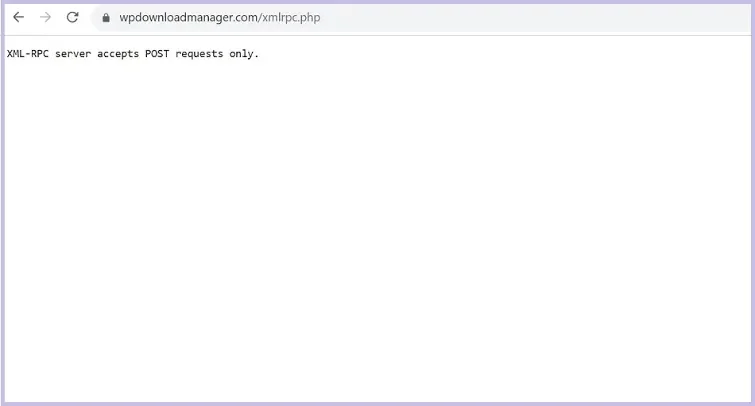
Opening it in a browser returned a page, which the researcher shows below. The screenshot is a generic image taken from Google, not from the target, and is used only to illustrate what such a page looks like.
Seeing xmlrpc.php was enough to recall write-ups about this file and the bugs that can be obtained from it. The researcher points readers to a separate write-up for the background on XML-RPC and WordPress rather than repeating it here.
Exploitation
Step 1: capture the request
The page was reloaded with the proxy intercepting, and the resulting request was sent to Repeater so that it could be modified and replayed.
Step 2: list the available methods
The request method was changed to POST and the body was replaced with a system.listMethods call, which asks the endpoint to enumerate the XML-RPC methods it supports:
<methodCall><methodName>system.listMethods</methodName><params></params></methodCall>
The body was replaced with a system.listMethods call to list all functions:
Step 3: trigger an outbound request with pingback.ping
With pingback.ping available, the researcher used it to make the server issue an HTTP request to a host under their control. The body sent was:
<methodCall><methodName>pingback.ping</methodName><params><param><value><string><-- burp collaborator link --></string></value></param><param><value><string>http://< Any valid page from the website ></string></value></param></params></methodCall>
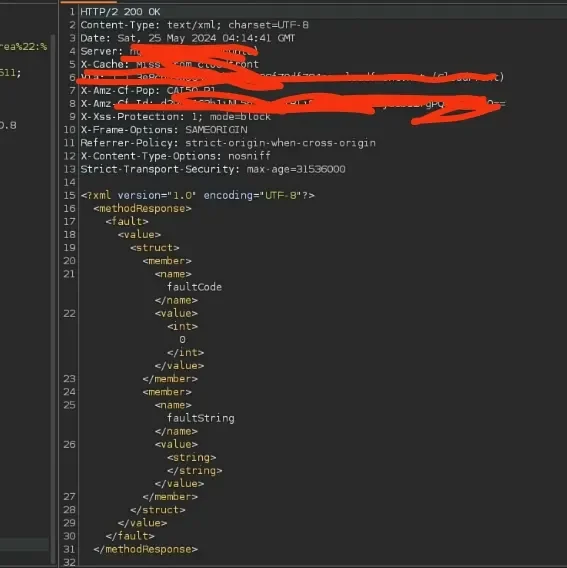
The body sent was: The second parameter is the target URL, a valid page on the site itself, which the pingback mechanism expects to be the page being linked to. The response came back with faultCode 0, which the researcher reads as the request having been sent successfully.
Step 4: confirm the interaction
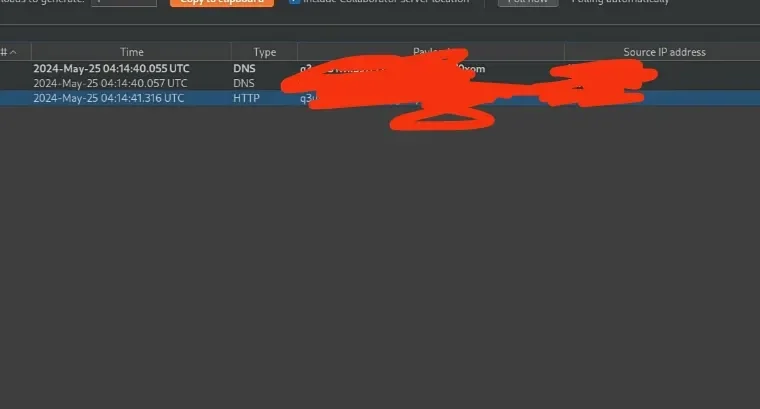
Checking Burp Collaborator showed the incoming interaction from the server, confirming that the target had made the outbound HTTP request. That interaction alone was treated as sufficient evidence to report the bug.
Root cause
The pingback.ping call caused the server to make an outbound HTTP request to the Collaborator link. Because the source URL is attacker-controlled, the server can be pointed at an arbitrary host. The report does not describe any validation, allow-list or network restriction that was present or missing, so the exact reason existing defences did not stop the request is not stated;
Impact
The researcher classifies the issue as blind SSRF: the server sent an HTTP request, which was enough to report the bug. The impact of SSRF, as set out in the report, depends mainly on how the application uses the responses from the remote resource, and can include:
- scanning ports and IP addresses
- interacting with protocols such as Gopher
- discovering the IP addresses of servers running behind a reverse proxy
- denial of service
- in some situations, potentially remote code execution
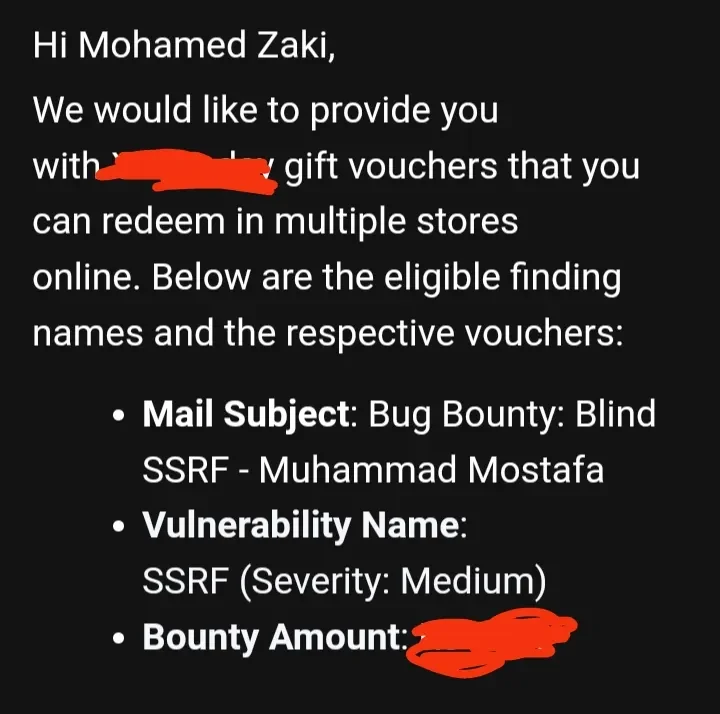
These are presented as general possibilities, not as things demonstrated against this target. The program accepted the report with medium severity and awarded a voucher code for a specific amount usable on some popular websites.
Fix
The general remediation for this class of issue is to disable or restrict XML-RPC where it is not needed, in particular pingback.ping, and to apply egress filtering so that server-side fetches cannot reach internal addresses or arbitrary external hosts.
Variants to test
- Other XML-RPC methods. After
system.listMethods, look for methods that cause server-side fetches or file access. A positive result is a method that returns data from, or triggers an interaction with, a host you control. - Pingback against internal addresses. Point the source parameter at internal ranges or hostnames instead of a Collaborator link. A positive result is a response or timing difference indicating the server reached an internal service.
- Other CMS or framework RPC endpoints. Look for equivalent endpoints on other platforms that fetch a URL supplied by the caller. A positive result is an out-of-band interaction from the target's infrastructure.
- Cache-related paths. Since the endpoint was found while probing cache behaviour, test whether responses from such endpoints are cached and served to other users. A positive result is your marker appearing in another user's response.
What happened, in plain words
A security researcher was testing a website that was part of a bug bounty programme. Bug bounty programmes invite people to look for security problems and report them, often in exchange for a reward. While looking for a different kind of bug, the researcher spotted a file called xmlrpc.php on the site. That file is commonly associated with WordPress, a very common system for building websites. The researcher remembered reading about this file in other people's write-ups (public reports of past bugs) and knew it could sometimes be abused to make the website's server send requests to other computers. By sending a specially crafted request to that file, the researcher made the server contact a server they controlled. That proved the website could be tricked into making requests on the attacker's behalf, a problem known as Server Side Request Forgery (SSRF). Because the researcher could only see that a request was made, not what came back, it is called blind SSRF. The programme accepted the report as a medium severity issue and gave a voucher code as a reward.
Introduction
Reading write-ups is one of the most useful habits in bug bounty. It lets you learn from other people's experience without having to discover everything yourself. This is the story of how a write-up helped me find a blind SSRF.
Story
I was exploring an external bug bounty programme. I was trying to find cache bugs: cache poisoning and cache deception. A cache is a copy of a web page or response stored somewhere between the server and the user to make things faster. Cache poisoning means tricking the cache into storing something harmful; cache deception means tricking it into storing private information. While doing that, I noticed a URL in one of the responses:
https://www.target.com/about-us/xmlrpc.php
This is just a web address. www.target.com is a placeholder for the real site; the path /about-us/xmlrpc.php points to a file named xmlrpc.php inside an about-us folder. When I opened that URL in my browser, I got a page. The screenshot below is a generic image taken from Google, not from the target, and is only there to show what such a page looks like.
Seeing xmlrpc.php immediately reminded me of write-ups about this file and the bugs that can be found through it. I will not explain XML-RPC in detail here; instead, I point you to another write-up that covers it:
Writuep link:
https://ms-official5878.medium.com/xml-rpc-php-wordpress-vulnerabilities-9a7d66068bde
So after finding this page, I reloaded it while intercepting the request with a proxy tool (Burp Suite) and sent the request to Repeater, a part of Burp that lets you modify and resend requests. A proxy sits between your browser and the server and lets you see and change the traffic.
Step 1: capture the request
I reloaded the page with the proxy intercepting, and sent the captured request to Repeater so I could edit and replay it.
Step 2: list the available methods
I changed the request method to POST and put this in the request body to list all functions the endpoint supports:
<methodCall><methodName>system.listMethods</methodName><params></params></methodCall>
This is an XML document. XML is a way of structuring data with tags, like <methodCall> and </methodCall>. The whole document is a "method call": it asks the server to run a function. <methodName>system.listMethods</methodName> names the function to run: system.listMethods, which asks the server to return the list of all functions it offers. <params></params> is empty because this call needs no arguments. The server's answer lists the functions it offers.
Step 3: trigger an outbound request with pingback.ping
With pingback.ping available, I used it to make the server send an HTTP request to a host I control. The body I sent was:
<methodCall><methodName>pingback.ping</methodName><params><param><value><string><-- burp collaborator link --></string></value></param><param><value><string>http://< Any valid page from the website ></string></value></param></params></methodCall>
Again this is an XML method call. <methodName>pingback.ping</methodName> selects the pingback function. The first <param> contains a string, and I put my Burp Collaborator link there. Burp Collaborator is a service that gives you a unique address and records any request sent to it, so you can see when a server contacts you. The second <param> is a valid page from the website. The server's reply came back with faultCode 0, which I read as the request having been sent successfully.
Step 4: confirm the interaction
I checked Burp Collaborator and saw an incoming interaction from the server. That confirmed the target had made the outbound HTTP request. That interaction alone was enough evidence to report the bug.
What is the impact of SSRF?
The impact of an SSRF vulnerability depends mainly on how the web application uses the responses from the remote resource. Possible consequences include:
- scanning ports and IP addresses
- interacting with protocols such as Gopher
- discovering the IP addresses of servers running behind a reverse proxy
- denial of service
- in some situations, potentially remote code execution
These are general possibilities, not things demonstrated against this target. The programme accepted the report with medium severity and gave a voucher code for a specific amount usable on some popular websites.
Glossary
- Bug bounty programme: A scheme where organisations reward people for finding and reporting security problems.
- Write-up: A public report describing a bug and how it was found.
- Cache: A stored copy of a response used to speed up future requests.
- Cache poisoning: Tricking a cache into storing malicious content that is then served to others.
- Cache deception: Tricking a cache into storing private information that can later be accessed by someone else.
- URL: A web address, like
https://www.target.com/about-us/xmlrpc.php. - XML-RPC: A protocol that lets a program call functions on a remote server by sending XML documents.
- XML: A text format for structured data using tags.
- Method call: A request to run a specific function on a server.
system.listMethods: An XML-RPC function that returns the list of functions the server supports.pingback.ping: An XML-RPC function used by blogs to notify each other about links; it makes the server fetch a URL.- SSRF (Server Side Request Forgery): A vulnerability where an attacker can make a server send requests to other systems.
- Blind SSRF: SSRF where the attacker can see that a request was made but cannot read the response.
- Burp Suite: A tool for intercepting and modifying web traffic.
- Repeater: A Burp Suite component for editing and resending requests.
- Burp Collaborator: A service that provides a unique address and records requests sent to it, used to detect out-of-band interactions.
- Proxy: An intermediary that sits between your browser and the server and can inspect or change traffic.
- POST: An HTTP method used to send data in the request body.
- Request body: The part of an HTTP request that carries data, such as an XML document.
faultCode 0: A value in an XML-RPC response indicating success (no fault).- Out-of-band interaction: A connection made to a system you control, observed separately from the main response.
- Reverse proxy: A server that sits in front of other servers and forwards requests to them.
- Gopher: An older protocol that can sometimes be abused in SSRF to craft arbitrary requests.
- Denial of service: Making a service unavailable to legitimate users.
- Remote code execution: Running arbitrary code on a server.




