N-able MailAssure SSRF Vulnerability: When Email Security Infrastructure Becomes an Internal…
An LDAP synchronization connection-check feature in N-able MailAssure and SpamExperts allowed an authenticated API user to make the service connect to arbitrary internal hosts and ports. This could let an attacker reach internal services that are not exposed publicly.
 Published on medium.com
Email security platforms are designed to protect organizations from phishing, malicious attachments, spam, and other email-based threats.
The full write-up lives on its author's site
It belongs to its author, so we link to it rather than copy it. The other two tabs are our own rewrites, checked against it.
Context
N-able MailAssure, also associated with SpamExperts, is an email security platform: it filters phishing, malicious attachments, spam and other email-borne threats, and it is typically deployed as a trusted component of enterprise infrastructure. One of its features is an LDAP synchronisation connection check.
The vulnerability discussed here is tracked as CVE-2026-134624 and is classified as a server-side request forgery (SSRF). It affects that LDAP synchronisation connection-check feature. CISA added it to its Known Exploited Vulnerabilities catalogue on November 23, 2026.

Setup
The report describes the issue as reachable by an authenticated API user. No specific account names, roles, API endpoints, parameters, headers or tooling are given in the source material, so the exact request shape is not reproduced here. The precondition that matters is authentication to the API and access to the LDAP synchronisation connection-check functionality.
Finding it
The starting point is the trust placed in email security infrastructure. Such platforms are often allowed to communicate with internal systems, and the connection-check feature makes outbound connections on the platform's behalf. If the destination of that connection is not properly restricted, the same feature can be turned into a way to reach internal hosts and ports that the attacker cannot reach directly.
Server-side request forgery is the general class: instead of the attacker's system communicating directly with a destination, the vulnerable server is induced to make the connection. That is dangerous when the vulnerable server has network access the attacker does not have, for example to internal services that are not exposed publicly.

Exploitation
The report does not publish a request, payload or command. What it states is the outcome: an authenticated API user may be able to cause the service to connect to arbitrary internal hosts and ports under affected conditions. The steps below follow that description only.
Step 1: Authenticate to the API
Obtain credentials for an API account that can reach the LDAP synchronisation connection-check functionality. The report gives no detail on how such an account is provisioned.
Step 2: Supply an internal destination
Use the connection-check feature to specify an internal host and port as the destination. The report does not disclose the parameter names or the request format.
Step 3: Observe the connection
The service makes the connection on the attacker's behalf. Because the platform sits inside the network and is permitted to talk to internal systems, the request originates from a trusted position rather than from the attacker's host.
Root cause
The report attributes the issue to the LDAP synchronisation connection-check functionality: the feature accepts a destination and connects to it, and the reported vulnerability allows connections to arbitrary internal hosts and ports. The report does not state why the destination is not restricted. The report does not include the code or the specific validation logic, so the precise mistake is not shown; the design-level problem is that a feature whose purpose is outbound connectivity was not confined to the destinations it legitimately needs.
A vulnerability that enables unintended network connectivity could potentially undermine segmentation assumptions. A vulnerability that enables unintended network connectivity can undermine those assumptions.
Impact
An authenticated API user may be able to make the email security platform connect to arbitrary internal hosts and ports. What that yields depends on the vulnerable application's permissions, its network access, the authentication requirements of the destination service, and what that service is.
Enterprise networks commonly hold services reachable only from inside: internal web applications, management interfaces, databases, monitoring systems, cloud infrastructure services, directory services and internal APIs. An SSRF can potentially provide a way to interact with such systems through the vulnerable server.
Email security infrastructure is a high-value target because it may have privileged access to email routing, LDAP integration, user directories, internal network services, security configuration, administrative APIs and authentication-related information.
Separately, N-able reported a security incident affecting its MailAssure and SpamExperts Hosted Cloud environments. The vendor said it remediated the incident and restored affected functionality, and that its investigation indicated exploitation was confined to a single hosted server. Public information does not conclusively establish that this SSRF was the initial entry point for that incident.
Fix
N-able identified the fixed build as 20261121.1943. Organisations should confirm their installed version and follow vendor guidance.
Beyond upgrading, the report recommends:
- Review API access: identify API accounts with access to sensitive functionality, remove unnecessary permissions and rotate potentially exposed credentials.
- Restrict network connectivity: email security platforms should not have unrestricted access to internal networks; use network segmentation and allowlists to restrict destinations.
- Monitor outbound requests: review logs for unusual outbound connections, unexpected destinations and abnormal connection patterns.
- Review LDAP configuration: confirm that directory integrations are appropriately restricted.
- Investigate suspicious activity: if compromise is suspected, examine system integrity, administrative access, authentication activity and potential persistence.
Variants to test
These follow from the nature of the bug rather than from anything the report demonstrates:
- Other connection-check and integration-test features. Any function that validates connectivity to LDAP, SMTP, syslog, webhooks or similar back ends is a candidate. A positive result is the server reaching a host or port you chose that it has no business reaching.
- Destination parsing edge cases. Try alternative representations of an internal address to see whether validation is applied to the parsed destination or only to the raw string. A positive result is a connection to the internal target despite the filter.
- Redirects and name resolution. Point the check at a host you control that redirects or resolves to an internal address. A positive result is the follow-up connection landing internally.
- Port-level probing. Vary the port on an internal host and compare timing or error behaviour. A positive result is a distinguishable response that reveals whether a port is open.
Hunting notes
This class of bug tends to hide in features that exist to make outbound connections: integration wizards, connection tests, import and synchronisation jobs, and anything that takes a hostname or URL from a user. During recon, the signals are an authenticated API surface with administrative or integration functionality, and a product that by design sits inside the network with broad egress.
For scope and impact, the report's framing is useful: the value is not the SSRF primitive alone but the position of the server. An email gateway with privileged access to directories, routing and administrative APIs turns a connection into a path toward systems the attacker could not otherwise touch.
For SOC teams, the report lists what to investigate: unexpected API authentication, unusual LDAP-related operations, unexpected outbound connections, access to internal services from email infrastructure, abnormal administrative activity, configuration changes and unusual service behaviour. Monitoring should be correlated with approved administrative activity.
The broader lesson is that a security product is not automatically secure because it protects other systems. Security infrastructure must itself be hardened, monitored, patched and restricted, and email gateways and security-management systems should be treated as high-value assets with carefully controlled network access.
What happened, in plain words
A company called N-able makes an email security product called MailAssure, which is also associated with another product name, SpamExperts. Organisations put this product in front of their email so that it can filter out phishing messages, malicious attachments, spam and other threats that arrive by email. Because it sits in the middle of an organisation's email flow, it is usually trusted and given a fair amount of freedom to talk to other systems inside the network.
One of the product's features is an LDAP synchronisation connection check. LDAP is a common way for systems to look up users and groups in a directory, a bit like a company phone book that software can query. The connection check lets the platform test whether it can reach that directory. In other words, the feature exists to make an outgoing connection on the platform's behalf and report whether it worked.
A vulnerability was found in that feature. It is tracked as CVE-2026-134624. A CVE is a public catalogue number given to a known security flaw so that everyone can refer to the same thing. The flaw is classified as a server-side request forgery (SSRF), which we will explain shortly. The short version is that an authenticated API user may be able to make the service connect to internal hosts and ports of their choosing.
CISA, a US government cybersecurity agency, added this vulnerability to its Known Exploited Vulnerabilities catalogue on November 23, 2026. That catalogue lists flaws that are known to be used in real attacks, not just theoretically possible ones.
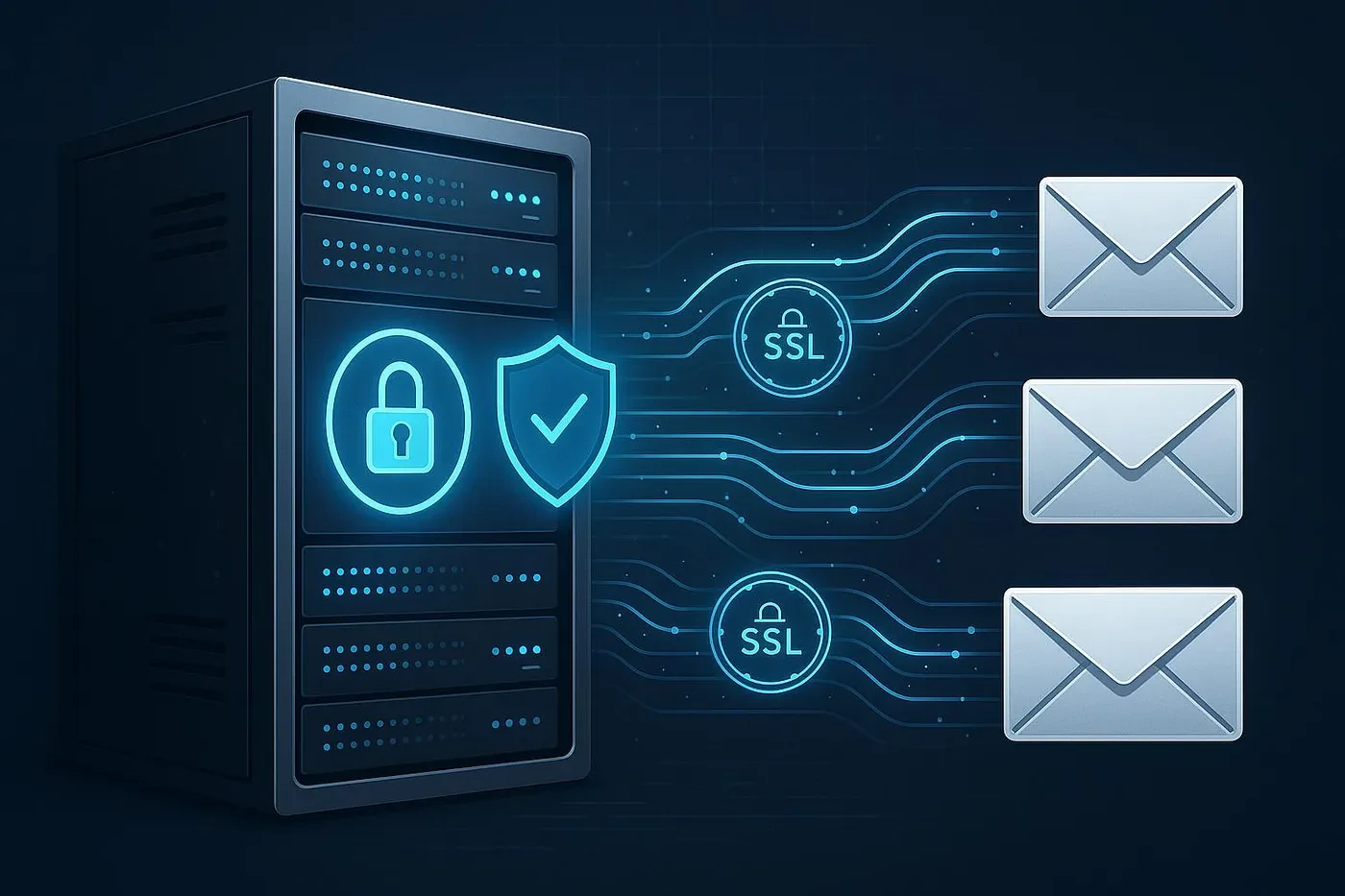
The image above is a title card for the topic, labelled Email Security, SSRF, Network Defence and Vulnerability Management.
Introduction
Email security platforms are designed to protect organisations from phishing, malicious attachments, spam and other email-based threats. They are often trusted components of enterprise infrastructure, meaning the rest of the network treats them as friendly and lets them do things that an ordinary visitor could not.
However, a vulnerability in an email security platform can create risks that extend beyond email itself, particularly when the platform is permitted to communicate with internal systems. Think of a security guard who is allowed into every room of a building: if someone can control the guard, they get into every room too.
CISA recently added a vulnerability affecting N-able MailAssure, also associated with SpamExperts, to its Known Exploited Vulnerabilities catalogue. The vulnerability is tracked as CVE-2026-134624 and is classified as a server-side request forgery (SSRF). It affects an LDAP synchronisation connection-check feature. An authenticated API user may be able to cause the service to connect to internal hosts and ports.
What is SSRF?
Server-Side Request Forgery is a vulnerability in which an application can be manipulated into making requests on behalf of the attacker. A request here simply means one computer asking another for something, such as a web page or a status reply.
Instead of the attacker's system communicating directly with a destination, the vulnerable server is induced to make the connection. This can be dangerous when the vulnerable server has network access that the attacker does not have.
A useful comparison is asking a colleague who has a key to a locked floor to go and check something for you. You cannot get in, but your colleague can, and you get the answer back. If the colleague never checks who is asking or where they are being sent, they become a way in.
For example, an application may be able to communicate with internal services that are not exposed publicly. If the application does not properly restrict destinations, an attacker may abuse that connectivity.
The image above illustrates the idea that an application able to reach internal services, without proper restrictions on where it connects, can be abused.
Why SSRF matters in enterprise environments
Enterprise networks frequently contain services that are accessible only from internal systems. These services may include:
- Internal web applications
- Management interfaces
- Databases
- Monitoring systems
- Cloud infrastructure services
- Directory services
- Internal APIs
An API, short for application programming interface, is a way for one piece of software to talk to another without a human clicking through screens. It is like a service counter: you hand over a request in an agreed format and get an answer back. Many products expose an API so that administrators and other tools can automate tasks.
An SSRF vulnerability can potentially provide a way to interact with systems through the vulnerable server. The impact depends on the vulnerable application's permissions, network access, authentication requirements, and the destination service. In plain terms: what an attacker can achieve depends on how much freedom the email platform has, what it is allowed to log in to, and what the target service will answer without further proof of identity.
What was reported?
CISA listed CVE-2026-134624 in its Known Exploited Vulnerabilities catalogue on November 23, 2026.
The vulnerability affects N-able MailAssure and SpamExperts and involves the LDAP synchronisation connection-check functionality. The reported vulnerability allows an authenticated API user to cause connections to arbitrary internal hosts and ports under affected conditions. "Authenticated" means the person has already logged in with valid credentials; "arbitrary" means they can choose the destination rather than being limited to the intended directory server.
N-able also reported a security incident affecting its MailAssure and SpamExperts Hosted Cloud environments. The vendor said it remediated the incident and restored affected functionality, while its investigation indicated exploitation was confined to a single hosted server. Public information does not conclusively establish that this SSRF was the initial entry point for the incident. In other words, the two events are related in time and product, but it has not been publicly proven that the SSRF was how the attackers first got in.
Why an email security gateway is a high-value target
A gateway is a system that sits at the edge between two networks and passes traffic between them. Email security infrastructure may have privileged access to:
- Email routing
- LDAP integration
- User directories
- Internal network services
- Security configuration
- Administrative APIs
- Authentication-related information
This makes the platform an important part of the organisation's security architecture. A vulnerability that enables unintended network connectivity could potentially undermine segmentation assumptions. Segmentation means dividing a network into zones so that a problem in one zone cannot easily spread to another; if a trusted system is allowed to cross those zones, the walls are less useful than they look.
The image above illustrates how a platform that is central to an organisation's security architecture can undermine segmentation assumptions when it can make unintended connections.
Defensive actions
1. Upgrade affected installations
N-able identified the fixed build as 20261121.1943. Organisations should confirm their installed version and follow vendor guidance. A build number is the specific version of the software that was compiled and released; Organisations should confirm their installed version and follow vendor guidance.
2. Review API access
Identify API accounts with access to sensitive functionality. Remove unnecessary permissions and rotate potentially exposed credentials. Rotating credentials means replacing passwords or keys with new ones, so that any copy that leaked stops working. The reason to do this is that the flaw requires an authenticated API user, so fewer and better-controlled accounts reduce the exposure.
3. Restrict network connectivity
Email security platforms should not have unrestricted access to internal networks. Use network segmentation and allowlists to restrict destinations. An allowlist is a list of things that are permitted, with everything else refused; here it would name the directory servers and other destinations the platform genuinely needs to reach.
4. Monitor outbound requests
Review logs for unusual outbound connections, unexpected destinations, and abnormal connection patterns. Outbound means leaving the platform towards somewhere else. Logs are the records systems keep of what happened, and they are the main way to notice a connection check being pointed somewhere it should not go.
5. Review LDAP configuration
Confirm that directory integrations are appropriately restricted. If the platform only ever needs to talk to one directory server, the configuration should reflect that.
6. Investigate suspicious activity
If compromise is suspected, examine system integrity, administrative access, authentication activity, and potential persistence. Persistence means the attacker's ability to keep access after a reboot or cleanup, for example through an added account or scheduled task.
What SOC teams should monitor
A SOC, or security operations centre, is the team that watches an organisation's systems for signs of attack. Security analysts should investigate:
- Unexpected API authentication
- Unusual LDAP-related operations
- Unexpected outbound connections
- Access to internal services from email infrastructure
- Abnormal administrative activity
- Configuration changes
- Unusual service behaviour
Monitoring should be correlated with approved administrative activity. Correlated means comparing what was seen against what was legitimately scheduled or requested, so that a routine maintenance task is not mistaken for an attack and a real attack is not dismissed as routine.
Conclusion
The MailAssure vulnerability highlights a fundamental security lesson:
A security product is not automatically secure simply because it is designed to protect other systems.
Security infrastructure must itself be hardened, monitored, patched, and restricted. Email gateways and security-management systems should be treated as high-value assets with carefully controlled network access.
A security service with excessive network privileges can become a pathway into the very environment it was designed to protect.
Glossary
- API: a way for one piece of software to talk to another in an agreed format, like a service counter for programs.
- API user: an account used to access a product through its API rather than through a browser screen.
- Authenticated: having already logged in with valid credentials.
- Allowlist: a list of permitted destinations or actions, with everything not on the list refused.
- Arbitrary: chosen freely by the attacker rather than limited to the intended target.
- Build: the specific compiled version of a piece of software, identified here as 20261121.1943.
- CISA: a US government cybersecurity agency that publishes, among other things, a catalogue of vulnerabilities known to be exploited.
- Correlated: compared against other records, such as approved administrative activity, to judge whether something is expected.
- Credentials: the passwords, keys or tokens that prove who you are when logging in.
- CVE: a public catalogue number given to a known security vulnerability so everyone can refer to the same flaw; here CVE-2026-134624.
- Directory service: a system that stores users and groups so other software can look them up, like a company phone book for computers.
- Email gateway: a system at the edge of a network that filters and passes email between the outside world and the organisation.
- Enterprise infrastructure: the collection of servers and services an organisation depends on to operate.
- Host: a single computer or server on a network, identified by an address.
- Known Exploited Vulnerabilities catalogue: CISA's list of flaws that are known to be used in real attacks.
- LDAP: a common protocol for querying a directory service to look up users and groups.
- LDAP synchronisation connection check: the MailAssure feature that tests whether the platform can reach a directory server, so that user directories and mail routing can be integrated.
- Logs: the records systems keep of what happened, used to spot and investigate unusual activity.
- Outbound: traffic leaving a system towards somewhere else.
- Persistence: an attacker's ability to keep access after a reboot or cleanup.
- Port: a numbered channel on a computer that a particular service listens on, so one machine can offer several services.
- Remediated: fixed, so the problem no longer applies.
- Request: one computer asking another for something, such as a page or a status reply.
- Rotate credentials: replace passwords or keys with new ones so any leaked copy stops working.
- Segmentation: dividing a network into zones so a problem in one zone cannot easily spread to another.
- Server-side request forgery (SSRF): a flaw where an application is manipulated into making a connection on the attacker's behalf, useful to the attacker when that server can reach places the attacker cannot.
- SOC: security operations centre, the team that watches systems for signs of attack.
- SpamExperts: a product name associated with N-able MailAssure.
- Vendor guidance: the instructions published by the maker of the software.



