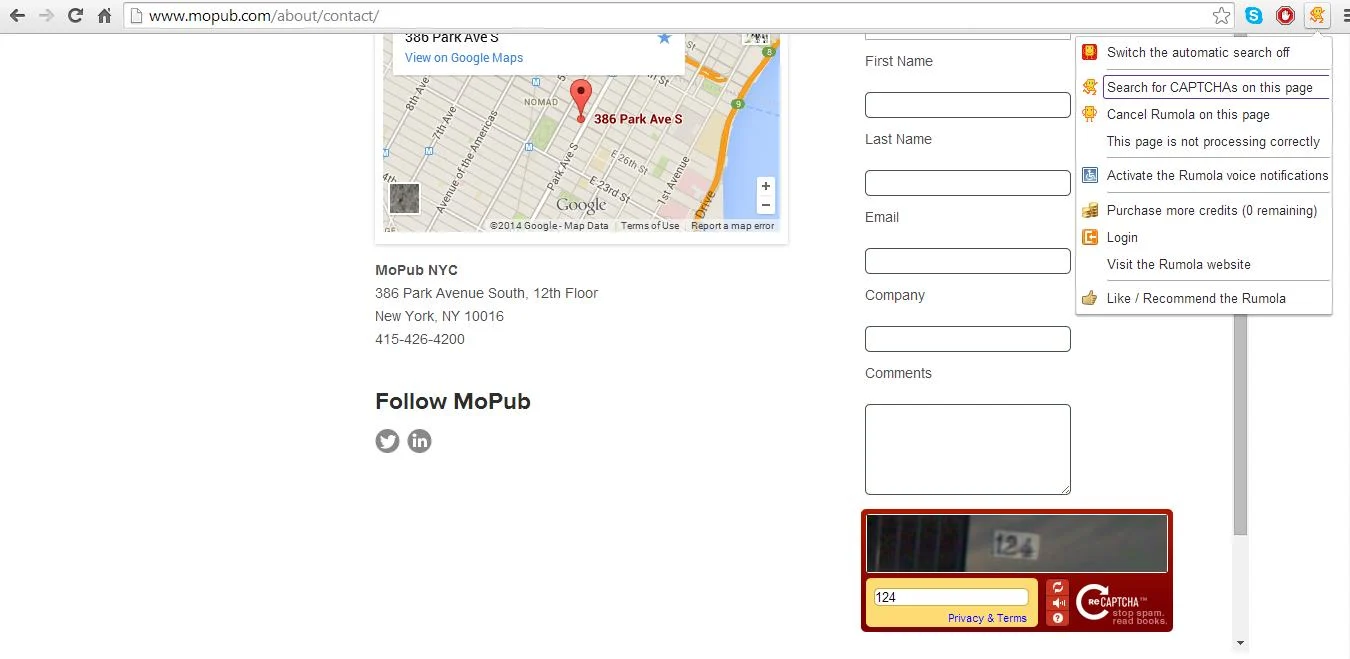
Captcha bypass with extension at http://www.mopub.com/about/contact/
The report claims that a browser extension called Rumola can automatically solve the CAPTCHA on a contact form, allowing bots to bypass the bot-protection check. The author suggests this could lead to database flooding.

- Disclosed after 4 months
Hello,
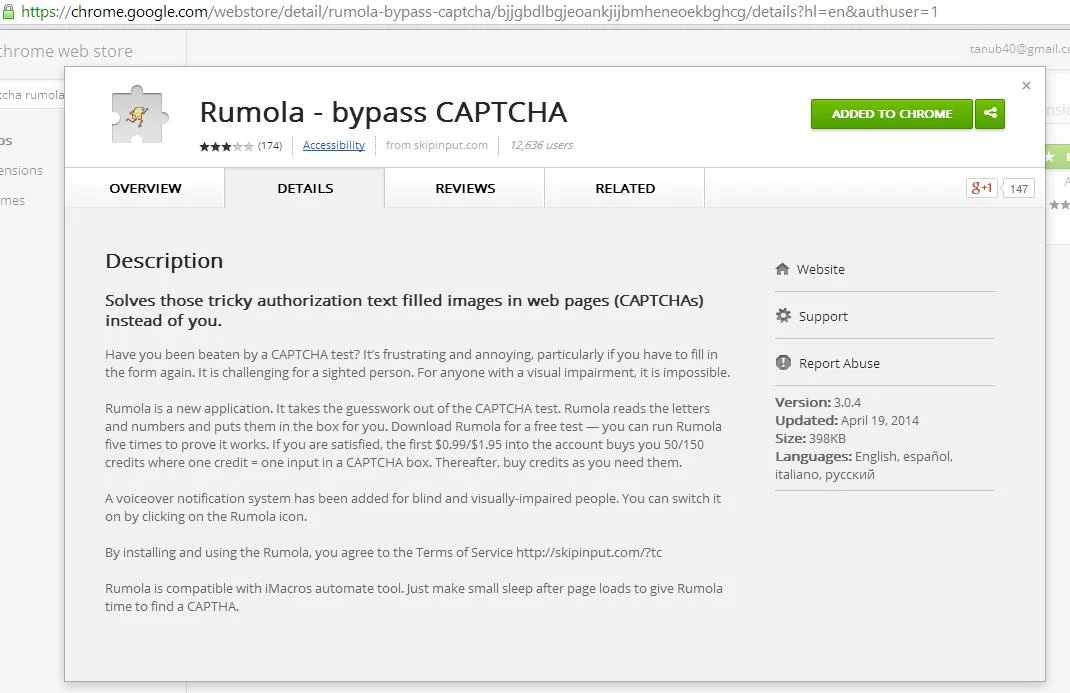
These days Captcha's are one of the most vulnerable methods To Protect The Website From Bots, But there is a Extension Named Rumola Which Automatically Fills up the Captcha While We Fill Other Credentials like Email etc. Here a Vulnerability Arises That Bots May Use This Extension Script in their Interface To Bypass the Captcha Check. it may lead to flooding in database too.
As a possible Fix, you can Replace Captcha check with- 1) A Honeypot Trap or 2) A simple Task or 3) Skill testing Question.
thanks
Vineet
Attachments
Not written yet. The AI write-up for this report has not been written yet. The Original tab links to the source.
How it worked
Root cause
Likely the site relies on a CAPTCHA that a third-party browser extension can solve automatically, without any additional bot mitigation.
Impact
Automated submissions could bypass the CAPTCHA and potentially flood the site's database, though the report only speculates this.
What the attacker needed
A browser extension that solves CAPTCHAs; a public form protected only by CAPTCHA
The fix
The reporter suggests replacing the CAPTCHA with a honeypot trap, a simple task, or a skill-testing question.
Explained by bugbounty.wiki with AI from the original and checked against quotes from it; it can still be wrong. Read the original before relying on a detail.
Not written yet. The AI write-up for this report has not been written yet. The Original tab links to the source.
A CAPTCHA is a puzzle meant to prove a human is filling in a form, not a computer. The reporter says a browser add-on can solve that puzzle automatically, so automated programs could submit the form many times. No actual attack or proof is shown.
What is Crypto?
Encryption, signatures, randomness or certificate checks that do not protect what they claim to.