Brave: Admin Panel Access
The report notes that the Brave blog's admin panel is reachable at a predictable path and redirects to a Ghost sign-in page. The author claims an attacker could enumerate the panel and attempt brute force, but did not demonstrate a bypass or takeover.

- Disclosed after 10 months
** Steps to reproduce**
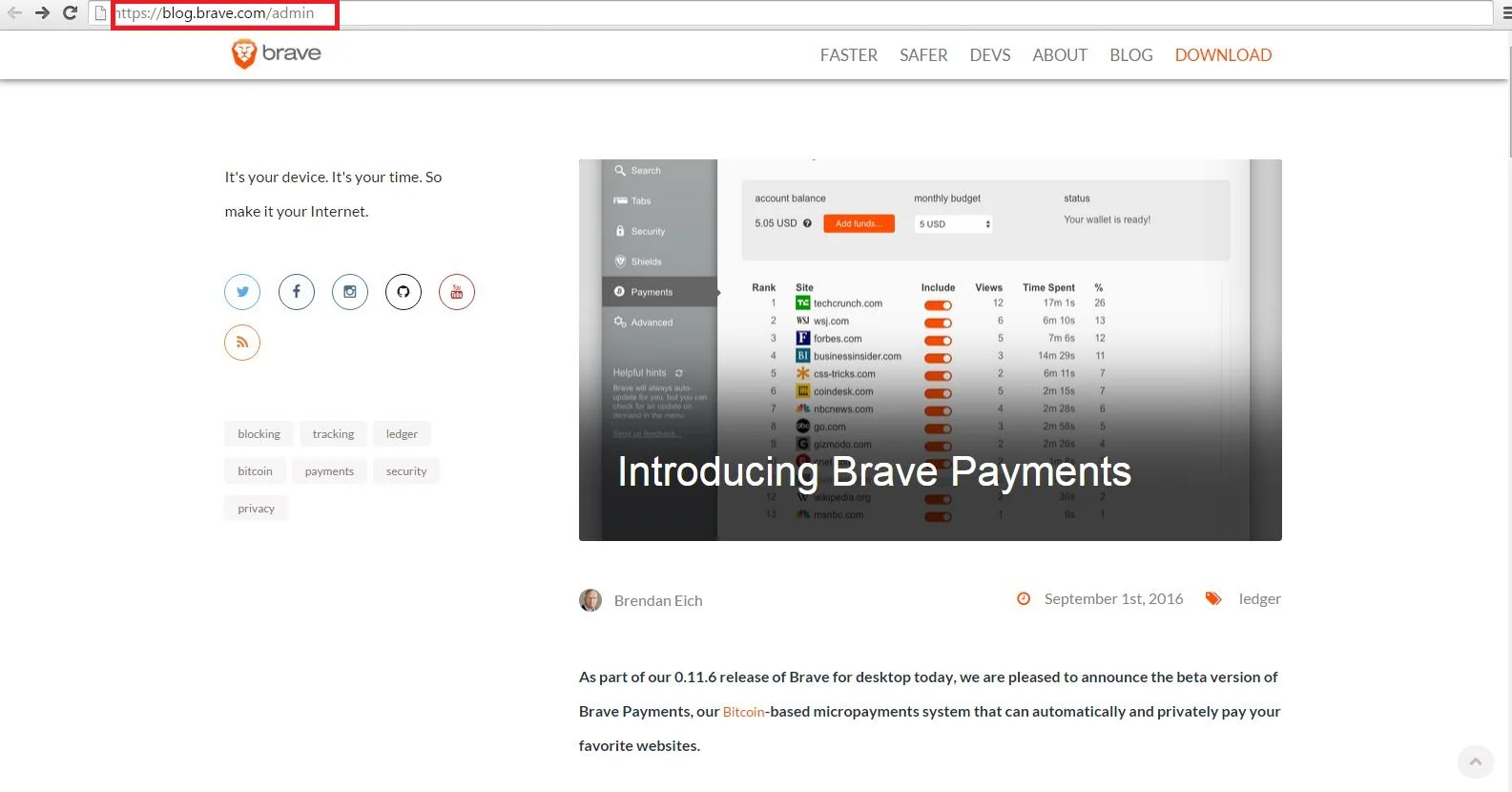
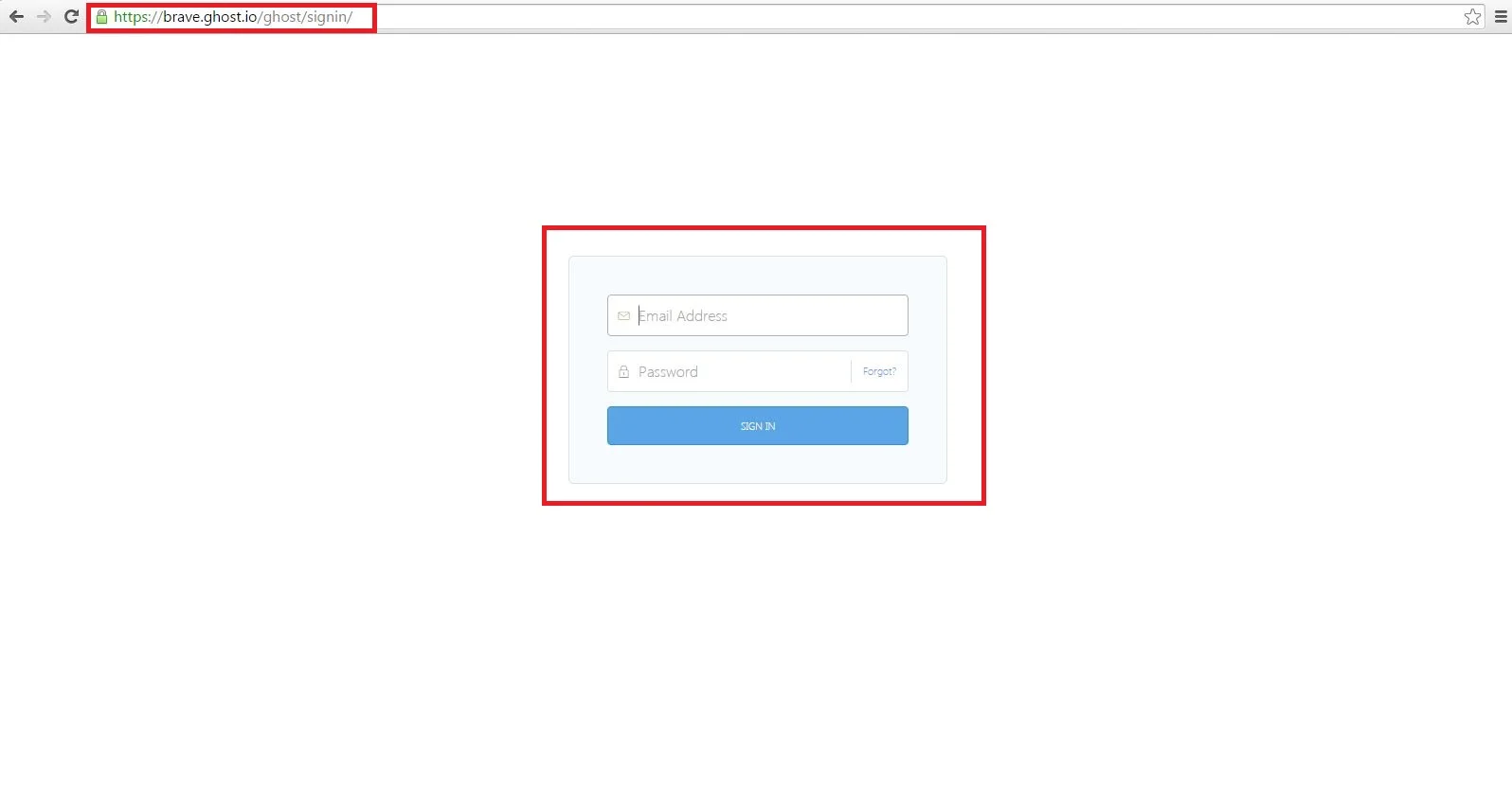
While browsing through the https://blog.brave.com/admin, it is getting redirected to a admin login panel https://brave.ghost.io/ghost/signin/.
Consequence An attacker can easily enumerate this admin panel with the url such as https://blog.brave.com/admin and with brute force attack this can be bypassed, but I didn't do that. If a known ghost.io vulnerability exists there can be chances of even taking over the sub domain.
Remediation
It's recommended to give custom directory names instead of easily guessable names such as "admin" for such sensitive directories.
Please find the attached screenshots.
Attachments
Not written yet. The AI write-up for this report has not been written yet. The Original tab links to the source.
How it worked
Root cause
Likely the admin interface is exposed at a predictable path rather than a less guessable one, and the report does not identify a software flaw.
Impact
The login page is easy to find and could be targeted with brute force or a known Ghost vulnerability, but the report shows no actual bypass or takeover.
What the attacker needed
None
Explained by bugbounty.wiki with AI from the original and checked against quotes from it; it can still be wrong. Read the original before relying on a detail.
Not written yet. The AI write-up for this report has not been written yet. The Original tab links to the source.
A website's admin area is where staff log in to manage content. Here it sits at an easy-to-guess address, so anyone can find the login page. The reporter only found the page and guessed that guessing passwords might work, but did not actually break in.
What is Access control?
A user can do something their role should not allow: reach an admin function, act on a feature they have not paid for, or skip a permission check. IDOR is the special case where the object belongs to someone else.

