DMARC RECORD MISSING
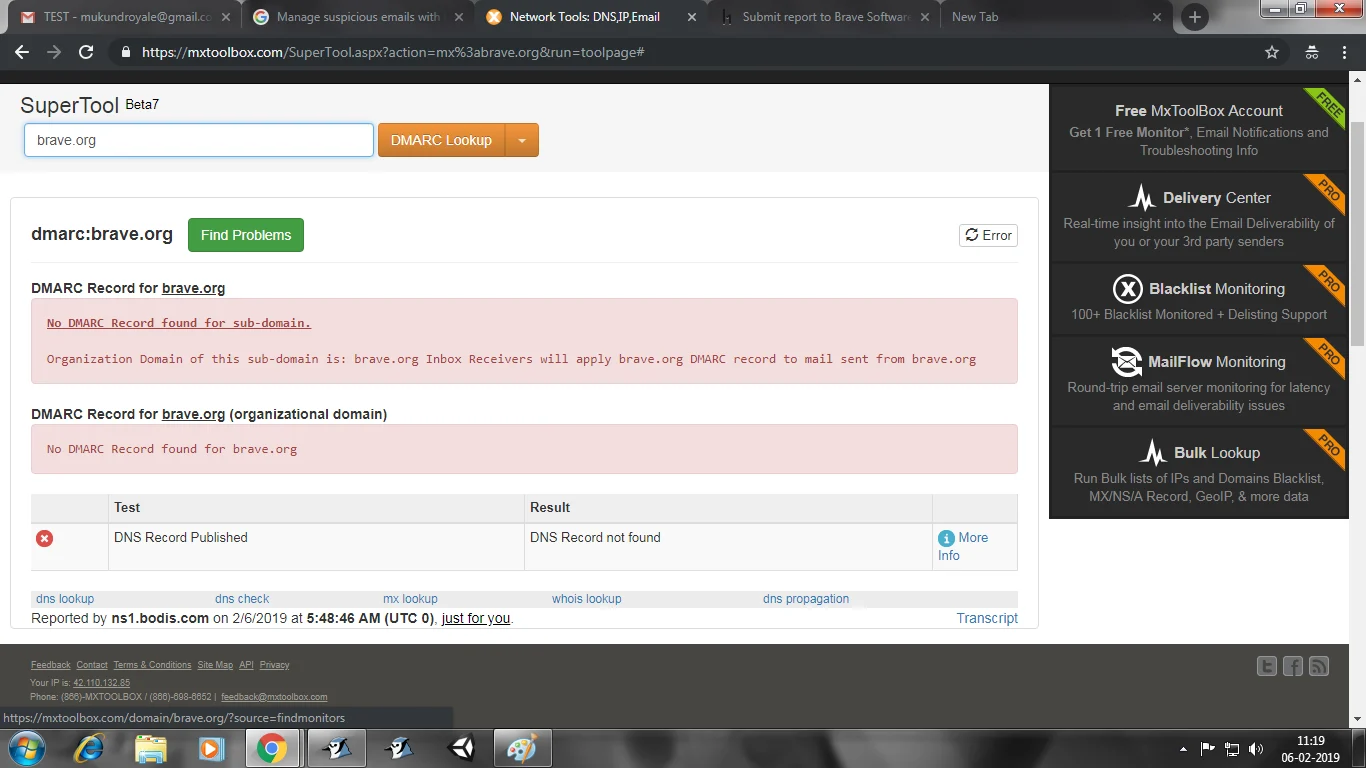
The domain brave.org did not publish a DMARC record, so email receivers had no policy telling them to reject or quarantine forged mail claiming to come from that domain. An attacker could therefore send email with a forged From address that appears to originate from the domain, which could harm the domain's reputation.
 Originally disclosed on HackerOne
- Fixed in 13 hours
- Paid in 13 hours
- Disclosed after 8 days
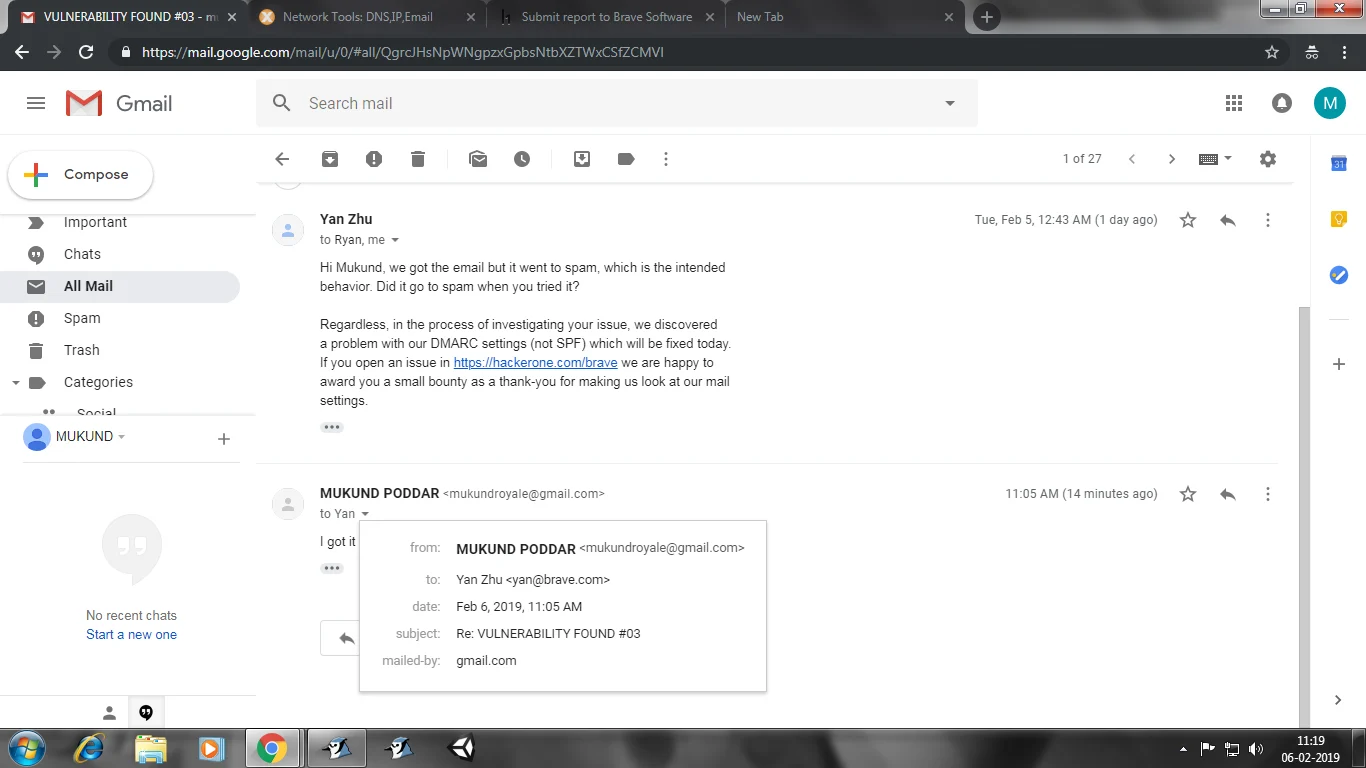
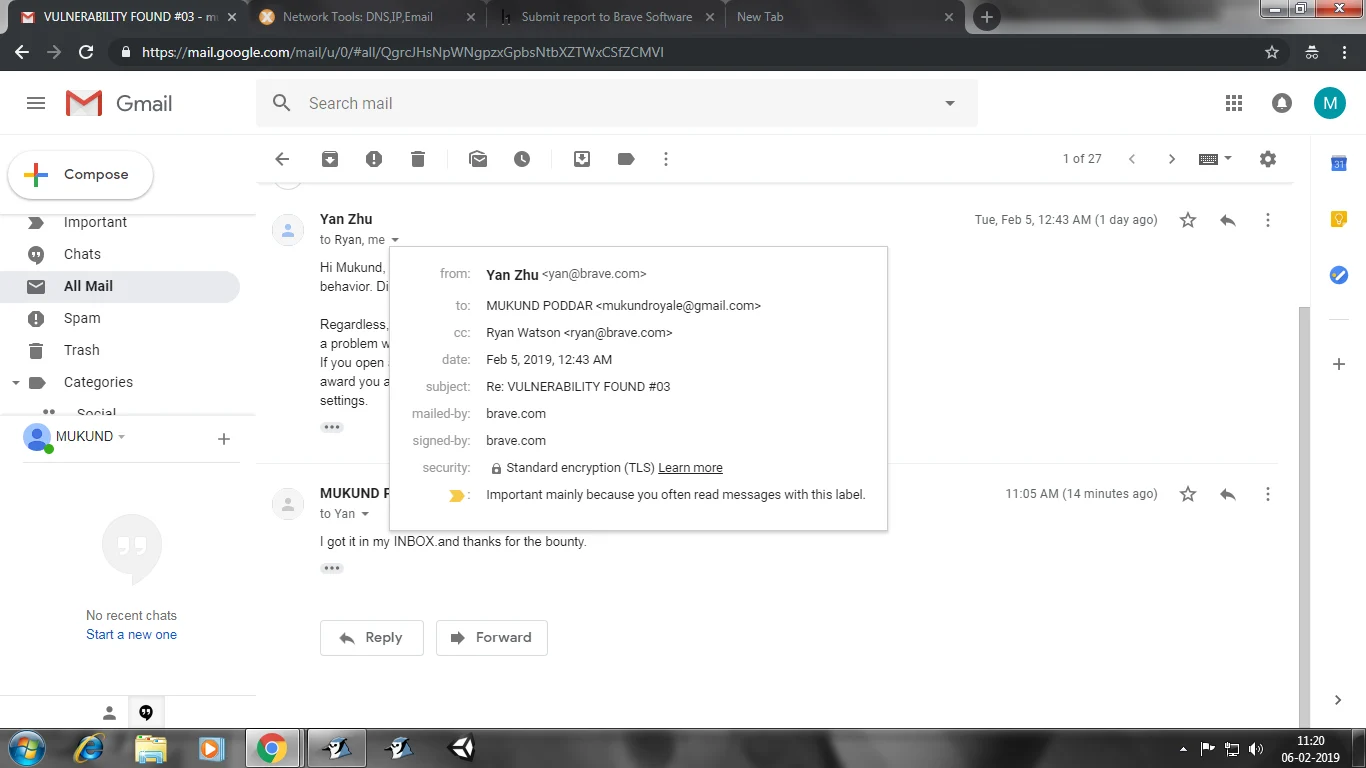
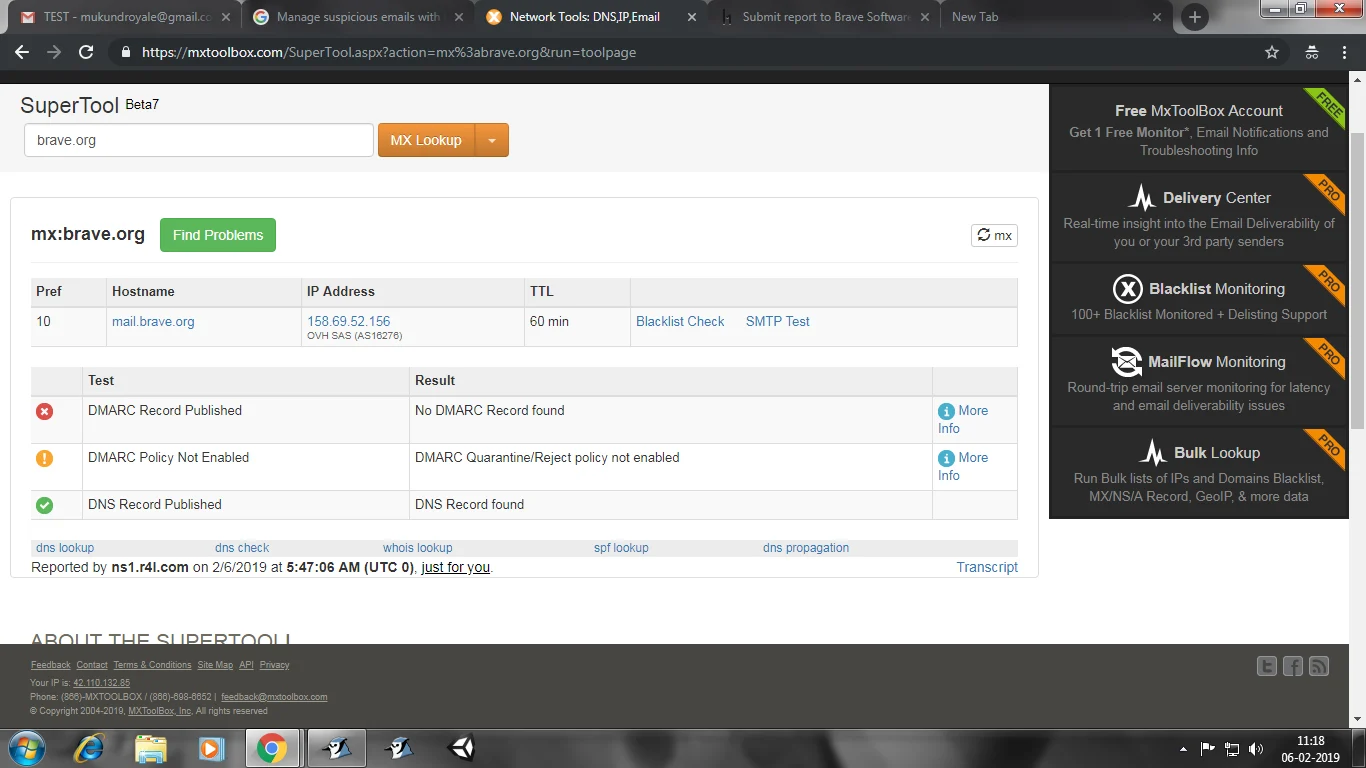
VULNERABILITY TYPE- DMARC RECORD MISSING. HOW TO REPRODUCE(POC-ATTACHED IMAGE):- 1.GO TO- https://mxtoolbox.com 2.ENTER THE WEBSITE(brave.org).CLICK GO. 3.YOU WILL SEE THE FAULT(No DMARC Record found) 4.In the new page that loads change MXLookup to DMARCLookup I HAVE ALREADY INFORMEDD THEM.THEY TOLD TO OPEN THE ISSUE IN HackerOne.(POC-ATTACHED IMAGE)
Impact
Spammers can forge the "From" address on email messages to make messages appear to come from someone in your domain. If spammers use your domain to send spam or junk email, your domain quality is negatively affected. People who get the forged emails can mark them as spam or junk, which can impact authentic messages sent from your domain.
Attachments
Not written yet. The AI write-up for this report has not been written yet. The Original tab links to the source.
How it worked
Root cause
Likely the domain owner had not published a DMARC DNS record for the domain.
Impact
Spammers could forge the From address to make messages appear to come from the domain, and recipients marking those forged messages as spam could negatively affect the domain's email reputation.
What the attacker needed
None
The fix
The domain should publish a DMARC record.
How it was found
- Open the mxtoolbox.com website.
- Enter the domain brave.org and start the lookup.
- Observe that no DMARC record is found.
- Switch the lookup type from MX to DMARC on the results page.
Explained by bugbounty.wiki with AI from the original and checked against quotes from it; it can still be wrong. Read the original before relying on a detail.
Not written yet. The AI write-up for this report has not been written yet. The Original tab links to the source.
When an email arrives, the receiving server can check a published record called DMARC to see whether the sender is allowed to use that domain. If the record is missing, the server has no instruction to reject fake mail, so anyone can pretend to send from that domain. This is a configuration gap rather than a break-in, and it mainly affects trust in the domain's email.
What is Misconfiguration?
Settings left unsafe: exposed panels, open storage buckets, debug modes, default credentials.




