'cnvID' parameter vulnerable to Insecure Direct Object References
An unauthenticated user can enumerate comments from all blog posts by sending POST requests with incremental 'cnvID' integers to a specific endpoint. This allows access to sensitive data posted in comments, even when blog permissions restrict read/write to administrators only.
 Originally disclosed on HackerOne
- Triaged in 31 days
- Fixed in 4 months
- Disclosed after 7 months
Installation Information
IIS 8, PHP 5.5, Concrete5 (5.7.5.7) [Default install]
Issue POC
An unauthenticated user can enumerate comments from all blog posts by POSTing requests to /index.php/tools/required/conversations/view_ajax with incremental 'cnvID' integers.
- An example blog with permissions set for READ/WRITE to Administrators only
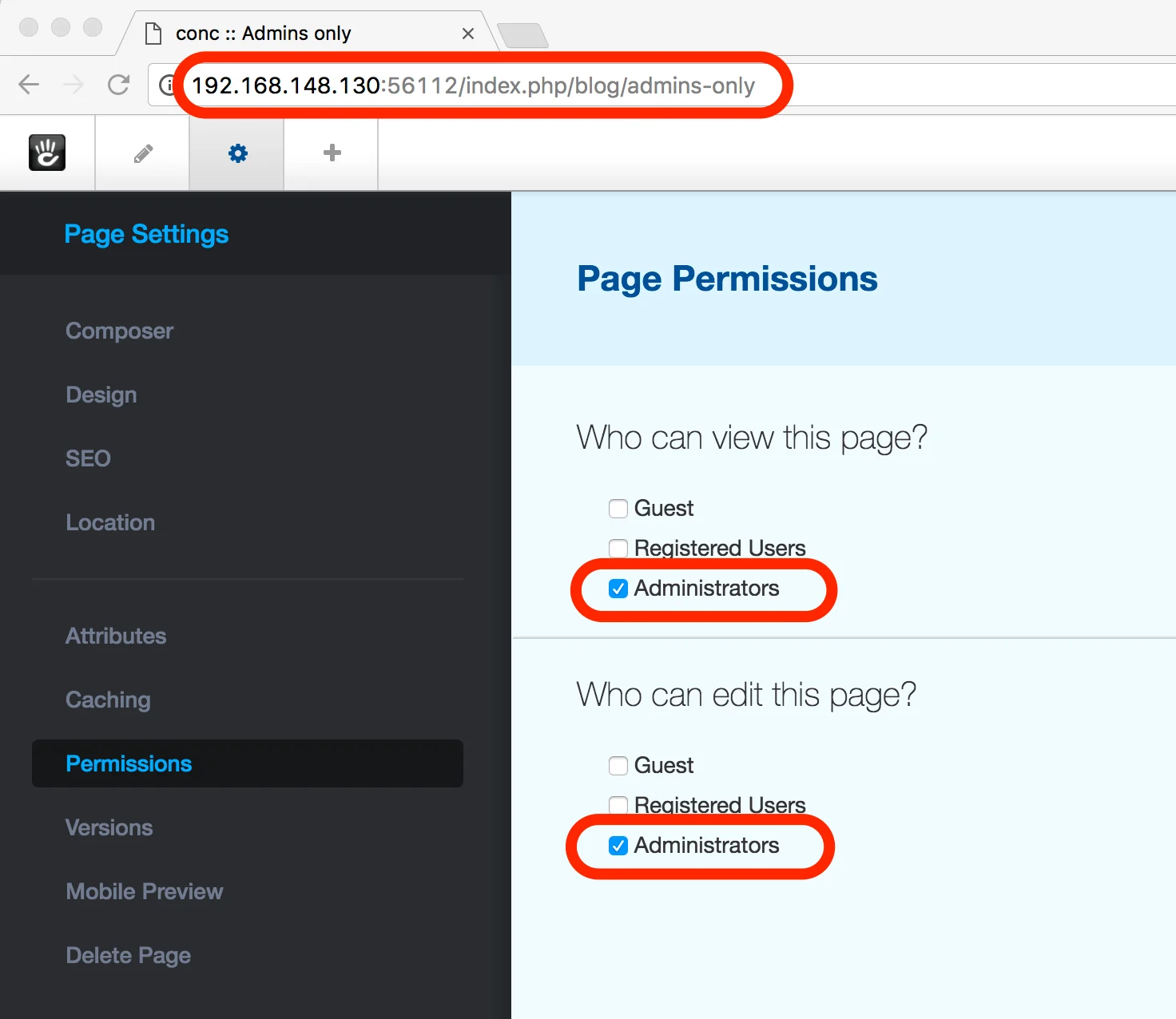
admins_only_page.png From the original on HackerOne - A comment entry with sensitive data (this could be PII or any other type of sensitive data posted by users)
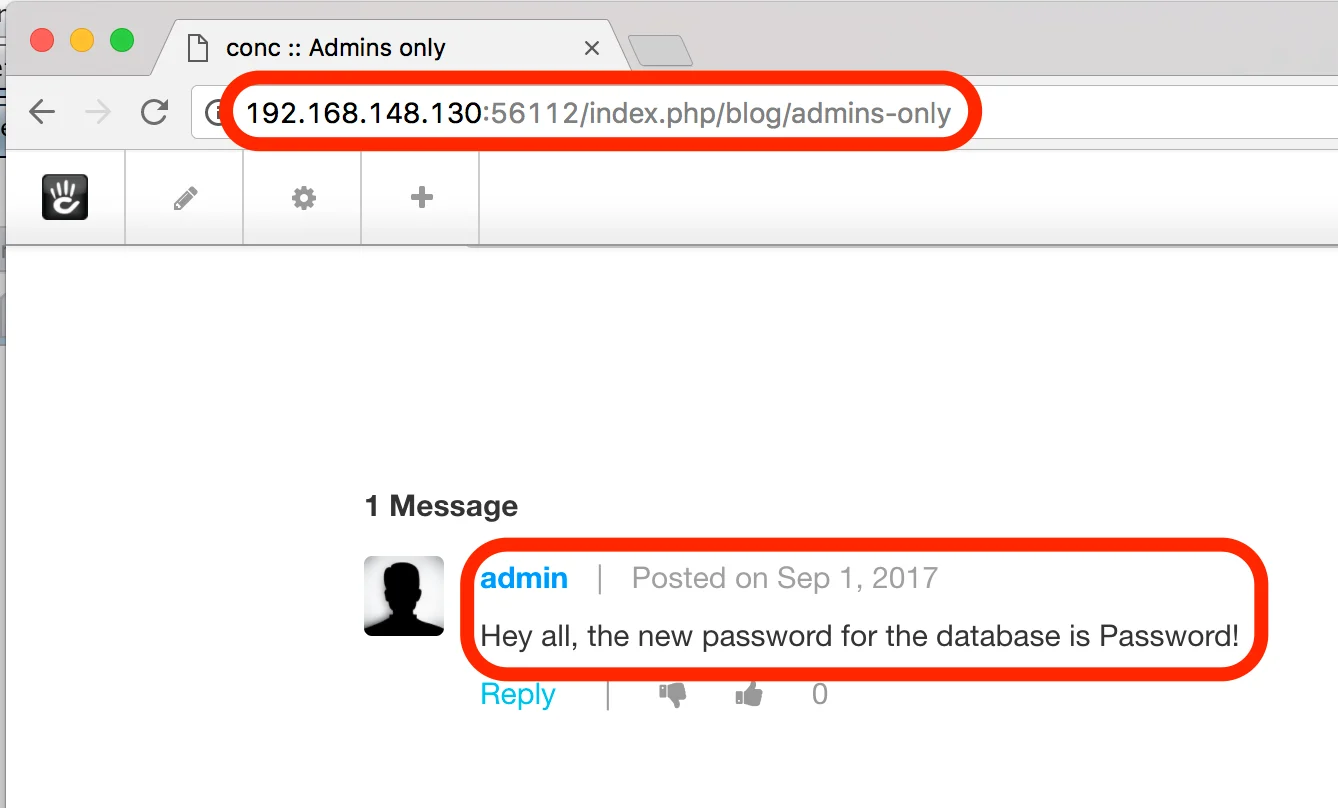
admin_post_sensitive_data.png From the original on HackerOne - POST request by a malicious user without authentication
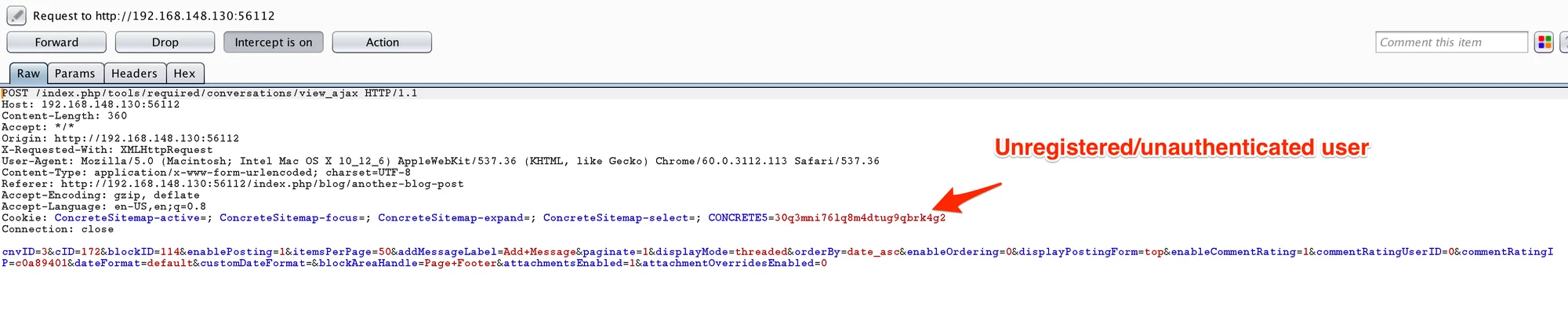
non-auth.png From the original on HackerOne - Enumeration of comments via brute of 'cnvID'
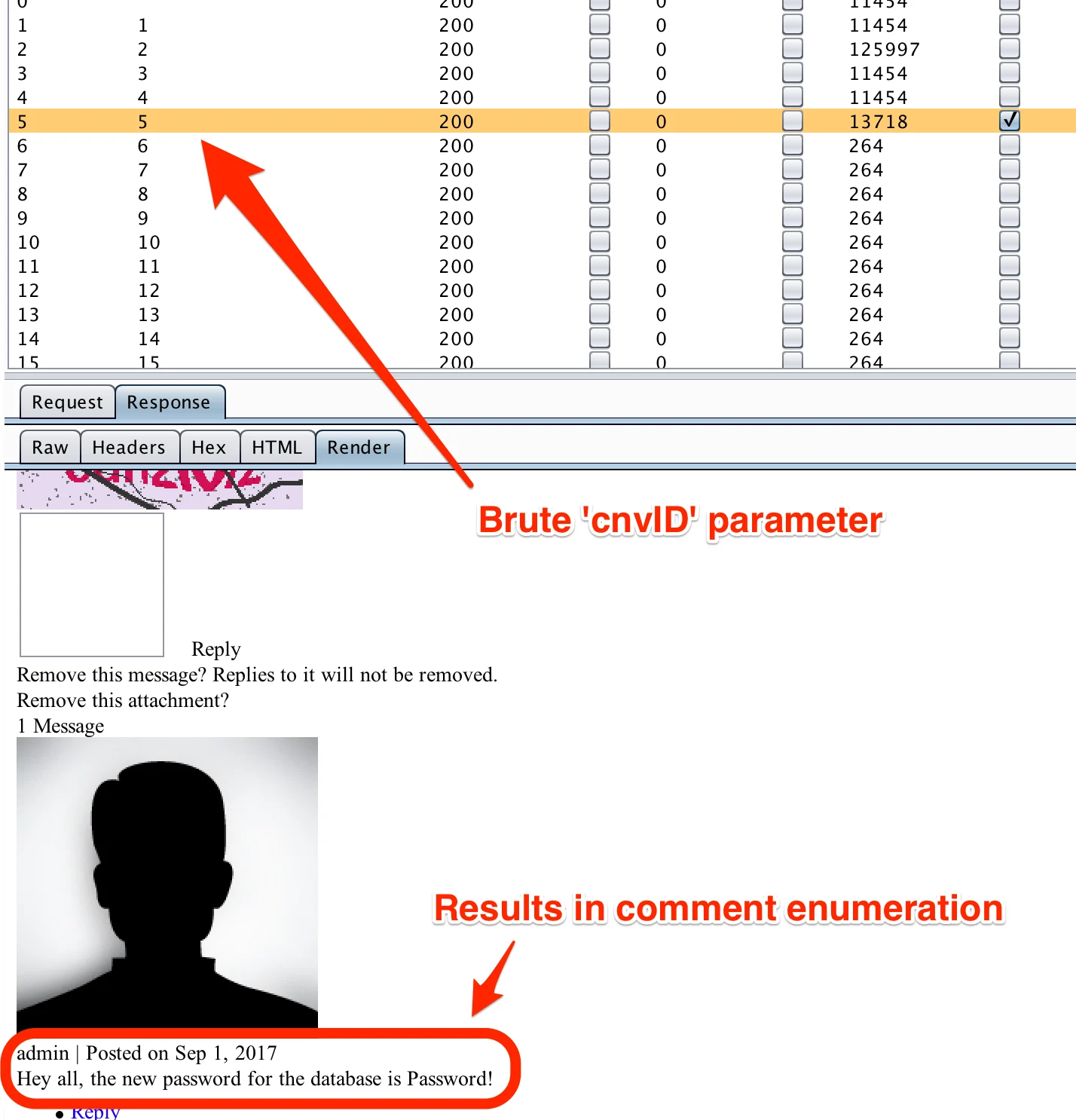
brute.png From the original on HackerOne
Remediation
Preventing insecure direct object references requires selecting an approach for protecting each user accessible object (e.g., object number, filename):
- Use per user or session indirect object references. This prevents attackers from directly targeting unauthorized resources. For example, instead of using the resource’s database key, a drop down list of six resources authorized for the current user could use the numbers 1 to 6 to indicate which value the user selected. The application has to map the per-user indirect reference back to the actual database key on the server. OWASP’s ESAPI includes both sequential and random access reference maps that developers can use to eliminate direct object references.
- Check access. Each use of a direct object reference from an untrusted source must include an access control check to ensure the user is authorized for the requested object.
References
OWASP Top 10 2010-A4-Insecure Direct Object References Also, crayons
Not written yet. The AI write-up for this report has not been written yet. The Original tab links to the source.
How it worked
Impact
An unauthenticated attacker could access and enumerate sensitive data (such as PII) from comments across all blog posts, even when permissions restrict read/write to administrators only.
What the attacker needed
No authentication required; target runs Concrete5 [redacted]; comments exist on blog posts
The fix
The endpoint should perform an access control check for each request to ensure the user is authorised to view the requested comment, and optionally use per-user indirect references instead of direct database keys.
How it was found
- Set up a blog with read/write permissions restricted to administrators only.
- Post a comment containing sensitive data.
- Send a POST request to the view_ajax endpoint without authentication.
- Enumerate comments by iterating over the 'cnvID' parameter.
Explained by bugbounty.wiki with AI from the original and checked against quotes from it; it can still be wrong. Read the original before relying on a detail.
Not written yet. The AI write-up for this report has not been written yet. The Original tab links to the source.
The website uses a simple number (cnvID) to identify each comment. Because it does not check if the person asking is allowed to see that comment, anyone can change the number and see other comments, even private ones. This is called an insecure direct object reference (IDOR).
What is IDOR?
One user can read or change another user's data, usually by changing an identifier the server trusts without checking who is asking. One of the most paid bug classes on web programs.


